
British Airways Jet Drops 28,000 Feet Over Ireland and Returns to Heathrow
British Airways flight BA295 declared a general emergency over Ireland on Monday, descended about 28,000 feet from cruising altitude and turned back to Heathrow, where it landed safely after circling for more than an hour to burn fuel. No injuries were reported.
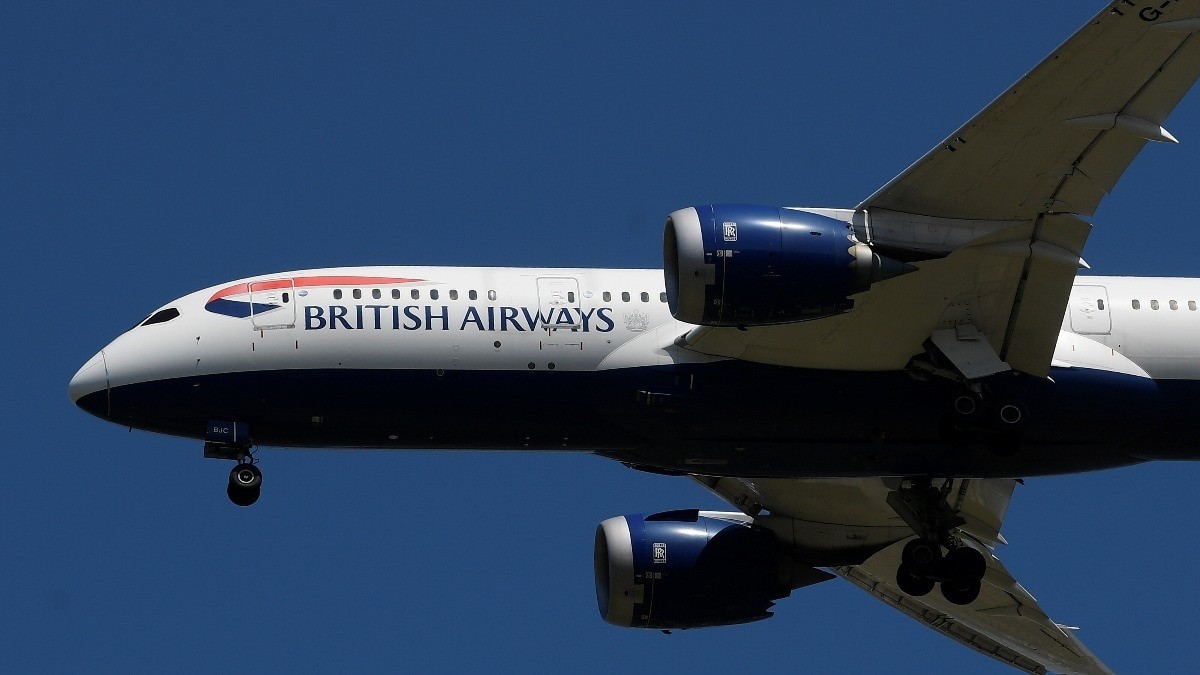
A British Airways Boeing 777-200ER bound for Chicago declared a general emergency over Ireland on Monday and turned back to Heathrow, descending roughly 28,000 feet from cruising altitude before circling for more than an hour and landing safely. Flight BA295, registration G-VIIA, had departed London Heathrow for Chicago O'Hare when the crew squawked 7700, the international transponder code for a general emergency. No injuries have been reported, and the airline says passengers disembarked normally. The cause has not been confirmed.
British Airways Jet Drops 28,000 Feet Over Ireland and Returns to Heathrow
London, England — A British Airways widebody bound for Chicago spent nearly five hours in the air on Monday without ever leaving the British Isles, after a general emergency over Ireland sent it into a steep descent and then into a long holding pattern off the south-west of Britain. The aircraft, a Boeing 777-200ER registered G-VIIA, landed back at Heathrow safely. British Airways has described only a "technical issue" and has not identified the specific problem behind the emergency or the descent.
The Descent
According to The Mirror, BA295 departed Heathrow at 11.50am local time. GB News reports the aircraft left Terminal 5 at 11.15am and had just reached 36,000 feet by 11.50am, while Paddle Your Own Kanoo says the flight left over an hour late, at around 12.14pm — a disagreement the airline has not resolved. The aircraft climbed to a cruising altitude of about 37,000 feet, though Paddle Your Own Kanoo records 36,000 feet. Roughly 30 to 34 minutes to about an hour into the flight, over Ireland, it began a rapid, steep descent from about 37,000 feet to around 9,000 feet. The crew transmitted squawk 7700; GB News reports the code was broadcast after the steep descent began, while Hindustan Times says it came shortly after the descent started. The code itself identifies nothing: it is the standard signal pilots use to tell air traffic control an aircraft is in a general emergency and may need priority assistance, and it can cover technical problems, medical emergencies, security concerns or other issues. Once it is broadcast, air traffic control moves to clear surrounding airspace and notify ground-based emergency services so the aircraft can reach a suitable runway without delay.
What the Flight Trackers Showed
AirLive's live log records the U-turn over Irish airspace at 12.11 UTC and confirmation that the aircraft was returning to Heathrow at 12.15 UTC. GB News' tracker timeline has the jet at 9,000 feet by 11.57am. The aircraft then entered a long holding pattern off the south-west of Britain, between Wales and Ireland, maintaining 9,000 feet for more than an hour. AirLive logs 30 tonnes of fuel on board and no fuel jettison, and notes the crew lowered the landing gear while in the hold "to burn more fuel in order to reduce the weight." Its later update reads: "After burning 30T of fuel, #BA295 is returning to Heathrow." Flight-tracking sites can show where an aircraft flew, how high it was and whether its transponder was broadcasting an emergency code, but they cannot show what was happening inside the cockpit or cabin.
Why Pilots Descend That Fast
A controlled rapid descent to below about 10,000 feet is standard practice when a cabin pressurisation problem is suspected, because the atmosphere at that altitude contains enough oxygen to breathe without supplemental masks. At 9,000 feet the cabin air is still safe to breathe without oxygen supplementation, although thin. British Airways' Boeing 777 supplemental oxygen system is designed to provide oxygen for well in excess of an hour. Paddle Your Own Kanoo reports the pilots were attempting to troubleshoot the aircraft's pressurisation system, and that the masks dropped as the plane flew at 36,000 feet over the Irish Sea. There is currently no confirmation that BA295 suffered a loss of cabin pressure, and the descent profile alone does not establish one.
The Masks in the Cabin
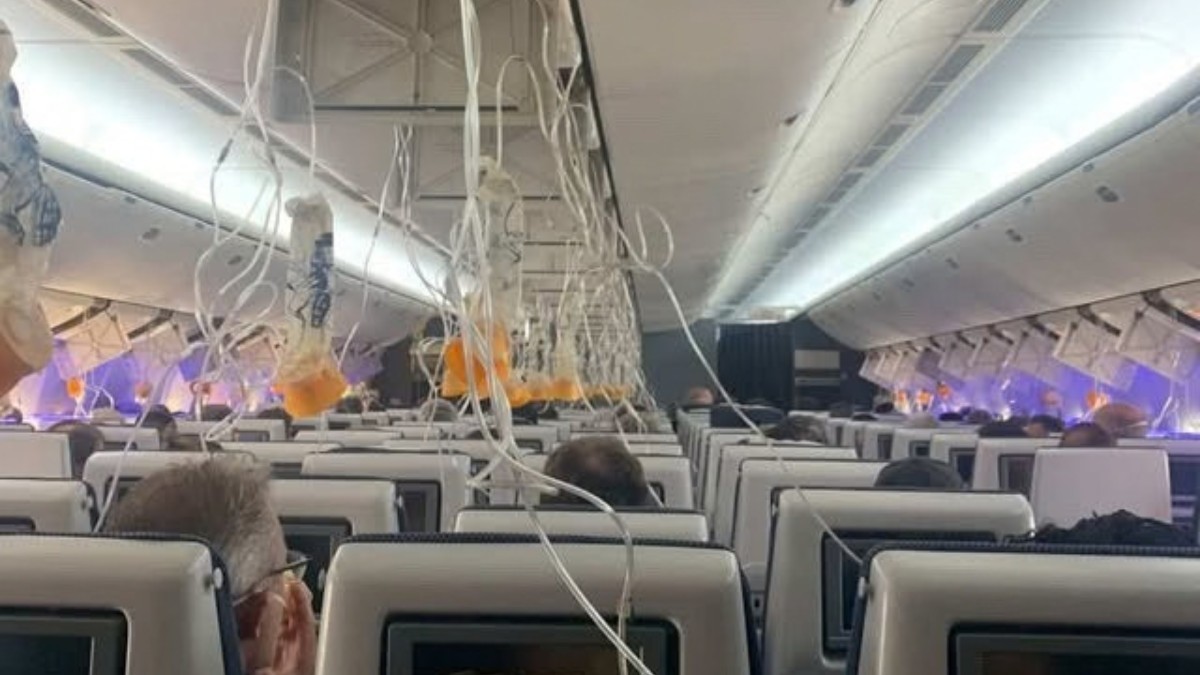
The Mirror says a passenger on board sent it footage showing oxygen masks deployed from the ceiling, with an announcement audible: "Grab the nearest oxygen mask and put it over your nose and mouth immediately." GB News says footage online appears to show oxygen masks being deployed for passengers and crew. That is the extent of what has been reported about the cabin. Hindustan Times notes that the Times of India reported the flight landed after a "reported pressurisation problem" — a description the outlet did not attribute to the airline, and one that NBC News does not mention.
Thirty Tonnes of Fuel and the Landing Gear
AirLive's log of 30 tonnes of fuel remaining, with no jettison, explains the shape of Monday's flight: rather than dump fuel, the crew held at 9,000 feet and lowered the landing gear to increase drag and burn weight before returning. That decision kept the aircraft airborne for more than an hour after the U-turn. Reported landing times differ. AirLive logs touchdown on runway 27L at 16.05 UTC. GB News says it landed back at Heathrow at around 4.02pm; The Mirror says around 5pm. Hindustan Times and PTI, along with Mathrubhumi, say it landed after 4 hours and 47 minutes in the air, while The Mirror describes BA295 as having been "in the air for roughly five hours."
The Oldest Widebody in the Fleet
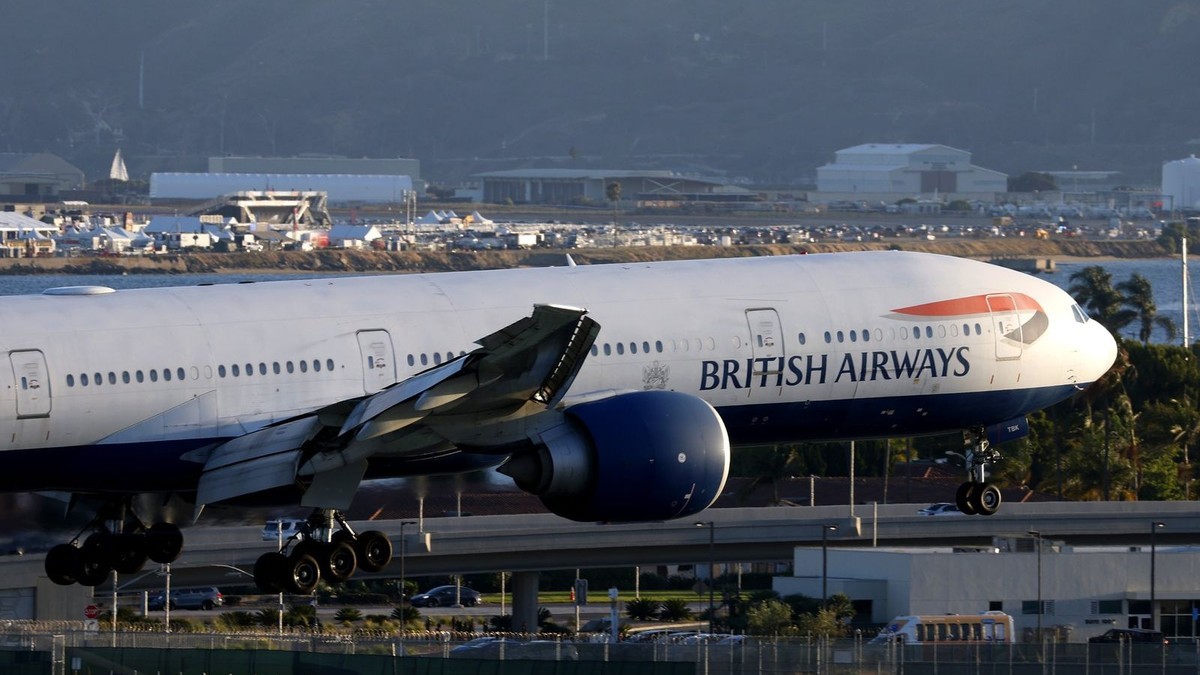
G-VIIA was delivered to British Airways brand new in July 1997 and is about 30 years old. Simple Flying reports it is the oldest widebody in the BA fleet and that it was the first 777-200ER to roll off the production line — a detail attributed to the outlet rather than the manufacturer. The aircraft is to be replaced by new Boeing 787-10 Dreamliners. British Airways operates 43 Boeing 777-200ERs, delivered between February 1997 and July 2009, with an average age of around 26 years. The 777-200ER is powered by two GE90 engines. Geo.tv noted that the age of the aircraft alone does not establish what caused Monday's emergency, and the airline has not suggested any such link.
What British Airways Has Said
The airline's statement, issued to UK media including The Mirror and the Daily Mail, reads: "The safety of our customers and crew is always our top priority, and the aircraft landed safely after our highly-trained pilots returned to Heathrow following a technical issue. Customers disembarked the aircraft normally and our teams are working to get their travel plans back on track as quickly as possible." British Airways has described the cause only as a "technical issue." It has not publicly identified the specific problem behind the emergency or the steep descent. AirLive logs that the airline first scheduled a new departure at 15.00 local time, then 17.30 local time, and then cancelled the flight.
What Is Not Yet Known
The number of passengers and crew on board has not been reported. There is no confirmed cause: the airline's own wording is "technical issue," and no loss of cabin pressure, depressurisation, engine failure or other specific fault has been established. No injuries, illness or medical treatment on board or after landing have been reported. No investigation by the Air Accidents Investigation Branch or any other body has been announced, and no regulator has issued a statement. Nothing has been said about when G-VIIA will fly again or whether it has already returned to service. The reported departure times disagree, and no single figure should be treated as certain.
The Precedent in British Airways' Own Record
On 6 March 2015, a British Airways Boeing 777 flying from London to Seattle, carrying 235 passengers and crew, returned to Heathrow for an emergency landing after all three crew members on the flight deck reported feeling unwell. Britain's Air Accidents Investigation Branch reported that the pilots wore oxygen masks and opened the door between the cockpit and the passenger cabin. The AAIB concluded that the air supply was blocked by debris, including wire, bubble wrap and insulation material, trapped in a ventilation duct below the cockpit floor. Symptoms reported by the pilots included headache, nausea, light-headedness, a constant urge to take deep breaths and difficulty maintaining concentration. The same aircraft had been reported for inadequate airflow twice in the preceding weeks, on 18 and 26 February, but engineers believed the problem was fixed. The AAIB said reports of similar issues in other 777s were "sufficiently rare that it could be concluded that such problems were not endemic." AeroInside's British Airways incident log separately records a Boeing 777-200, G-YMMD, on a London Gatwick to Cancun flight on 26 April 2026 with an electrical burning odour, and a Boeing 777-200, G-VIIR, with a strange odour on board on 4 February 2026. Neither has been linked to Monday's event.
The Passengers' Next Move
NBC News reported that under UK Civil Aviation Authority rules, passengers are likely to be put up in hotels by the airline until another flight can be arranged. Paddle Your Own Kanoo estimates the compensation bill for BA could run well into six figures. With the Monday service cancelled outright after two rescheduled departure times came and went, those booked on BA295 face rebooking onto later Chicago services or partner carriers. The airline has said its teams are working to get travel plans back on track as quickly as possible.
By Jessica Ali, Staff Writer
This article was produced with AI-assisted research and editorial support. Sources: The Mirror, GB News, Hindustan Times and PTI, Mathrubhumi English, AirLive, Geo.tv, The Sunday Guardian, Paddle Your Own Kanoo, AeroInside, Simple Flying and NBC News.
What's Your Reaction?
 Like
0
Like
0
 Dislike
0
Dislike
0
 Love
0
Love
0
 Funny
0
Funny
0
 Wow
0
Wow
0
 Sad
0
Sad
0
 Angry
0
Angry
0

Editor-in-Chief at Global1.News. Atlanta-based journalist who cuts through the BS and tells it like it is. Lead anchor, host, and the voice you hear when the spin stops and the truth starts.















Comments (0)