
SC Acquits Imelda Marcos in 7 Graft Cases, Erasing 2018 Conviction
In an ANC 24/7 report, former PCGG commissioner Ruben Carranza called the Supreme Court's reversal of Imelda Marcos's seven graft convictions "an insult," saying it contradicts past rulings. The 50-page First Division decision, penned by Justice Rodil Zalameda and promulgated June 10, 2026, was released only this week. It cited unauthenticated Swiss bank records and a failure to prove the foundations were businesses. Civil forfeiture cases continue.
In an ANC 24/7 report, former Presidential Commission on Good Government commissioner Ruben Carranza did not mince words: the Supreme Court's reversal of Imelda Marcos's graft conviction is "an insult," he said, and it contradicts the High Court's own past rulings. For ordinary Filipinos — the jeepney driver in Cubao, the farmer in Nueva Ecija, the OFW sending money home every month — the ruling lands as a reminder that the wealth taken from the national treasury during martial law has never fully come back, and that the woman at the center of it all will now live out her years without a single day behind bars.
SC Clears Imelda Marcos in 7 Graft Cases
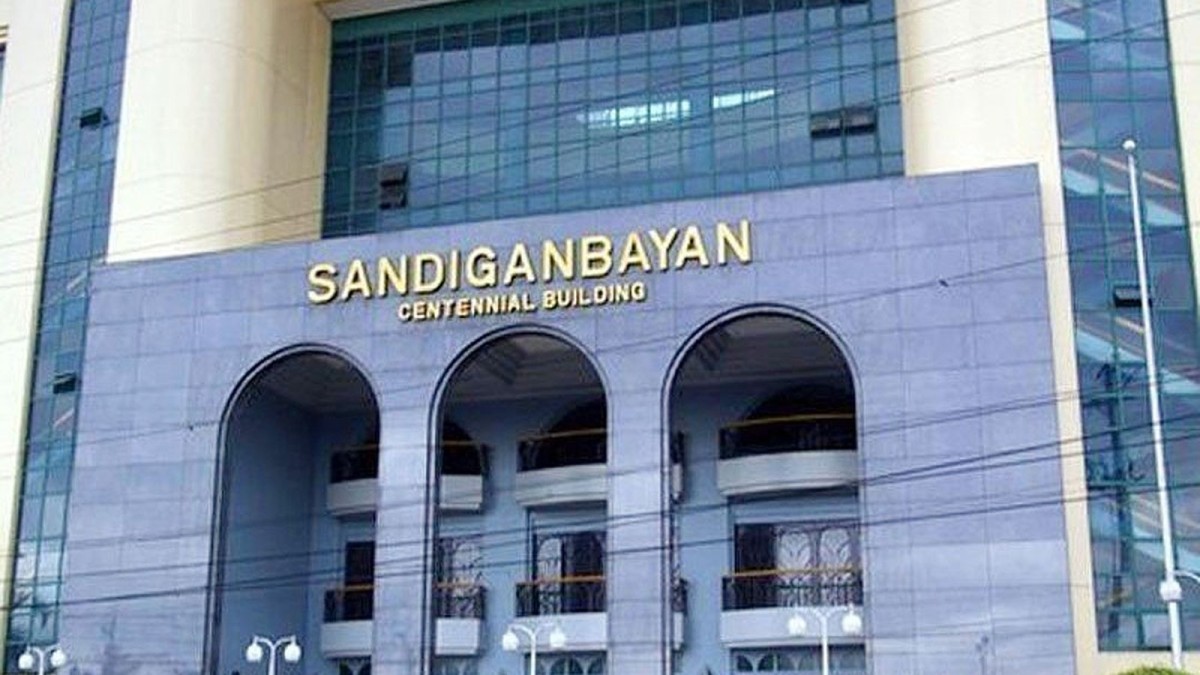
Manila, Philippines — The Supreme Court's First Division has acquitted former First Lady Imelda R. Marcos of seven counts of graft, reversing the Sandiganbayan's November 9, 2018 conviction and wiping out a sentence that had carried a total exposure of up to 77 years in prison. The 50-page decision, penned by Associate Justice Rodil V. Zalameda, was promulgated on June 10, 2026, but was released to the public only this week, on Wednesday, September 9, 2026 — a gap of nearly three months between the signing of the decision and its release to the public.

What the Court Actually Said
The dispositive portion is blunt: "Accused-appellant Imelda R. Marcos is acquitted for the prosecution's failure to prove her guilt beyond reasonable doubt." The ruling covers seven of the ten graft cases filed against her, following the Sandiganbayan's 2018 acquittal on three other graft charges.
The 2018 Sandiganbayan Fifth Division ruling had sentenced Marcos to six years and one month to 11 years' imprisonment for each of the seven counts, plus perpetual disqualification from public office. She was out on bail throughout the appeal, so she never spent a night in jail. She had been charged with graft in December 1991 and surrendered days later — meaning the case ran for roughly 27 years before the 2018 conviction, and another eight years before the acquittal.
The charge was violation of Section 3(h) of Republic Act No. 3019, the Anti-Graft and Corrupt Practices Act, in relation to Article IX, Section 8 of the 1973 Constitution. Prosecutors alleged she held financial or pecuniary interests in, and took part in managing, Swiss foundations used to stash at least USD 200 million abroad. The seven foundations named by the Sandiganbayan were Maler, Trinidad, Rayby, Palmyra, Azio-Verzo-Vibur, Rosalys-Aguamina, and Avertina-Xandy / WintropCharis / ScolariNalamo / Spinus. The alleged period ran roughly from 1978 to 1984, while she served as Metro Manila governor, Minister of Human Settlements, and an interim member of the Batasang Pambansa.
Four Grounds for Acquittal
The Court rested the acquittal on four grounds, each of which deserves scrutiny because each one tells us something about how difficult it is to prosecute grand corruption in the Philippines.
First, four counts — Maler, Trinidad, Rayby, and Palmyra — suffered from a fundamental defect. The informations identified Marcos as an Interim Batasang Pambansa member, but the Sandiganbayan applied the constitutional restriction that applies to Cabinet members. The charges were never amended. In plain terms, the prosecution charged her under one legal theory and convicted her under another.
Second, the Swiss bank documents "were not properly authenticated." No credible witness attested to their genuineness and due execution, and prosecution witnesses lacked personal knowledge of their contents. The testimonial and documentary evidence was held "inadmissible and lacking in probative weight." This is the same evidentiary wall that has frustrated many ill-gotten wealth cases: the paper trail sits in foreign vaults, and Philippine courts demand a level of authentication that foreign records rarely survive.
Third, the prosecution failed to prove the foundations were "businesses" under RA 3019. The Court held that opening bank accounts, transferring funds, and earning interest or investment profits do not by themselves make an entity a commercial enterprise. "Bank depositors lend banks their money in exchange for the payment of interest," the Court said — that does not make depositors business operators. Such activity could simply belong to a passive investor.
Fourth, on the meaning of "business," the Court declared: "Doubts on the coverage of the term 'business' should be resolved against the State and in favor of the accused-appellant." The Court also stressed it is the prosecution's burden to show the foundations were wrongly classified and were in fact businesses under the relevant foreign laws.
Justice Zalameda wrote that the sufficiency of the allegations and the admissibility and probative weight of evidence "could not be set aside by merely invoking public interest and justice." It is a line that will be quoted for years — and criticized for years — because it effectively tells the public that the magnitude of the alleged theft does not lighten the prosecution's burden.
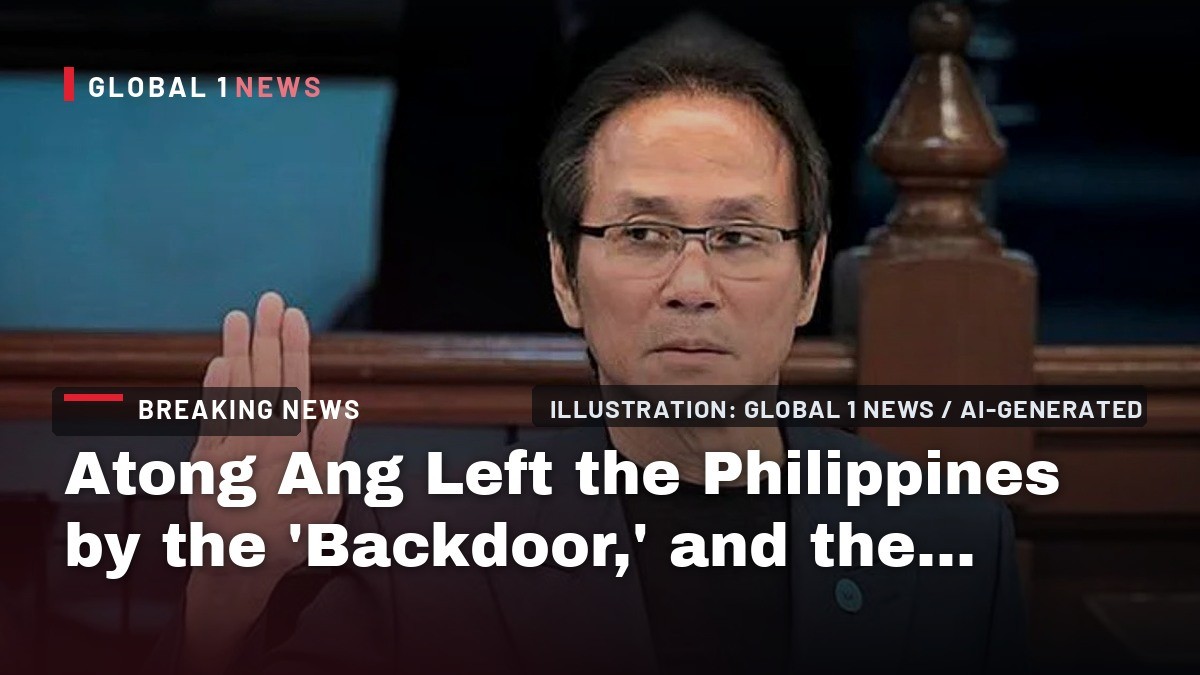
Carranza: 'Binababoy Tayo'
Ruben Carranza, a former PCGG commissioner who served from 2001 to 2004 and is now a senior expert at the International Center for Transitional Justice in New York, told ANC 24/7 that the reversal is "an insult" and that the Court's ruling contradicts its own past rulings. He used the Filipino phrase "Binababoy tayo" — roughly, we are being treated like pigs, we are being trampled on.
Carranza speaks with authority. He was part of the PCGG team that won the 2003 Supreme Court case declaring hundreds of millions of dollars in Marcos Swiss deposits ill-gotten. That same 2003 ruling determined that the combined lawful income of Ferdinand and Imelda Marcos from 1966 to 1985 was only about USD 304,372.43 — anything beyond that was presumed ill-gotten. In other words, the High Court itself once held that the Marcoses could not have legally accumulated what they did. Now, Carranza argues, the same Court has set that history aside in favor of the accused.
His frustration is not abstract. The PCGG had recovered roughly PHP 170 to 174 billion in Marcos ill-gotten wealth by 2018 to 2020, and has been running after a further sum reported at around PHP 125.9 billion in 2021. Every peso not recovered is a peso not spent on classrooms, rural health units, farm-to-market roads, or the barangay-level services that ordinary families depend on.
ATOM: The Court That Did Nothing in 1972
The August Twenty-One Movement, a group formed in honor of Sen. Benigno "Ninoy" Aquino Jr., who was assassinated on August 21, 1983, condemned the decision in language that reached back half a century. "For decades, Filipinos have looked to the Supreme Court as the last refuge where true and absolute justice can be obtained," ATOM said. "This mirrors the same Supreme Court that gave leeway to the dictator 54 years ago, when it did nothing to stop him from shackling this country after martial law was declared."
Martial law was declared in September 1972 — 54 years ago, as ATOM notes. The group has also said that no one from the dictatorship ever spent a day in jail after 1986. That claim is the emotional core of the reaction: not just that Imelda Marcos was acquitted, but that the entire martial law apparatus — the torture, the disappearances, the crony monopolies, the debt — has produced almost no prison time for anyone at the top.
For the families of desaparecidos, for the survivors of torture in Camp Crame and Fort Bonifacio, for the farmers who lost land to crony estates, the ruling is not a legal technicality. It is a verdict on whether the Philippine justice system can ever hold the powerful to account.
The Forfeiture Cases Continue
One crucial point that has been lost in the noise: the ruling does not resolve the separate civil forfeiture proceedings over alleged ill-gotten wealth. Those cases continue. The acquittal is criminal; the forfeiture is civil. The government can still pursue the Marcos estate's assets through the PCGG and the Sandiganbayan, and the 2003 ruling on the Swiss deposits remains on the books.
That distinction matters enormously for the national budget. If the forfeiture cases succeed, the recovered billions go to the national treasury. If they stall, the money stays where it has been for decades — in accounts, foundations, and properties that ordinary Filipinos can only read about.
In 1997, the Swiss Federal Supreme Court ruled there was "little doubt about the criminal provenance of the secret Marcos accounts and securities hidden in Swiss banks" and ordered them returned to the Philippine government. That finding has never been overturned. It sits in the record, a foreign court's judgment that the money was stolen, even as a Philippine court this week says the prosecution failed to prove the crime beyond reasonable doubt.
A Family Still at the Center of Power
Imelda Marcos is now 97 years old. Her son, Ferdinand Marcos Jr., is the sitting president. Her family remains at the center of Philippine politics, and the timing of the ruling's release — three months after it was signed, in the same week that the Sandiganbayan issued a commitment order for former House Speaker Martin Romualdez on a plunder charge — has fed speculation about political timing.
Estimates of the Marcos family's ill-gotten wealth have ranged from about USD 5 billion to USD 10 billion. Against that figure, the PHP 170 to 174 billion recovered by the PCGG is real money, but it is a fraction of what was taken. The gap is the measure of what the country has lost — in hospitals not built, in teachers not hired, in roads not paved.
For the tao on the street, the lesson is familiar and bitter. The Sandiganbayan, the Ombudsman, the PCGG, the Supreme Court — all of them exist. All of them have mandates. But when the accused is a Marcos, the machinery grinds slowly, and the outcome, more often than not, is an acquittal on reasonable doubt.
What Happens Next
The forfeiture cases remain the live question. The ruling leaves the government's civil track intact, and the two technical findings at the heart of the acquittal — the authentication of foreign bank records and the narrow reading of "business" under RA 3019 — are now the battlegrounds for anyone trying to prove ill-gotten wealth in the future.
For students of law, the ruling is a case study in the burden of proof. For students of history, it is another entry in a long ledger. And for the millions of Filipinos who marched on Edsa in 1986 believing that the dictatorship would finally be held to account, it is a hard reminder that bayanihan can topple a regime, but it cannot by itself convict one in court.
The Supreme Court has spoken. The forfeiture cases remain. The country, as always, waits.
By Bella Reyes, Staff Writer
This article was produced with AI-assisted research and editorial support. Reporting is based on sources cited in the article.
What's Your Reaction?
 Like
0
Like
0
 Dislike
0
Dislike
0
 Love
0
Love
0
 Funny
0
Funny
0
 Wow
0
Wow
0
 Sad
0
Sad
0
 Angry
0
Angry
0

Philippines/Southeast Asia Correspondent at Global1.News. Manila-based journalist covering Philippine politics, environment, maritime security, and social issues. Passionate about marine conservation and the communities protecting the Philippines' natural heritage.














Comments (0)