
Rima Das on ‘Village Rockstars 2’ and the state of independent cinema
Rima Das’s latest film, Village Rockstars 2 , arrived in Assam theatres on 6 March 2026 after a circuitous journey that began with its world premiere at the 29 th Busan International Film Festival in October 2024.
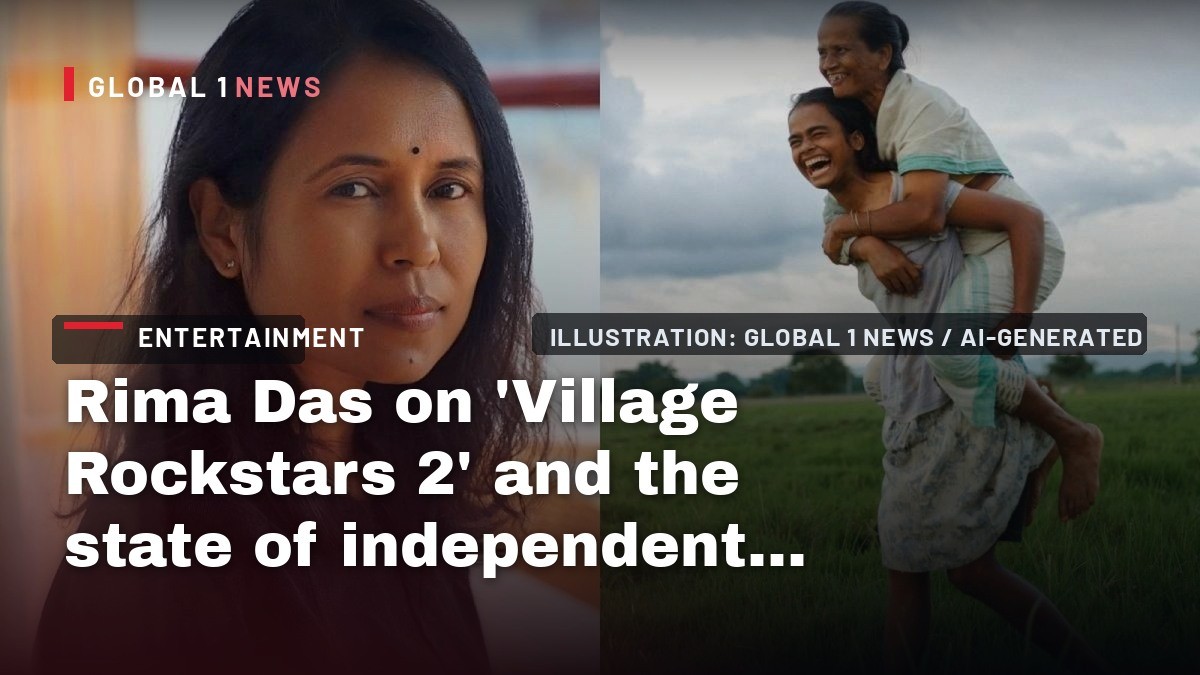
Rima Das’s latest film, Village Rockstars 2, arrived in Assam theatres on 6 March 2026 after a circuitous journey that began with its world premiere at the 29th Busan International Film Festival in October 2024. The sequel to her 2017 coming‑of‑age drama – which was India’s official Oscar entry that year – carries the weight of both artistic ambition and the structural challenges that independent cinema faces in the Northeast. As Das reflects on the delayed release, the broader picture that emerges is one of a vibrant but under‑supported regional film ecosystem, where personal stamina, marketing resources and seasonal monsoons intersect with the aspirations of filmmakers who seek to tell stories rooted in rural life and childhood.
From Festival Screens to Local Theatres: The Release Timeline
After its Busan screening, Das opted to launch the film in Assam on 6 March 2026, a decision she now describes as driven by fatigue rather than strategy. “I was really tired,” she admits, noting that the emotional shock of singer Zubeen Garg’s accidental death in September 2025 had already dampened the state’s cultural mood. The loss of the beloved artist, whom Das calls a “hearthrob,” delayed promotional activities and contributed to a broader sense of grief that affected the film’s rollout.
Having just returned from the Berlin International Film Festival, where her unrelated project Not a Hero premiered, Das felt the timing was right to bring the sequel to local audiences. Yet she concedes that limiting the release to Assam was a missed opportunity. “From next time, I will release it pan‑India,” she says, underscoring a learning curve that many independent creators in the region must navigate: the balance between personal bandwidth and the logistical demands of a wider distribution.
The Marketing Gap in Independent Cinema
Das’s experience underscores a recurring theme for Northeast filmmakers: the necessity of a dedicated marketing budget and a team that can generate buzz without relying on controversy or viral moments. “If you don’t have anything viral or controversial, then it becomes difficult to get the theatrical slot,” she explains, highlighting how theatrical windows are often reserved for films with built‑in audience pull.
The long monsoon season in Assam further compresses the window for theatrical releases, a factor Das identifies as critical for timing. The climate dictates not only when audiences are willing to venture out but also when cinemas can operate at full capacity. Consequently, independent films must align their release strategies with seasonal patterns, a nuance that larger production houses typically manage through sophisticated release calendars.
Creative Choices Shaped by Constraints
Beyond distribution, Das’s artistic decisions illustrate how constraints shape narrative form. While the original Village Rockstars lingered in long, contemplative sequences that let children interact with nature, the sequel adopts a sharper edit and brisker pacing. Das, who also serves as cinematographer and editor, trimmed an early 160‑minute cut to a more concise version, removing scenes that, despite taking several days to shoot, did not serve the final narrative flow.
This ruthless editing reflects a broader reality for low‑budget filmmakers: the need to balance artistic vision with audience engagement. “What also matters is my intention. If I want to make a film about nature, then I don’t think about how many people will watch it,” Das says, emphasizing a philosophy that prioritises authenticity over commercial considerations. Yet she acknowledges that audience expectations sometimes demand tighter storytelling, especially when competing for limited theatrical slots.
Children’s Stories as a Vehicle for Universal Appeal
Das’s focus on children and young adults stems from a perceived scarcity of narratives that centre youthful perspectives. “There’s no lesson in them, I just want them to feel what I felt,” she explains, positioning her work as an emotional conduit rather than didactic cinema. Initially, she believed Village Rockstars would resonate primarily with children, but audience reception revealed a broader, cross‑generational appeal, both domestically and internationally.
This insight aligns with recent successes from the region, such as the film Boong, which secured an honour at the 79th British Academy Film Awards, and Angh, which won the Platform Prize at the Toronto International Film Festival on 15 September 2026. These achievements demonstrate that stories rooted in the Northeast can transcend linguistic and cultural boundaries when they tap into universal themes of childhood, aspiration and connection to nature.
Structural Challenges: Funding, Infrastructure and State Support
Despite artistic triumphs, Das stresses that the Northeast’s film infrastructure remains fragmented. Assam hosts the only relatively established industry in the region, yet even there filmmakers often work for modest incomes and lack certainty about distribution outcomes. In other states, the situation is more acute, with “negligible theatres” and limited avenues for revenue generation.
Funding pathways are opaque, leaving creators to navigate personal networks and ad‑hoc fundraising. Das observes, “I don’t know how everyone is raising funds and taking individual journeys. We need State support to tell these stories from our region.” Her call for systematic assistance points to a policy gap: while central schemes exist for film promotion, regional adaptation and targeted subsidies for the Northeast are limited, leaving filmmakers to shoulder financial risk largely on their own shoulders.
Building a Sustainable Ecosystem for Independent Films
One practical lever Das identifies is the development of children’s film festivals across India. She notes that “six or seven year old kids are watching world‑class films and developing a taste for a different kind of cinema” abroad, yet similar platforms are scarce domestically. Establishing regular festivals could nurture early appreciation for diverse cinematic forms, creating a future audience base for independent works.
Beyond festivals, Das urges a collaborative approach among filmmakers, enthusiasts and authorities. She acknowledges the emotional toll of the current situation but frames change as a collective responsibility: “I often feel upset at the situation but then I also tell myself that it is not my responsibility alone to change things.” This sentiment underscores the need for coordinated policy interventions, capacity‑building programmes, and perhaps a dedicated Northeast film council to streamline funding, distribution and exhibition channels.
Looking Ahead: Lessons from Village Rockstars 2 for Policy Makers
Das’s journey with Village Rockstars 2 offers concrete lessons for Indian cultural policy. First, the timing of releases must account for regional climatic patterns, suggesting that state film bodies could provide seasonal release calendars to optimise theatrical windows. Second, targeted marketing grants could level the playing field for independent films that lack viral hooks, ensuring they secure screen space in multiplexes and single‑screen theatres alike.
Third, investment in infrastructure—such as dedicated screening rooms in district cultural centres and subsidies for travelling exhibition circuits—could mitigate the scarcity of theatres in many Northeast states. Finally, fostering a pipeline of child‑focused festivals would not only cultivate future audiences but also create regular exhibition opportunities for regional filmmakers.
As Das prepares for her next pan‑India release, the hope is that her experience will catalyse a more robust support system for the Northeast’s storytellers. The region’s recent international accolades demonstrate its creative potential; translating that into sustainable domestic growth will require coordinated effort across policy, industry and civil society. Only then can films like Village Rockstars 2 move beyond limited regional runs to become integral parts of India’s national cinematic narrative.
This article was produced with AI-assisted research and editorial support. Reporting is based on the source material cited below. Sources: The Hindu; thehindu.com; Global1.News (29 September 2026).
By Dr. Raj Patel, Staff Writer
What's Your Reaction?
 Like
0
Like
0
 Dislike
0
Dislike
0
 Love
0
Love
0
 Funny
0
Funny
0
 Wow
0
Wow
0
 Sad
0
Sad
0
 Angry
0
Angry
0

India/South Asia Correspondent at Global1.News. Analytical voice with a background in science and health journalism. Based in New Delhi, covering Indian politics, education, healthcare, technology, and policy. Breaks down complex data into clear, actionable reporting.














Comments (0)