
Trump's AI rebrand causes 'unprecedented' demand for Slovenian website names
Donald Trump’s latest linguistic crusade—rebranding artificial intelligence as “super intelligence” (SI)—has sparked an unexpected surge in the tiny European country’s domain market.
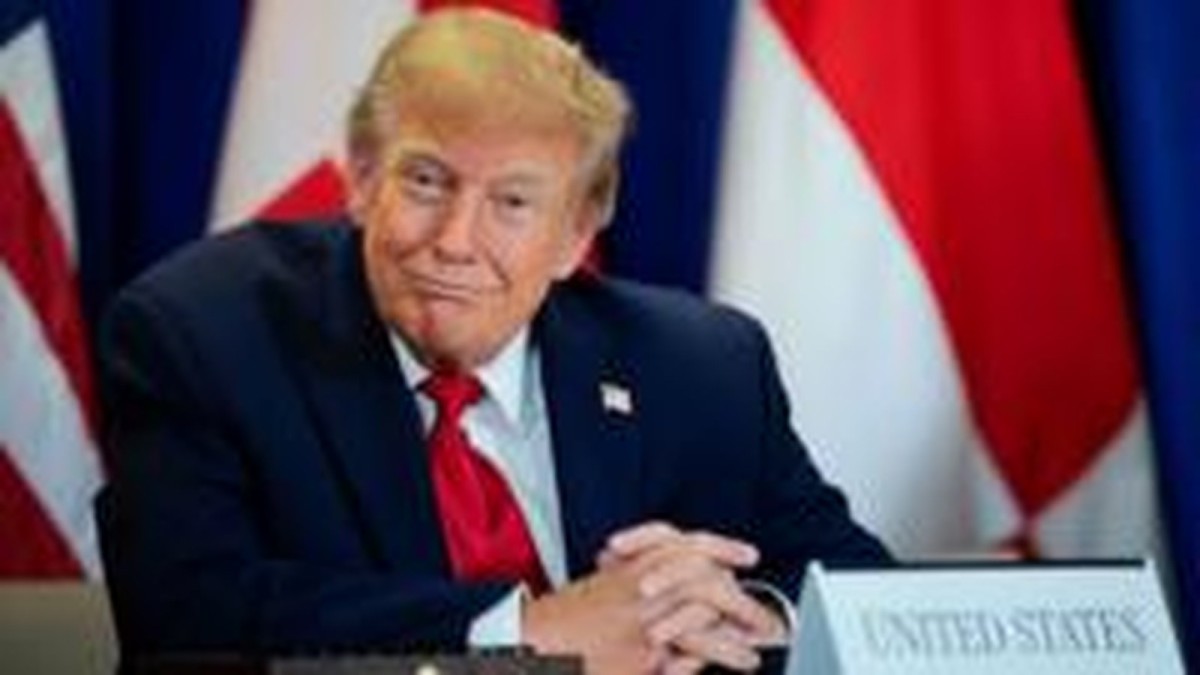
Donald Trump’s latest linguistic crusade—rebranding artificial intelligence as “super intelligence” (SI)—has sparked an unexpected surge in the tiny European country’s domain market. In September alone, Slovenia’s .si registry recorded 44,000 new web addresses, a jump that dwarfs the sub‑2,000 registrations logged in August. The spike, which the registry’s spokeswoman Klara Herman describes as “unprecedented” for the past year, appears tightly linked to Trump’s September 11 United Nations speech, where he argued the word “artificial” sounds “fake” and urged the world to adopt the new moniker.
From the UN Podium to Slovenian Registrars
Trump’s call to rename AI resonated far beyond diplomatic circles. In his UN address, he framed “artificial intelligence” as a misleading label, insisting that “super intelligence” better captures the technology’s promise. The president’s push was cemented the following Tuesday when he convened an “extraordinary gathering” of top tech CEOs and signed an executive order directing U.S. agencies to replace “AI” with “SI” in all official communications. The order’s language—mandating the new term across correspondence, websites, and reports—sent a clear signal that the rebrand was not merely rhetorical but intended to reshape bureaucratic habit.
Within days, the .si domain space lit up. Herman reported that on 30 September alone, 11,000 fresh registrations were logged, a figure that alone accounts for a quarter of the month’s total surge. While Herman cautioned against attributing the entire spike to Trump’s remarks, the timing is hard to ignore. The .si suffix, matching the initials of “super intelligence,” suddenly became a digital shorthand for the president’s agenda, turning a modest European top‑level domain into a global branding battlefield.
Why the .si Domain Became a Hot Commodity
The appeal of .si addresses lies in their linguistic alignment with the new term. As Trump’s order forces U.S. agencies to adopt “SI,” businesses and entrepreneurs worldwide anticipate a cascade of rebranding efforts that could spill into the private sector. Owning a .si domain offers a ready‑made, memorable URL that echoes the official nomenclature, making it an attractive asset for anyone hoping to ride the wave of the president’s linguistic overhaul.
Beyond the symbolic draw, the domain market has a well‑established speculative dimension. Herman noted that the September registrations “stood out very clearly” against the rest of the year, suggesting that many registrants are not merely seeking a convenient web address but are positioning themselves for future resale gains. The practice of buying domains in anticipation of rising demand—often called domain investing—has a storied history, with early pioneers like Rick Schwartz turning modest purchases into multimillion‑dollar payouts. While the article’s earlier reference to “cyber‑squatting” was corrected to emphasize legitimate investment, the underlying logic remains: a surge in demand can inflate domain values, and savvy speculators are quick to capitalize.
The Business Angle: Who Wins and Who Risks Missing Out
For established brands, the sudden influx of .si registrations presents both an opportunity and a dilemma. Companies already using “AI” in their branding may feel pressure to secure a .si counterpart to stay aligned with the new official terminology, especially if they contract with U.S. government agencies that will soon be required to use “SI.” Early adopters could lock in premium names at current market rates, avoiding the premium that may emerge if the trend solidifies.
Conversely, smaller firms and startups may find themselves outbid by larger players or speculative investors who can afford to snap up high‑value keywords. The rapid jump from under 2,000 to 44,000 registrations in a single month suggests a scramble for the most obvious and market‑ready names—think “superintelligence.si” or “si‑tech.si.” Those left on the sidelines risk paying inflated prices later or missing the branding window entirely.
Speculation vs. Legitimate Investment: A Fine Line
The domain surge also revives the debate over speculative registration practices. While the article’s correction distinguishes legitimate domain investing from “cyber‑squatting,” the line can blur when registrants acquire names solely to resell them at a profit, especially if the names are generic or closely tied to a public policy shift. Herman’s cautious tone—acknowledging the unprecedented spike but stopping short of blaming Trump’s speech alone—reflects the registry’s awareness of the ethical nuances.
Historical precedent offers context. In 1997, Rick Schwartz purchased “men.com” for $15,000 and later sold it for $1.32 million, illustrating how a seemingly ordinary name can become a lucrative asset. The example underscores that domain investing is a recognized, if sometimes controversial, business model. As the .si market heats up, registrars and policymakers may need to monitor for abusive practices, but the current data points to a largely market‑driven response rather than coordinated hoarding.
Political Implications of a Linguistic Rebrand
Trump’s push to rename AI is more than a branding exercise; it’s a strategic move to reshape public perception. By framing “artificial” as “fake” and championing “super intelligence,” the administration seeks to recast the technology as inherently positive and forward‑looking. The executive order’s mandate for all federal communications to adopt “SI” embeds the term into the bureaucratic fabric, ensuring that every report, press release, and internal memo reinforces the new language.
This top‑down approach has ripple effects across the tech ecosystem. International partners, contractors, and vendors who do business with U.S. agencies will need to align their own documentation, potentially prompting a cascade of rebranding projects. The surge in .si registrations can be seen as a grassroots manifestation of this policy shift—individuals and firms pre‑emptively aligning with the official terminology to stay in sync with the evolving regulatory environment.
What the Surge Means for Ordinary Internet Users
Beyond the boardrooms and policy memos, the .si boom has tangible implications for everyday netizens. As more .si domains populate the web, users may encounter a growing number of sites that use the suffix as a shorthand for “super intelligence,” potentially creating a new visual cue for AI‑related content. This could aid discoverability—search engines might associate .si addresses with the emerging terminology, nudging users toward content that reflects the administration’s preferred framing.
However, the influx also raises the risk of confusion. With a flood of new domains, some may be low‑quality or even deceptive, leveraging the “SI” branding to appear authoritative. Users will need to exercise the same caution they apply to any new domain space: verify sources, check for reputable ownership, and remain skeptical of overly polished sites that might be speculative holdings waiting for resale.
Looking Ahead: Will the .si Trend Stick?
The durability of the .si surge hinges on the longevity of Trump’s linguistic agenda. If the executive order remains in force and the “super intelligence” label gains traction across government, industry, and media, the demand for .si domains could stabilize at a higher baseline, turning the September spike into the start of a new norm. Conversely, if future administrations roll back the rebrand, the market may contract, leaving many registrants with unused or undervalued assets.
For now, the data points to a clear cause‑and‑effect pattern: a high‑profile speech, an executive order, and a sudden scramble for a matching domain suffix. As the tech world watches the political theater, the .si registry continues to log registrations at a pace that dwarfs the previous month’s totals. Whether this represents a fleeting flash of speculative frenzy or the birth of a lasting digital ecosystem will become clearer in the months ahead, but one thing is certain—Trump’s push to rename AI has already reshaped the internet’s address book in a way that few could have predicted.
This article was produced with AI-assisted research and editorial support. Reporting is based on the source material cited below. Sources: BBC Technology; bbc.co.uk; Global1.News (04 October 2026).
By Nova Chen, Staff Writer
What's Your Reaction?
 Like
0
Like
0
 Dislike
0
Dislike
0
 Love
0
Love
0
 Funny
0
Funny
0
 Wow
0
Wow
0
 Sad
0
Sad
0
 Angry
0
Angry
0

Trend Reporter at Global1.News. Based in San Francisco, tracking the stories crossing from social platforms, forums, and community discussions into mainstream news — tech breakthroughs, cultural shifts, and world events that real people are engaging with right now.













Comments (0)