
A Lab Worker Died of Suspected Plague in Siberia, and the Region Would Not Name the Disease
A 28-year-old laboratory assistant at Siberia's only anti-plague research institute died in the Irkutsk region of a suspected infection officials have not named. Nearly 200 contacts are under observation and a hospital is quarantined.

A 28-year-old laboratory assistant at Siberia's only anti-plague research institute died in a hospital in the Irkutsk region overnight on 1-2 October, and the region's own officials have refused to name the disease that killed her. Media outlets Mash and Baza reported the cause as pneumonic plague, while the head of neighboring Buryatia, Alexei Tsydenov, said publicly that she died of plague before editing his own post to add the word "possibly." At least 197 people who may have had contact with her are under medical observation, and no secondary infection has been confirmed.
A Lab Worker Died of Suspected Plague in Siberia, and the Region Would Not Name the Disease
Irkutsk, Russia — The woman died in the Shelekhov district hospital, roughly 20 kilometers from Irkutsk. The regional government describes the cause only as a "particularly dangerous infection." Rospotrebnadzor, Russia's consumer-safety and public-health watchdog, has not publicly confirmed the diagnosis or a laboratory accident. The case has emptied pharmacy shelves, closed a hospital to new patients, and drawn Russia's chief public-health official onto a plane from Moscow.
What Happened in Shelekhov
The patient was admitted to the Shelekhov district hospital with symptoms of severe pneumonia, placed on a ventilator, and died. The regional independent outlet Lyudi Baikala and the pro-Kremlin broadcaster REN TV named her as Darya Shipilova, 28; some reports give her age as 27. She worked as a laboratory assistant at the Irkutsk Anti-Plague Research Institute of Siberia and the Far East. Two years before her death she graduated with honors, a "red diploma," from a residency at Irkutsk State Medical University in clinical laboratory diagnostics. iz.ru and IRK.ru reported that doctors initially suspected severe COVID and sent her to the hospital's COVID centre. The Shelekhov district hospital was placed under quarantine from 1 October. Its inpatient department, in the former "covidarium" opened in winter 2020, was closed. Several departments suspended admissions and discharges, and laboratories and routine testing paused. The outpatient clinic remained open. Shelekhov district head Maxim Modin confirmed the closure.
A Death the Region Would Not Name
Irkutsk region officials have not named the disease. RIA Novosti reported that a woman died "from an infectious disease, the nature of which is being established." Governor Igor Kobzev told TASS it was premature to name the disease, and he did not mention the death in his public statements. On 2 October the head of Rospotrebnadzor, Anna Popova, flew to Irkutsk and, together with Kobzev, held an emergency meeting of the regional sanitary and anti-epidemic commission. An operational anti-epidemic plan was approved. Kobzev wrote on Telegram that day: "All identified contact persons have been placed under medical observation. As of today, the contacts show no signs of illness, and their laboratory test results are negative." Irkutsk region's own Rospotrebnadzor and Roszdravnadzor have not officially reported plague. The regional authorities say the circumstances of infection are being established.
A Neighboring Governor Said the Word
Alexei Tsydenov, head of the neighboring republic of Buryatia, said on the evening of 2 October, citing Rospotrebnadzor data, that the woman died of plague. He later edited his post to add the word "possibly." Tsydenov also denied any link to his republic: "There are no plague outbreaks in the republic, including in areas bordering Mongolia." He said she had not visited Buryatia. His statement put the word "plague" into official circulation while Irkutsk region's own health authorities stayed silent. Telegram channels Mash and Baza reported the cause as pneumonic plague. That is a media report, not an official confirmation. The gap between Tsydenov's public statement and the silence from Irkutsk has shaped how the episode is being read across Russian media and beyond.
Nearly 200 Contacts Under Observation
At least 197 people who may have had contact with the woman were placed under medical observation. Of those, 189 were hospitalized for observation and preventive treatment: 114 in one facility, 63 in another, and 12 at the anti-plague institute itself. Eight remained outside hospital at the time of reporting. Some accounts say the list was still growing. No secondary infection has been confirmed, and confirmed cases among contacts stand at none. Izvestia reported that some contacts showed symptoms, but that hospitalisation was mainly preventive and that no conclusions about infection had been drawn. Media outlet Mash says only two employees worked in the unit where the victim worked; the second specialist was examined and showed no symptoms. Residents reported seeing people in protective suits, masks and gloves on the streets, and masks were reportedly handed out at kindergartens. Pharmacies in Irkutsk and Shelekhov reportedly sold out of antibiotics.
The Warning That Was Deleted
On the morning of 3 October the administration of the town of Baykalsk in the Irkutsk region published a message on its official Telegram channel asking residents to limit travel to Shelekhov and nearby settlements, citing "unofficial information" about a human plague case. It read: "Dear residents! In connection with unofficial information about the detection in the city of Shelekhov of a fact of human infection with plague, we ask you to limit visits to Shelekhov and settlements adjacent to the city until the circumstances of this threat are clarified." The post was deleted less than two hours later. The federal broadcaster REN TV also deleted five of its own posts about people hospitalized in connection with the infection. Current Time TV reported that local officials were removing such posts. No official has been named as responsible for the deletions.
What Pneumonic Plague Is
Plague is caused by the bacterium Yersinia pestis and is transmitted to humans by rodent fleas; rodents, mainly mice and rats, are the natural reservoir. Pneumonic plague is the form that spreads person-to-person through respiratory droplets and is the fastest-moving and most epidemiologically dangerous form. Plague is one of four WHO-designated "particularly dangerous" quarantine diseases, alongside cholera, smallpox and yellow fever, all highly contagious but treatable if caught early.
Treatment uses antibiotics: streptomycin, gentamicin, tetracyclines such as doxycycline, or chloramphenicol, usually intravenously first.
Untreated bubonic plague kills 40-60 percent of patients; early treatment cuts mortality to 10-15 percent. Untreated pneumonic plague and septicemic plague are far more lethal.
A plague vaccine exists. Russia's national vaccination schedule calls for vaccinating people who work with live cultures of the plague pathogen, and people within a natural plague focus when the situation worsens.
The Institute at the Center of the Story
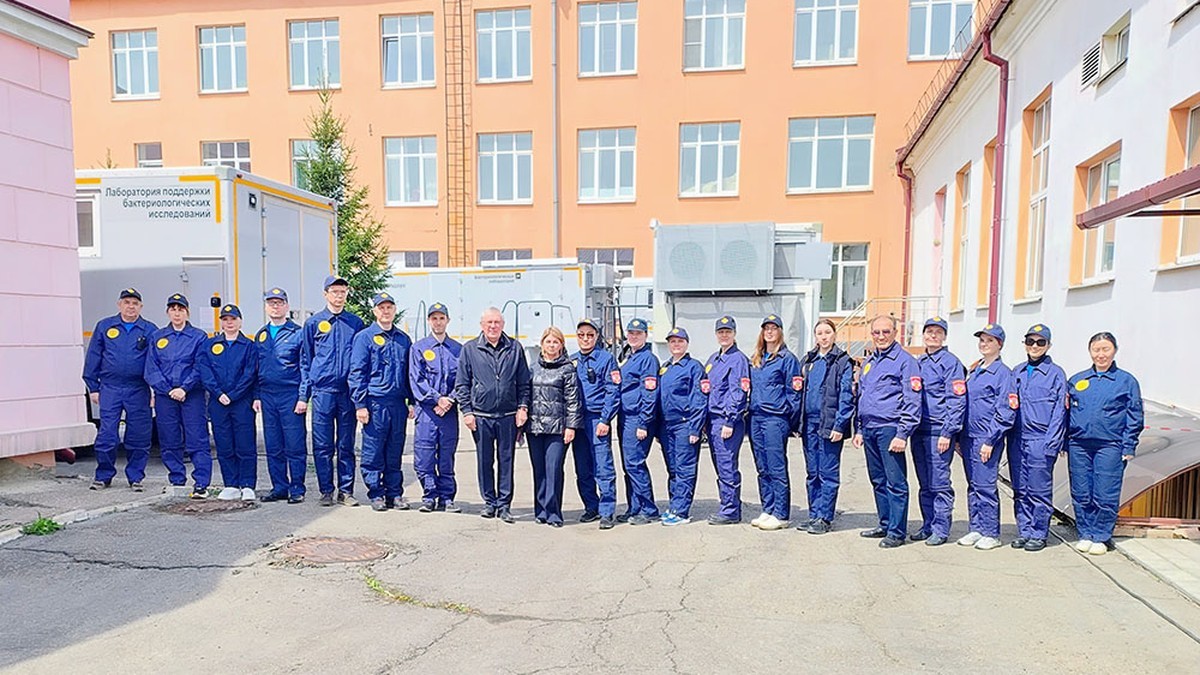
The Irkutsk Anti-Plague Institute was founded in 1934; its predecessor laboratory was set up in 1923 at the Irkutsk chemical-bacteriological institute. It is one of five such institutes nationally and the only one covering Siberia and the Far East. It leads surveillance for plague and for cholera, anthrax and tularemia across the region. It once ran specialized anti-plague trains and expeditions into Tuva, Transbaikalia and Mongolia. The woman who died worked there as a laboratory assistant. Her reported statement to medical staff that she had accidentally broken a test tube containing live bacteria has not been publicly confirmed by investigators. Law enforcement reportedly opened a criminal investigation into possible health and safety violations resulting in a death. No suspect has been identified in that case.
A Disease Siberia Knows Well
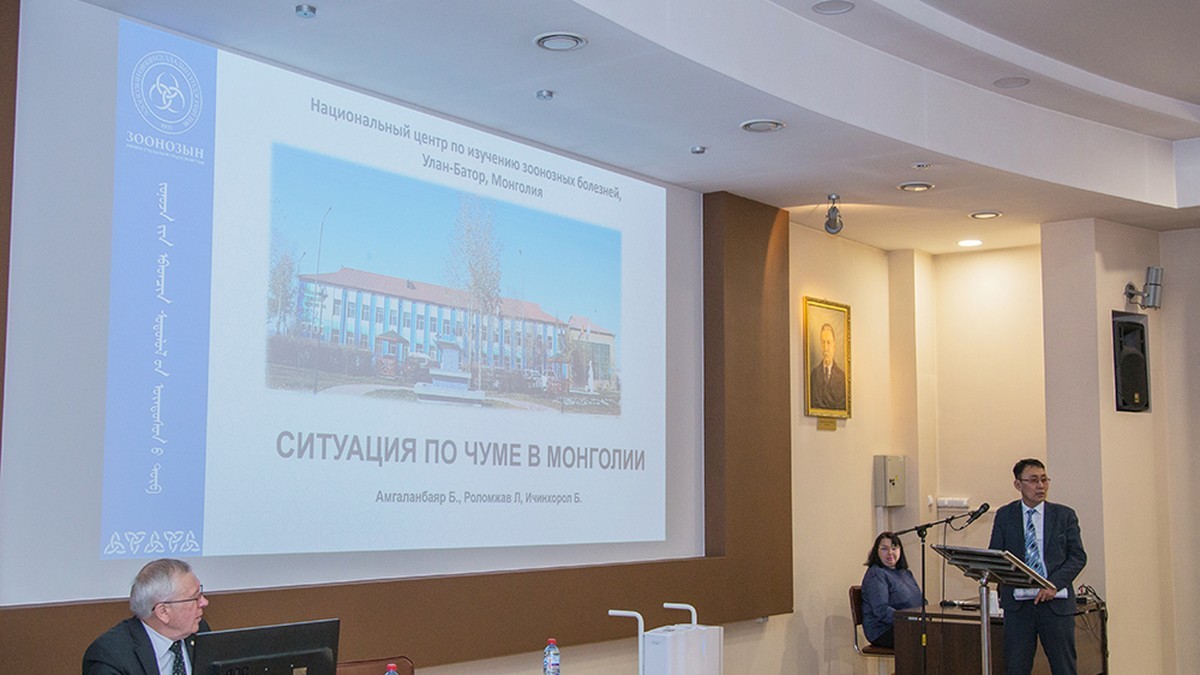
Mass plague outbreaks in Siberia and the Russian Far East occurred in the 1910s-1920s, largely linked to hunting the Mongolian marmot, the tarbagan, which carried the infection. Through strict epidemiological surveillance, mass human outbreaks in the Transbaikal and Siberian foci ended by 1931-1934. The institute's director, Sergei Balakhonov, has said mountain trans-border natural plague foci across southern Siberia and neighboring Mongolia have sharply re-activated since the start of the 21st century, partly touching China. The first human bubonic plague cases recorded in Russia this century were in the Altai Mountains in 2014-2016, contracted while butchering hunted marmots. Russia's most recent recorded plague case before this was in 2016, a 10-year-old child in the Altai Republic. WHO-registered plague worldwide for 2010-2015 totalled 3,248 cases and 584 deaths.
The Explanations That Do Not Agree
Three competing origin claims are in circulation, and none is confirmed. First, a laboratory accident: Lyudi Baikala says she broke a test tube containing live pneumonic-plague pathogen on 25 September, fell ill, and spent three days in the Shelekhov hospital before dying overnight into 2 October. Second, a trip to Buryatia, which Tsydenov denied outright.
Third, some reports said she had returned from Thailand. The timelines also conflict and are not resolved. Lyudi Baikala gives the 25 September break and a death overnight into 2 October. The Moscow Times gives a 29 September admission and a Thursday, 1 October, death.
Academician Gennady Onishchenko, a former chief state sanitary doctor of Russia, publicly said the infection was not plague and suggested it could be a rarer infection. Russian political-insider Telegram channel Nezygar wrote: "The situation in Shelekhov, Irkutsk region, where a plague quarantine has been declared, resembles the Wuhan case." That comparison is Nezygar's, and it is not endorsed here.
What Nobody Has Confirmed
No official authority has confirmed the diagnosis; plague remains suspected. No cause of the laboratory accident has been confirmed. No number of contacts beyond roughly 197 has been confirmed. No FSB role has been confirmed, though Lyudi Baikala and The Insider reported that FSB units began escorting ambulances carrying her contacts to examinations from 1 October. No secondary infections have been confirmed. No death toll beyond the one woman has been confirmed. Plague has not been shown to have spread. No government has admitted fault.
Anna Popova traveled roughly 2,600 miles from Moscow to Irkutsk. Irkutsk postponed a city-wide "subbotnik," a volunteer cleanup day, scheduled for 3 October. Watch for the results of the criminal investigation, any statement from Rospotrebnadzor naming the pathogen, and whether the contact list grows or the observation period closes without a second case.
By Jessica Ali, Staff Writer
This article was produced with AI-assisted research and editorial support. Sources: Lyudi Baikala (People of Baikal), The Moscow Times, Meduza, Current Time TV, IRK.ru, IrSiTi, Novaya Gazeta, Deutsche Welle, REN TV, Izvestia, TASS, RIA Novosti, Metro, Zona Media, Newsweek and TVP World.
What's Your Reaction?
 Like
0
Like
0
 Dislike
0
Dislike
0
 Love
0
Love
0
 Funny
0
Funny
0
 Wow
0
Wow
0
 Sad
0
Sad
0
 Angry
0
Angry
0

Editor-in-Chief at Global1.News. Atlanta-based journalist who cuts through the BS and tells it like it is. Lead anchor, host, and the voice you hear when the spin stops and the truth starts.














Comments (0)