
Bill C-22: Liberals Push Fast-Track Amid Privacy Debate
Liberal Government Urges Swift Conclusion to Bill C-22 Study Canada's public safety minister on Tuesday urged parliamentarians to quickly wrap up their study of the government's controversial lawful access bill, saying it was time to "choose" whether to stand with law enforcement and victims of crime. (Global 1 News) Public Safety Minister Gary Anandasangaree accused Conservati
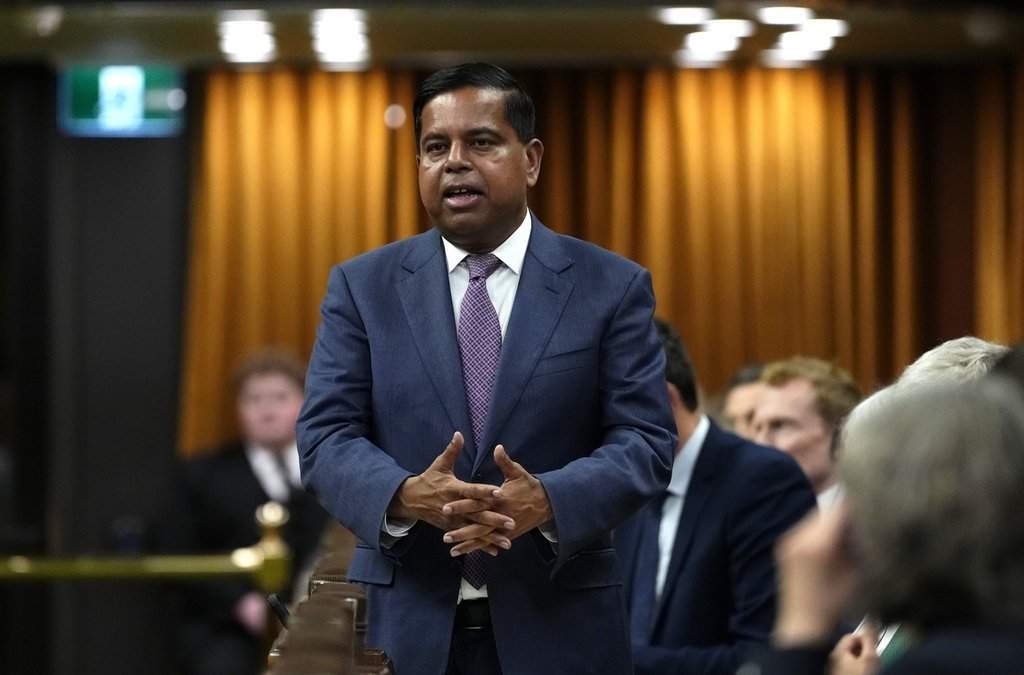
Liberal Government Urges Swift Conclusion to Bill C-22 Study
Canada's public safety minister on Tuesday urged parliamentarians to quickly wrap up their study of the government's controversial lawful access bill, saying it was time to "choose" whether to stand with law enforcement and victims of crime.
(Global 1 News)
Public Safety Minister Gary Anandasangaree accused Conservatives, who have raised several privacy concerns about Bill C-22 along with tech companies and independent privacy experts, of employing "stalling tactics" during debate over amendments to the bill at the House of Commons public safety committee.
The push for speed reflects broader pressures on the Liberal government to demonstrate action on public safety files ahead of the next election cycle. With rising concerns over cybercrime, online exploitation, and national security threats, ministers have framed Bill C-22 as essential modernisation of investigative tools that have not kept pace with encrypted communications and digital evidence. Yet the accelerated timeline has drawn criticism from civil society groups who argue that rushed legislation risks embedding permanent surveillance capabilities without adequate safeguards or public consultation.
Motion to Limit Debate on Remaining Amendments
The Liberal government gave notice Monday that it is prepared to table a motion forcing the committee to conclude its clause-by-clause review of the bill and quickly move to a final reading in the full House of Commons, without considering the dozens of amendments still remaining.
"When Parliament makes law, there's time for debate and there's time for choosing," Anandasangaree told reporters Tuesday in Ottawa. "It's time to choose. It's a time to choose between victims of crime who are demanding that we, as parliamentarians, act to protect them. It's the time to choose because law enforcement needs modern tools to fight modern criminals. Those tools are in Bill C-22."
Observers note that such time-allocation motions have become more frequent in recent minority parliaments, often justified by the need to advance priority legislation before prorogation or dissolution. Critics, however, contend that the approach undermines the committee system's role as a deliberative check on executive power, particularly on bills that touch fundamental rights.
Historical Echoes from Previous Lawful Access Efforts
Anandasangaree's comments echoed those of his Conservative predecessor Vic Toews in 2012 when the Harper government was pushing its own expanded lawful access bill. During debate in the House of Commons that year, Toews said critics "can either stand with us or with the child pornographers."
Michael Geist, a law professor and the Canada Research Chair in internet and e-commerce law at the University of Ottawa, told Global News it was "incredible" to hear the Liberals adopt Toews' language after the party heavily criticized it at the time.
The rhetorical parallel underscores how successive governments have struggled to balance investigative needs against privacy expectations in an era of ubiquitous data collection. The 2012 bill ultimately collapsed under public opposition, prompting the current government to emphasise judicial oversight and narrower definitions in its own proposal.
Expanded Powers Proposed in Bill C-22
The legislation would give police and national security agencies expanded powers to seek subscriber information and other data from telecommunications providers with a judicial warrant for the purposes of an investigation, if they have reason to suspect an individual is involved in a crime.
A section of the bill that has raised considerable alarm would require "core" providers to retain all users' metadata for up to a year and create capacity for investigators to access their systems, so long as doing so wouldn't create a "systemic vulnerability." The public safety minister could then order other tech companies to do the same.
Proponents argue these measures close investigative gaps created by modern messaging platforms that store minimal data by design. Opponents counter that the retention mandate represents a significant departure from Canada's traditional approach to data minimisation and could normalise bulk collection practices previously rejected in parliamentary reviews.
Impact on Canadians' Digital Privacy
The reduction of mandatory metadata retention from one year to six months still leaves ordinary Canadians exposed to extensive state access to their digital footprints. Metadata includes details such as who a person contacts, when and where connections occur, and the volume of data exchanged, revealing patterns of association, movement, and online behaviour without capturing the content of messages themselves.
For everyday users, this means routine activities such as searching for health information, participating in political discussions, or using dating applications could be reconstructed by investigators months later. The practical implication is a chilling effect on free expression, as individuals may self-censor sensitive queries or avoid certain platforms altogether once they understand that their digital trails are being preserved by law.
Privacy advocates emphasise that even anonymised metadata can be re-identified when cross-referenced with other datasets, undermining claims that retention poses minimal risk. Rural and Indigenous communities with limited digital literacy may be disproportionately affected, lacking the tools or awareness to adopt privacy-enhancing technologies.
Warnings from Experts on Encryption and Data Risks
Several companies have warned such orders as defined in the bill would force them to weaken encryption and raise the possibility of data breaches, leading some to warn they may pull their services from Canada.
"This is such an evisceration of both the privacy and security of Canadians — putting not only Canadians at risk, but frankly, putting many of our companies at risk in terms of their willingness to continue to service the Canadian market," Geist said Tuesday.
Security researchers have highlighted that any mandated access capability introduces potential points of failure that sophisticated adversaries could exploit, reversing years of progress toward stronger default encryption standards across the industry.
Tech Industry Response and Market Consequences
Companies including Signal, DuckDuckGo, and ProtonVPN have publicly stated that compliance with the bill's access and retention requirements could force them to exit the Canadian market rather than compromise their security architecture. Such withdrawals would remove privacy-focused options from the choices available to Canadian consumers and businesses.
The departure of these services would harm Canada's digital economy by reducing competition in the privacy and security sector, discouraging foreign investment in Canadian technology infrastructure, and signalling that the country is no longer a reliable jurisdiction for privacy-respecting innovation. Small and medium-sized enterprises that rely on secure communications tools for client trust could face higher costs or operational disruptions.
Industry analysts warn that the cumulative effect could slow the growth of Canada's cybersecurity sector and push talent toward jurisdictions with clearer protections for encryption.
Proposed Amendments and Fast-Track Implications
Anandasangaree has promised to put forward amendments making clear that encryption will be protected and more clearly defining "systemic vulnerability." He has also agreed to shorten the metadata retention period from a year to six months after previously refusing to do so.
However, if the motion to fast-track the bill is passed, those and all other amendments would be considered adopted without giving MPs a chance to scrutinise how they're written or get advice from government, RCMP and CSIS officials guiding the committee's review.
The absence of detailed review raises questions about whether promised protections will be drafted with sufficient precision to prevent unintended consequences or future ministerial overreach.
Committee Progress and Competing Views on Scrutiny
Anandasangaree said just seven amendments have been adopted over 10 hours of clause-by-clause study so far. "One amendment was considered over a three-hour period and, in fact, that amendment was supported by and adopted by the Conservatives. So that to me demonstrates that there is a clear filibuster taking place," he said. "You can call it any other name, but delay and stalling tactics is not what's warranted right now. What is warranted is collaboration and cooperation."
Conservative MP Frank Caputo, a vice-chair of the committee, said his party is not filibustering but merely ensuring the bill receives proper scrutiny. He called the Liberals' attempts to fast-track the bill "shameful" and vowed Conservatives would fight to ensure the process plays out.
The committee's chair, Liberal MP Jean-Yves Duclos, said Tuesday it would take 260 hours — or until the end of 2028 — to consider all the remaining amendments at the current pace.
Parliamentary procedure experts note that the pace of clause-by-clause review varies widely depending on bill complexity and partisan dynamics, with highly technical legislation often requiring extended examination to avoid drafting errors that later require corrective legislation.

(Global 1 News)
What Happens Next
Should the fast-track motion pass the House committee, the bill would proceed to third reading and, if approved, be sent to the Senate for its own review. The Senate's legal and constitutional affairs committee has historically conducted thorough examinations of privacy and security legislation, often inviting extensive expert testimony and proposing substantive amendments.
The timeline for Senate consideration remains uncertain but could extend well into the next parliamentary session, particularly if the upper chamber chooses to hold additional hearings. Politically, the government faces pressure to demonstrate legislative progress before the next election while opposition parties seek to portray the bill as an overreach that requires further safeguards.
Expected Senate Review and Broader Implications
Geist noted that even if the Liberals are successful in getting the bill passed in the House quickly, it would then move to the Senate, where it is expected to be scrutinised all over again. "The law will not take effect at the end of the week," he said. "All they want to do is be able to tick a box to say they got this through, as opposed to getting it right."
Longer-term implications include the precedent set for future lawful access requests and the potential for constitutional challenges once the legislation takes effect. Legal scholars anticipate litigation focusing on whether the retention and access provisions comply with section 8 of the Charter of Rights and Freedoms.
Tags: Bill C-22, Lawful Access Act, Gary Anandasangaree, privacy, House of Commons committee, Michael Geist, metadata retention, encryption, Parliament Hill, Vic Toews
By Alex Thompson, Staff Writer
This article was produced with AI-assisted research and editorial support. Reporting is based on sources cited in the article.
What's Your Reaction?
 Like
0
Like
0
 Dislike
0
Dislike
0
 Love
0
Love
0
 Funny
0
Funny
0
 Wow
0
Wow
0
 Sad
0
Sad
0
 Angry
0
Angry
0

Canada Correspondent at Global1.News. Based in Toronto, covering Canadian politics, energy, trade, and US-Canada relations. Provides the Canadian perspective on North American and global affairs.















Comments (0)