
Ballot Shortage in South Korea's 2026 Local Elections: A Crisis of Democratic Confidence
The June 3, 2026 local elections in South Korea exposed critical vulnerabilities in the country's electoral administration, revealing how logistical oversights can rapidly escalate into constitutional and political crises. The ballot shortages that occurred at dozens of polling stations, concentrated in conservative-leaning districts, tested the resilience of institutions respo
The June 3, 2026 local elections in South Korea exposed critical vulnerabilities in the country's electoral administration, revealing how logistical oversights can rapidly escalate into constitutional and political crises. The ballot shortages that occurred at dozens of polling stations, concentrated in conservative-leaning districts, tested the resilience of institutions responsible for safeguarding one of Asia's most vibrant democracies. This episode underscores the delicate balance between administrative efficiency and public trust in a polity still marked by deep partisan divisions.
Ballot Shortage in South Korea's 2026 Local Elections: A Crisis of Democratic Confidence
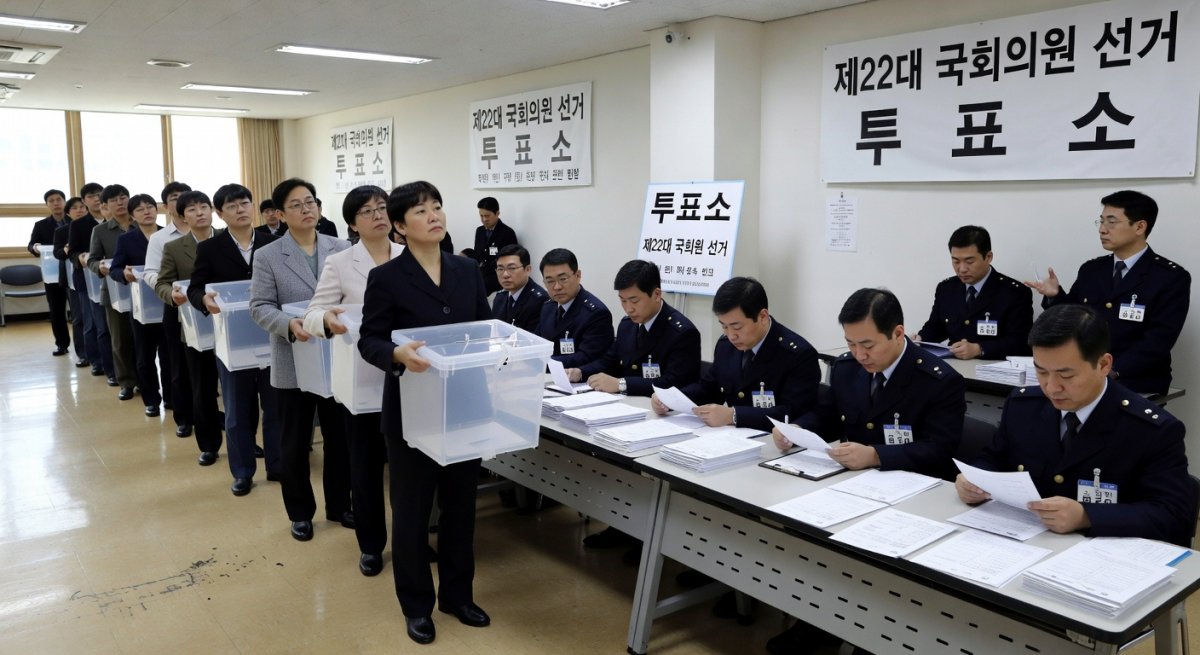
Seoul, South Korea – June 5, 2026 — South Korea's National Election Commission (NEC) faced its most severe institutional crisis in decades after ballot shortages at 14 polling stations in Seoul and 17 nationwide disrupted the June 3 local elections, forcing extended voting hours, triggering protests, and prompting the resignation of the NEC chair. The shortages occurred predominantly in conservative-leaning districts of southern Seoul — Songpa-gu, Gangnam-gu, and Seocho-gu — where some stations received ballots for only half of registered voters.
Background: The June 3 Local Elections and Ballot Administration Failure
South Korea's quadrennial local elections determine mayors, governors, and municipal councilors across the country. In 2026 these contests took place against a backdrop of heightened political polarization following the 2024–2025 impeachment proceedings involving former President Yoon Suk-yeol. The NEC, an independent constitutional body established in 1963, bears statutory responsibility for printing and distributing ballots under the Public Official Election Act.
Preparatory planning for the 2026 vote underestimated turnout in several urban districts. Historical data from the 2022 local elections had shown lower participation in affluent Seoul neighborhoods such as Songpa-gu, Gangnam-gu, and Seocho-gu. Yet actual voter mobilization exceeded projections, producing the documented shortfall reported across affected stations.
The Ballot Shortage: Scope and Immediate Fallout
The NEC later confirmed that certain polling stations in Songpa-gu received ballots sufficient for only half the registered electorate. Voting hours were extended past midnight at affected locations, and provisional ballots were issued where supplies permitted. These measures prevented outright disenfranchisement but delayed result tabulation, particularly for the Seoul mayoral race, where conservative incumbent Oh Se-hoon ultimately defeated liberal challenger Chong Won-o by a margin of 1.15 percentage points — approximately 50,000 votes.
Civic engagement took on a distinctly Korean flavor as celebrities — including BTS member Jin and rapper Lee Youngji — appeared among voters who encountered empty ballot boxes, amplifying media coverage and public awareness. The incident remained geographically limited; rural provinces and most progressive strongholds reported no comparable problems, highlighting the uneven distribution of administrative error.
Political Fallout: NEC Leadership Crisis and Government Response
On June 5, NEC Chair Rho Tae-ak offered his resignation, stating before the public, "There is no room for excuses for an incident that breached people's precious right to vote, which should have never happened." NEC Secretary-General Hun Chul-hoon simultaneously offered to step down. Rho announced that a committee of outside experts would be established to investigate root causes and draft preventative measures for future elections.
President Lee Jae-myung described the episode as "a serious lapse in election management" and "an unacceptable failure," directing relevant ministries to identify accountability mechanisms. Prime Minister Kim Min-seok went further, characterizing the shortage as "a grievous challenge against K-democracy" and ordering consideration of criminal investigation, parliamentary audit, or special counsel proceedings. The Seoul Metropolitan Police Agency opened a direct probe into the incident, while a right-leaning civic group, the People's Welfare Countermeasure Committee, filed a criminal complaint against senior NEC officials for abuse of authority and dereliction of duty.
Protests and Standoff: The Jamsil Crisis
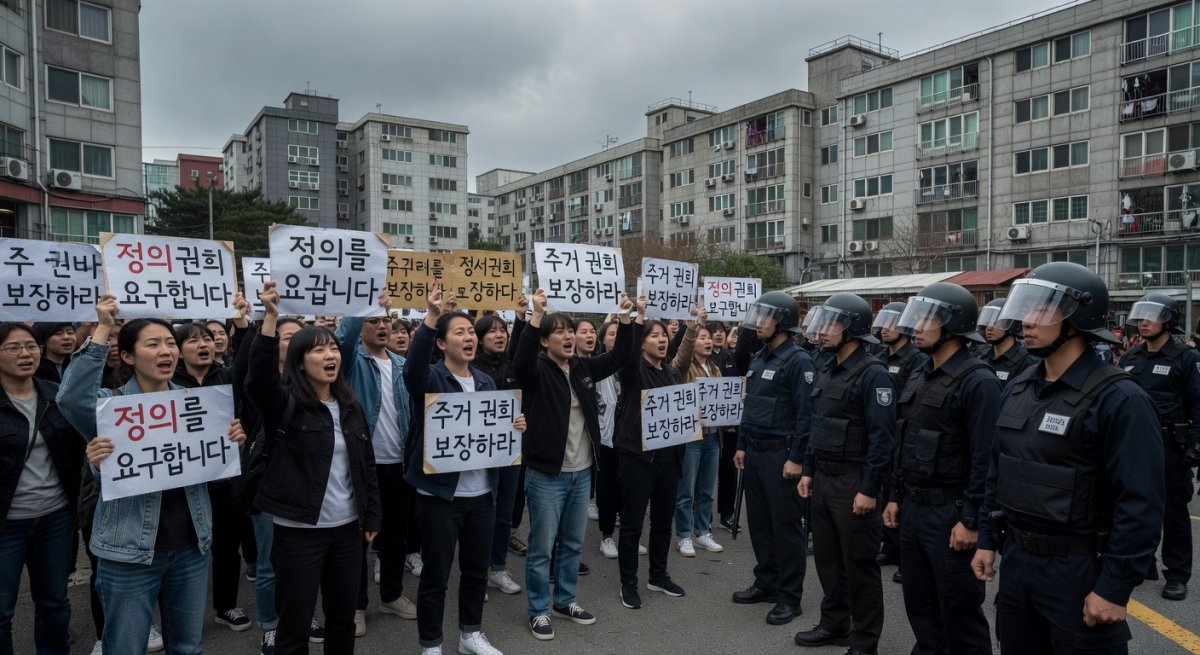
The most acute confrontation unfolded at a Jamsil-dong polling station in Songpa-gu. Protesters — with police estimates reaching 1,400 at peak — blocked access to ballot boxes for approximately 35 hours. Mobile police units were dispatched at around 7:30 a.m. on June 5, forcing entry at 8:51 a.m. to retrieve two ballot boxes containing roughly 2,000 votes for the Seoul mayoral contest. One district official fell ill during the standoff and required hospitalization.
Although unsubstantiated allegations of election rigging circulated among some conservative YouTubers and activists — including far-right figures such as Jeon Han-gil, who claimed "all elections nationwide are void" — the People Power Party ultimately accepted Oh Se-hoon's narrow victory once counting concluded. Lawyer Do Tae-woo, a legal representative for former President Yoon Suk-yeol during his impeachment trial, filed a constitutional complaint against the NEC, accusing it of infringing on citizens' political rights. The standoff also sparked complaints from Jamsil residents about excessive noise and parking disruption, with the station situated within an apartment complex.
Broader Implications for Korean Democratic Institutions
The episode illustrates how localized administrative failures can intersect with Korea's polarized media environment and history of contested electoral legitimacy. The disproportionate impact on conservative districts fueled narratives that resonated with long-standing grievances among right-wing constituencies — echoing patterns seen after the 2025 presidential election, when similar unsubstantiated claims of rigging circulated. Yet the rapid resignation of senior NEC officials and the government's willingness to entertain external oversight also demonstrated institutional self-correction mechanisms that distinguish South Korea from less consolidated democracies in the region.
The incident also highlighted Korea's reliance on an election management system designed in an era of lower turnout and less partisan scrutiny, raising questions about whether the NEC's institutional capacity has kept pace with the country's democratic maturation.
Comparative and Historical Context
South Korea is not alone in experiencing election-day administrative failures. Comparative cases from other democracies — including ballot shortages in certain U.S. precincts during the 2020 primaries and United Kingdom polling station closures in 2019 — suggest that even well-established electoral systems can experience logistical breakdowns under unexpected turnout surges. However, the speed with which the incident became politicized in Korea reflects the country's particular post-2024 political dynamics, where questions of electoral integrity have become a central axis of partisan conflict.
Looking Ahead
Future electoral reforms will likely focus on real-time ballot inventory systems, revised turnout forecasting models, and clearer protocols for extending polling hours, as well as potential legislative action regarding the NEC's accountability framework. The outgoing NEC chair has pledged full cooperation with all investigative procedures, including a potential parliamentary probe. Whether these adjustments restore full public confidence will depend on transparent implementation and the avoidance of further politicization in the run-up to the 2028 presidential contest. For South Korea's democracy, the June 3 ballot shortage represents not merely an administrative failure but a stress test of the institutions upon which the country's regional leadership in democratic governance depends.
By Prof. David Park, Staff Writer
This article was produced with AI-assisted research and editorial support. Reporting is based on sources cited in the article.
What's Your Reaction?
 Like
0
Like
0
 Dislike
0
Dislike
0
 Love
0
Love
0
 Funny
0
Funny
0
 Wow
0
Wow
0
 Sad
0
Sad
0
 Angry
0
Angry
0

East Asia/Technology Correspondent at Global1.News. Seoul-based voice covering Korean politics, technology, business, and culture. Analyzes how technology and geopolitics intersect across East Asia.













Comments (0)