
Japanese Firms Capitalize on Earth Observation in Growing Space Industry
The space industry continues its transition from primarily government-directed programs to initiatives increasingly shaped by private enterprise. Japanese companies are positioning themselves to capture value in Earth observation, a segment where demand for reliable, high-resolution data is expanding across the Asia-Pacific region. Japanese Firms Capitalize on Earth Observation
The space industry continues its transition from primarily government-directed programs to initiatives increasingly shaped by private enterprise. Japanese companies are positioning themselves to capture value in Earth observation, a segment where demand for reliable, high-resolution data is expanding across the Asia-Pacific region.
Japanese Firms Capitalize on Earth Observation in Growing Space Industry
Tokyo, Japan – June 6, 2026 — The space industry continues its transition from primarily government-directed programs to initiatives increasingly shaped by private enterprise. Japanese companies are positioning themselves to capture value in Earth observation, a segment where demand for reliable, high-resolution data is expanding across the Asia-Pacific region.
The Transition from Government to Private Space Initiatives
Japan's space activities have long centered on the Japan Aerospace Exploration Agency (JAXA) under the Ministry of Education, Culture, Sports, Science and Technology (MEXT). Recent years have seen a deliberate broadening of participation. The Cabinet Office's Space Policy Committee periodically updates the Basic Plan on Space Policy, which now explicitly encourages commercial actors to develop services that complement or extend public capabilities.
This policy evolution aligns with global patterns documented by the Space Foundation, which placed the space economy at approximately $570 billion in 2024. Private capital is funding satellite constellations and data services that governments alone cannot scale at the same pace. Japanese firms are responding by building business models around recurring revenue from data sales rather than one-off hardware contracts.
The shift does not diminish JAXA's role; instead, it creates new interfaces between public research infrastructure and commercial operators. Technology demonstration missions previously conducted solely by the agency now serve as proving grounds for later private missions.
Earth Observation as a Strategic Focus for Japan
Earth observation occupies a central position in Japan's space strategy because of the country's exposure to natural disasters. Synthetic aperture radar (SAR) systems, which operate independently of daylight and cloud cover, offer particular value for typhoon monitoring and rapid damage assessment after earthquakes or heavy rainfall events.
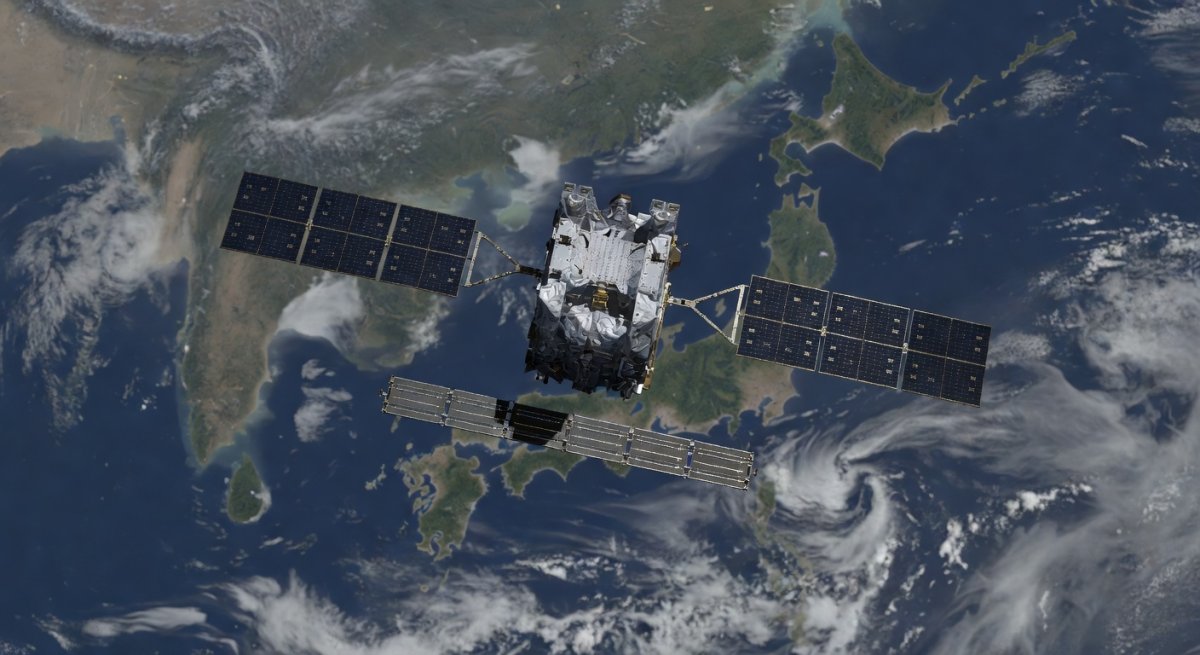
Earlier JAXA programs such as the Advanced Land Observing Satellite (ALOS) series established domestic expertise in SAR. Commercial successors are now extending observation frequency and reducing revisit times, directly addressing operational needs of disaster-management agencies and infrastructure operators.
Beyond disaster response, Earth observation data supports agricultural yield forecasting, port infrastructure monitoring, and coastal erosion studies. These applications create diversified revenue streams for operators while contributing to national resilience objectives.
Leading Japanese Companies Driving Innovation
Synspective has emerged as a prominent domestic player developing small SAR satellites for commercial customers. The company's focus on frequent imaging cycles targets users who require near-real-time information rather than archival datasets.
Astroscale concentrates on on-orbit servicing and debris removal, a capability that supports the long-term sustainability of Earth observation constellations. Its missions demonstrate technologies that could become mandatory for future licensing regimes in congested orbital regimes.
ispace pursues lunar exploration but also contributes to broader ecosystem development through component supply and mission operations experience. The presence of multiple specialized firms reduces single-point dependencies and fosters a more resilient supply chain within Japan.
Advantages of Synthetic Aperture Radar Technology
SAR sensors transmit their own microwave signals and record reflections, enabling observation regardless of weather or time of day. This characteristic is especially relevant for Japan and neighboring countries frequently affected by tropical cyclones and monsoons.
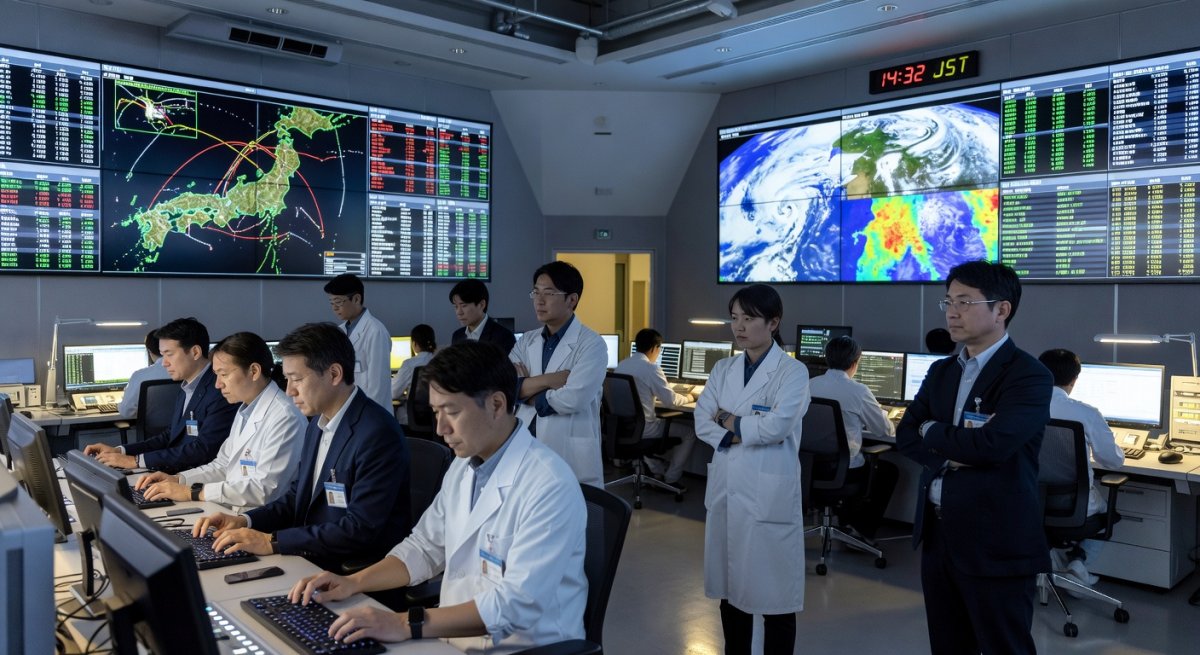
Current commercial SAR satellites achieve resolutions suitable for both wide-area surveillance and detailed infrastructure inspection. Data products can be processed into change-detection maps that highlight new construction, flooding extent, or ground deformation with millimeter-level precision when interferometric techniques are applied.
Japanese engineers continue to refine antenna miniaturization and onboard processing, lowering satellite mass and power requirements. These improvements directly affect launch costs and constellation economics.
Policy Support and Economic Security Implications
Space has been designated a priority sector under Japan's economic security strategy. METI coordinates industrial policy measures that include funding for technology development and support for international standardization activities. The Basic Plan on Space Policy provides the overarching framework that links these industrial measures to national security and diplomatic objectives.
Japan's endorsement of the Artemis Accords further signals alignment with like-minded partners on responsible space operations. Participation in such frameworks helps Japanese firms access collaborative opportunities while maintaining technology safeguards.
Policy instruments are being phased in gradually, allowing industry time to adjust business plans. Early-stage support focuses on demonstration missions and data validation rather than immediate large-scale procurement commitments.
Global Competition and Asia-Pacific Opportunities
Established international providers such as Maxar, Planet Labs, Airbus, and ICEYE already offer Earth observation services at varying resolutions and cadences. Japanese entrants differentiate through SAR specialization and regional geographic focus.
Asia-Pacific demand is rising as governments and commercial entities seek independent data sources for resource management and disaster preparedness. Proximity to customers allows Japanese operators to offer shorter delivery times and localized processing options.
Competition remains intense on price and revisit frequency. Success for Japanese firms will depend on sustained investment in satellite reliability and the development of value-added analytics that convert raw imagery into decision-ready intelligence.
By Kenji Tanaka, Staff Writer
This article was produced with AI-assisted research and editorial support. Reporting is based on sources cited in the article.
What's Your Reaction?
 Like
0
Like
0
 Dislike
0
Dislike
0
 Love
0
Love
0
 Funny
0
Funny
0
 Wow
0
Wow
0
 Sad
0
Sad
0
 Angry
0
Angry
0

Japan Correspondent at Global1.News. Tokyo-based voice covering Japanese politics, technology, economy, and culture. Tracks the intersection of tradition and innovation in one of the world's most dynamic societies.















Comments (0)