
Avatar: Fire and Ash — Zoe Saldaña on Trust, Loss, and Family in Cameron's Epic
In recent weeks, the africanews YouTube channel released an exclusive interview with Zoe Saldaña that has sparked conversations across Dakar, Lagos, and Nairobi about how James Cameron's Avatar: Fire and Ash weaves universal themes of trust, loss, and family fracture into its $400 million spectacle. The third film in the franchise, which hit theaters on December 19, 2025, and i
In recent weeks, the africanews YouTube channel released an exclusive interview with Zoe Saldaña that has sparked conversations across Dakar, Lagos, and Nairobi about how James Cameron's Avatar: Fire and Ash weaves universal themes of trust, loss, and family fracture into its $400 million spectacle. The third film in the franchise, which hit theaters on December 19, 2025, and is now available on physical media with a Disney+ streaming debut set for June 24, 2026, follows the Sully family as they confront grief over the death of their son Neteyam while facing a new volcanic threat from the Ash People clan. For audiences across Africa, Saldaña's words have opened a deeper conversation about how the biggest blockbuster on earth tells a story that feels intimately familiar.
Avatar: Fire and Ash — Zoe Saldaña on Trust, Loss, and Family Fracture in James Cameron's Latest Epic
Dakar, Senegal — Zoe Saldaña's candid reflections in her africanews interview have resonated deeply with Senegalese viewers who see echoes of their own family bonds tested by migration, loss, and resilience. The film places the Sully family at its center, with Sam Worthington reprising Jake Sully and Saldaña returning as Neytiri, as they navigate whether grief will pull them apart or bind them tighter amid ash storms and lava flows on Pandora. The interview, conducted during the film's promotional tour, has been shared widely on African social media platforms with viewers praising Saldaña's honesty about the emotional demands of the role.
A Story of Grief and Survival
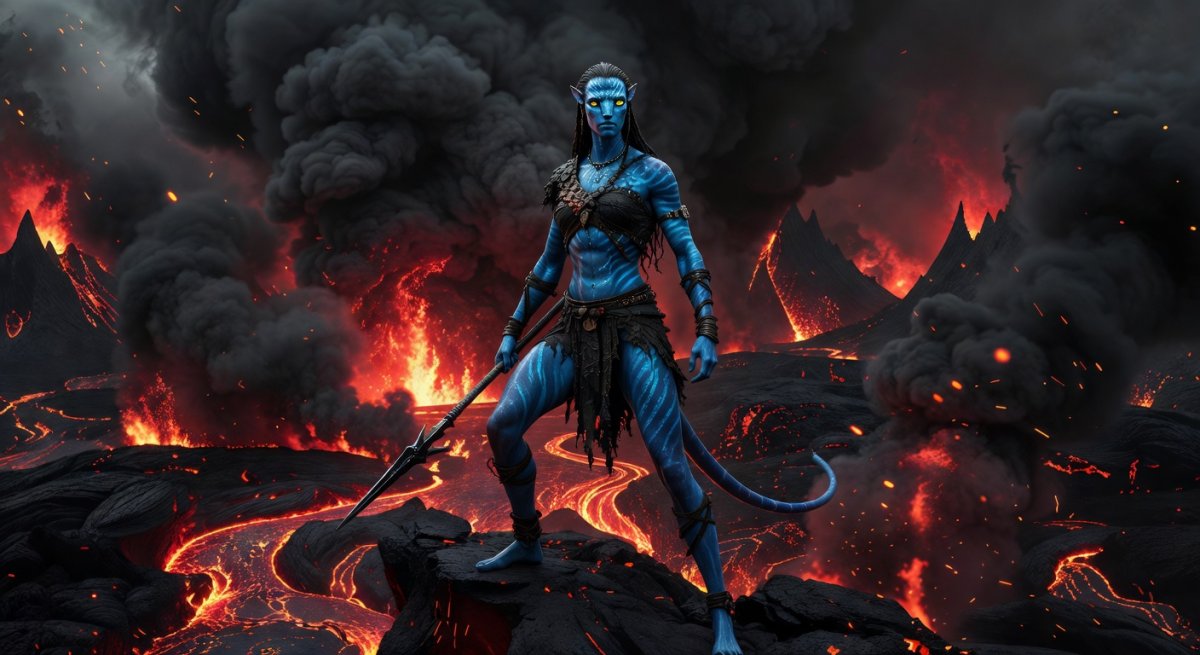
Avatar: Fire and Ash opens with the Sully family still mourning the loss of Neteyam, whose death in The Way of Water leaves lasting fractures across the household. Jake Sully and Neytiri must decide how to protect their remaining children — Kiri, Lo'ak, and Tuk — while a new Na'vi clan, the Ash People (Mangkwan), emerges from volcanic regions with their own strict codes of loyalty. The story unfolds across high-stakes battles where ash storms reduce visibility and lava flows force the family to adapt quickly or perish, creating some of the most visually stunning sequences in modern cinema.
James Cameron centers these family dynamics within the epic science-fiction framework, showing how each member processes grief differently. Sigourney Weaver returns in an expanded role that connects past and present generations through new scientific discoveries about Pandora's ecology, while the narrative asks whether shared loss strengthens the Sully unit or exposes hidden rifts among parents and children alike. The volcanic setting adds constant tension, with environments that test both physical survival and emotional trust among the characters, forcing Jake Sully to question his leadership and Neytiri to confront her instinct for vengeance.
Key sequences show the Sully children each responding to trauma in different ways. Lo'ak seeks validation through risky behavior, Kiri retreats into her spiritual connection with Pandora, and Tuk clings to her parents with an intensity born from fear. These character beats give the action sequences emotional weight, ensuring that every battle carries consequences that ripple through the family structure.
Zoe Saldaña's Most Challenging Performance
In her africanews interview, Zoe Saldaña described Avatar: Fire and Ash as her most challenging performance to date, noting that she filmed many emotional scenes while becoming a mother herself. The actress, who gave birth to twins in 2014 and has spoken openly about balancing career with parenthood, highlighted how the themes of trust and family fracture felt deeply personal as Neytiri confronts the possibility that grief could drive her family apart rather than unite them. Saldaña praised Cameron's decision to let female characters outnumber males in key storylines, giving Neytiri, her daughters, and the new character Varang more space to lead the narrative forward.
Saldaña also singled out Oona Chaplin's portrayal of Varang, the leader of the Ash People, calling it a standout performance that brings fierce complexity to what could have been a one-dimensional antagonist. The interview explored whether the Sully family stays united through their trials or fractures under pressure, with Saldaña emphasizing Cameron's focus on these intimate questions amid the large-scale action set pieces. Her reflections have prompted Senegalese mothers and daughters to discuss similar pressures within their own households, where the weight of keeping a family together during difficult times is a familiar struggle.
Saldaña's performance required months of physical training alongside emotionally grueling scenes. She worked with movement coaches to embody Neytiri's grief-stricken physicality while also learning new combat choreography involving the volcanic terrain. The actress told africanews that the role pushed her beyond anything she had done before, requiring a level of vulnerability that she had not previously brought to the character.
The Ash People — Pandora's New Threat
The Ash People represent a Na'vi clan fully adapted to volcanic environments, with Oona Chaplin's Varang leading them as a formidable antagonist who challenges the Sully family's values at every turn. Their society thrives amid lava flows, ash storms, and scorched terrain, creating visually intense sequences where battles take place on shifting ground that can swallow warriors without warning. Varang's leadership style introduces new questions about loyalty and survival, contrasting sharply with the forest-dwelling Na'vi traditions of the Omaticaya clan seen in earlier films.
These fire-adapted Na'vi bring fresh cultural elements to Pandora, including rituals tied to volcanic cycles, ceremonial scarring practices, and strict communal rules that test the Sullys' more flexible approach to family and alliance-building. The high-stakes confrontations force Jake and Neytiri to weigh their protective instincts against the need for broader alliances with other Na'vi clans who have their own histories with the Ash People. Cameron uses the introduction of Varang's people to expand the world of Pandora while keeping the emotional core fixed on how loss reshapes relationships across generations.
The Ash People's volcanic homeland introduces entirely new bioluminescent ecosystems, with creatures adapted to extreme heat that have never been seen in the previous Avatar films. These environments required the visual effects team to invent new rendering techniques for heat distortion, ash particle physics, and lava light sources, pushing technological boundaries much as the first Avatar film did with its forest environments.
Avatar's Impact on African Audiences
Across the continent, Avatar: Fire and Ash has ignited discussions at film festivals from the Zanzibar International Film Festival to FESPACO screenings in Ouagadougou, where African creators see parallels between the Sully family's struggles and their own stories of migration, displacement, and resilience. In Senegal, young filmmakers at the Dakar Film Festival have cited the movie's blend of spectacle and family drama as direct inspiration for local science-fiction projects that merge Wolof oral traditions with futuristic settings, proving that African cinema can participate in global genre storytelling without losing its cultural identity.
Nollywood directors in Lagos have begun developing their own high-budget sci-fi features that explore grief and community bonds, drawing directly from the themes Saldaña discussed in her africanews interview. The film's emphasis on female leadership, with Neytiri and Varang driving major plot decisions, resonates with Senegalese audiences familiar with the strong matriarchal figures that anchor families in West African society. These conversations have strengthened ties between African creative communities and Hollywood's biggest franchises, encouraging more cross-cultural storytelling that reflects the continent's growing influence on global popular culture.
The film's box office performance in African markets has been particularly notable. In South Africa, Nigeria, and Kenya, Avatar: Fire and Ash ranked among the highest-grossing films of 2025, with sold-out screenings in Lagos, Nairobi, Johannesburg, and Accra. This commercial success has caught the attention of international distributors who are now paying closer attention to African audience preferences, potentially opening doors for more African-centered science fiction projects.
Behind the Billion-Dollar Sequel
Produced on a budget of roughly $400 million, Avatar: Fire and Ash has already surpassed $1 billion at the global box office through its theatrical run, demonstrating the enduring appeal of Cameron's vision of Pandora. The production combined cutting-edge motion-capture technology with practical volcanic sets that allowed actors to perform in physically demanding environments, with temperatures on set sometimes reaching extreme levels to simulate the Ash People's homeland. Saldaña's performance captured both intimate family moments and large-scale action, contributing to the film's strong word-of-mouth among African diaspora communities worldwide.
James Cameron's decision to place family dynamics at the heart of the epic sci-fi narrative helped the sequel connect across cultures, from Dakar cinemas to Nairobi multiplexes to Johannesburg IMAX screens. The technical achievements in rendering ash storms, lava flows, and heat shimmer have set new benchmarks that African visual-effects artists are now studying for their own productions. This commercial success has opened doors for increased investment in African-led genre films that tackle similar emotional themes with local cultural depth, particularly in Nigeria's rapidly expanding film industry.
Physical media extras include over two hours of behind-the-scenes documentaries showing how the underwater performance capture technology developed for The Way of Water was adapted for volcanic environments. These materials have proven popular with film students at universities in Dakar, Accra, and Johannesburg who study how large-scale productions coordinate special effects, sound design, and performance across international teams.
What's Next for Pandora
Following its theatrical success, Avatar: Fire and Ash arrived on physical media in 4K UHD, Blu-ray, and DVD formats on May 19, 2026, allowing Senegalese households to revisit the Sully family's journey in the highest possible quality at home. The film then streams exclusively on Disney+ beginning June 24, 2026, giving wider access to audiences in smaller cities across Africa who may have missed the initial cinema release due to limited theater availability. The streaming debut is expected to introduce the film to millions of new viewers across the continent.
Future Avatar installments — Avatar 4 and Avatar 5 — are already in advanced development, with Cameron confirming continued focus on family bonds and new Na'vi clans that will further expand Pandora's cultural landscape. Reports indicate that Avatar 4 has already completed principal photography, with post-production underway for a planned 2029 release. African filmmakers are watching these developments closely, hoping these sequels will continue to highlight diverse perspectives and inspire local productions that blend global spectacle with Senegalese and broader African storytelling traditions. The ongoing saga promises more opportunities for cross-continental dialogue about loss, trust, and the strength of family ties that transcend species and worlds.
The themes explored in Zoe Saldaña's africanews interview continue to echo in creative circles from Dakar to Lagos, reminding viewers that even the grandest science-fiction epics can reflect the intimate struggles that define our shared humanity. As one Senegalese film blogger wrote after watching the interview, "The Na'vi cry just like us, and their grief teaches us something about our own."
By Amara Diop, Staff Writer
This article was produced with AI-assisted research and editorial support. Reporting is based on sources cited in the article.
What's Your Reaction?
 Like
0
Like
0
 Dislike
0
Dislike
0
 Love
0
Love
0
 Funny
0
Funny
0
 Wow
0
Wow
0
 Sad
0
Sad
0
 Angry
0
Angry
0

West Africa/Sahel Correspondent at Global1.News. Dakar-based journalist covering politics, security, climate, and development across Francophone and Anglophone West Africa. Tells the stories of a region undergoing profound transformation.












Comments (0)