
Japan Diet Leaders Adopt Draft Proposal for Imperial Succession Reform
Consensus Emerges Among Diet Leadership on Succession Stability The leaders and vice leaders of both chambers of the Diet adopted a draft proposal on June 5, 2026, aimed at securing a sufficient number of Imperial Family members for stable Imperial succession. This development, reported by Jiji Press, marks a significant step toward legislative consensus on revising the Imperia
Consensus Emerges Among Diet Leadership on Succession Stability
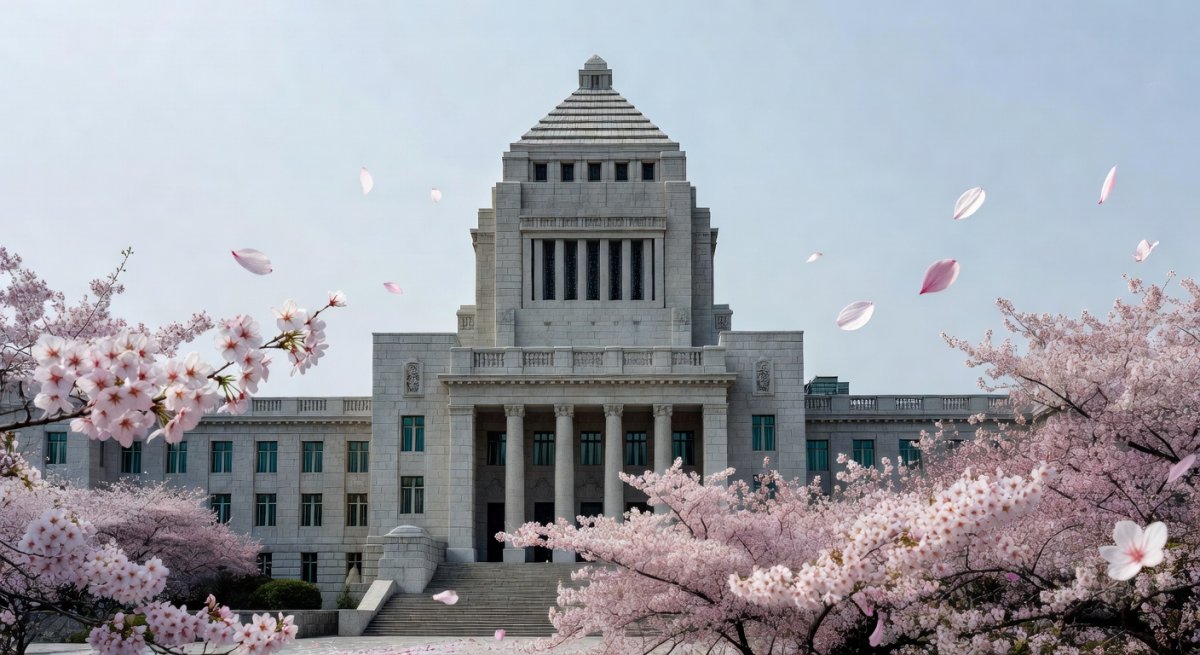
The leaders and vice leaders of both chambers of the Diet adopted a draft proposal on June 5, 2026, aimed at securing a sufficient number of Imperial Family members for stable Imperial succession. This development, reported by Jiji Press, marks a significant step toward legislative consensus on revising the Imperial House Law. The draft was shown to political parties the same day and is scheduled for official presentation at a general meeting of 13 parties and parliamentary groups on June 8. Lower House Speaker Eisuke Mori has expressed the goal of realizing revisions during the current Diet session ending in July, contingent on forming broad legislative consensus at an expected gathering the following week.
Core Provisions of the Draft and Mechanisms for Female Imperial Status
The draft calls on the government to design a new system allowing female members of the Imperial Family to maintain their Imperial status after marriage. It also proposes enabling the Imperial Family to adopt male heirs in the male line from former Imperial Family branches. According to the Asahi Shimbun, the draft was initially presented by Lower House Speaker Eisuke Mori on May 27 during a meeting that included Vice Speaker Keiichi Ishii, Upper House President Masakazu Sekiguchi, and Vice President Tetsuro Fukuyama. The four leaders are expected to reconvene early the following week, with the possibility of revisions if conflicting views surface. These provisions directly address the 1947 Imperial House Law, which currently restricts succession to males of the paternal line and requires female members who marry commoners to lose their imperial status.
Verification of Key Figures and the Narrow Line of Succession
Current succession stands with Emperor Naruhito, aged 66, followed by Crown Prince Fumihito, aged 60, Prince Hisahito, born September 6, 2006 and now 19 (turning 20 in September 2026), and Prince Hitachi, born November 28, 1935 and now 90. Prince Hisahito remains the sole young male heir. Without legislative change, continuity rests heavily on this single individual. The draft explicitly seeks to mitigate this vulnerability by expanding the pool of potential heirs through adoption from former branches and retention of status by female members. These demographic realities underscore the urgency cited in the Jiji Press reporting.
Postwar Restructuring and the 1947 Imperial House Law
The Imperial Family underwent major restructuring after World War II. In 1947, 11 collateral branches lost imperial status, shrinking the family from its prewar scale. The Imperial House Law enacted that year has seen only one amendment since, in 2019 to accommodate Emperor Akihito's abdication. Debate over succession stability dates to at least 2005, when a government panel first recommended allowing female succession. Discussions resumed in 2021 under then-Prime Minister Yoshihide Suga and accelerated after the 2024 appointment of an advisory panel under Prime Minister Sanae Takaichi, who took office in November 2024. The current draft builds directly on these postwar constraints and the limited prior amendments.
Divisions Among Parties on Extending Status to Spouses and Children
The Asahi Shimbun notes that the draft includes provisions for future discussions, explicitly highlighting gaps in party positions. Opinion remains divided over whether spouses and children of female imperial family members who retain status should also receive imperial status. The draft omits any resolution on this point, with supplementary provisions expected to call for further deliberation in future legislation. Liberal Democratic Party members have expressed caution about granting such status, citing the risk of a future emperor descending through the matrilineal line. In contrast, some elements of the Centrist Reform Alliance (Chudo) support extending status in this manner. Certain Constitutional Democratic Party of Japan members have questioned granting status to males from former branches who were raised as commoners.
Attribution to Named Diet Leaders and Timeline for Legislative Action
Specific sourcing strengthens the draft's authority. Eisuke Mori, as speaker of the House of Representatives, is positioned to advance the revision. The four named leaders — Mori, Ishii, Sekiguchi, and Fukuyama — will report any finalized consensus to Prime Minister Sanae Takaichi. If all parties and parliamentary groups approve, the report is expected to follow the June 8 general meeting. This structured attribution to individual officeholders provides clear lines of responsibility absent in earlier, less formalized discussions.
Limitations of the Current Draft and Requirements for Supplementary Provisions
Because the draft deliberately defers resolution of contentious issues, any eventual revision of the Imperial House Law must incorporate supplementary provisions mandating continued discussion. This approach reflects the need to balance immediate stability measures with longer-term questions about matrilineal descent and the scope of imperial status. The absence of prescriptive language on spouses and progeny in the draft itself preserves space for negotiation while still advancing the core goal of increasing the number of imperial family members.
Outlook for Approval and Implementation Within the Current Session
With the general meeting set for June 8 and a follow-up gathering anticipated shortly thereafter, the window for achieving legislative consensus remains narrow but defined. Should approval materialize across the 13 parties and groups, the two chambers' leaders and vice leaders will transmit the outcome directly to the prime minister. The explicit target of completing revisions before the Diet session closes in July demonstrates the leadership's intent to convert the draft into binding legislation without delay. All reporting draws from Jiji Press via Nippon.com, Asahi Shimbun, and Tempo.co, sourced through the Japan Times RSS feed.
Tags: imperial succession, Imperial House Law, Diet proposal, Emperor Naruhito, Prince Hisahito, Japan monarchy, female imperial status, male-line adoption, Sanae Takaichi, Liberal Democratic Party
By Kenji Tanaka, Staff Writer
This article was produced with AI-assisted research and editorial support. Reporting is based on sources cited in the article.
What's Your Reaction?
 Like
0
Like
0
 Dislike
0
Dislike
0
 Love
0
Love
0
 Funny
0
Funny
0
 Wow
0
Wow
0
 Sad
0
Sad
0
 Angry
0
Angry
0

Japan Correspondent at Global1.News. Tokyo-based voice covering Japanese politics, technology, economy, and culture. Tracks the intersection of tradition and innovation in one of the world's most dynamic societies.















Comments (0)