
Ro Khanna Detained by Armed Settlers in West Bank
US Congressman Ro Khanna was detained by armed Israeli settlers in the West Bank village of Khirbet Zanuta on July 10, 2026. The incident involved US-made weapons and raised questions about American military aid amid ongoing displacement of Palestinian communities.
In a recent Middle East Eye report, the story of a dramatic confrontation in the occupied West Bank laid bare the reality of Israel's settlement enterprise: armed settlers, using American-made weapons and backed by the Israeli military, detained a sitting United States congressman at gunpoint. Democratic Representative Ro Khanna of California was visiting the destroyed Palestinian village of Khirbet Zanuta on July 10, 2026, when his delegation was surrounded and blocked for over an hour by settlers carrying M4 rifles supplied through US military aid to Israel. The incident has sent shockwaves through Washington and sparked renewed debate over America's role in enabling the occupation.
Armed Settlers Detain US Congressman Ro Khanna in Occupied West Bank
Turmus Ayya, West Bank — Armed Israeli settlers carrying US-made M4 rifles held Democratic Congressman Ro Khanna at gunpoint in the occupied West Bank on July 10, 2026, as he visited Palestinian communities to witness Israel's human rights abuses first-hand. The incident has ignited a political firestorm, with Khanna calling the settlers "21-year-old hoodlums" and the Israeli military siding with those who detained an American lawmaker.
The Confrontation at Khirbet Zanuta
Khanna was touring the ruins of Khirbet Zanuta, a Palestinian Bedouin village in the southern West Bank near Hebron that had been systematically destroyed by Israeli settlers. The village school had been burned to the ground. Homes had been looted. Residents had been assaulted with rifles and stones, their windows and solar panels smashed, water tanks emptied, and raw sewage pumped onto their farmland. The community had been ethnically cleansed — emptied of its Palestinian residents through a sustained campaign of violence and intimidation.
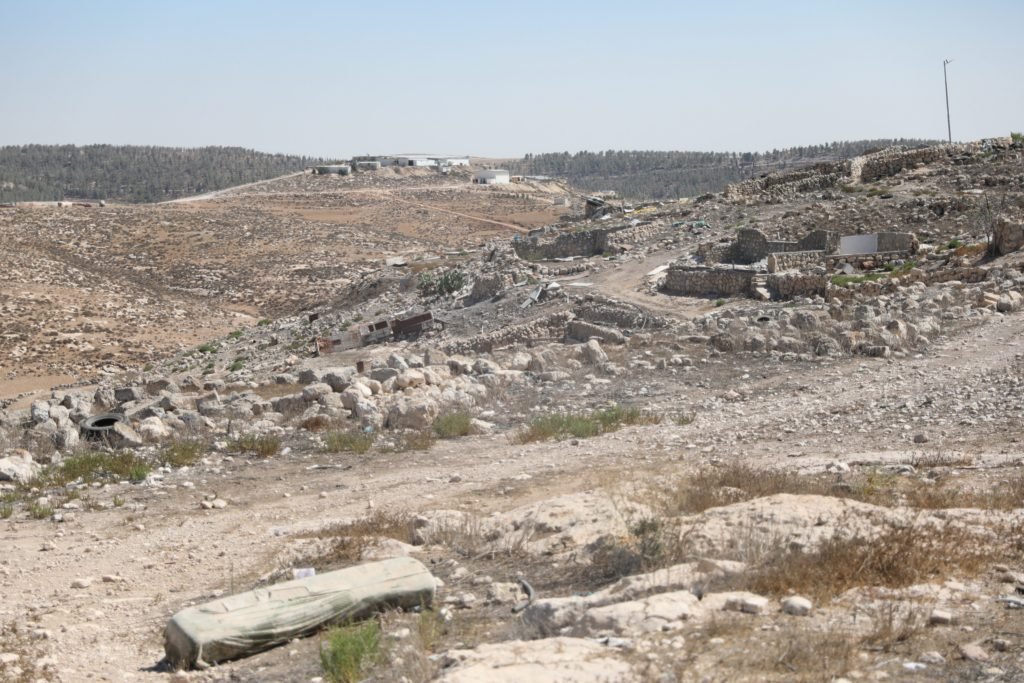
Ruins of Khirbet Zanuta following the village's destruction by settlers. (Amnesty International)
"We were at a village that Israeli settlers had destroyed, they had destroyed the school, they had destroyed that village, and we were just looking at it," Khanna told Reuters. "And these hoodlums come in with machine guns — M4, an American-made machine gun — and they detain us. They block off the road. And then they call the IDF and the IDF is on their side, not on the side of the Americans."
Khanna posted the incident on X, writing: "Israeli settlers, brandishing American made M4s, detained me and other Americans on my trip to Palestine. When the IDF arrived, they sided with the settlers and continued our detention. They made a huge mistake."
How the Detention Unfolded
Cameron Kasky, an aide traveling with Khanna, said the armed settlers blocked the delegation's van and held them for more than an hour. The group repeatedly contacted the US embassy in Jerusalem for assistance as the standoff continued. It remains unclear whether Mike Huckabee, the hardline pro-Israel US ambassador to Israel, intervened on their behalf or protested against their treatment.
Israeli police officers eventually arrived at the scene and secured the delegation's release. The Israeli military confirmed that settlers had blocked vehicles near Khirbet Zanuta but claimed its forces had ended the confrontation — a claim contradicted by Khanna and his aides, who stated that the IDF had actually prolonged the detention by siding with the settlers. The episode underscores the degree to which armed settler groups operate with impunity and, in many cases, with the support of Israeli security forces.
US-Made Weapons in Settler Hands
A central element of the incident is the presence of US-supplied M4 rifles in the hands of armed Israeli civilians. Israel receives $3.8 billion in annual US military assistance, which funds the very weapons carried by the settlers who detained a sitting American congressman. The fact that US-made weapons were brandished against an American delegation has amplified scrutiny of Washington's unconditional military support for Israel.
Khanna described the settlers as "arrogant" and called them "21-year-old hoodlums with American-made machine guns" who appeared to operate with full confidence that they would face no consequences. The incident has prompted questions from other Democratic lawmakers about how US military aid is being used and whether sufficient oversight mechanisms exist to prevent its diversion to settler violence.
The Broader Settlement Explosion
The detention of Khanna occurred against a backdrop of accelerating settlement expansion. Finance Minister Bezalel Smotrich has declared a settlement "revolution," and Israel has approved over $400 million to fund 34 new settlements and outposts across the occupied West Bank. These outposts now control more than 1.1 million dunams of land — approximately 18 percent of the occupied West Bank.
Over 700,000 Israelis now live in settlements that the vast majority of the international community considers illegal under international law. Amnesty International documented that 117 Bedouin and herding Palestinian communities were either fully or partially displaced between January 2023 and April 2026 due to settler attacks and related access restrictions. The village of Khirbet Zanuta is among them — a community erased from the map while the world looked on.
The timing of Khanna's visit is significant. He arrived in the West Bank as Smotrich's settlement drive intensifies, with new outposts springing up across the southern Hebron hills and other strategic areas. Settler violence against Palestinians has surged, with attacks on olive groves, farmlands, and homes becoming a near-daily occurrence in areas already stripped of Palestinian presence.
Shifting Political Winds in Washington
The Khanna detention comes at a moment of profound change in American attitudes toward Israel. Support for Israel among Democratic voters has collapsed — from 59 percent in 2018 to just 22 percent in May 2026, according to Reuters/Ipsos polling. The genocide in Gaza and growing awareness of Israel's apartheid policies in the West Bank have driven the sharpest shift in US public opinion toward Israel in decades.
Khanna, who is weighing a 2028 presidential run, plans to introduce a House resolution condemning settlement expansion and calling for accountability. The fact that an American lawmaker was himself detained by settlers armed with US weapons may give the resolution more political weight than similar efforts in the past. Several Democratic colleagues have already expressed outrage, and the incident has intensified pressure on the Biden administration — and any future administration — to condition military aid on Israel's human rights record.
Analysis and Implications
The detention of a sitting US congressman by armed settlers is without modern precedent, but the circumstances that enabled it are the product of decades of deliberate policy. Successive Israeli governments have armed, funded, and protected settler movements even as those movements have carried out violent displacement of Palestinian communities. The complicity of the IDF in the Khanna detention — siding with armed civilians against an American delegation — reveals the extent to which the military and settler apparatus operate as a single system.
For Palestinian communities in the West Bank, the Khanna incident offers a rare moment of international visibility. The same violence that displaced the families of Khirbet Zanuta and destroyed their school is an everyday reality that rarely makes global headlines. The difference this time was that an American politician was in the line of fire — and that fact alone has brought scrutiny that Palestinian witnesses have been demanding for years.
"They made a huge mistake," Khanna said of the settlers. Whether the political fallout from that mistake translates into tangible change for the people of Khirbet Zanuta and the 117 other communities facing displacement remains to be seen. But for one day in July 2026, the occupation's machinery revealed itself in plain view — an American-made M4 rifle, pointed at an American congressman, while the Israeli military watched and did nothing to stop it.
By Fatima Al-Rashid, Staff Writer
This article was produced with AI-assisted research and editorial support. Reporting is based on sources cited in the article.
What's Your Reaction?
 Like
0
Like
0
 Dislike
0
Dislike
0
 Love
0
Love
0
 Funny
0
Funny
0
 Wow
0
Wow
0
 Sad
0
Sad
0
 Angry
0
Angry
0

Gulf/MENA Correspondent at Global1.News. Based in Doha, covering Gulf politics, energy markets, diplomacy, and development across the Middle East and North Africa. Tracks the economic transformation of the Gulf states.










Comments (0)