
Artemis Program Fuels Japan's Lunar Ambitions JAXA Toyota Rover Society 5.0
Artemis Ignites Japan’s Next-Generation Space Ambitions Tokyo, Japan – June 22, 2026 — The June 9 announcement of the Artemis III crew has prompted Japanese policymakers and media outlets to reassess the pace of national space planning. Although no Japanese astronaut was named for the initial landing, the selection process highlighted ongoing coordination between NASA and JAXA
Artemis Ignites Japan’s Next-Generation Space Ambitions
Tokyo, Japan – June 22, 2026 — The June 9 announcement of the Artemis III crew has prompted Japanese policymakers and media outlets to reassess the pace of national space planning. Although no Japanese astronaut was named for the initial landing, the selection process highlighted ongoing coordination between NASA and JAXA on crew training and mission requirements. Coverage in major Japanese outlets emphasized that the Artemis framework now includes a commitment for two JAXA astronauts to fly on future landing missions, a milestone that has accelerated budget discussions inside the Cabinet Office.
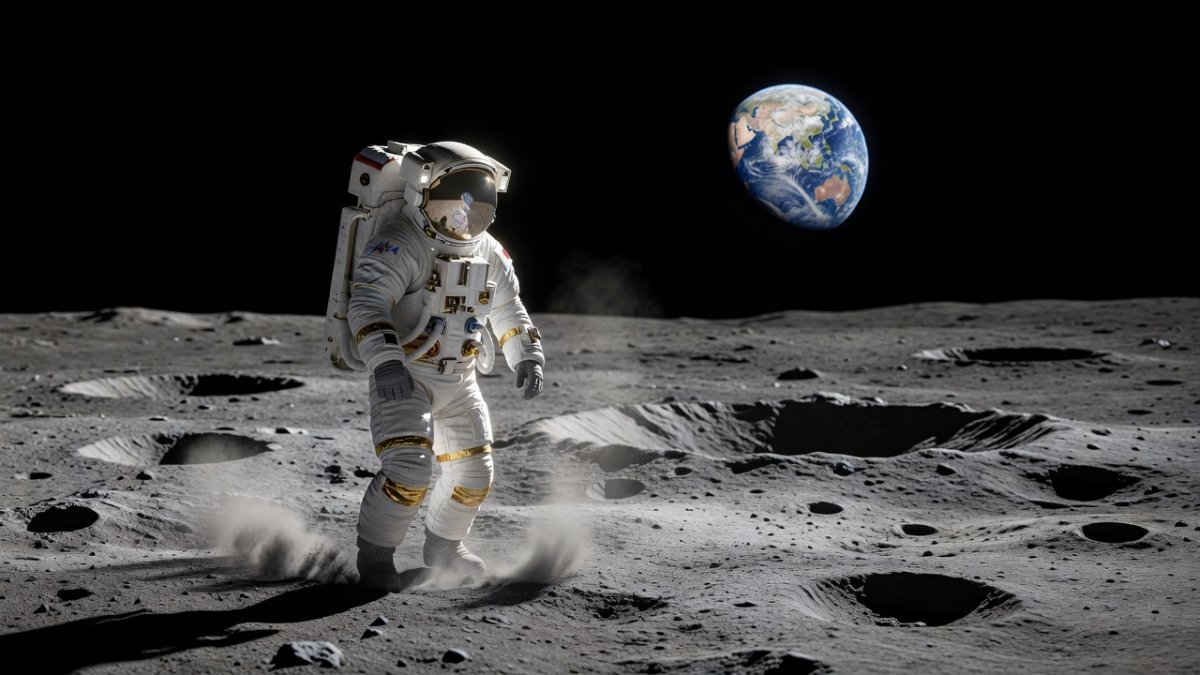
Section 1: Artemis III Crew Announcement and Japan's Strategic Response
The June 9, 2026, NASA announcement named the Artemis III prime and backup crews without including a Japanese member, yet it explicitly referenced the 2024 Implementing Arrangement that reserves two JAXA seats on subsequent Artemis landing flights. Japanese government sources described the omission as consistent with the original timeline, which prioritizes U.S. and international partner sequencing. Within the Cabinet Office’s Space Strategy Promotion Council, officials noted that the announcement reinforced the need for accelerated Japanese crew training at NASA’s Johnson Space Center and at JAXA’s Tsukuba facility. Media commentary in outlets such as NHK and Nikkei focused on the symbolic importance of the two-seat guarantee rather than the immediate crew roster. METI representatives highlighted that the Artemis schedule provides a concrete deadline for completing the Lunar Cruiser pressurized rover, whose operational readiness is tied to post-Artemis III surface activities. Policy analysts observed that the announcement coincided with internal deliberations over the next five-year space budget, with preliminary figures indicating an increase in JAXA’s human spaceflight allocation. The measured tone in official statements reflected Japan’s preference for steady, treaty-based participation over headline-driven milestones. This approach mirrors earlier contributions to the International Space Station, where Japan delivered the Kibo module on schedule despite shifting NASA timelines. Observers expect the next crew announcement, likely in 2027, to name the first Japanese Artemis landing crew member.
Section 2: JAXA's Role in Artemis Landing Missions
Under the 2024 NASA-JAXA Implementing Arrangement, two JAXA astronauts are slated to participate in Artemis landing missions after Artemis III. Technical coordination centers on JAXA’s contributions to the Human Landing System interfaces and lunar surface operations protocols. JAXA engineers participate in joint working groups that define power, communications, and mobility requirements for the Artemis Base Camp concept. The agency has also committed to delivering samples from the lunar south pole region to Japanese research institutions under the Artemis science framework. Coordination meetings occur quarterly, alternating between Houston and Tsukuba, with additional virtual sessions addressing radiation monitoring and extravehicular activity tool compatibility. JAXA’s experience operating the Kibo module and the HTV-X cargo vehicle supplies operational lessons directly applicable to lunar logistics. The agency’s astronaut office has expanded its cadre to accommodate the new flight opportunities, with two candidates currently completing advanced lander-specific training. These steps occur within Japan’s legal framework for space activities, updated in 2021 to clarify liability and licensing for government and commercial missions. The partnership also supports data-sharing agreements that allow JAXA access to Artemis environmental data for future Japanese lunar orbiters. Progress remains subject to NASA’s overall program milestones, which Japanese officials monitor through the established bilateral mechanisms.
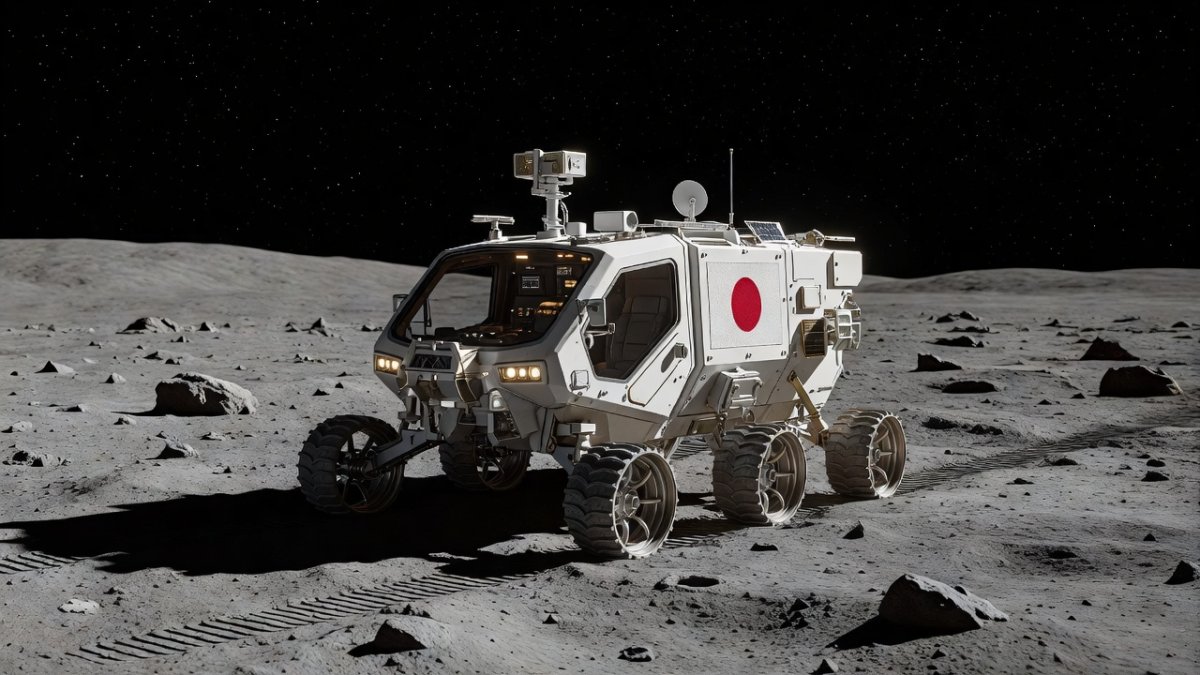
Section 3: Lunar Cruiser: Toyota-JAXA Pressurized Rover
The Lunar Cruiser pressurized rover, developed jointly by Toyota and JAXA, is designed to support two astronauts for up to 30 days on the lunar surface. Current specifications call for a six-wheeled, 6.5-meter-long vehicle with a mass of approximately 6 tons when fully fueled and loaded. The cabin provides a shirt-sleeve environment, regenerative life support, and a 1.5 kW average power budget supplied by regenerative fuel cells. Toyota’s automotive engineering teams contribute chassis durability, thermal management, and autonomous driving software adapted from terrestrial electric vehicle platforms. JAXA supplies radiation shielding requirements, navigation systems compatible with Artemis communication relays, and integration with NASA’s lunar terrain vehicle interfaces. Development milestones include a 2025 engineering test unit for mobility trials in simulated regolith and a 2027 integrated systems test at JAXA’s Sagamihara campus. The current schedule targets delivery readiness for Artemis surface operations in the early 2030s. Funding is shared through a METI-supported public-private partnership, with Toyota covering a substantial portion of the mobility subsystem costs. The rover’s design also incorporates Society 5.0 principles by embedding data analytics for predictive maintenance and real-time health monitoring. International partners have expressed interest in potential interoperability with European and Canadian lunar mobility assets. Technical reviews continue to address dust mitigation and power margin under polar lighting conditions.

Section 4: Japan's Private Space Sector Growth
Japanese startups have expanded commercial lunar service offerings in parallel with Artemis progress. ispace, having completed its first lunar landing attempt in 2023, is preparing a second mission targeted for 2026 that will demonstrate precision landing and small rover deployment. The company has secured payload contracts from both government and private customers, including technology demonstration instruments from JAXA. Additional startups such as Astroscale and GITAI are developing orbital servicing and robotic manipulation capabilities that complement lunar surface needs. Investor interest has grown, with several Series B and C rounds closed in 2025 involving domestic venture funds and corporate strategic investors. The emergence of a domestic launch provider, Space One, offers potential cost reductions for small lunar payloads. These commercial activities align with the 2021 Space Resources Act, which clarifies property rights for extracted materials and encourages private investment. Government procurement mechanisms now include competitive solicitations for lunar communications relays and sample return containers. Industry associations report that the Artemis program has served as a reference customer, giving startups credible milestones against which to measure technology readiness. While revenue remains modest, the sector’s growth trajectory supports Japan’s goal of increasing the space industry’s economic contribution under the Society 5.0 vision.
Section 5: Policy Framework: METI, Cabinet Office, and Society 5.0
Japan’s space budget and innovation strategy are coordinated through the Cabinet Office’s Space Strategy Promotion Council, with METI responsible for industrial development aspects. The current Basic Plan on Space Policy, updated in 2023, explicitly links lunar exploration to Society 5.0 objectives of integrating cyber and physical systems for societal benefit. Funding allocations prioritize dual-use technologies such as autonomous mobility and advanced materials that serve both space and terrestrial markets. METI’s “Space Industrialization” initiative provides matching grants for companies developing lunar hardware, including the Lunar Cruiser program. The framework also encourages international standardization efforts through the Artemis Accords, which Japan signed in 2020. Budget documents indicate a gradual rise in the overall space appropriation, with human exploration and lunar infrastructure receiving protected status. This policy continuity supports long-term planning by JAXA and industry partners despite annual fiscal reviews. The approach reflects Japan’s preference for incremental capability building rather than large, single-mission expenditures.
Section 6: Implications for Asia Pacific Space Competition
China’s Chang’e program and India’s Gaganyaan and lunar orbiter plans create a competitive regional context for Japan’s Artemis participation. Beijing’s announced intention to establish a lunar research station by the mid-2030s overlaps with Artemis timelines, prompting Tokyo to emphasize interoperability standards through the Artemis Accords. India’s successful Chandrayaan-3 landing demonstrated growing south Asian capability, yet Japan maintains a larger industrial base and deeper NASA integration. Japanese officials have avoided direct comparisons, instead stressing cooperative frameworks that include India as an Artemis Accords signatory. Regional diplomacy through the Asia-Pacific Regional Space Agency Forum provides additional channels for confidence-building measures. The Artemis commitment therefore functions as both a technical and a diplomatic instrument that positions Japan as a reliable middle power in lunar governance discussions.
What to Watch For
Key near-term milestones include ispace’s 2026 mission outcome, the 2027 Lunar Cruiser engineering test review, and the expected 2027 Artemis crew announcement that may name the first Japanese landing astronaut. Budget deliberations in Japan’s next fiscal cycle will indicate whether the Artemis-related increases are sustained. Continued coordination meetings between NASA and JAXA will clarify surface operations concepts for the Lunar Cruiser.
Japan’s measured integration into the Artemis program illustrates how established industrial and policy frameworks can convert international partnership opportunities into durable national capabilities. The coming decade will test whether these investments translate into operational lunar presence and expanded commercial activity.
By Kenji Tanaka, Staff Writer
This article was produced with AI-assisted research and editorial support. Reporting is based on sources cited in the article.
What's Your Reaction?
 Like
0
Like
0
 Dislike
0
Dislike
0
 Love
0
Love
0
 Funny
0
Funny
0
 Wow
0
Wow
0
 Sad
0
Sad
0
 Angry
0
Angry
0

Japan Correspondent at Global1.News. Tokyo-based voice covering Japanese politics, technology, economy, and culture. Tracks the intersection of tradition and innovation in one of the world's most dynamic societies.















Comments (0)