
Vancouver Man Detained in Georgia Faces 20 Years Over ADHD Medication Prescription
In a recent CBC News report on Hanomansing Tonight, Nika Rovensky described the harrowing experience of her 22-year-old brother Simon, a Vancouver man who was detained at Tbilisi International Airport in Georgia after carrying his prescribed ADHD medication without proper documentation. The case has raised serious questions about the adequacy of consular support for Canadians d
In a recent CBC News report on Hanomansing Tonight, Nika Rovensky described the harrowing experience of her 22-year-old brother Simon, a Vancouver man who was detained at Tbilisi International Airport in Georgia after carrying his prescribed ADHD medication without proper documentation. The case has raised serious questions about the adequacy of consular support for Canadians detained abroad.
Vancouver Man Detained in Georgia Faces 20 Years Over ADHD Medication Prescription
Vancouver, British Columbia — Simon Rovensky, 22, from Vancouver, British Columbia, remains in Gldani Prison north of Tbilisi after Georgian authorities charged him with smuggling and narcotics offences in early May 2026. He carried an orange prescription bottle of Adderall for attention deficit hyperactivity disorder, issued by his Canadian physician. The bottle lacked original packaging and a Georgian-translated note. A pharmacy receipt proved insufficient under local rules. His sister Nika Rovensky told CBC News that the case has already consumed nearly two months of his life before any trial date.
The Story
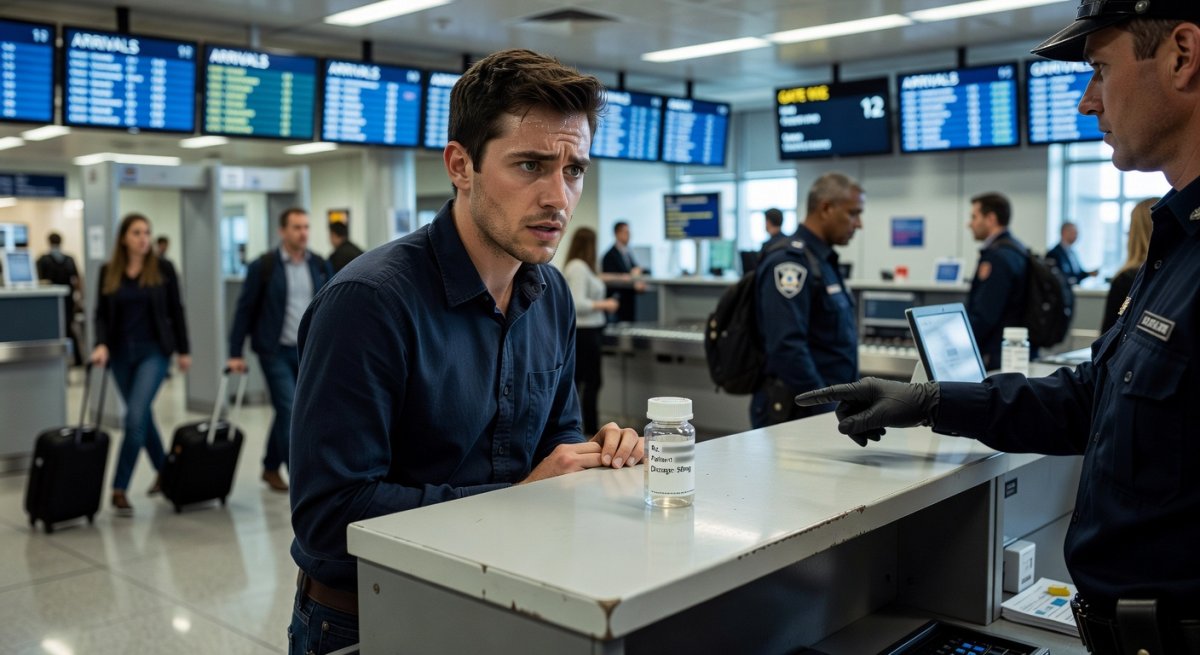
Simon Rovensky and his friend arrived at Tbilisi International Airport in early May 2026. Border officers conducted an invasive search and discovered the Adderall bottle containing amphetamines. Georgian law lists amphetamines as narcotic drugs of the highest medical and social risks. The pair underwent seven hours of interrogation at the airport facility before officers separated Simon from his friend without explanation.
Authorities rejected the Canadian pharmacy receipt and the doctor's name on the bottle as insufficient documentation. Simon had not packed the original blister packaging from the Vancouver pharmacy. Georgian officials classified the medication as illegal narcotics under their criminal code. Charges of smuggling and narcotics offences followed immediately.
Adderall contains amphetamines, which are classified under Georgian law as a controlled substance with severe penalties. According to his sister Nika, Simon had no idea his prescription could land him in a foreign prison. The incident has now consumed nearly two months of his young life.
Family's Ordeal
Nika Rovensky stated on Hanomansing Tonight that the family lost all contact with Simon for 48 hours after the interrogation. "We had no idea if he was being hurt or where he was in the country. So it was obviously extremely scary for our whole family," she told CBC News.
Family members in Vancouver described the uncertainty as unbearable. Simon's parents contacted the Canadian embassy in Ankara, which covers Georgia, within hours of the detention. But no wellness confirmation arrived for more than two weeks. By then the family had already retained a Tbilisi defence lawyer through private funds.
The emotional toll extended to Simon's friend, who was released after additional questioning. Nika Rovensky launched a GoFundMe page to cover legal costs and any potential fine, noting the high cost of international legal representation from British Columbia. Relatives described sleepless nights while monitoring Georgian court filings from Canada.

Legal Framework in Georgia
Georgian criminal law classifies Adderall's active ingredient, amphetamine salts, under the highest category of controlled substances. Possession without specific government authorisation carries penalties of 12 to 20 years imprisonment plus fines reaching tens of thousands of dollars. The European Court of Human Rights documented cases of torture and ill-treatment at Gldani Prison until 2012, with conditions reports from that period citing overcrowding and inadequate medical access.
Canadian travellers receive no automatic exemption for medications approved under Health Canada regulations. Adderall prescriptions fall under the Controlled Drugs and Substances Act in Canada, yet Georgian authorities apply a much stricter classification. The absence of a translated prescription note violated Georgian customs regulations on pharmaceutical imports.
Nika expressed frustration at the legal situation. "Him just travelling and not thinking twice about [the prescription], you know, it was his mistake. But what happened next was just insane. Like the fact that he's looking at 12 to 20 years in prison and tens of thousands of dollars as a fine is completely crazy," she said.
Canadian Government Response
Global Affairs Canada confirmed that consular officials are providing assistance and remain in contact with Georgian authorities. The department's statement referenced standard procedures under the Vienna Convention on Consular Relations. However, officials did not explain the two-week delay before the first wellness visit. Nika Rovensky noted that the family had already secured local counsel by that point.
Consular services operate from the Canadian embassy in Ankara with limited staff dedicated to Georgia. Response times vary according to staffing levels and competing cases. The Rovensky family received template emails directing them to local lawyers rather than direct intervention. Canadian citizens abroad retain primary responsibility for their own legal defence costs.
Parliament Hill records show similar consular cases involving Canadian travellers and prescription medications in recent years. Global Affairs Canada maintains a travel advisory page listing documentation requirements for controlled substances, but no specific alert existed for Georgia prior to this incident.
Implications for Canadian Travellers
Nika Rovensky closed her CBC interview with a direct warning to other Canadians travelling with ADHD medication. "Let this be a warning to the other Canadians out there that might be travelling with their ADHD medication — facing these very severe penalties and years and years in prison," she said. She urged travellers to obtain translated physician notes and retain original packaging before any international travel.
Federal health data indicate hundreds of thousands of Canadians hold active Adderall prescriptions. Many travel annually for work or study without incident when documentation meets destination requirements. Georgian customs officers enforce the rule uniformly at Tbilisi airport, and similar enforcement occurs in several Eastern European jurisdictions.
Canadians are advised to verify destination-country rules on amphetamine-based medications before departure, as legislation in countries like Georgia treats these substances much differently than Canadian regulations do. Travel medicine specialists recommend obtaining translated medical documentation and confirming acceptance with the destination's embassy in Ottawa prior to any international trip.
What Happens Next
A court appearance for Simon Rovensky is expected in the coming weeks at Tbilisi City Court. His lawyer will present medical records and request release pending trial. A conviction could result in 12 to 20 years at Gldani Prison plus a substantial fine. Payment of the fine may trigger deportation to Canada under Georgian immigration rules.
Global Affairs Canada will continue monitoring the case through its Ankara embassy. Family members plan to travel to Tbilisi for the hearing if permitted. The family will continue the GoFundMe campaign until resolution.
Canadian consular officials cannot override Georgian judicial processes. The case illustrates the gap between Canadian prescription access under medicare and stricter foreign controlled-substance regimes. For Simon Rovensky and his family, resolution remains weeks or months away, but his sister's message is clear: Canadians need to be better informed, and the federal government needs to respond faster when citizens are detained overseas.
By Alex Thompson, Staff Writer
This article was produced with AI-assisted research and editorial support. Reporting is based on sources cited in the article.
What's Your Reaction?
 Like
0
Like
0
 Dislike
0
Dislike
0
 Love
0
Love
0
 Funny
0
Funny
0
 Wow
0
Wow
0
 Sad
0
Sad
0
 Angry
0
Angry
0

Canada Correspondent at Global1.News. Based in Toronto, covering Canadian politics, energy, trade, and US-Canada relations. Provides the Canadian perspective on North American and global affairs.














Comments (0)