
6.0 Earthquake Rattles Philippines as Ukraine's Drone War Escalates: Two Worlds, One Dangerous Week
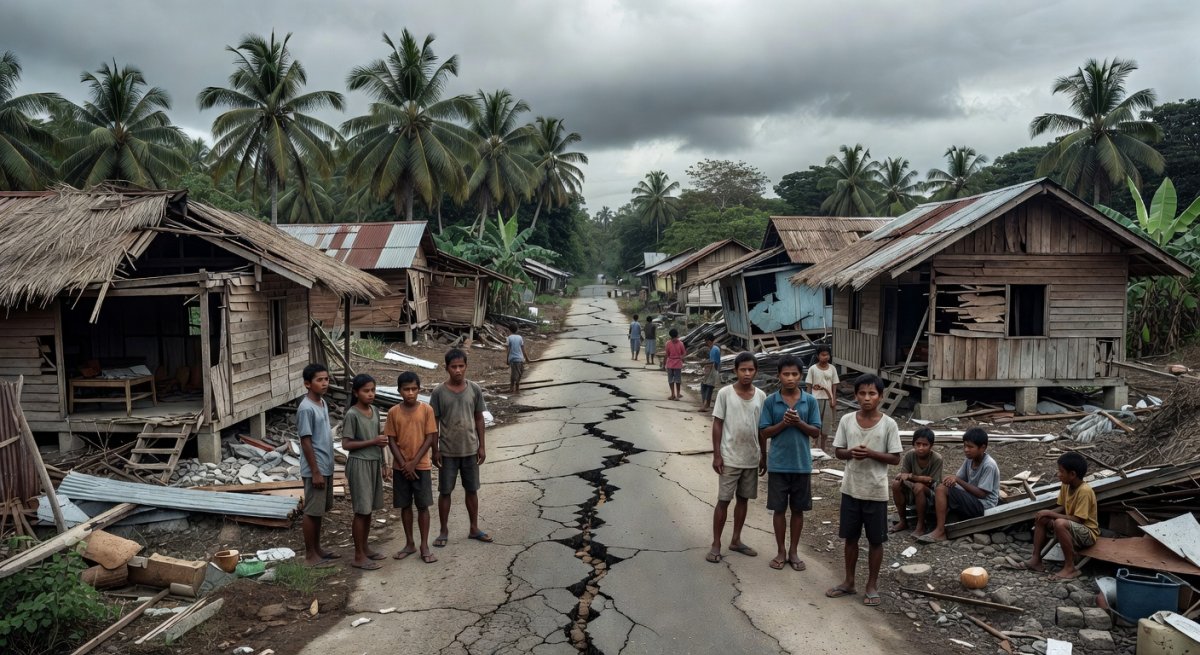
Ground Zero: 6.0 Magnitude Earthquake Tears Through Samar Folks, let's cut straight to it. On June 5, 2026, a 6.0 magnitude earthquake rocked Eastern Samar, Philippines, and the search numbers tell you everything you need to know about how terrified people were. We're talking over 100,000 Google searches within hours for "earthquake near me" — that's not casual curiosity. That'
Ground Zero: 6.0 Magnitude Earthquake Tears Through Samar
Folks, let's cut straight to it. On June 5, 2026, a 6.0 magnitude earthquake rocked Eastern Samar, Philippines, and the search numbers tell you everything you need to know about how terrified people were. We're talking over 100,000 Google searches within hours for "earthquake near me" — that's not casual curiosity. That's people checking if their loved ones are still standing.
PHIVOLCS — the Philippine Institute of Volcanology and Seismology — confirmed the epicenter and magnitude without the usual bureaucratic padding. The New York Times mapped the shake across the region almost immediately. The Independent reported that aftershocks aren't just possible — they're expected. And the Philippine Daily Inquirer documented damage spreading through Eastern Visayas, with cracked homes and compromised roads piling up before officials could finish their first cup of coffee and their first damage assessment.
Let me be real with you. A 6.0 quake is not a minor event. It's not one of those "did you feel that?" moments you laugh about over dinner. This is the kind of shaking that brings down poorly reinforced structures, triggers landslides in mountainous areas, and leaves thousands sleeping outside because they're too scared to go back inside. The Straits Times reported no immediate mass casualties, and we should all be grateful for that. But here's the thing about earthquakes in the Philippines — the initial reports almost always undercount. Remote barangays take hours, sometimes days, to check in. And when they do, the numbers climb.
The Science of What Happened: Eastern Samar on the Ring of Fire
The Philippines sits on the Pacific Ring of Fire. That's not a cute nickname — it's a 40,000-kilometer horseshoe of seismic activity where tectonic plates collide, subduct, and rupture. The country gets hit by hundreds of earthquakes every year, most of them too small to notice. But a 6.0 is in a different league entirely.
GFZ German Research Centre confirmed the quake's coordinates in Eastern Samar. PHIVOLCS put out the standard bulletins — depth, epicenter, expected aftershocks. But the real story is what happens next in a region that's already vulnerable. Eastern Visayas has communities that are still recovering from Typhoon Haiyan back in 2013. Infrastructure there isn't built to California seismic codes. When the ground shakes, homes made of light materials collapse. Roads crack. Power lines go down. And the response has to come from a government already stretched thin by other crises — including the political drama surrounding VP Sara Duterte's impeachment trial and the ongoing Senate power struggle that's been paralyzing the legislature.
The Hindu and The Straits Times both added regional context, noting the quake's reach extended across multiple provinces. Inquirer.net's reporters on the ground described visible damage — not catastrophic, but real. The kind of damage that makes you wonder what a 7.0 would have done in the same spot.
Aftershocks Are Not a Suggestion — They're a Guarantee
PHIVOLCS was clear: aftershocks are expected. This matters more than most people realize. The initial quake is the headline, but aftershocks are the ones that finish the job on already-weakened structures. A building that survived the 6.0 might not survive a 5.5 aftershock twelve hours later. This is why disaster response experts always say the danger window extends far beyond the first tremor.
The Independent specifically flagged this in their reporting, and they're right to do so. If you're in Eastern Visayas right now, the safest assumption is that more shaking is coming. Secure water. Keep your phone charged. Know where your family is. Don't assume the worst is over just because the ground stopped moving for a few hours.
And here's the part that makes me angry: the Philippine government has been cutting disaster preparedness budgets while spending billions on political infighting. The Senate has been paralyzed for days by the Cayetano-Escudero power struggle. The impeachment trial of VP Sara Duterte has consumed all the political oxygen in Manila. Meanwhile, the ground is literally shaking beneath the most vulnerable communities in the country. That's not just bad governance — it's a dereliction of duty.
Now Pivot: Ukraine's Drone War Just Hit a Whole New Level
Half a world away, a different kind of shaking is happening. Ukraine's drone campaign has escalated into something Moscow can no longer spin its way out of. UNITED24 Media dropped a bombshell number: Ukraine's 2026 drone campaign has hit 174 Russian air defense systems, costing Moscow an estimated $5.4 billion in destroyed equipment.
Let me repeat that because it deserves to sink in. 174 air defense systems. Five-point-four billion dollars. That's not harassment. That's a systematic dismantling of Russia's protective shield, one drone strike at a time.
ABC News confirmed that drone attacks inside Russia have hit record levels. Not a slow uptick — a surge. Ukrainian drones are reaching deeper into Russian territory than ever before. Spectrum News reported that Ukrainian drones struck an oil terminal in St. Petersburg — St. Petersburg! — right ahead of the city's big economic forum, the so-called "Russian Davos." You cannot send a clearer message than hitting an energy target in Russia's second-largest city while the global business elite is gathered there.
174 Systems Down, $5.4 Billion Gone — And Putin Is Rattled
UNITED24 Media's tally breaks down to more than just a number. Each destroyed system represents months of production, billions in R&D, and a gap in coverage that Ukrainian forces can exploit. Surface-to-air missile systems are the backbone of Russia's defensive strategy. When those go dark, everything below them becomes vulnerable — supply depots, command centers, logistics hubs, oil infrastructure.
NPR captured Putin's response, and it's telling: he promised to bolster air defenses. That sounds like decisive leadership until you realize it's also an admission that the current system isn't working. You don't promise to fix something that's functioning fine. The Atlantic Council put it even more bluntly — they argued that Ukraine just showed the whole world that Putin is losing control of the war. Not the narrative about the war. The war itself.
The Institute for the Study of War's June 4 assessment backs this up. Their analysts documented how each successful drone strike compounds Russia's existing vulnerabilities — manpower shortages, morale problems, equipment degradation. The gaps that drone operators are exploiting aren't going to get smaller. As Ukraine scales up production and refines its tactics, those gaps will grow.
The $5.4 Billion Question: Can Russia Afford This War of Attrition?
Here's what the spin doctors don't want you to think about. Russia's defense budget is not infinite. Every Pantsir system that gets blown up, every S-400 radar that goes dark, every oil terminal that burns — that's money Moscow has to spend to replace, and they're spending it faster than they can produce new equipment.
The Kyiv Independent reported that Ukraine is openly talking about ending the "hot phase" of the war before winter. That's a strategic shift in messaging. For months, the narrative was about holding the line and grinding through the winter. Now Ukraine's leadership is signaling that they believe they can force conditions for a meaningful change in the conflict's trajectory. The drone campaign is a big reason why.
When you combine the ISW data with ABC News reporting on record attack levels and UNITED24 Media's $5.4 billion figure, a clear picture emerges: Ukraine has found a way to impose costs that Russia cannot ignore and cannot easily counter. Drones are cheap. Air defense systems are not. That asymmetry is Ukraine's strategic weapon, and they're wielding it effectively.
Two Crises, One Uncomfortable Truth: Systems Under Stress Break
The Philippines earthquake and Ukraine's drone offensive are vastly different events — one is geological, one is military. But they share a deeper truth that folks need to understand: systems under sudden stress reveal their weaknesses immediately.
The Philippine government's disaster response apparatus is being tested by the Samar quake at a moment when the country's political leadership is consumed by infighting. Russia's air defense network is being tested by Ukraine's drone campaign at a moment when Moscow's military is stretched thin across multiple fronts. In both cases, preparation gaps that were papered over during calm periods become fatal flaws when the pressure hits.
This is what I mean when I say cut through the BS. Whether it's a seismic event or a strategic campaign, the underlying pattern is the same. Institutions that invested in resilience survive the shock. Institutions that spent their energy on politics, propaganda, and infighting collapse under the weight of reality.
What You Can Do: Practical Steps Right Now
If you're in or near Eastern Visayas, PHIVOLCS's message is not a suggestion: treat aftershocks as guaranteed. Secure your water supply. Keep communication lines open. Know the evacuation routes in your barangay. Do not assume help will arrive quickly — the government's attention is divided, and it may take longer than it should.
If you're following the Ukraine war, track the drone numbers. UNITED24 Media, ISW, and ABC News are your primary sources. Ignore the propaganda from both sides and focus on hard data — systems destroyed, territory changes, production rates. The $5.4 billion figure from UNITED24 Media is not just a headline. It's a signal about the trajectory of the entire conflict.
Share this article. Talk to your neighbors about earthquake preparedness. Call your representatives and ask what they're doing about disaster funding. The next aftershock and the next drone wave will not wait for anyone to catch up. Stay sharp, stay informed, and never let anyone tell you that being prepared is alarmist. Being prepared is how you survive.
By Jessica Ali, Staff Writer
This article was produced with AI-assisted research and editorial support. Reporting is based on sources cited in the article.
What's Your Reaction?
 Like
0
Like
0
 Dislike
0
Dislike
0
 Love
0
Love
0
 Funny
0
Funny
0
 Wow
0
Wow
0
 Sad
0
Sad
0
 Angry
0
Angry
0

Editor-in-Chief at Global1.News. Atlanta-based journalist who cuts through the BS and tells it like it is. Lead anchor, host, and the voice you hear when the spin stops and the truth starts.














Comments (0)