
"Won't Tolerate": US Threatens To Sanction Ally Oman Over Hormuz Tolls
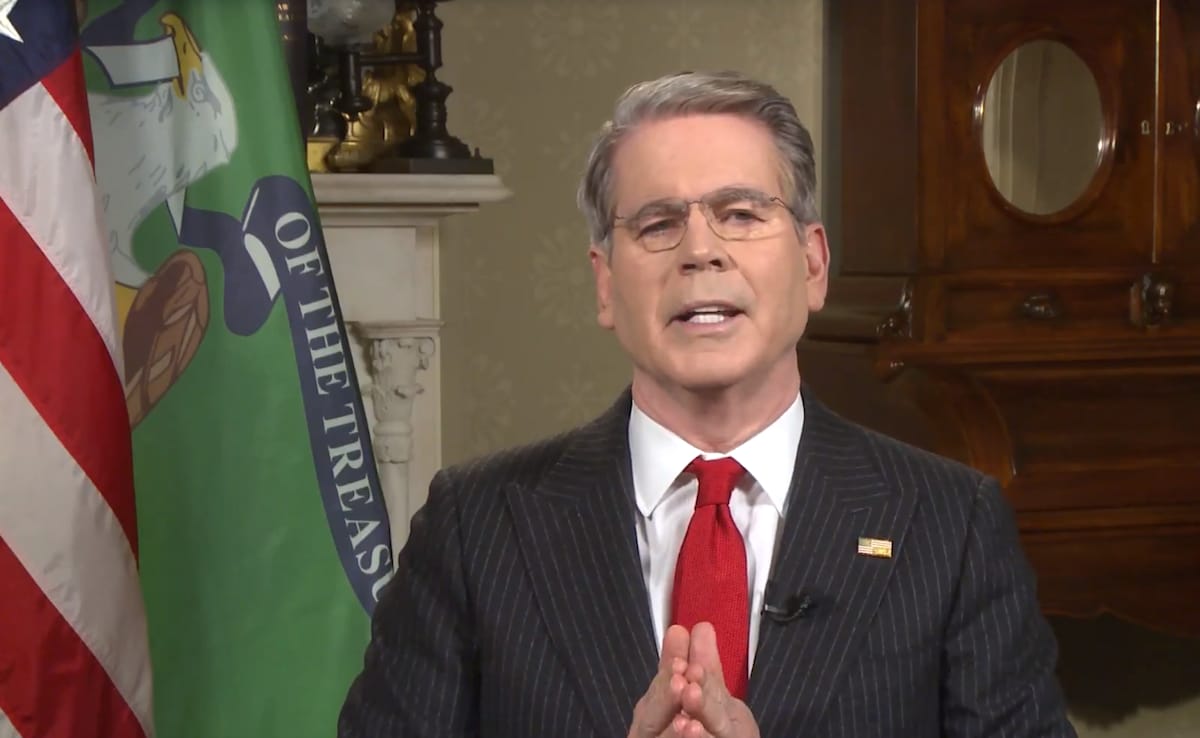
"Won't Tolerate": US Threatens To Sanction Ally Oman Over Hormuz Tolls
The United States has issued a direct warning to Oman, its longstanding Gulf ally, stating it will not accept any tolling regime in the Strait of Hormuz. The threat of sanctions comes amid reports that Oman may facilitate Iranian proposals to charge transit fees on oil tankers passing through the vital waterway.
US Position and Immediate Context
State Department spokesperson Matthew Miller confirmed the stance during a briefing on October 10, 2024. "We will not tolerate any effort to impose a tolling system in the Strait of Hormuz," he said. The remarks target Iranian suggestions floated during backchannel talks with Washington, with Oman positioned as a potential intermediary due to its shared coastline with the strait.
Oman has hosted multiple rounds of indirect US-Iran discussions since 2023. Its geographic location at the southern entrance to the 21-mile-wide chokepoint gives it unique leverage over navigation rules. US officials fear that any revenue-sharing agreement with Tehran could set a precedent for restricted access.
Strategic Importance of the Strait of Hormuz
The Strait of Hormuz remains the world's most critical energy artery. Data from the US Energy Information Administration shows an average of 20.8 million barrels per day transited the waterway in 2023, representing 21 percent of global petroleum liquids consumption. Approximately 82 percent of those volumes originated from Saudi Arabia, Iraq, the UAE, and Kuwait.
Disruption here would immediately affect Asian importers. India alone received 1.9 million barrels per day via the strait in the first half of 2024, accounting for 58 percent of its crude imports. Any toll structure would raise delivered costs by an estimated $1.50 to $3 per barrel according to shipping analysts at Clarksons Research.
Oman's Delicate Balancing Act
Oman maintains formal security cooperation agreements with the United States, including access to the Duqm port for US naval vessels. At the same time, Muscat has preserved open diplomatic channels with Tehran since the 1970s. This dual posture has allowed Oman to mediate prisoner swaps and nuclear talks.
Foreign Minister Badr Albusaidi stated last month that Oman supports "stable and open navigation" but did not rule out revenue mechanisms discussed with Iranian counterparts. Satellite tracking data shows increased Omani coast guard patrols near the strait since August, coinciding with Iranian parliamentary debates on transit fees.
Potential Sanctions Framework
US sanctions could target Omani entities involved in port management or joint ventures with Iranian firms. Existing authorities under Executive Order 13608 allow designation of persons supporting Iran's energy sector. Treasury officials have already flagged two Omani shipping companies for review over suspected links to sanctioned Iranian tankers.
Historical precedent exists. In 2019, the US sanctioned Chinese and Russian entities for purchasing Iranian crude. Extending similar measures to a treaty ally would mark an escalation, potentially affecting Oman's $3.2 billion annual US defense purchases.
Expert Analysis on Market and Geopolitical Risks
Energy economist Dr. Sarah Al-Mansoori of the Oxford Institute for Energy Studies notes that even a modest $0.50 per barrel toll would generate $3.8 billion annually at current volumes. "The question is enforcement," she said. "Iran lacks the naval capacity to collect fees without Omani cooperation or third-party verification."
Maritime lawyer Rajiv Menon, based in Singapore, highlights legal complications under the 1982 UN Convention on the Law of the Sea. The strait qualifies as an international strait with guaranteed transit passage rights. Imposing tolls would require multilateral agreement or risk challenges at the International Court of Justice.
Implications for India and Asian Energy Security
From Mumbai's perspective, higher transit costs would compound existing pressures on India's oil import bill, already projected at $118 billion for fiscal 2024-25. Refiners such as Reliance and Indian Oil Corporation would face margin compression unless they pass costs to domestic consumers.
Alternative routes remain limited. The proposed UAE-Oman pipeline bypasses only a fraction of the strait, while expanded Saudi east-west pipelines require years to scale. Insurance premiums for Hormuz transits have already risen 14 percent since September amid the toll rumors.
Outlook and Next Steps
Washington has requested clarification from Muscat within 30 days. Oman is expected to respond through its embassy in Washington rather than public statement. Meanwhile, Iranian oil exports continue at 1.4 million barrels per day, largely via shadow fleet tankers that already evade conventional fees.
The episode underscores how narrow geographic chokepoints continue to shape great-power competition and energy economics well into the 2020s.
This is Dr. Raj Patel for Global1 News, reporting from Mumbai. 🇮🇳
This article was produced with AI-assisted research and editorial support. Reporting is based on sources cited in the article.
What's Your Reaction?
 Like
0
Like
0
 Dislike
0
Dislike
0
 Love
0
Love
0
 Funny
0
Funny
0
 Wow
0
Wow
0
 Sad
0
Sad
0
 Angry
0
Angry
0

India/South Asia Correspondent at Global1.News. Analytical voice with a background in science and health journalism. Based in New Delhi, covering Indian politics, education, healthcare, technology, and policy. Breaks down complex data into clear, actionable reporting.















Comments (0)