
With US Diplomacy at Standstill, Iran Shifts to Offensive Posturing
Six months into a war that has already reshaped the Persian Gulf's security architecture, the Islamic Republic of Iran is abandoning its defensive crouch.
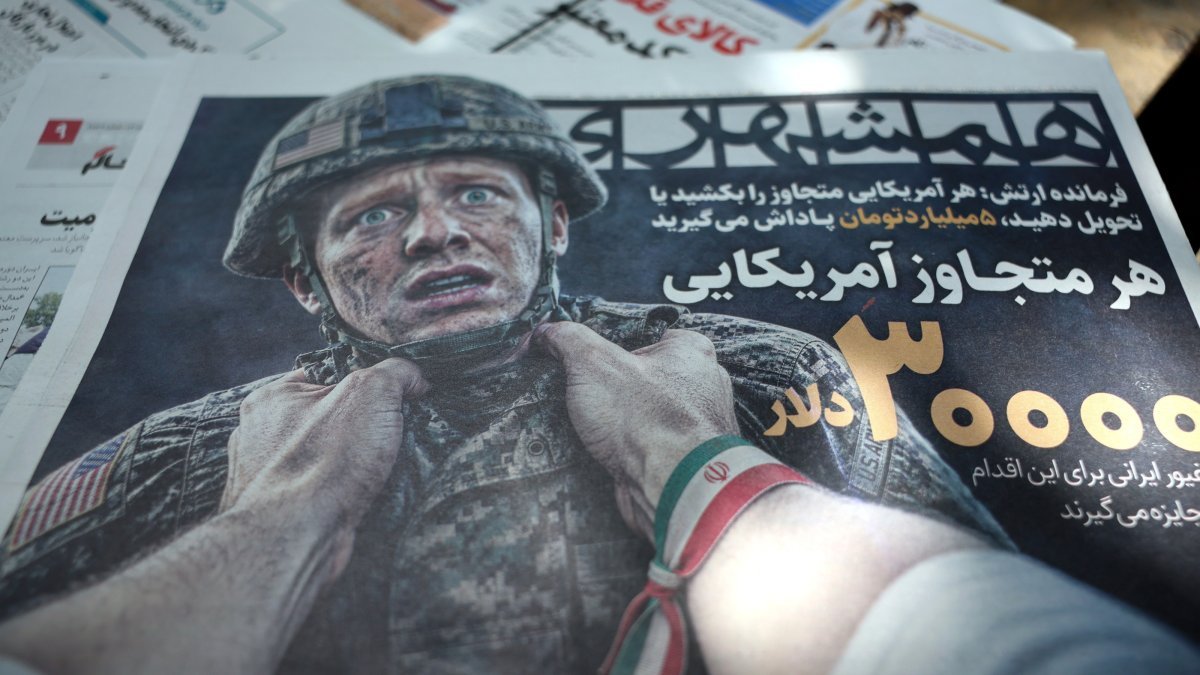
Six months into a war that has already reshaped the Persian Gulf's security architecture, the Islamic Republic of Iran is abandoning its defensive crouch. With Washington's diplomatic channels frozen and economic pressure mounting, Tehran's leadership has concluded that only offensive escalation can break a stalemate that threatens the regime's survival.
With US Diplomacy at Standstill, Iran Shifts to Offensive Posturing
Beirut, Lebanon - Aug 20, 2026 - The calculus emerging from Tehran represents a significant departure from the strategy that defined the first six months of this conflict. Since U.S.-Israeli strikes launched the war on Feb. 28, Iran's military responses were framed as retaliation—proportional answers to American and Israeli aggression. That framing is now shifting to something more assertive, as Supreme Leader Mojtaba Khamenei and the Islamic Revolutionary Guard Corps (IRGC) signal a doctrinal change that could have profound consequences for energy markets and regional stability.
The Strategic Shift in Tehran
In a reshuffle of top military commanders earlier this month, Khamenei called for "strengthening maximum deterrence and preparing to conduct large-scale offensive operations against the enemy." The language marks a clear break from the reactive posture Tehran maintained after suffering heavy losses in the initial bombardment campaign, which included the killing of then-Supreme Leader Ayatollah Ali Khamenei and senior military commanders.
Last week, a deputy commander of the IRGC indicated that Tehran was revising its military doctrine to give "offensive operations" strategic priority. This is not merely rhetorical posturing, according to analysts tracking the shift.
Sina Toossi of the Center for International Policy argues the move does not mean Tehran is "adopting a doctrine of preventive war." Rather, he said, Tehran appears to have concluded that "if confrontation becomes unavoidable, Iran should escalate earlier and more forcefully rather than wait for the United States or Israel to define the terms of the conflict."
The political system has remained intact despite the devastating opening weeks of the war. Intense bombardment eventually subsided following an April 8 cease-fire, apart from sporadic exchanges of fire, particularly in and around the Strait of Hormuz. That resilience appears to have emboldened Tehran's strategic reassessment.
The Hormuz Leverage
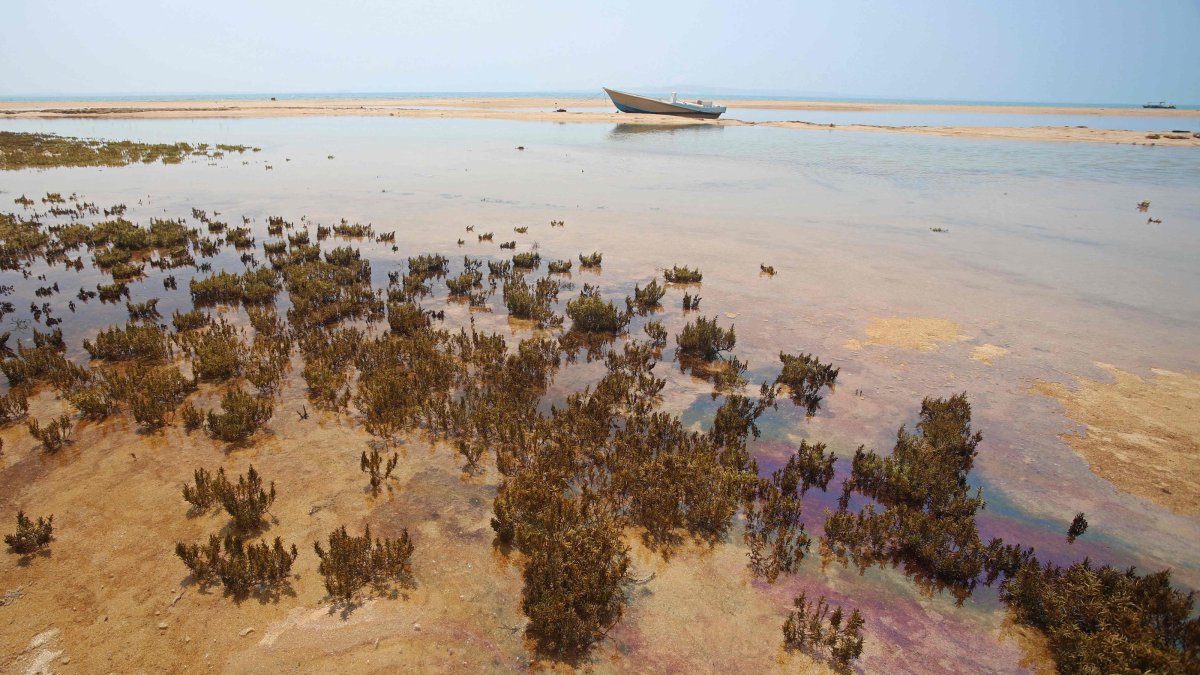
The Strait of Hormuz has become the central battleground in this new phase. Tehran now requires vessels to seek permission and pay service fees to transit the strait—a move strongly opposed by Washington and regional countries. The strait's disruption has already driven up global energy prices and created a humanitarian and economic crisis for Gulf states dependent on the waterway.
Reopening the strait has become a U.S. priority. Vice President JD Vance said last week that "goal No. 1" was keeping energy prices low for Americans, while preventing Tehran from acquiring a nuclear weapon ranked second. That ordering reveals Washington's vulnerability: the American economy remains sensitive to energy price shocks, and Iran knows it.
Tehran's control over Hormuz is its primary source of leverage against Washington. By weaponizing the strait, Iran has disrupted a vital global energy route and demonstrated that American military superiority does not automatically translate into escalation dominance. As Toossi noted, "Tehran increasingly believes that American military superiority does not give Washington escalation dominance."
Washington's Sanctions Escalation
While Iran shifts to offensive posturing, the Trump administration is doubling down on economic warfare. Treasury Secretary Scott Bessent said Washington would impose measures on Tehran "never seen before," and President Donald Trump has vowed to inflict severe economic pain on the Islamic Republic.
Data from the U.S. Treasury Department's Office of Foreign Assets Control (OFAC) show that the agency has sanctioned more than 1,000 individuals, vessels and aircraft since Trump began his second term. The latest measures target Iran's covert oil fleet, shipping insurers, organizations and individuals accused of facilitating Iran's weapons procurement, as well as entities operating on digital exchanges.
The sanctions campaign extends beyond Iran's borders. OFAC has begun imposing secondary sanctions on smaller China- and Hong Kong-based entities accused of processing billions of dollars' worth of Iranian oil. China purchases more than 80% of the oil shipped by Iran, according to 2025 data from analytics firm Kpler, with independent Chinese refineries handling a significant share of this trade.
The U.S. Treasury Department has warned that two major Chinese banks could face secondary sanctions if Iranian funds are found to have passed through their systems, although Washington has so far avoided directly targeting them. Such measures could trigger retaliatory action from Beijing, complicating the Trump administration's efforts to ease tensions ahead of an expected meeting between Trump and Chinese President Xi Jinping later this year.
The Diplomatic Dead End
Diplomatic efforts remain stalled, especially since a June 17 truce collapsed and the U.S. reimposed oil sanctions and the naval blockade on Iranian ports. A June 17 memorandum of understanding between Tehran and Washington that outlined terms for a truce was a far cry from Trump's initial call for Iran's "unconditional surrender."
That truce later collapsed over disagreements primarily over the management of Hormuz. Yet Iranian officials still tout it as evidence of "victory." Top negotiator Mohammad Bagher Ghalibaf said in a speech last week, "I can state with conviction that we have won this war in the true sense of the word, both militarily and politically," describing the deal as a source of "pride and victory."
Ahmad Zeidabadi, a Tehran-based international relations expert, believes the shift reflects Tehran's assessment of Washington's intentions. "The Islamic Republic believes the United States has likely ruled out war and now seeks to perpetuate the status quo including the U.S. naval blockade and the economic pressure," he told AFP.
"Iranians believe that diplomacy is doomed to fail in the current climate and that the Americans will not accept their terms," Zeidabadi added. "Consequently, they may feel compelled to resort to offensive action to force the U.S. to accept Iranian conditions ... and to initiate a new round of negotiations."
Regional Fallout
The war has spread across the region, including clashes between Saudi Arabia and the Iran-backed Houthis in Yemen and the disruption of shipping in the Red Sea's Bab el-Mandeb strait. The conflict has drawn in Gulf states, with Iran's strikes against U.S., Israeli and Gulf targets expanding the theater of operations.
An Iranian attack in late July on a U.S. air base and a command center in Jordan has been portrayed on Iranian media as an example of the "preemptive" approach Tehran is now embracing. For Hossein Kanani-Moghadam, an international relations expert and former general in the Revolutionary Guards, the new strategy could take other forms beyond conventional military action.
"Such operations could encompass a combination of cyber warfare, psychological warfare, intelligence operations, and economic warfare," he said.
The sanctions are not affecting Iran alone. Independent refineries in China account for around one-quarter of the country's refining capacity and operate with narrow, and sometimes negative, profit margins. Previous U.S. sanctions prevented larger independent refineries from purchasing Iranian oil, but smaller ones gained a degree of immunity due to limited exposure to U.S. sanctions—an immunity OFAC is now closing.
The Deterrence Trap
Tehran's calculus comes with serious risks. "If this threat is serious ... the outcome of this scenario would be catastrophic for Iran and the region," said Zeidabadi. Toossi also believes that the strategy "means future crises could escalate much faster."
The broader danger, according to Toossi, is what he described as a "reciprocal deterrence trap"—with each side responding to the other's attempts to strengthen deterrence as evidence it must escalate further. "That is a much more unstable strategic environment, even if neither side actually wants another major war," he said.
This dynamic is playing out in real time. Iran's shift to offensive operations is a response to U.S. sanctions and blockade; Washington's sanctions escalation is a response to Iran's military posturing. Each cycle of escalation reinforces the other's narrative of threat, making de-escalation increasingly difficult.
The U.S. also plans to introduce additional aviation sanctions aimed at weakening Iran's ability to conduct trade, following the blockade of maritime traffic through Hormuz. A potential land blockade of Iran could disrupt imports of food, energy and textiles, though experts say such a move would be difficult to implement and might not generate the desired level of domestic pressure.
Regional Implications
The confrontation between the U.S. and Iran has entered its seventh month with no clear end in sight. Both sides are taking military steps while diplomatic contacts continue, but the gap between their positions appears unbridgeable.
For the Gulf states, the stakes could not be higher. Saudi Arabia and the UAE have been drawn into a conflict they did not seek, with the Houthi clashes in Yemen and the disruption of Red Sea shipping threatening their economic diversification ambitions. The Vision 2030 projects that were supposed to transform the Gulf economies now face an extended period of regional instability and elevated energy prices.
For global energy markets, the continued disruption of Hormuz—through which roughly a fifth of global oil passes—represents a structural shock. The U.S. priority on keeping energy prices low for American consumers, as articulated by Vance, may conflict with the reality that Iran's leverage over the strait gives Tehran a veto over global energy prices.
The sanctions campaign, meanwhile, risks creating a new axis of tension between Washington and Beijing. China's dependence on Iranian oil—purchasing 80-90% of Iran's exports—creates a complex dynamic where U.S. secondary sanctions could trigger Chinese retaliation on critical minerals needed for advanced technology manufacturing.
The strategic environment in the Middle East has become fundamentally more unstable. Iran's shift to offensive posturing, Washington's sanctions escalation, and the collapse of diplomatic channels have created a volatile mix. As Toossi warned, the reciprocal deterrence trap means future crises could escalate much faster—even if neither side actually wants another major war.
The coming months will test whether Tehran's offensive strategy can force Washington back to the negotiating table on Iranian terms, or whether it will trigger a new cycle of escalation that neither side can control. For the region, the only certainty is continued uncertainty.
This article was produced with AI-assisted research and editorial support. Sources: Daily Sabah, Reuters, Al Jazeera.
By Malik Hassan, Staff Writer
What's Your Reaction?
 Like
0
Like
0
 Dislike
0
Dislike
0
 Love
0
Love
0
 Funny
0
Funny
0
 Wow
0
Wow
0
 Sad
0
Sad
0
 Angry
0
Angry
0

Middle East Correspondent at Global1.News. Based in Beirut, covering politics, conflict, energy, and society across the Middle East. Brings context and depth to a region often reduced to headlines.











Comments (0)