
Gulf of Paria Tensions Rise as Venezuela Demands Answers Over May Oil Spill
The calm waters of the Gulf of Paria have become the centre of a fresh diplomatic storm between Trinidad and Tobago and Venezuela, after Caracas formally demanded information and compensation over a May 1 oil spill it insists originated in Trinidadian waters.
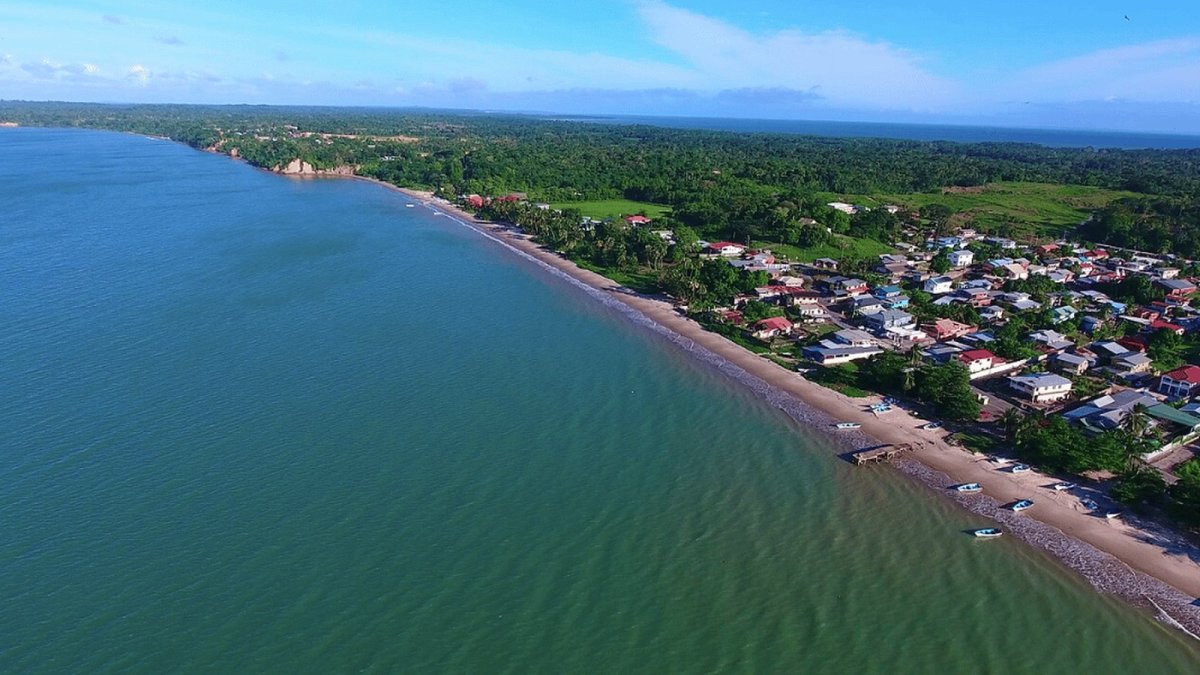
The calm waters of the Gulf of Paria have become the centre of a fresh diplomatic storm between Trinidad and Tobago and Venezuela, after Caracas formally demanded information and compensation over a May 1 oil spill it insists originated in Trinidadian waters. The Venezuelan government has warned of "severe risks" to mangroves, wetlands and marine fauna along its eastern coastline, while Port of Spain maintains the incident was a minor, quickly contained ten-barrel leak that posed no significant environmental threat.
The dispute, which has simmered for weeks, erupted publicly after a late Saturday statement from the government of Venezuela alerted the international community to what it described as environmental damage in the Gulf of Paria and along the coastal areas of Sucre and Delta Amacuro states. The communique was pointed in its language, accusing Trinidad and Tobago of failing to meet its obligations under international environmental law and demanding urgent reparation measures.
For Trinidadians, many of whom depend on the gulf's rich fishing grounds and who have long viewed the shared waterway as a symbol of both opportunity and vulnerability, the row is deeply unsettling. It comes at a time when the cost of living continues to bite across the Caribbean, and when energy security remains a delicate balancing act for small island developing states caught between economic necessity and environmental stewardship.
Caracas Issues Formal Demand for Answers and Compensation
The Venezuelan statement, issued through its Foreign Ministry, was unequivocal. It claimed that evaluations carried out by Venezuelan authorities showed "severe risks to mangroves, wetlands, marine fauna and strategic hydrobiological resources for food security and the ecological balance of the region." The communique added that "impacts have been recorded on vulnerable species and ecosystems of high environmental value."
Caracas instructed its Foreign Ministry to immediately request all pertinent information regarding the incident, as well as the corresponding action plan for the mitigation and containment of the spill. It demanded "compliance with the obligations established in international environmental law and the urgent adoption of reparation measures for the damage caused."
The language is significant. By invoking international environmental law and demanding compensation, Venezuela is signalling that it views this not merely as a bilateral inconvenience but as a matter with potential legal consequences. The reference to "strategic hydrobiological resources" underscores the importance of the gulf's fisheries to Venezuelan coastal communities, many of whom rely on the waters for their daily bread.
For Trinidad and Tobago, the demand raises uncomfortable questions about how the incident was handled publicly, and whether more could have been done to reassure a neighbour that shares not only a maritime border but also a fragile ecosystem.
Port of Spain's Response: A Minor Incident, Quickly Contained
The Ministry of Energy and Energy Industries has pushed back firmly against the Venezuelan characterisation, releasing a detailed account of the May 1 incident. According to the ministry, Heritage Petroleum detected an oil spill at its main offshore field at approximately 7.25 am on May 1. Oil spill response protocols were immediately activated, and regulatory agencies including the ministry itself, the Environmental Management Authority (EMA) and the T&T Coast Guard were notified without delay.
The ministry reported that oil spill trajectory modelling indicated a risk of untreated hydrocarbons potentially crossing into Venezuelan waters. Approval to deploy chemical dispersants was therefore granted at 9.50 am on May 1, with dispersants applied six to eight nautical miles from the maritime border. Subsequent visual assessments, drone surveillance and vessel inspections reportedly found no visible hydrocarbons remaining on the sea surface.
The source of the leak was secured and repaired on the same day, with the affected installation returning to service on May 2. The spill was estimated at approximately ten barrels of oil, and daily inspections have since shown no recurrence. The ministry added it would collaborate with all relevant authorities locally and abroad to provide any additional information which may be required, and stated it is "committed to working with its counterparts in the Bolivarian Republic of Venezuela to develop a structured framework to manage any incidents of this nature which may arise in the future along our shared border."
Energy Minister Dr Roodal Moonilal characterised the incident as "a minor event in Trinidad and Tobago waters that was dealt with in 48 hours." He maintained that "the situation was contained quickly and effectively," and insisted there was no significant environmental impact.
Political Fallout at Home: Accusations of a Cover-Up
While the diplomatic row with Venezuela simmers, the domestic political temperature has risen sharply. Former energy minister and Opposition member Stuart Young has accused both Heritage Petroleum and the current administration of deliberately withholding information from the public about what he called a "major offshore oil spill."
"Having regard to the announcement by the Ministry of Energy a short while ago about an oil spill on May 1, it is clear that both Heritage and the Government sought to cover up and hide a major offshore oil spill, which is a significant environmental event," Young said. He questioned why the population was not informed at the time of the spill and called for a formal investigation to determine who was responsible for suppressing information. "There must be an investigation now into who suppressed this information of an oil spill since May 1," he said.
Young also raised concerns about the effectiveness of existing monitoring mechanisms, noting that during the previous administration significant investment had been made in an oil-spill radar detection system designed specifically to identify spills in the Gulf of Paria. His remarks suggest that the current government may not be making full use of the tools available to detect and respond to such incidents.
Moonilal, for his part, has directed blame toward the former People's National Movement (PNM) administration, arguing that inherited infrastructure problems were a contributing factor. He said "dilapidated infrastructure and ageing pipeline installations" left behind by the PNM had increased the likelihood of leaks, which he described as common following "years of PNM neglect."
The exchange is classic Trinidadian politics, with each side seeking to score points ahead of the next election cycle. But the stakes here are higher than mere political point-scoring. The accusation of a cover-up, if proven, would damage public trust in both Heritage Petroleum and the regulatory oversight of the energy sector, which remains the lifeblood of the Trinidadian economy.
The Diplomatic Stakes: A Delicate Relationship With Caracas
Political analyst Dr Shane Mohammed has warned that poor communication may have unnecessarily strained bilateral ties with Caracas. "My issue here is the delicacy of the relationship between Trinidad and Tobago and Venezuela. This is a highly sensitive, time-bound and emotionally charged geopolitical environment, especially in matters relating to energy security and cross-border cooperation," Mohammed said.
He questioned why neither the Ministry of Energy nor Heritage Petroleum made the spill public when it occurred on May 1, noting that transparency should have been paramount. He warned: "We cannot afford to drop the ball. We have to take into consideration the geopolitics in Trinidad and Tobago and in the world that is affecting Trinidad and Tobago; it's very delicate. We have to tread carefully."
Prime Minister Kamla Persad-Bissessar has referred all questions on the matter to Energy Minister Moonilal, a move that some observers read as an attempt to keep the controversy at arm's length from the highest office. But the Prime Minister's silence may itself become a political liability if the situation escalates further.
The relationship between Trinidad and Tobago and Venezuela has long been complex, shaped by shared history, energy interdependence and occasional friction over maritime boundaries. The Gulf of Paria is a shallow inlet between Trinidad and the western coast of Venezuela, opening into the south Caribbean Sea, where the Caribbean Current sends waters northwestward and into the Gulf of Mexico. This means that any spill in the gulf has the potential to drift across borders, making cooperation not just desirable but essential.
A New Spill? Satellite Imagery Raises the Stakes
In a later development, Venezuela claimed that a NEW oil spill originating from Trinidad and Tobago had been confirmed by satellite imagery, saying: "This event surpasses in magnitude the one that occurred in May and confirms the movement of contaminants into Venezuelan waters, posing risks to marine ecosystems, fishing activity and coastal communities."
The T&T Government said authorities were conducting an operation to determine the source and nature of the substance. Moonilal said his ministry, Heritage Petroleum and the Air Guard were conducting a joint operation: "We have deployed sea vessels and drones to conduct reconnaissance. We have received a report from our Venezuelan counterparts and are urgently investigating." He said the ministry was in touch with the Minister of Foreign and CARICOM Affairs, Sean Sobers.
Caracas said Venezuela "demands that the Government of Trinidad and Tobago fully assume its responsibility, adopting immediate measures to prevent further incidents and guaranteeing full transparency regarding the causes, scope and consequences of this spill," and reserved the right to take appropriate action before competent international bodies to determine responsibility, demand compensation and prevent recurrence.
The reference to "competent international bodies" is a clear warning that Venezuela may seek to escalate the matter beyond bilateral channels, potentially to international arbitration or environmental tribunals. For a small nation like Trinidad and Tobago, such a prospect is unwelcome, carrying both financial and reputational risks.
What This Means for the Gulf of Paria and the Wider Caribbean
The Gulf of Paria is not just a body of water; it is a lifeline for communities on both sides of the border. Its mangroves serve as nurseries for fish and crustaceans, its wetlands support migratory birds, and its waters sustain artisanal fishing fleets that feed thousands of families. The region's vulnerability to climate change and environmental degradation is well documented, and small island developing states (SIDS) like Trinidad and Tobago are on the front lines of these challenges.
The energy sector remains central to the Trinidadian economy, with Heritage Petroleum and Atlantic LNG among the key players. But the sector's environmental footprint is a growing concern, and incidents like the May 1 spill — however minor — serve as reminders of the risks inherent in offshore extraction. The fact that the spill was detected, contained and cleaned up within 48 hours is a testament to the effectiveness of the response protocols. But the failure to communicate the incident publicly, whether through oversight or deliberate suppression, has created a credibility gap that will not be easily closed.
For the wider Caribbean, this dispute is a cautionary tale. The region's shared waters, from the Gulf of Paria to the Caribbean Sea, are vulnerable to pollution from energy extraction, shipping and other activities. The need for robust regional cooperation on environmental protection has never been greater, and incidents like this one highlight the importance of transparency and trust between neighbours.
As the investigation into the alleged new spill continues, all eyes will be on Port of Spain and Caracas to see whether they can manage this crisis without further damage to their relationship. The people of the Gulf of Paria, on both sides of the border, will be watching closely. They know that the health of the gulf is inseparable from their own well-being, and that political posturing must not come at the expense of the environment they share.
The coming weeks will be critical. Will Trinidad and Tobago provide the information Venezuela has demanded? Will Caracas accept the ten-barrel figure, or push for a more thorough independent assessment? And will the alleged new spill prove to be a genuine cause for concern, or another flashpoint in an already tense relationship? These are questions that only time — and the actions of both governments — will answer.
By Sharon Sahatoo, Staff WriterThis article was produced with AI-assisted research and editorial support. Sources: Caribbean360, Trinidad Guardian, CBC Barbados, Daily Post.
What's Your Reaction?
 Like
0
Like
0
 Dislike
0
Dislike
0
 Love
0
Love
0
 Funny
0
Funny
0
 Wow
0
Wow
0
 Sad
0
Sad
0
 Angry
0
Angry
0

Caribbean Correspondent at Global1.News. Based in Port of Spain, Trinidad, covering Caribbean politics, economy, energy, climate, and culture. Amplifying the voices and stories of the Caribbean region.












Comments (0)