
GAO Rules Trump's $810 Million Pocket Rescission Illegal as the Fiscal Year Runs Out
The Government Accountability Office told Congress and the White House that President Trump's $810 million pocket rescission is unlawful, saying the funds must be obligated before the fiscal year ends on September 30, as Senate Appropriations chair Susan Collins calls it a violation of the law.

The Government Accountability Office ruled Tuesday that President Donald Trump's $810 million "pocket rescission" is unlawful, finding that the administration must spend money it moved to cancel five days before the fiscal year ends.
GAO General Counsel Edda Emmanuelli Perez sent the five-page decision to congressional leaders and Vice President JD Vance. The fiscal year ends Wednesday, September 30.
GAO Rules Trump's $810 Million Pocket Rescission Illegal as the Fiscal Year Runs Out
Washington, D.C. — The nonpartisan watchdog for Congress says the money is still Congress's to spend, and the clock on it runs out today.
The Watchdog Says No
GAO's conclusion is unambiguous. "The rescission proposals contained in the President's September 25, 2026, special message to Congress do not permit the President to withhold the appropriations," Perez wrote.
The letter, sent Tuesday to congressional leaders and Vice President JD Vance, restates a position GAO has held since 2018. The White House announced its intention Friday night to impound more than $800 million from 11 appropriations accounts, according to the Associated Press.
The notice went to House Speaker Mike Johnson on September 25, five days before the fiscal year ends. The New York Post first reported the notice to the Speaker, according to Fox News.
POLITICO reported the decision under the headline: "Federal watchdog says Trump's $810M funding cancellation is unconstitutional."
What the Five-Page Decision Actually Says
Perez grounded the finding in the Constitution. "The Constitution vests in Congress the power of the purse, and Congress did not cede this important power through the ICA," she wrote.
The Impoundment Control Act, Perez wrote, "permits only the temporary withholding of budget authority and provides that unless Congress rescinds the amounts at issue, they must be made available for obligation."
She added: "The President cannot rely on the authority in the ICA to withhold amounts from obligation, while simultaneously disregarding the ICA's limitations."
Perez wrote that "any withholding of appropriated funds beyond their date of expiration, regardless of size, subverts both the constitutional process for enacting federal law and Congress's constitutional power of the purse."
And: "The President may not force the expiration of budget authority Congress has already enacted and did not rescind."
GAO's 2018 decision, B-330330, held that "amounts proposed for rescission must be made available for prudent obligation before the amounts expire."
What $810 Million Was Supposed to Buy
The largest single piece is $567 million for Health and Human Services programs serving refugees, asylees and other non-citizens, administered by HHS's Office of Refugee Resettlement, according to the Associated Press and CNBC.
Medical Daily itemized $567.4 million for that account. Also from HHS: $27.7 million from the Agency for Healthcare Research and Quality and $5.1 million from the Office of Minority Health. About $600 million of the total is HHS money.
Other targets include Department of Education special programs for immigrant students, a Department of Justice office focused on reducing racial tensions, and a grant program at the Minority Business Development Agency, the Associated Press reported.
Also on the list: housing counseling at the Department of Housing and Urban Development and grants for affordable housing, plus a Treasury account that provided "debt forgiveness to foreign countries that make climate change-related investments for coral reefs and tropical forests," NC Newsline reported.
The 11 rescissions span Commerce, Education, HHS, Homeland Security, Housing and Urban Development, Justice and international assistance programs, Fox News reported. No CDC or NIH funding is directly cancelled.
The 45-Day Trick That Made It Possible
Under the Impoundment Control Act of 1974, passed in the aftermath of Watergate to codify Congress's power of the purse, the president may ask Congress to cancel funds and may withhold them for the 45 days of congressional session while lawmakers decide, according to the Washington Sun and NC Newsline.
Lawmakers can pass a bill approving all or part of the request. If Congress does not act within the 45-day window, the president must release the funds, according to the Associated Press.
A request sent during the last 45 days of the fiscal year is what makes it a "pocket" rescission — the money can expire before Congress votes, NC Newsline reported.
Trump made congressional action all but impossible by announcing the cuts with just five days left in the fiscal year and with the House of Representatives out of session through the November election, according to the Associated Press.
GAO's WatchBlog described the maneuver in August 2025: "A pocket rescission occurs when a president asks Congress to rescind (or cancel) funds very close to the end of the fiscal year—so close that the funds expire before they can be used for new obligations."
Vought Says the Watchdog Changed Its Mind
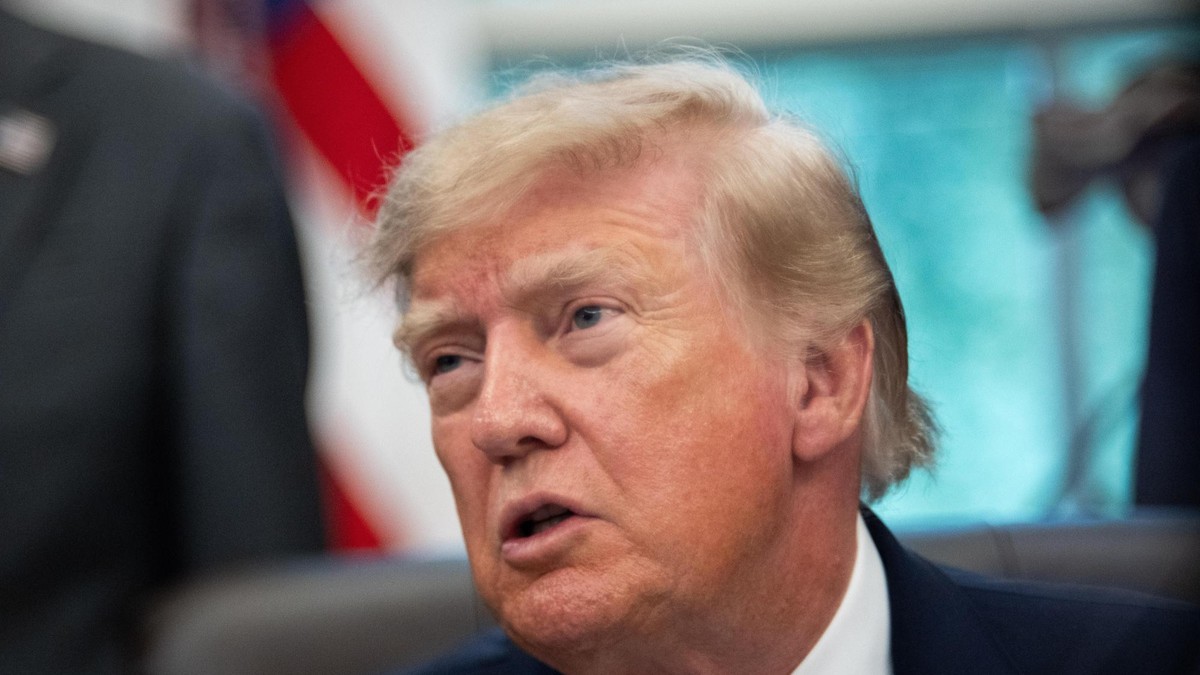
Office of Management and Budget Director Russell Vought rejected the finding on X. "Not a surprise. GAO has become hyper partisan and Congress recently attempted to cut their spending because of it," he wrote.
Vought added: "GAO changed its long-time opinion on this very issue from the 1970s when they specifically noted the tool was available to the president. They make their legal assessments based on whether Democrats are in the White House."
OMB General Counsel Mark Paoletta, also on X, wrote: "The text of the Impoundment Control Act (ICA) specifically allows for pocket rescissions and GAO previously agreed with this view for 43 years-until 2018 (during Trump 45 Administration) when it abruptly reversed its position."
Paoletta added: "We are just using the system CONGRESS established and never changed despite being told by your own GAO to change it." He said the administration "will continue to use its lawful authorities to get wins for the American people."
The White House directed reporters to Vought's statement when asked for comment, according to The Hill. OMB has argued the ICA sets no limit on how late in the fiscal year a president may propose a rescission and has cited actions by earlier administrations as precedent, Medical Daily reported.
Who Could Sue, and Why Nobody Has
The U.S. Court of Appeals for the District of Columbia Circuit ruled in August 2025 that the GAO is the only group with the power to sue the administration over violations of the Impoundment Control Act, according to the Washington Sun.
The GAO reached a similar conclusion last year about the first set of pocket rescissions — and did not sue the administration.
"Our GC is incredibly squeamish," one current GAO employee told the Washington Sun.
GAO's warning "once again raises questions around whether the watchdog agency will take any legal action against the administration," the Washington Sun reported.
The Congressional Research Service noted in Legal Sidebar LSB11374 that "courts have not decided the merits of whether the ICA permits such action." CRS also noted a D.C. district court's September 3 ruling contained "the only judicial construction of Section 1012(b) to date," and the court appeared to conclude Section 1012(b) provides no authority to withhold funds proposed for rescission.
The Last Time Trump Did This, the Money Never Came Back
A year ago, Trump issued a pocket rescission for the first time in nearly 50 years by blocking $4.9 billion in congressionally approved foreign aid, according to the Associated Press.
That request was submitted in August 2025 and the administration cancelled the $4.9 billion without congressional action, NC Newsline reported.
The Supreme Court declined to block those rescissions, saying Trump's authority over foreign affairs weighed heavily. Its September 2025 preliminary ruling let the administration withhold about $4 billion of the aid while noting that the "order should not be read as a final determination on the merits," ABC News reported.
Last year's pocket rescissions were about five times larger than this year's, according to the Washington Sun. This year the targeted spending is domestic, the Associated Press reported.
A few months before that first pocket rescission, OMB worked with Republican lawmakers to successfully rescind $9 billion in funding for the Corporation for Public Broadcasting and certain foreign aid accounts, NC Newsline reported.
A Line-Item Veto by Another Name
CRS noted that GAO has likened pocket rescissions to a line-item veto — a power the Supreme Court ruled unconstitutional, according to Fox News.
GAO's WatchBlog was direct when it asked: "Are pocket rescissions legal?" Its answer: "No. A pocket rescission is illegal."
The watchdog said a pocket rescission "would cede Congress's power of the purse by allowing a president to, in effect, change the law by shortening the period of availability for fixed-period funds."
"The Impoundment Control Act (ICA) does not provide that authority. If Congress wanted a president to have that authority, it would need to change the law," GAO wrote.
GAO added that "when not enough time is given to consider this request or for funds to be used before they expire, the president is bypassing congressional authority over government funding."
The Associated Press reported that "the use of a 'pocket rescission' fits into a broader pattern by the Trump administration to exert greater control over the U.S. government, eroding Congress's power."
The Money Expires Tonight
The administration's position is that the money is already expired budget authority and will no longer be available for its previously authorized use, the Daily Signal reported. GAO's finding is not a court order, and the office has not sued.
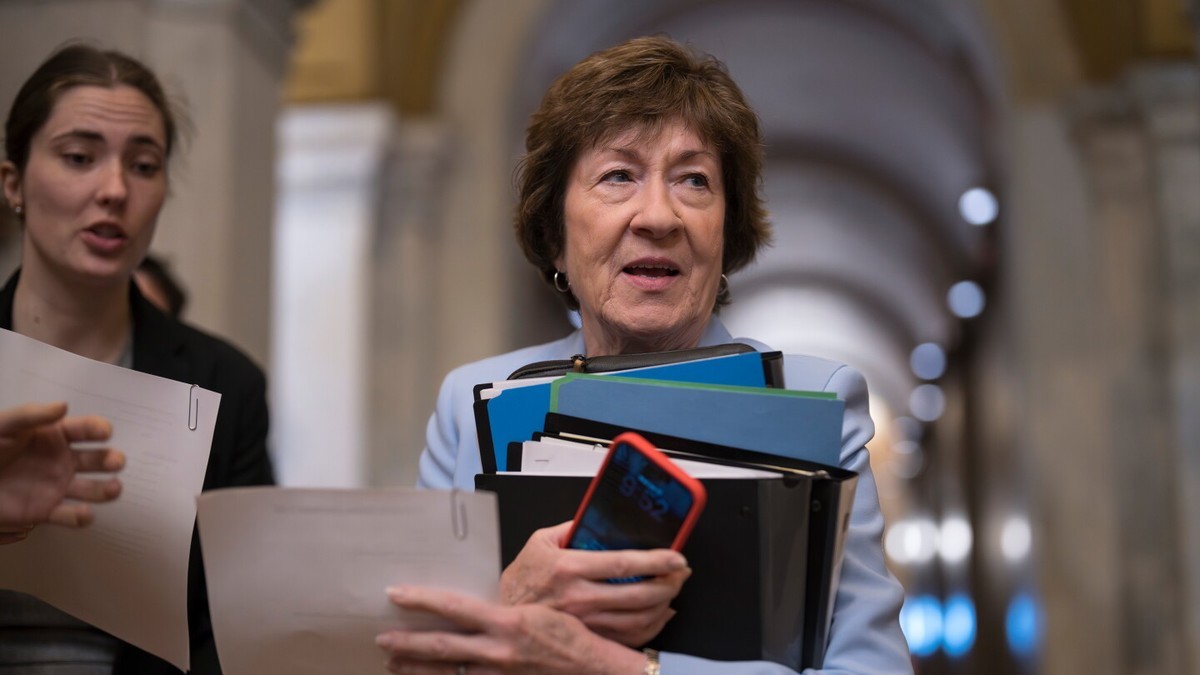
Sen. Susan Collins (R-Maine), the chair of the Senate Appropriations Committee, called the package a power grab on X: "Without warning or consultation, Congress just received an $810 million package of pocket rescissions from the Administration. This is the most recent attempt by this Office of Management and Budget (OMB) to undermine Congress's Constitutional power of the purse."
Collins added that "any effort to rescind appropriated funds without congressional approval is a clear violation of the law," and said OMB "intentionally withheld these funds for months to execute this unlawful cancellation of appropriations that were approved on a bipartisan basis and signed into law," CBS News reported. "OMB is an agency of the executive branch," she said. "It does not get to decide which programs are worth funding."
What to Watch Next
Collins told reporters Monday that she is exploring whether new language in future appropriations bills could prohibit pocket rescissions, and that outside groups are likely to challenge the cancellation in court, the Washington Sun reported. She did not describe a specific plan.
Other Republicans on the Senate Appropriations Committee are working with her to fight the rescissions and may add guardrails to the next appropriations bills, The Hill reported.
Senate Majority Leader John Thune (R-S.D.) said he again expects the courts to have the final word. Some of the proposed cuts are things that "many of us agree with, but the process by which they did it is going to be, I assume, subject to a lot of discussion and probably some litigation."
Sen. Jeff Merkley criticized the move as undermining Congress's spending authority, the Liberty Tribune reported. There is no shutdown attached: the Senate passed a stopgap 90-6 on August 8 that funds agencies through December 11, and Trump signed it into law weeks ahead of the deadline.
By Jessica Ali, Staff Writer
This article was produced with AI-assisted research and editorial support. Sources: Associated Press; The Hill; States Newsroom/NC Newsline; The Washington Sun; POLITICO; CNBC; ABC News; Fox News; The Daily Signal; Medical Daily; GAO WatchBlog and GAO decision B-330330; Congressional Research Service Legal Sidebar LSB11374; the White House September 25, 2026 rescissions package.
What's Your Reaction?
 Like
0
Like
0
 Dislike
0
Dislike
0
 Love
0
Love
0
 Funny
0
Funny
0
 Wow
0
Wow
0
 Sad
0
Sad
0
 Angry
0
Angry
0

Editor-in-Chief at Global1.News. Atlanta-based journalist who cuts through the BS and tells it like it is. Lead anchor, host, and the voice you hear when the spin stops and the truth starts.














Comments (0)