
Flydubai Jet to Tel Aviv Squawks Hijack Code as Pilots Brawl in the Cockpit
A flydubai jet from Dubai to Tel Aviv sent the hijack code over Saudi Arabia after the airline confirmed its pilots clashed in the cockpit. The flight diverted to Tabuk and landed safely with about 180 people aboard.
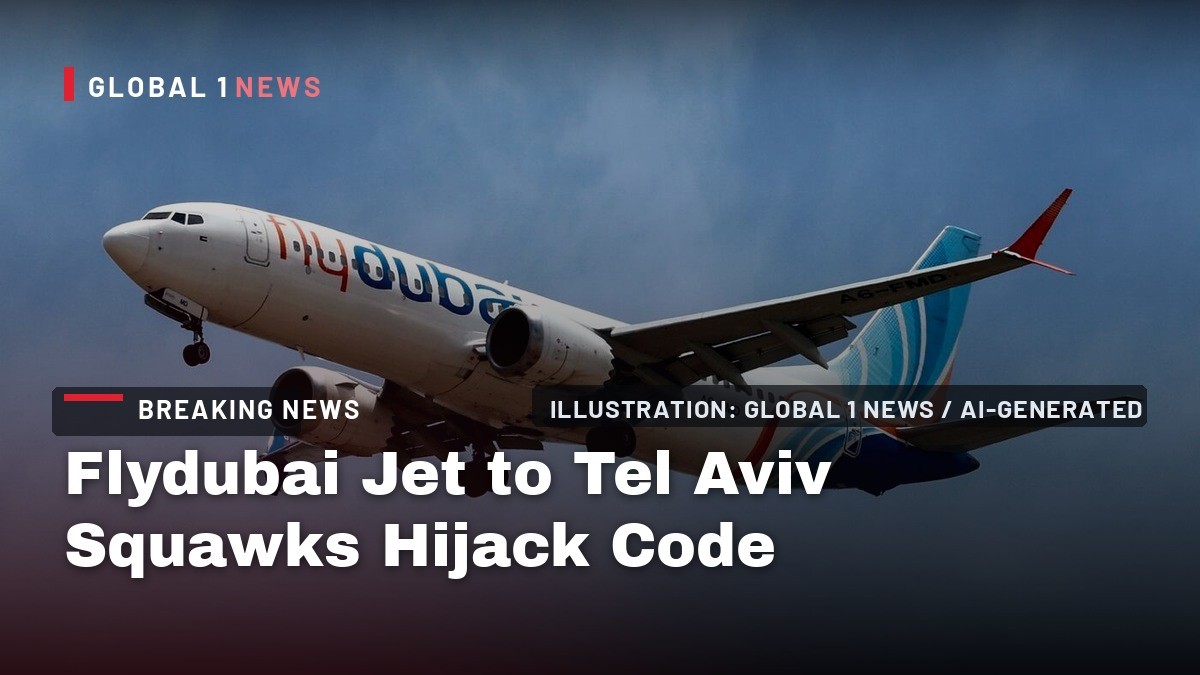
Folks, here is a sentence you never want attached to your flight: the pilots were fighting in the cockpit, and the aircraft sent the hijack code to the ground.
That is exactly where a flydubai passenger jet bound for Tel Aviv ended up on Wednesday morning — a Boeing 737 MAX 8, roughly 180 people on board, squawking the code reserved for unlawful interference over Saudi Arabia, with Israeli fighter jets scrambled and the prime minister pulled into an emergency security consultation before anyone on the ground knew what had actually happened inside that flight deck.
Flydubai Jet to Tel Aviv Squawks Hijack Code as Pilots Brawl in the Cockpit
Dubai, United Arab Emirates — A flydubai flight from Dubai to Tel Aviv declared an emergency over Saudi Arabia on Wednesday, briefly transmitted the transponder code that signals a hijacking, and diverted to a Saudi airport after the airline confirmed that its two pilots clashed in the cockpit.
The Code No Pilot Wants to Send
The flight, operating as FZ1073, departed Dubai International Airport at about 6:55 a.m. local time on its scheduled service to Ben Gurion Airport near Tel Aviv, according to flight-tracking data. It was a Boeing 737 MAX 8 registered as A6-FKF.
Roughly ninety minutes before it was due to land, the aircraft began transmitting emergency signals. The first was squawk 7700, the international code for a general emergency. Then came the one that changes everything: squawk 7500, the code reserved for unlawful interference — the signal a crew sends when a plane is being hijacked.
Transponder codes are not casual transmissions. A pilot selects them deliberately, and air traffic control and security agencies treat 7500 as an unambiguous declaration that something is catastrophically wrong on board.
What the Transponder Said
Flight-tracking data showed the aircraft turning sharply over northern Saudi Arabian airspace and descending far below its cruising level, dropping to around 15,000 feet before stabilising. Cedar News reported that the aircraft briefly switched from 7500 back to 7700 as the situation evolved.
According to Israel National News, the flight turned around while flying over Jordan and changed course. A few minutes after the distress code was activated, the pilot signalled that the aircraft was again bound for Israel, and the plane changed direction a second time.
For a stretch, the aircraft did not contact control towers, and it disappeared from Flightradar24 and other tracking apps — a gap that, on a route into Israel, is precisely the kind of silence that sets off alarms in a military operations room.
Israel Sends Up Fighters
Israeli Air Force fighter jets were scrambled toward the aircraft, according to security sources cited by Ynet and confirmed to CNN by an Israel Defense Forces spokesperson.
Prime Minister Benjamin Netanyahu and Defense Minister Israel Katz held an urgent security consultation with senior defence officials, and the Israeli military carried out a situation assessment involving the Air Force and other security agencies.
The IDF said in a statement that "following reports, the IDF Chief of the General Staff conducted a situational assessment in recent minutes with the Commander of the Israeli Air Force, the Head of the Operations Directorate, the Head of Military Intelligence, and additional commanders."
Reports said departures from Ben Gurion Airport were temporarily affected while authorities evaluated the threat. A single 7500 transmission, on a flight headed for Israel, is enough to trigger that entire chain — and that is by design.
Down in Tabuk
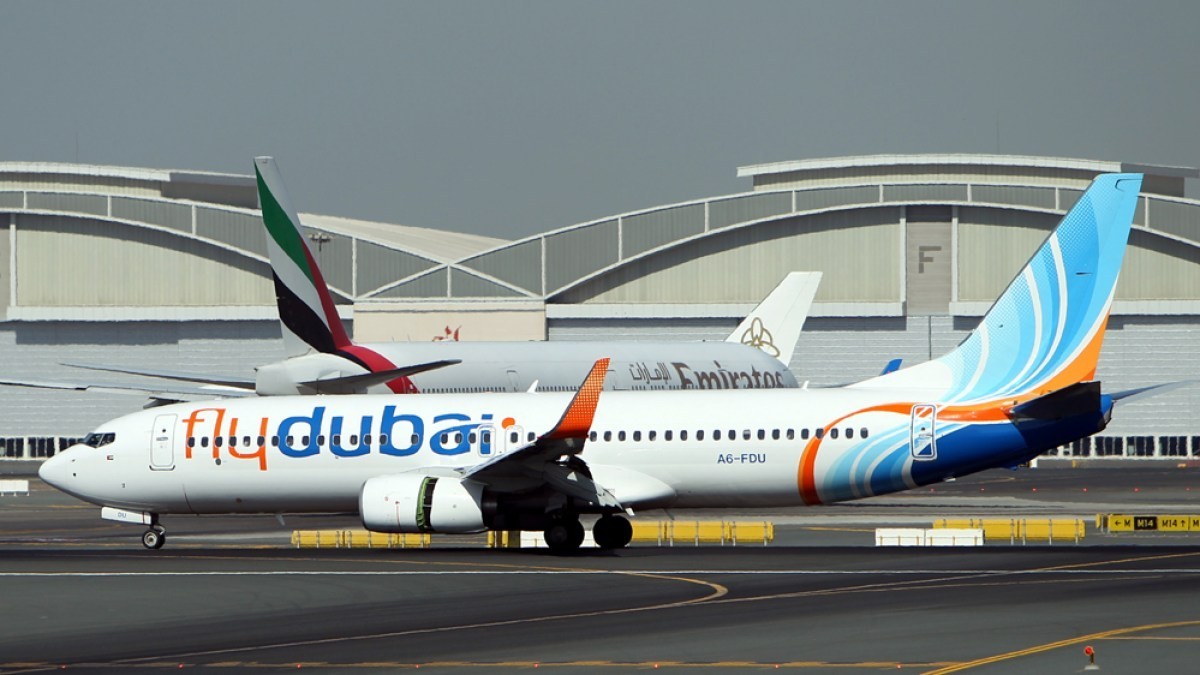
The flight was diverted to Tabuk Airport in northwestern Saudi Arabia, where it landed safely. The flydubai website displayed the change plainly: "The flight has been diverted from Tel Aviv (TLV) to Tabuk (TUU)."
Israeli officials told Haaretz that the aircraft had landed at Tabuk with approximately 180 Israeli passengers aboard. Anadolu Agency had earlier reported more than 150 passengers on board, and Daily Sabah cited reports of roughly 174 people, including about 27 children.
The Prime Minister's Office said in a statement: "Following concerns of an aerial incident, Prime Minister Netanyahu held discussions on the matter and followed the developments." It added: "The incident is under control, and we are now using all means available to bring the Israeli passengers safely to Israel."
flydubai Confirms the Cockpit Fight
The most consequential development came when the airline itself spoke. Israel National News reported that flydubai confirmed the pilots had clashed in the cockpit, and that the distress signal had been entered as a result of the violent altercation between them.
Israeli television station Channel 12 reported that one of the pilots is Russian and the other Ukrainian. That detail has not been independently confirmed by the airline or by aviation authorities, and it should be treated as an unverified report rather than an established fact.
The airline's own public statement was more measured than the accounts circulating around it. Al Jazeera reported that flydubai confirmed the plane "experienced an incident while en route", adding that it landed safely at Tabuk Airport and that all passengers were safe and accounted for.
A few hours earlier, the signals had pointed in a very different direction. The Prime Minister's Office later said the diversion to Saudi Arabia was not believed to have been the result of a hijacking, and a security source cited by Ynet stressed that "there is no confirmed information about a hijacking. The pilot activated a distress signal."
What a Passenger Says Happened
One passenger who was aboard the flight gave i24NEWS an account that goes considerably further than the airline's statement. The passenger said that during the incident an attempt was made to stab the pilot.
"The entire cockpit was covered in blood," the passenger said. "The Israeli guys took control of the situation and caught the attacker."
That is a single passenger's account, relayed through one broadcaster. It has not been corroborated by flydubai, by Saudi authorities or by any aviation regulator, and it should be read with that in mind. But if it holds up, it describes an act that goes well beyond a dispute between two crew members.
Two Accounts That Do Not Fully Agree
Here is where the reporting stands, and it is worth being precise about it, because the two main narratives are not the same story told twice.
The first account — carried by Israel National News and attributed to the airline — is a fight between the two pilots. The second account — a passenger's testimony on i24NEWS — describes an attack on a pilot, with blood in the cockpit and civilians stepping in to subdue an assailant. Those are different events with different legal and security implications.
What is not in dispute: the flight sent 7500, it descended and turned over Saudi Arabia, fighter jets went up, and the aircraft landed safely at Tabuk. Everything about who did what inside that flight deck remains under investigation.
Why This Route Raises the Alarm
The Dubai–Tel Aviv route exists because of the Abraham Accords, the US-brokered normalisation of ties between the United Arab Emirates and Israel signed at the White House in 2020. flydubai launched the first scheduled commercial service between the two cities that November, and the route has since grown into a workhorse link — the airline now operates dozens of weekly flights on the pairing.
That makes it one of the most politically freighted short-haul corridors in the world. An aircraft arriving from the UAE is arriving from a partner state, but it is arriving into Ben Gurion, where Israeli security authorities have spent months on heightened alert amid a wider regional crisis.
When a plane on that route sends 7500, the response is not calibrated to a mechanical fault. It is calibrated to a threat.
A Gulf Aviation Market Already on Edge
The incident lands on an aviation market that was already buckling. Gulf News reported on Wednesday that travellers in the UAE faced another morning of disruption, with delays at both Dubai International and Abu Dhabi's Zayed International as the regional security situation remained fluid.
Air France extended its suspension of Dubai flights from October 13 to October 24. Cathay Pacific cancelled its Dubai and Riyadh passenger flights up to and including January 31, 2027. Air Arabia reported cancellations to Kuwait and Bahrain, and flydubai cancelled its Dubai–Abha service.
The airline has been advising passengers departing Dubai to allow at least four hours before departure. Against that backdrop, a hijack code on a flagship UAE–Israel service is the last headline the region's carriers needed.
The Questions Still Open
Several questions remain unanswered. Saudi Arabia's General Authority of Civil Aviation and Israeli authorities did not immediately respond to requests for comment.
What exactly triggered the altercation; whether any crew member or passenger was injured; whether anyone has been detained in Tabuk; and what role, if any, the nationalities of the pilots played — none of that has been established by an official source.
flydubai's chief executive has informed Israeli transportation authorities that a replacement aircraft will be sent from Dubai to Saudi Arabia and will continue from there to Israel, according to Israel National News.
For the roughly 180 people who boarded a routine morning flight to Tel Aviv and ended their day in northwestern Saudi Arabia, the arrangement of who is responsible will be sorted out by investigators. What is already clear is how quickly a flight deck dispute can become an international security incident — and how narrow the margin was. Stay vigilant, folks. We will keep following it.
By Jessica Ali, Staff Writer
This article was produced with AI-assisted research and editorial support. Sources: CNN, Haaretz, The Times of Israel, Israel National News, i24NEWS, Channel 12, Ynet, The National, Anadolu Agency, Daily Sabah, BNO News, Kurdistan24, Cedar News, Gulf News, Flightradar24.
What's Your Reaction?
 Like
0
Like
0
 Dislike
0
Dislike
0
 Love
0
Love
0
 Funny
0
Funny
0
 Wow
0
Wow
0
 Sad
0
Sad
0
 Angry
0
Angry
0

Editor-in-Chief at Global1.News. Atlanta-based journalist who cuts through the BS and tells it like it is. Lead anchor, host, and the voice you hear when the spin stops and the truth starts.














Comments (0)