
US Withdrawal from Iraq Marks End of Two-Decade Military Presence
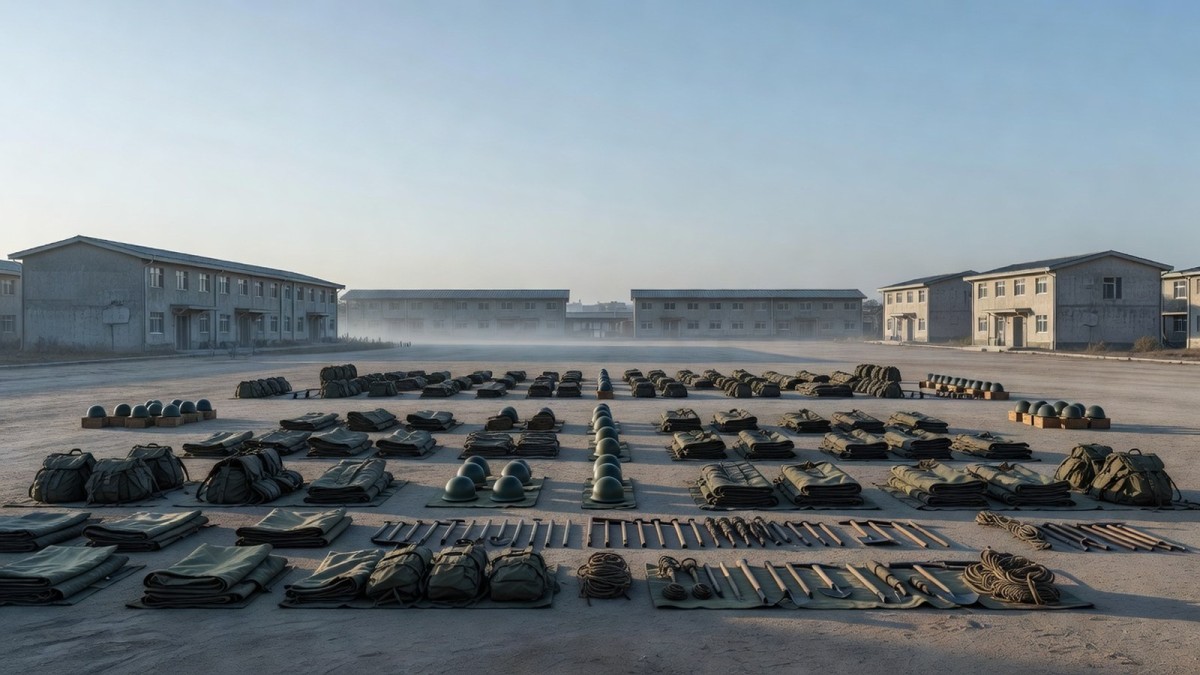
The latest footage from TRT World shows US forces packing up their final bases in Iraq, signalling the conclusion of a military footprint that has stretched back over twenty years.
The latest footage from TRT World shows US forces packing up their final bases in Iraq, signalling the conclusion of a military footprint that has stretched back over twenty years. The departure, which follows an agreement reached in 2024, is being executed under the current US administration despite an ongoing conflict with Iran. As the last convoys roll out, regional observers are weighing the strategic repercussions of a potential security vacuum, the possible empowerment of Iran‑backed militias, and the spectre of a Daesh resurgence.
Historical Context of the US Presence in Iraq
The United States first entrenched its forces in Iraq in the early 2000s, a move that reshaped the security architecture of the country and the broader Gulf region. Over the ensuing two decades, American bases served as both a deterrent against external threats and a platform for counter‑terrorism operations. This long‑standing presence has been a cornerstone of the US‑Iraqi security partnership, influencing the balance of power among Sunni and Shia factions within Iraq.
From a strategic standpoint, the US footprint was also intertwined with broader great‑power rivalries, as Washington sought to limit Iranian influence while safeguarding energy routes that traverse the Persian Gulf. The 2024 agreement to withdraw, however, reflected a shift in Washington’s calculus, prioritising diplomatic engagement over a permanent military foothold.
In the report, TRT World’s correspondent notes that the withdrawal is being overseen by the Trump administration, underscoring a political decision that diverges from the previous administration’s approach to the Iranian threat. The timing of the exit, amid an ongoing war against Iran, raises questions about the future of US leverage in the region.
Implications for Iran‑Backed Militias
The exit of US troops inevitably alters the operational environment for Iran‑backed militias that have long operated in the shadow of American bases. These groups, which have benefited from the protective umbrella of US forces, may now find themselves emboldened by the removal of a direct counter‑balance.
Analysts from regional think tanks, as cited in the TRT World footage, warn that the vacuum could enable these militias to expand their influence across Iraq’s volatile provinces. The militias have historically leveraged sectarian divides, and without the presence of US forces, they could intensify recruitment and logistics networks.
Furthermore, the shift may affect Tehran’s strategic calculus. With the US no longer maintaining forward bases, Iran could perceive an opening to deepen its foothold in Iraq, thereby extending its reach into the Gulf’s maritime corridors and influencing the broader Sunni‑Shia competition that defines regional politics.
Risk of Daesh Resurgence
One of the most immediate concerns highlighted in the video report is the possibility of a Daesh resurgence. The militant group, which was largely contained through sustained US air and ground operations, could exploit the security gap left by the departing forces.
TRT World’s coverage points to fears among Iraqi officials that the loss of US intelligence and logistical support may diminish the capacity of Iraqi security forces to conduct effective counter‑terrorism missions. The prospect of Daesh re‑emerging in remote or contested areas could destabilise the fragile security gains achieved over the past decade.
Regional security experts caution that a resurgence would not only threaten Iraq’s internal stability but also have spill‑over effects across neighbouring states, potentially reigniting broader sectarian tensions and complicating the fight against extremism that has been a shared priority among Gulf states and Western partners.
Strategic Calculus of the Trump Administration
The decision to proceed with the withdrawal, despite the ongoing war against Iran, reflects a strategic pivot by the Trump administration. As the TRT World report indicates, the administration is pursuing a policy that seeks to disengage militarily while maintaining diplomatic pressure on Tehran.
This approach suggests a belief that the US can achieve its objectives through regional partnerships and economic levers rather than through a permanent ground presence. By ending the two‑decade deployment, Washington may be signalling confidence in the capacity of Iraqi and allied forces to manage security challenges independently.
Nevertheless, the timing raises questions about the administration’s contingency planning. Without a clear on‑the‑ground foothold, the US may find its ability to respond swiftly to flare‑ups or to influence Iraqi political dynamics constrained, potentially limiting its leverage in future negotiations with Tehran.
Regional Energy Security Considerations
Iraq sits atop some of the world’s most critical oil reserves, and the stability of its production capacity is a linchpin for global energy markets. The withdrawal of US forces, as reported by TRT World, could have indirect implications for energy security across the Gulf.
A secure Iraq is essential for uninterrupted oil exports, and any escalation of militia activity or a Daesh revival could threaten pipeline infrastructure and export terminals. This, in turn, could prompt neighbouring Gulf states to reassess their own security postures and possibly increase their own military deployments to safeguard energy corridors.
The broader great‑power rivalry over energy routes may also intensify, as external powers seek to fill any perceived vacuum left by the US. The strategic calculus of regional actors will therefore be closely linked to how quickly Iraq can stabilise its internal security landscape in the absence of American bases.
Future Outlook for Stability and Alliances
In the wake of the US exit, Iraq’s internal political dynamics and its relationships with regional powers will be decisive in shaping the country’s trajectory. The TRT World footage underscores that the departure is not merely a logistical operation but a watershed moment that could recalibrate alliances.
If Iraqi security forces manage to contain militia expansion and prevent a Daesh comeback, the country could emerge with a stronger sense of sovereignty, potentially fostering deeper ties with Gulf Arab states that share concerns over Iranian influence. Conversely, any lapse in security could drive Baghdad to seek renewed external assistance, perhaps from Russia or China, thereby altering the balance of great‑power competition in the region.
Ultimately, the end of a two‑decade US military presence marks a pivotal juncture for Middle East geopolitics. The coming months will reveal whether the vacuum feared by analysts materialises, and how regional actors adapt to a new security architecture that no longer includes a permanent American footprint in Iraq.
By Malik Hassan, Staff Writer
This article was produced with AI-assisted research and editorial support. Reporting is based on the source material cited below. Sources: TRT World video report (30 September 2026); TRT World; Global1.News
What's Your Reaction?
 Like
0
Like
0
 Dislike
0
Dislike
0
 Love
0
Love
0
 Funny
0
Funny
0
 Wow
0
Wow
0
 Sad
0
Sad
0
 Angry
0
Angry
0
Middle East Correspondent at Global1.News. Based in Beirut, covering politics, conflict, energy, and society across the Middle East. Brings context and depth to a region often reduced to headlines.









Comments (0)