
China‑Yunnan and Driscoll’s Forge New Blueberry Supply Chain
In a recent CGTN video report released on 29 September 2026, the partnership between U.S. The footage shows expansive blueberry fields set against Yunnan’s mountainous backdrop, while interview excerpts underline the strategic motivations of both parties.
In a recent CGTN video report released on 29 September 2026, the partnership between U.S. berry giant Driscoll’s and growers in Yunnan Province was highlighted as a vivid illustration of how agricultural cooperation is reshaping China’s fruit market and, by extension, regional supply chains. The footage shows expansive blueberry fields set against Yunnan’s mountainous backdrop, while interview excerpts underline the strategic motivations of both parties. This development merits close examination not merely as a commercial venture, but as a case study in how the People’s Republic is leveraging its diverse agro‑ecological zones to meet rising domestic demand for premium produce, and how foreign firms are navigating the evolving landscape of Sino‑American trade relations.
Yunnan’s Climatic Advantage and Agricultural Evolution
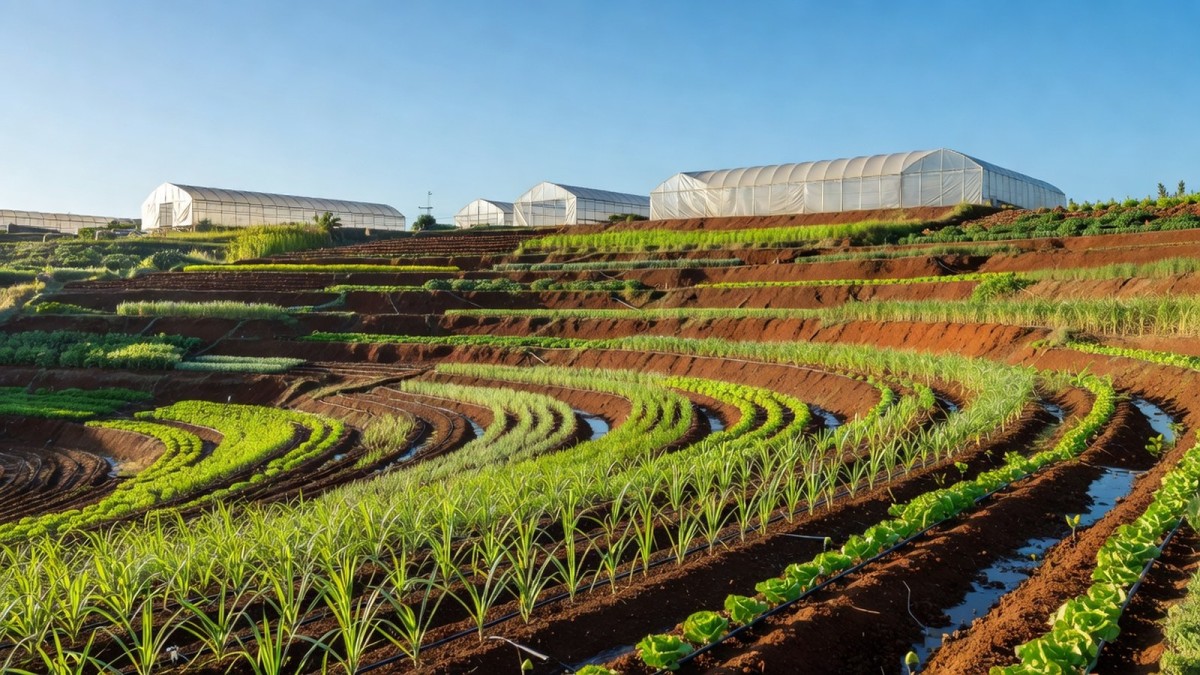
Yunnan Province, located in southwest China, enjoys a subtropical highland climate that combines ample rainfall, moderate temperatures, and a long frost‑free season. These conditions have traditionally supported tea, coffee, and a variety of tropical fruits. The CGTN report emphasizes that the same climate is now being harnessed for blueberry cultivation, a crop that historically required cooler, temperate zones. The video footage shows rows of blueberry bushes thriving on terraced slopes, suggesting that local growers have adapted horticultural techniques—such as canopy management and soil acidification—to suit the plant’s needs.
Beyond the natural endowment, Yunnan’s agricultural sector has undergone a rapid professionalisation over the past decade. Provincial authorities have promoted modern agronomy, introduced mechanised harvesting equipment, and facilitated access to financing for small‑scale farmers. The CGTN correspondents note that growers in the region are acquiring expertise through collaborations with foreign firms, which in turn accelerates the diffusion of best practices. This synergy between climate and capacity positions Yunnan as an emerging hub for high‑value fruit production within China’s broader push to diversify its agricultural output.
The strategic importance of Yunnan extends to its logistical connectivity. Bordering Myanmar, Laos, and Vietnam, the province sits at the crossroads of the Belt & Road Initiative’s southern corridors. While the video does not detail transport infrastructure, the broader context of China’s push to integrate inland provinces into international trade routes suggests that Yunnan’s produce can reach both domestic urban markets and export destinations with relative efficiency. This geographic advantage underpins the feasibility of scaling blueberry production to meet the growing appetite for premium fruit among Chinese consumers.
Driscoll’s Strategic Entry into the Chinese Blueberry Market
Driscoll’s, a leading U.S. berry company, has long cultivated a reputation for premium-quality strawberries, raspberries, and blueberries in North America and Europe. The CGTN segment reveals that the firm is now extending its footprint into China by partnering with Yunnan growers. The video highlights that the collaboration spans the entire value chain—from cultivation techniques and seedling supply to joint branding and sales channels. This comprehensive approach signals Driscoll’s intent to embed its standards within local production, rather than merely exporting finished fruit.
From a commercial perspective, the partnership aligns with Driscoll’s broader strategy to capture the burgeoning middle‑class market in Asia, where demand for safe, high‑quality fresh produce is rising sharply. The report underscores that Chinese consumers increasingly associate imported or foreign‑branded fruit with superior safety and taste, a perception that Driscoll’s can leverage. By co‑producing blueberries domestically, the company can sidestep import tariffs and logistical bottlenecks while retaining brand credibility through stringent quality controls.
The collaboration also reflects a pragmatic response to the complexities of U.S.–China trade relations. While the video does not mention specific policy measures, the broader geopolitical climate in 2026 has been marked by heightened scrutiny of foreign investment and technology transfer. Driscoll’s decision to work through local partners, rather than establishing wholly foreign‑owned farms, mitigates regulatory risk and aligns with Chinese expectations that foreign firms contribute to domestic capacity building. This model of “co‑creation” may become a template for other agribusinesses seeking market access in China.
Supply‑Chain Integration and Market Implications
The CGTN footage shows a seamless integration of cultivation, packing, and distribution processes. In one segment, a Driscoll’s representative explains that the company supplies certified planting material to Yunnan growers, monitors agronomic practices, and assists in establishing cold‑chain logistics to preserve fruit quality from field to market. This end‑to‑end involvement is crucial in a market where freshness and safety standards are paramount for premium positioning.
From a supply‑chain perspective, domestic production of blueberries reduces reliance on imports, which have historically been subject to seasonal fluctuations and trade barriers. By cultivating the fruit within China, Driscoll’s and its partners can offer a more stable year‑round supply, aligning with the seasonal demand peaks driven by Chinese festivals and the summer consumption surge. Moreover, the partnership enables the creation of a “Chinese‑grown premium” label that may resonate with consumers seeking locally sourced yet internationally certified products.
The market implications extend to price dynamics. While the video does not disclose pricing, the introduction of a high‑quality domestic supply is likely to exert downward pressure on imported blueberry prices, thereby expanding the overall market size. Simultaneously, the premium branding associated with Driscoll’s can sustain a price premium for its co‑produced fruit, carving out a niche segment that balances affordability with perceived quality. This dual‑track approach could stimulate broader consumer adoption of blueberries as a staple snack, further entrenching the fruit in Chinese dietary habits.
Geopolitical Context: Agricultural Cooperation Amid Tense Bilateral Relations
The partnership unfolds against a backdrop of cautious but pragmatic engagement between the United States and China. In recent years, trade disputes and technology restrictions have complicated direct investment flows. Nonetheless, agriculture has remained a relatively insulated domain where cooperation can persist, provided it respects sovereign regulatory frameworks. The CGTN report implicitly underscores this point by highlighting the collaborative, rather than confrontational, nature of the Driscoll’s‑Yunnan venture.
From a geopolitical standpoint, such agricultural partnerships serve multiple strategic purposes. For China, they demonstrate an openness to foreign expertise that can accelerate domestic agricultural modernization, a priority articulated in recent State Council white papers on food security. For the United States, they offer a channel to maintain economic ties and influence standards in a sector that is less politicised than high‑tech or defense. The video’s focus on mutual benefit—enhancing Yunnan growers’ capabilities while expanding Driscoll’s market reach—embodies a diplomatic language of win‑win cooperation that both sides can publicly endorse.
However, the partnership also carries sensitivities. The Chinese government remains vigilant about foreign involvement in critical supply chains, especially those that could affect food safety and public health. By embedding foreign standards within domestic production, Driscoll’s must navigate Chinese regulatory oversight, ensuring that its practices align with national standards and do not trigger protectionist backlash. The CGTN coverage, by presenting the collaboration in a positive light, suggests that the authorities view this particular venture as aligned with national development goals.
Implications for Regional Agricultural Development
Yunnan’s emergence as a blueberry hub may inspire neighboring provinces and bordering countries to pursue similar high‑value fruit cultivation. The region’s climate is conducive to a range of temperate and subtropical crops, and the success of the Driscoll’s partnership could act as a catalyst for cross‑border agribusiness initiatives under the Belt & Road framework. The CGTN report’s emphasis on Yunnan’s expertise development hints at a broader ambition to position southwestern China as a gateway for agricultural exports to Southeast Asia.
In the context of regional supply chains, the establishment of a reliable cold‑chain infrastructure for blueberries can have spillover benefits for other perishable goods. Investments in refrigerated transport, storage facilities, and quality‑control laboratories, initially justified by the blueberry market, can be leveraged for a wider array of horticultural products. This infrastructural uplift supports the broader goal of enhancing food security and market integration across the Greater Mekong Subregion.
Moreover, the partnership may influence trade patterns by reducing the share of imported berries from traditional exporters such as Chile and the United States. As domestic production scales, China could transition from a net importer to a net exporter of certain berry varieties, reshaping global trade flows. While the CGTN video does not project export ambitions, the strategic positioning of Yunnan along international transport corridors suggests that surplus production could be directed toward neighboring markets, reinforcing China’s role as a regional agrifood hub.
Strategic Outlook and Long‑Term Significance
Looking ahead, the Driscoll’s‑Yunnan collaboration illustrates how targeted foreign partnerships can accelerate China’s agricultural diversification while offering foreign firms a foothold in a massive consumer market. The CGTN report’s focus on the practical aspects of cultivation and sales underscores that the venture is not a symbolic gesture but an operationally integrated enterprise. As China continues to prioritize food quality and safety, the demand for internationally recognised standards is likely to rise, creating further opportunities for firms that can align with domestic policy objectives.
Strategically, the partnership serves as a microcosm of a broader trend: the blending of foreign expertise with domestic production capacity to meet the aspirations of a growing middle class. This model mitigates the risks associated with direct foreign investment while delivering tangible benefits to local economies. For policymakers in Beijing, the success of such collaborations can reinforce the narrative that opening select sectors to foreign participation enhances, rather than threatens, national development goals.
For Driscoll’s and similar agribusinesses, the Yunnan experience may inform future market entry strategies across China’s varied agro‑ecological zones. Replicating the co‑production model in other provinces—such as the temperate zones of Shandong for apples or the coastal regions for citrus—could enable a networked approach to building a domestic supply chain for premium fruit. The CGTN video, by documenting the early stages of this partnership, provides a valuable case study for both scholars and practitioners analyzing the evolving architecture of Sino‑American economic engagement in the agricultural domain.
By Prof. Marcus Chen, Staff Writer
This article was produced with AI-assisted research and editorial support. Reporting is based on the source material cited below. Sources: CGTN video report (29 September 2026); CGTN; Global1.News
What's Your Reaction?
 Like
0
Like
0
 Dislike
0
Dislike
0
 Love
0
Love
0
 Funny
0
Funny
0
 Wow
0
Wow
0
 Sad
0
Sad
0
 Angry
0
Angry
0

World Politics Analyst at Global1.News. Based in Beijing, covering US-China relations, global trade, and geopolitical strategy. Brings deep analytical perspective to the power dynamics shaping international affairs.














Comments (0)