
Venezuela releases dozens of political prisoners as election calls grow
Venezuelan authorities released a wave of political detainees early Saturday, a move that arrives just days after interim President Delcy Rodríguez met U.S.
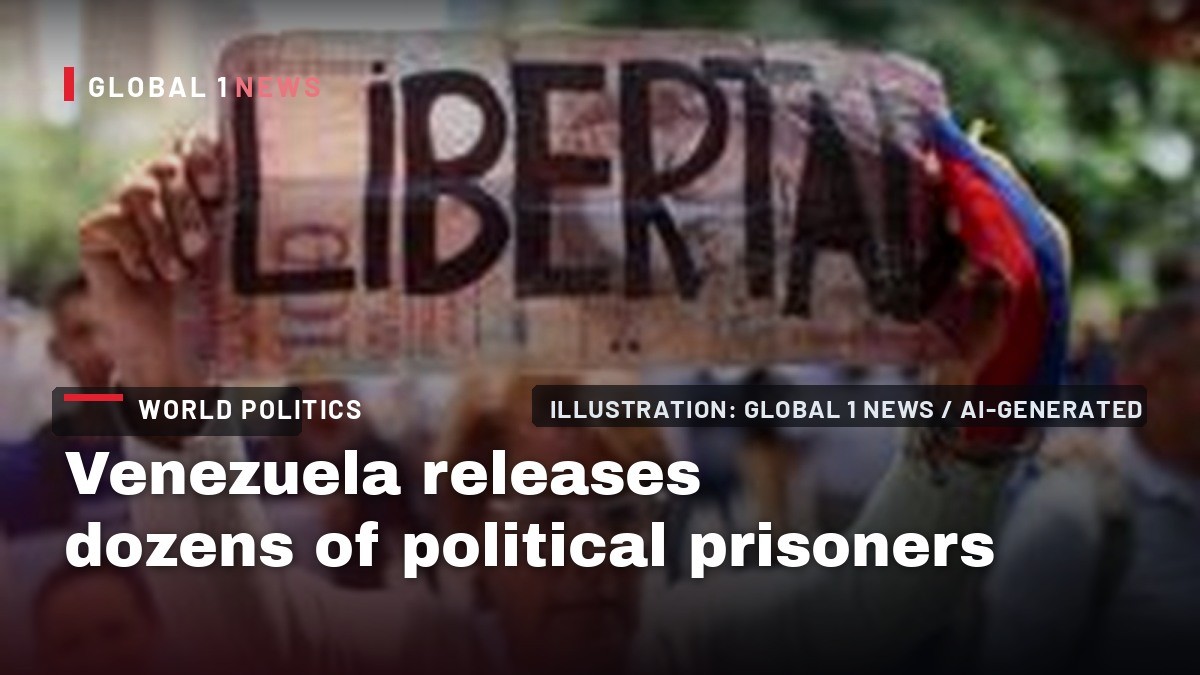
Venezuelan authorities released a wave of political detainees early Saturday, a move that arrives just days after interim President Delcy Rodríguez met U.S. President Donald Trump in New York. Human‑rights advocates say the releases are part of a broader, yet faltering, “reconciliation” scheme that began after former President Nicolás Maduro was seized earlier this year. The timing, however, raises fresh questions about whether the latest clemency is a genuine concession or a diplomatic gesture aimed at placating Washington while preserving the regime’s grip on power.
From mass pardons to a trickle
Rodríguez’s administration launched a prisoner‑release programme in the wake of Maduro’s arrest, freeing hundreds of inmates as a goodwill overture to the United States. The initiative was framed as a step toward national healing, an attempt to demonstrate a more permissive stance on dissent. Yet, as the months wore on, the flow of releases slowed dramatically. By April, the scheme “was coming to an end,” Rodríguez herself announced, signaling a retreat from the earlier, more generous pace.
Human‑rights groups note that the latest batch, described by Foro Penal’s vice‑president Gonzalo Himiob as “a significant number,” came from several detention centres across the country. While the exact tally remains unclear, the fact that multiple facilities were involved suggests a coordinated effort rather than isolated, ad‑hoc decisions.
Names behind the bars
Among those freed was Wilder Vasquez, sentenced in 2018 to five years for alleged plotting against former President Maduro. His case exemplifies the opaque criminal charges often levied against political opponents. Also released were Miguel Castillo Cedeño, detained arbitrarily since June 2019, and Frank Cabañas, who had spent nine years behind bars after being linked to a police officer’s death. Cabañas was the sole remaining suspect in his case, despite family reports of serious health problems last year.
These individual stories illustrate a pattern: long‑term detentions on vague or politically motivated accusations, followed by sporadic releases that rarely address the underlying grievances of the opposition or the broader human‑rights concerns raised by international observers.
Political calculus behind the releases
The releases cannot be viewed in isolation from Rodríguez’s recent diplomatic overtures. Her meeting with President Trump at the United Nations General Assembly, where she reiterated that “there will be elections in Venezuela,” was framed by the regime as a triumph of “the diplomacy of peace,” according to Interior Minister Diosdado Cabello. Yet opposition figures see the same meeting as a snub to their long‑standing demand for swift, free elections—a demand the United States has historically endorsed.
Analysts note that the United States lifted sanctions on Rodríguez and backed her as Maduro’s successor, favoring short‑term stability over a rapid transition to opposition leadership. This backing, coupled with the timing of the prisoner releases, suggests a calculated attempt to showcase a more conciliatory image while maintaining the core power structures that keep the regime intact.
Opposition reaction and the election question
Opposition leaders have seized on the releases to renew calls for free elections, arguing that the gesture is insufficient without a clear timetable. The 2024 presidential vote, which declared Maduro the winner, was widely condemned as rigged. Opposition tallies claimed their candidate—standing in after María Corina Machado was barred—had secured roughly 70 % of the vote. The disputed outcome fuels ongoing protests and deepens mistrust of any government‑led “reconciliation” efforts.
Pedro Mario Burelli, a former state oil executive turned commentator, dismissed the U.S.–Venezuelan dialogue as a “shameless puppet” scenario, accusing Washington of “clumsy and selective oversight.” His critique underscores a broader sentiment among many Venezuelans: foreign involvement, even when framed as supportive, often feels like another layer of manipulation rather than genuine assistance.
The limits of Rodríguez’s “goodwill”
Foro Penal estimates that less than half of the nation’s political prisoners have been released under the current scheme. The organization points out that the decision to wind down the programme attracted sharp criticism from both opposition and rights groups, who argue that the gesture is more symbolic than substantive. The regime continues to deny that dissidents are jailed, casting each release as a voluntary act of goodwill rather than a response to external pressure.
This narrative serves a dual purpose: it projects an image of magnanimity to the international community while allowing the government to retain leverage over remaining detainees. By controlling the pace and scope of releases, the interim administration can signal compliance without ceding real power.
International implications and regional dynamics
The United States’ involvement in Venezuela remains a contentious issue across Latin America. While Washington touts the prisoner releases and the lifting of sanctions as evidence of progress, many regional observers view the approach with skepticism. The “short‑term stability” strategy, praised by some analysts, risks entrenching a regime that continues to suppress dissent and manipulate electoral outcomes.
Moreover, the broader regional context—marked by rising authoritarian tendencies and external meddling—means that any perceived concession from the Venezuelan government will be scrutinized for its authenticity. Human‑rights groups warn that without a clear, enforceable commitment to free and fair elections, gestures like prisoner releases risk being mere window‑dressing for a system that still relies on intimidation and arbitrary detention.
Looking ahead: what the releases mean for Venezuela’s future
The latest wave of releases may provide temporary relief for families and signal a modest opening, but the underlying power dynamics remain unchanged. Rodríguez’s promise of elections, voiced at the UN, lacks a concrete timeline, leaving the opposition in a state of uncertainty. As long as the regime continues to control the narrative around political prisoners—portraying releases as unilateral goodwill while denying the existence of systemic repression—any progress will be fragile.
For Venezuelans yearning for genuine democratic renewal, the key will be sustained domestic pressure combined with consistent international advocacy that goes beyond symbolic gestures. The release of individuals like Wilder Vasquez, Miguel Castillo Cedeño, and Frank Cabañas offers a glimpse of what a more open society could look like, yet the path to that future remains fraught with the same political calculations that have defined the country’s recent history.
This article was produced with AI-assisted research and editorial support. Reporting is based on the source material cited below. Sources: BBC News Latin America; bbc.co.uk; Global1.News (29 September 2026).
By Elena Vasquez, Staff Writer
What's Your Reaction?
 Like
0
Like
0
 Dislike
0
Dislike
0
 Love
0
Love
0
 Funny
0
Funny
0
 Wow
0
Wow
0
 Sad
0
Sad
0
 Angry
0
Angry
0

Latin America Correspondent at Global1.News. Based in Mexico City, covering politics, economics, energy, and culture across the region. Brings an on-the-ground perspective to stories spanning from the Rio Grande to Patagonia.










Comments (0)