
Russian Government Suspends Audits for Companies Targeted in Ukrainian Attacks
The moratorium, which takes effect on Monday, 28 September 2026, will remain in force until 1 October 2027, covering a full year of post‑conflict reconstruction.
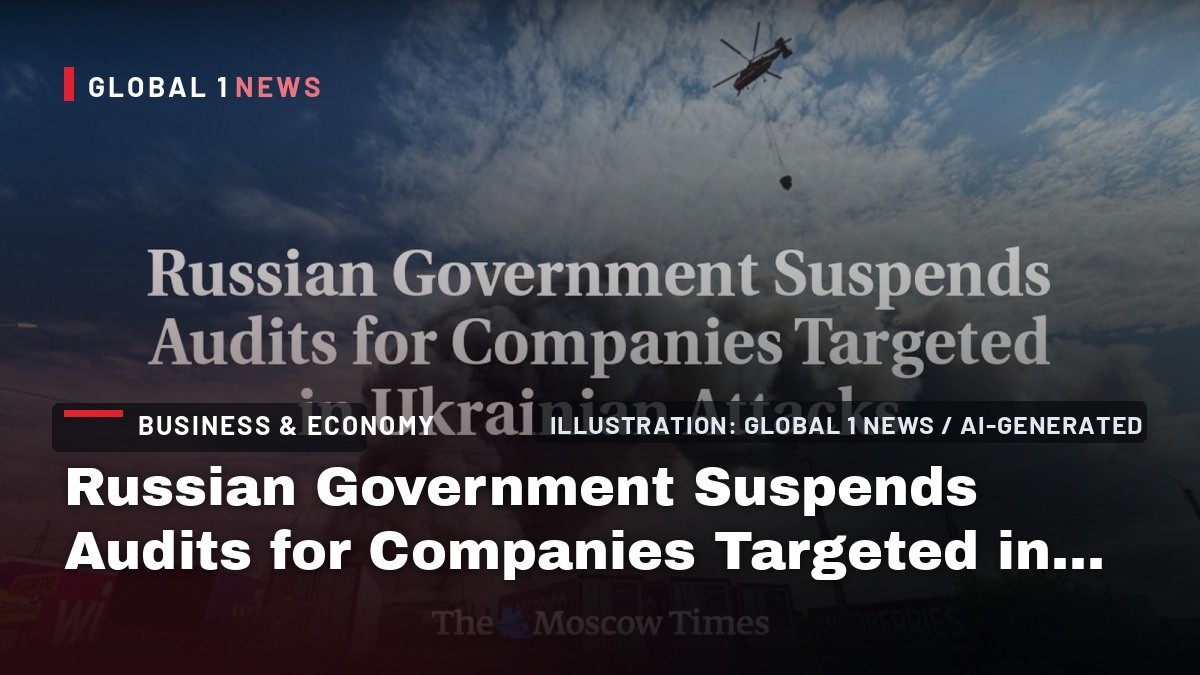
The Russian government has announced a sweeping suspension of routine state inspections for firms whose assets have been damaged in recent Ukrainian attacks, a move framed by Deputy Prime Minister Dmitry Grigorenko as a temporary measure to ease bureaucratic burdens during the recovery period. The moratorium, which takes effect on Monday, 28 September 2026, will remain in force until 1 October 2027, covering a full year of post‑conflict reconstruction. While officials present the policy as a pragmatic response to the urgent need for businesses to restore operations, the decision also reveals deeper shifts in the Kremlin’s approach to economic regulation and state control over strategic sectors.
Scope and Mechanics of the Inspection Moratorium
According to Grigorenko, the temporary suspension applies to routine inspections conducted by a range of agencies, including fire safety, labor, consumer protection and tax authorities. Under the new rules, companies engaged in rebuilding efforts are exempt from scheduled audits, though the government retains the right to launch “emergency audits” if triggered by an executive order, prosecutorial request, or concerns related to national security and public health. This dual‑track system preserves a degree of oversight while ostensibly reducing the administrative load on firms grappling with damaged infrastructure.
The moratorium’s legal basis is anchored in an Interfax‑quoted statement that the measure is “aimed at reducing the administrative burden on businesses and supporting firms that are currently restoring facilities targeted in strikes.” By limiting only routine inspections and not eliminating all oversight, the Kremlin maintains a lever of control that can be re‑activated swiftly should a company’s reconstruction efforts be deemed insufficient or pose a perceived risk to state interests.
Political Context: From Putin’s Critique to Executive Power
The suspension follows a public rebuke by President Vladimir Putin earlier in September, in which he labeled the aggressive regulatory scrutiny of businesses receiving emergency state support as “harmful and pointless.” Putin’s criticism aligns with a broader narrative that positions the state as a protector of economic actors during wartime, while simultaneously warning against bureaucratic overreach that could stifle recovery. This rhetoric provides political cover for the moratorium and signals a shift toward a more lenient regulatory posture—at least on the surface.
However, the easing of inspections coincides with a parallel tightening of state authority in other domains. In August, Putin signed an executive order granting the government the power to seize companies and critical infrastructure if owners fail to protect their assets against drone attacks or delay repairs. This order underscores a paradox: while routine audits are suspended, the state retains the capacity to intervene directly and decisively in cases of perceived negligence or non‑compliance, especially where strategic assets are concerned.
Economic Implications for Affected Enterprises
The moratorium is likely to provide immediate relief for firms facing extensive damage to physical assets, particularly those in the energy, transportation and retail sectors that have been prime targets of Ukrainian strikes. By removing the requirement to accommodate scheduled inspections, companies can allocate resources more efficiently toward reconstruction, potentially accelerating the resumption of production and services. This could mitigate some of the economic fallout from the attacks, preserving employment and tax revenues in the short term.
Nevertheless, the temporary nature of the measure—set to expire on 1 October 2027—means that businesses must still prepare for a return to full regulatory scrutiny. The lingering threat of emergency audits, which can be triggered at the discretion of executive or prosecutorial authorities, introduces a lingering uncertainty. Companies may therefore adopt a cautious approach, prioritizing compliance with security and health standards to avoid triggering state intervention.
Strategic Sectors Under Scrutiny
The policy’s impact is most pronounced in sectors that have been directly targeted by Ukrainian attacks. Notably, the report mentions a recent move by the Russian government to place one of Moscow’s largest gas station chains under temporary state control, invoking the executive order that allows seizure of assets failing to protect against drone strikes. This action illustrates how the Kremlin is willing to exercise direct control over critical infrastructure, even as it relaxes routine inspection requirements elsewhere.
Such selective enforcement suggests a tiered approach to state oversight: routine inspections are suspended for most firms, but strategic assets—particularly those linked to energy distribution and transport—remain under tight watch. This dual strategy enables the government to balance the need for rapid economic recovery with the imperative of maintaining control over sectors deemed vital to national security and the war effort.
Legal and Institutional Dimensions
The moratorium’s legal framework is anchored in the authority of the Deputy Prime Minister’s office, but it also interacts with broader institutional powers. Emergency audits, for instance, can be initiated by the Prosecutor General’s Office, which has recently expanded its reach by designating independent outlets such as The Moscow Times as “undesirable” organizations. This broader crackdown on dissent underscores the government’s willingness to leverage legal mechanisms to curtail both economic and informational autonomy.
By retaining the option for emergency audits, the state preserves a legal instrument that can be used to enforce compliance or punish perceived non‑cooperation. The combination of a moratorium on routine checks and the threat of emergency interventions creates a regulatory environment that is simultaneously permissive and coercive, depending on the strategic importance of the enterprise in question.
Broader Geopolitical Implications
The suspension of inspections can be interpreted as part of a larger Kremlin strategy to sustain the domestic economy under the strain of ongoing hostilities. By easing bureaucratic burdens, the government seeks to prevent a cascade of business failures that could erode public confidence and weaken the war economy. At the same time, the ability to seize assets and impose emergency audits signals to both domestic and foreign observers that the state retains ultimate control over critical sectors.
This balancing act has implications for Russia’s international economic relations. While the moratorium may reassure domestic investors of short‑term relief, the underlying threat of state seizure could deter foreign capital and complicate any future attempts at economic reintegration. Moreover, the policy underscores the Kremlin’s reliance on a hybrid model of market mechanisms tempered by direct state intervention—a model that may shape Russia’s post‑war economic architecture.
Outlook and Potential Developments
Looking ahead, the moratorium’s expiration date of 1 October 2027 provides a clear timeline for businesses to plan their compliance strategies. Companies are likely to use the intervening year to rebuild infrastructure, adapt to new security protocols, and negotiate the ambiguous regulatory environment. The continuation of emergency audit powers suggests that the state will retain a lever of coercion, which could be employed more aggressively if reconstruction stalls or if security threats persist.
In the broader context, the suspension of routine inspections reflects a pragmatic response to wartime exigencies, but it also reveals the Kremlin’s willingness to oscillate between liberalization and repression as circumstances dictate. As the war in Ukraine continues to shape Russia’s domestic policy landscape, the interplay between economic relief measures and state control will remain a key indicator of the government’s long‑term strategy for managing both the war effort and the country’s economic resilience.
This article was produced with AI-assisted research and editorial support. Reporting is based on the source material cited below. Sources: The Moscow Times; themoscowtimes.com; Global1.News (30 September 2026).
By Irina Volkov, Staff Writer
What's Your Reaction?
 Like
0
Like
0
 Dislike
0
Dislike
0
 Love
0
Love
0
 Funny
0
Funny
0
 Wow
0
Wow
0
 Sad
0
Sad
0
 Angry
0
Angry
0
Russia/Eastern Europe Correspondent at Global1.News. Covering Russian politics, energy, security, and the shifting dynamics of the post-Soviet space. Provides clear-eyed analysis on one of the world's most opaque regions.










Comments (0)