
ICC rejects Duterte camp’s request on digital evidence
Manila’s legal community watched with bated breath as the International Criminal Court’s Trial Chamber III issued its decision on September 26, 2026, rejecting a key request from the defense team of former President Rodrigo Duterte.
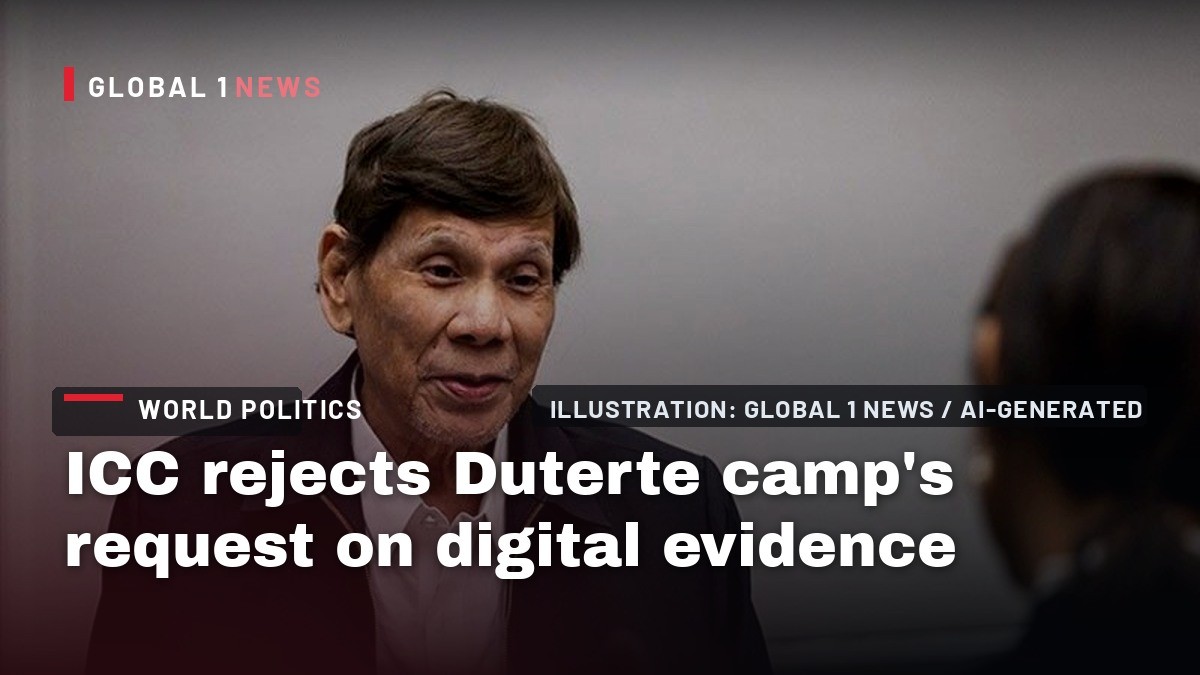
Manila’s legal community watched with bated breath as the International Criminal Court’s Trial Chamber III issued its decision on September 26, 2026, rejecting a key request from the defense team of former President Rodrigo Duterte. The request, lodged by defense lawyer Peter Haynes, sought to tighten the verification process for digital evidence—particularly open‑source and user‑generated material—by adding an “expert verification” field to the court’s E‑Court Protocol. While the ICC’s ruling may appear technical, its implications ripple through the barangays and sari‑sari stores across the Philippines, where the ongoing case already fuels intense public debate and concerns over the credibility of information circulating online.
Background of the ICC case and the defense’s digital evidence concerns
The Duterte case before the ICC has been marked by a flood of online content, ranging from official statements to viral videos posted by ordinary netizens. Defense counsel Peter Haynes warned that this “uniquely challenging information ecosystem” is saturated with misinformation, or “fake news,” that could cloud the evidentiary record. He argued that without a stricter protocol, the defense would struggle to sift through material of “dubious relevance, authenticity and reliability.” This concern reflects a broader anxiety among Filipinos who, whether in a Manila office or a remote barangay, rely increasingly on digital platforms for news and civic engagement.
Haynes’s proposal aimed to shift part of the evidentiary burden onto the prosecution, requiring them to attach an expert verification report to each piece of open‑source or user‑generated evidence. The defense believed this would safeguard the trial’s integrity by ensuring that only vetted, trustworthy digital material entered the courtroom, thereby protecting the rights of the accused and the fairness of the judicial process.
The ICC’s decision and its legal reasoning
In its seven‑page decision, the Trial Chamber III emphasized that the existing framework already places the primary responsibility on the defense to identify and challenge individual pieces of evidence. The judges warned that adding an “expert verification” field would invert this balance, compelling the prosecution to prepare additional documentation on relevance and admissibility before the defense could even begin its analysis. As the decision states, such a shift would “require the prosecution to prepare additional materials… before the defense analyses evidence and raises any abovementioned issues.”
The chamber’s ruling underscores a core principle of ICC proceedings: each party must meet its evidentiary obligations without imposing undue procedural burdens on the other side. By rejecting the defense’s amendment, the judges reaffirmed that the existing protocol, while perhaps imperfect, aligns with the court’s procedural efficiency and the equitable division of labor between prosecution and defense.
The prosecutor’s stance on the request
ICC acting prosecutor Mame Mandiaye Niang labeled the defense’s request as “unreasonable, unnecessary and against the interests of judicial efficiency.” Niang highlighted the breadth of open‑source and user‑generated evidence, noting that these categories encompass a wide array of documents and media. She argued that the decision to require an expert report should be made on a case‑by‑case basis by the party submitting the evidence, which bears the burden of proving relevance, probative value, and potential prejudice.
This position reflects a pragmatic approach: imposing a blanket expert‑verification requirement could slow down proceedings, especially in a case already dense with digital material. By keeping the verification process flexible, the prosecutor aims to preserve the court’s ability to handle large volumes of evidence without compromising the speed and fairness of the trial.
The compromise: Adding a URL metadata field
While the defense’s broader amendment was denied, the Trial Chamber III granted the prosecution’s request to include a URL metadata field for each piece of open‑source or user‑generated evidence. This addition will allow parties to identify the exact web address associated with the evidence at the time it was captured. In practice, this means that judges, prosecutors, and defense lawyers can trace the source of digital material more precisely, helping to verify its authenticity without the need for a full expert report.
For Filipino netizens, this compromise offers a modest yet tangible improvement in transparency. It acknowledges the importance of pinpointing the origin of online content—a concern that resonates with many who have seen viral videos later debunked as fabricated. By ensuring that URLs are recorded, the court creates a clearer audit trail that could aid future investigations and public scrutiny.
Implications for the Philippine legal community
The ICC’s ruling reverberates beyond the international courtroom, prompting Philippine lawyers, scholars, and law students to revisit the standards for digital evidence in domestic cases. The Department of Justice and the Supreme Court may look to the ICC’s reasoning as a reference point when drafting or amending rules of evidence, especially as courts grapple with an ever‑growing influx of online material.
Moreover, the decision highlights the need for capacity‑building among Filipino judges and prosecutors in handling open‑source and user‑generated evidence. Training programs and workshops could help legal practitioners develop the technical expertise required to assess the reliability of digital content, ensuring that the justice system remains resilient against misinformation that can distort legal outcomes.
Public reaction and the broader fight against misinformation
Across the archipelago, reactions to the ICC’s decision have been mixed. Some view the court’s emphasis on procedural efficiency as a necessary safeguard against endless legal delays, while others worry that the lack of stricter verification could allow “dubious” digital evidence to influence the case’s outcome. Social media commentary reflects this tension, with many Filipinos echoing the defense’s concern that the evidentiary record could be “overwhelmed” by unreliable material.
Community leaders and NGOs have seized the moment to call for stronger media literacy programs in schools and barangays. By equipping ordinary citizens with the tools to discern credible information from fake news, they hope to bolster democratic participation and protect the integrity of both local and international legal processes.
Looking ahead: What the decision means for the Duterte case and beyond
As the Duterte trial proceeds, the inclusion of URL metadata may become a pivotal factor in how evidence is contested and evaluated. Both the prosecution and defense will likely rely on these links to argue the provenance and weight of digital material, shaping the narrative presented to the judges. The decision also sets a precedent for how the ICC and other tribunals might handle digital evidence in future cases involving complex information ecosystems.
For Filipinos, the case remains a reminder of how global legal battles intersect with everyday concerns about truth, accountability, and the power of the internet. Whether in a Manila courtroom or a provincial barangay hall, the quest for reliable evidence continues to be a cornerstone of justice—a principle that resonates deeply in our collective pursuit of a fair and transparent society.
This article was produced with AI-assisted research and editorial support. Reporting is based on the source material cited below. Sources: Philstar.com; Global1.News (30 September 2026).
By Bella Reyes, Staff Writer
What's Your Reaction?
 Like
0
Like
0
 Dislike
0
Dislike
0
 Love
0
Love
0
 Funny
0
Funny
0
 Wow
0
Wow
0
 Sad
0
Sad
0
 Angry
0
Angry
0

Philippines/Southeast Asia Correspondent at Global1.News. Manila-based journalist covering Philippine politics, environment, maritime security, and social issues. Passionate about marine conservation and the communities protecting the Philippines' natural heritage.











Comments (0)