
Assam Government Encroaches Into a World Heritage Site in India’s Northeast
Manas National Park, a UNESCO World Heritage Site and the nation’s first tiger reserve, is once again under pressure as the Assam government’s handling of a disputed 9.3‑square‑kilometre tract of land raises questions about the state’s commitment to conservation.
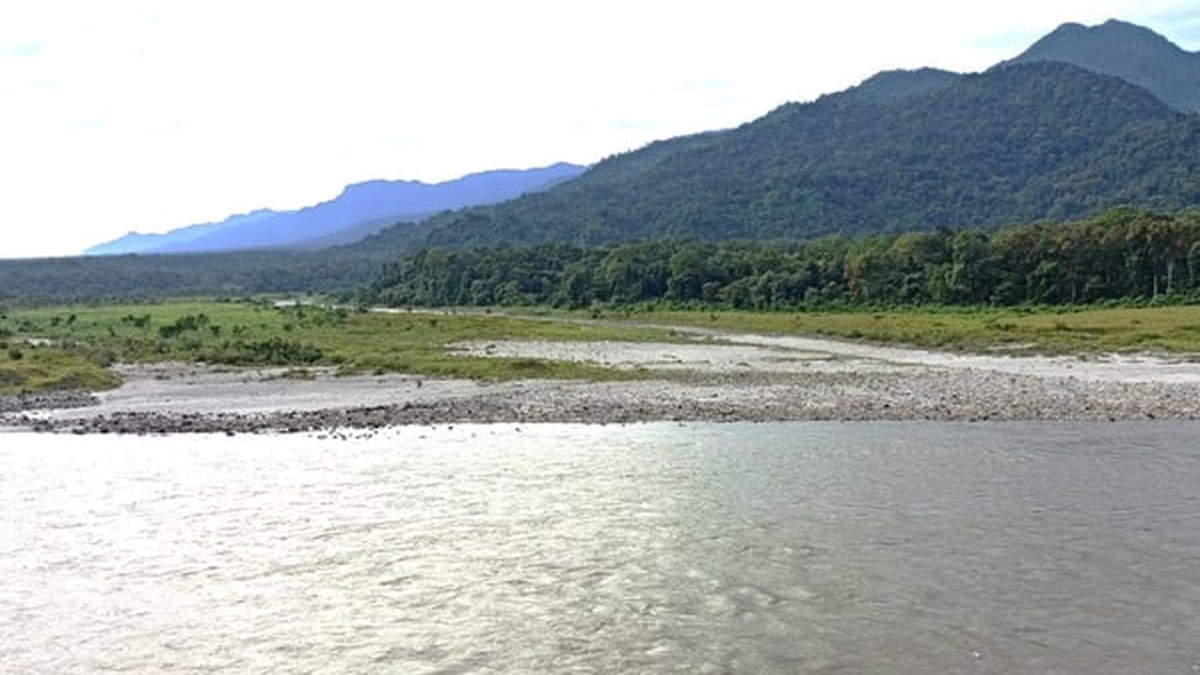
Manas National Park, a UNESCO World Heritage Site and the nation’s first tiger reserve, is once again under pressure as the Assam government’s handling of a disputed 9.3‑square‑kilometre tract of land raises questions about the state’s commitment to conservation. The contested area, originally part of a seed farm lease that expired in 2001, now lies within the park’s core tiger and Bengal florican habitats in the Bhuyanpara Range. Local farmers, allegedly operating with the consent of the Bodoland Territorial Council (BTC), have cultivated the land despite its protected status, prompting repeated warnings from the National Tiger Conservation Authority (NTCA) and legal interventions from the Gauhati High Court.
Historical context of Manas National Park
Manas’s protection lineage stretches back more than a century. Designated a reserve forest in 1907 and a wildlife sanctuary in 1928, the area was elevated to India’s first tiger reserve in 1973. Spanning 2,837 sq km, it was the country’s largest protected landscape at the time. International recognition followed: BirdLife International named it an Important Bird Area in 2004, and UNESCO inscribed it as a World Heritage Site in 1985, praising its “exceptional importance” for housing sizeable populations of threatened species across the Indian sub‑continent.
The park’s recent challenges echo a turbulent past. During the insurgency of the late 1980s, large swathes became inaccessible, hampering conservation work. Poaching surged, with the one‑horned rhinoceros disappearing from the park by the mid‑2000s after numbers fell from roughly one hundred in the late 1980s to zero. In 1996, researcher Anwaruddin Choudhury estimated that over 80 percent of the park’s large mammals had been decimated. UNESCO consequently listed Manas as “in danger” in 1992, a designation that underscored the fragility of its ecosystems.
The lease‑turned‑encroachment
The disputed parcel was originally part of the North Kamrup Reserve Forest before being leased for a seed farm operation. The 30‑year lease, granted to the Indian government, expired in 2001, after which the land was formally incorporated into Manas National Park and its tiger reserve. The Assam forest department’s letter to the Bodoland Territorial Council highlighted that the BTC had subsequently leased the same land for cultivation, a move that contravenes the legal framework governing wildlife sanctuaries, national parks, and World Heritage Sites.
Sources cited in the letter indicated that local farmers were actively farming the area, an activity expressly prohibited within protected zones. The forest department urged the Assam government to persuade the BTC to return the land to forest management, emphasizing the ecological sensitivity of the site, which lies within the core habitats of both tigers and the endangered Bengal florican.
Governmental and legal responses
The National Tiger Conservation Authority has repeatedly pressed the Assam administration to intervene. In a communique dated 30 July 2026, the NTCA appealed directly to the chief secretary, requesting “intervention” and the “handing over” of the encroached area to the Manas Tiger Reserve authorities. The NTCA noted that a prior directive issued on 11 June 2026 had not yielded visible progress, underscoring a perceived inertia within the state apparatus.
Legal pressure has also mounted. Following a Public Interest Litigation filed by activist Rohit Choudhury, the Gauhati High Court issued orders directing both the Assam government and the BTC to halt further encroachment. The court’s involvement reflects a pattern in Assam where judicial intervention has been necessary to enforce conservation measures, as seen in the 2016 eviction of illegal settlers from Kaziranga National Park after a similar court order.
Political dynamics behind the impasse
Political considerations appear to complicate the resolution. A former forest department official disclosed that the BJP‑led state government fears backlash from the BTC if it moves to clear the encroachment. The Bodoland People’s Front, which governs the council, is an ally of the BJP in the coalition, creating a delicate balance between conservation imperatives and regional political alliances. This dynamic may explain the hesitancy observed in the state’s response, despite repeated warnings from national conservation bodies.
The BTC’s role in leasing the land for agriculture, despite its location within a protected area, suggests a possible conflict between local development priorities and national conservation mandates. The tension illustrates a broader challenge in India’s federal structure, where state and regional authorities sometimes pursue divergent agendas concerning land use and environmental protection.
Ecological stakes of the encroached zone
The Bhuyanpara Range, where the disputed land lies, is integral to Manas’s tiger population. Tigers require extensive, undisturbed territories for hunting and breeding; any fragmentation can increase human‑wildlife conflict and reduce prey availability. Simultaneously, the Bengal florican, a critically endangered bird species, depends on specific grassland and wetland habitats that are highly sensitive to agricultural conversion.
Encroachment by farming not only removes native vegetation but also introduces pesticides, irrigation, and livestock, all of which can degrade habitat quality. The NTCA’s focus on the “core tiger and Bengal florican habitats” underscores the potential for irreversible damage if the land remains under cultivation. Given Manas’s status as an Important Bird Area and a tiger reserve, the ecological cost of losing even a small portion of habitat could reverberate across the broader landscape.
Implications for broader conservation policy
The Manas case highlights a systemic issue: the difficulty of reconciling local livelihood needs with the stringent protection required by World Heritage sites. While the Assam government has previously acted—evicting illegal settlers from Kaziranga after a court order—the reliance on judicial mandates rather than proactive policy suggests a reactive rather than preventive approach to conservation.
For policymakers, the situation underscores the need for clearer mechanisms to resolve lease expirations and land‑use transitions within protected areas. Establishing transparent processes for returning leased land to forest management, coupled with alternative livelihood programs for affected farmers, could mitigate future conflicts. Moreover, strengthening coordination between state ministries, regional councils, and national bodies like the NTCA may reduce the bureaucratic friction that currently hampers swift action.
Future outlook and recommendations
Immediate steps should include the Assam government honoring the NTCA’s July 2026 request by facilitating the handover of the 9.3 sq km parcel to the Manas Tiger Reserve authorities. Concurrently, the BTC must be engaged to negotiate compensation or alternative agricultural sites for the local farmers, ensuring that conservation measures do not exacerbate socioeconomic hardship.
Long‑term, Assam should consider instituting a monitoring framework that integrates satellite imagery, on‑ground patrols, and community reporting to detect and deter future encroachments. Strengthening the legal enforcement capacity of the forest department, in partnership with the Gauhati High Court, could provide a deterrent against unauthorized land use.
Ultimately, safeguarding Manas’s unique biodiversity hinges on aligning political will, legal authority, and community interests. The park’s historic resilience—surviving insurgency, poaching crises, and past “in danger” designations—demonstrates its capacity for recovery when robust protection is applied. The current encroachment episode offers a pivotal moment for Assam to reaffirm its stewardship of a site that holds not only ecological but also cultural significance for the nation and the broader Asia‑Pacific region.
This article was produced with AI-assisted research and editorial support. Reporting is based on the source material cited below. Sources: The Diplomat; thediplomat.com; Global1.News (30 September 2026).
By Kenji Tanaka, Staff Writer
What's Your Reaction?
 Like
0
Like
0
 Dislike
0
Dislike
0
 Love
0
Love
0
 Funny
0
Funny
0
 Wow
0
Wow
0
 Sad
0
Sad
0
 Angry
0
Angry
0

Japan Correspondent at Global1.News. Tokyo-based voice covering Japanese politics, technology, economy, and culture. Tracks the intersection of tradition and innovation in one of the world's most dynamic societies.















Comments (0)