
Rising seas may open new ground for invasive species: Scientists
The accelerating rise in global sea levels, a direct by‑product of climate‑driven thermal expansion and melting ice, is reshaping the coastal frontiers of many regions.
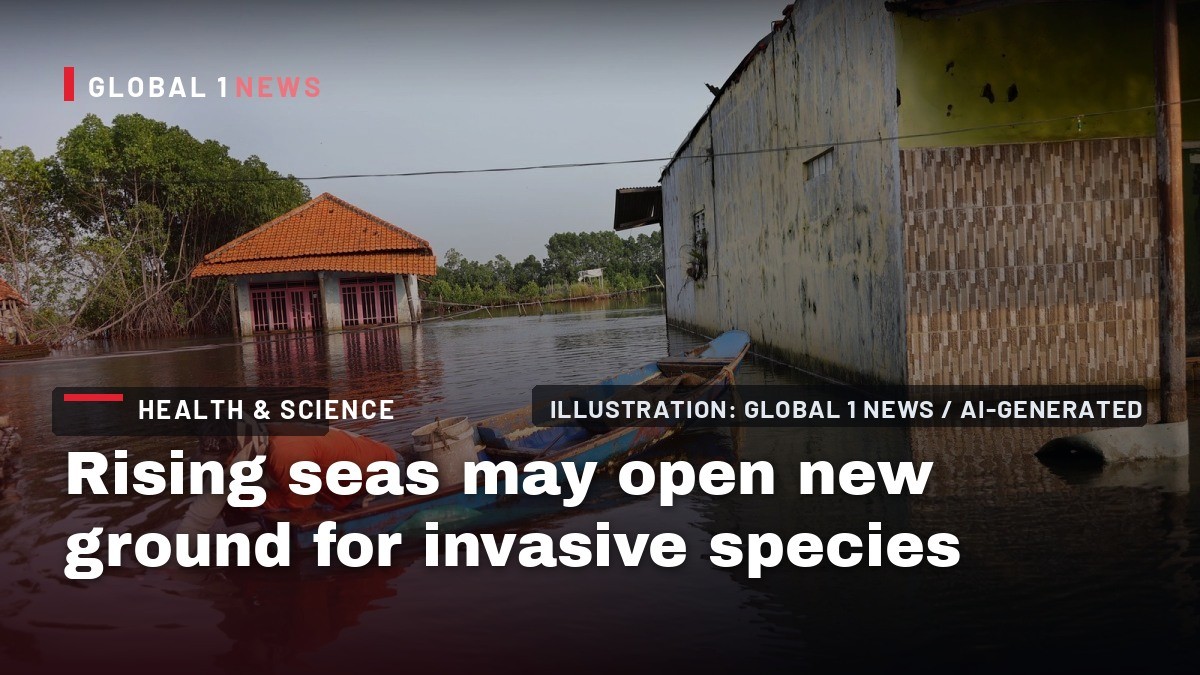
The accelerating rise in global sea levels, a direct by‑product of climate‑driven thermal expansion and melting ice, is reshaping the coastal frontiers of many regions. A new study published in Nature Ecology and Evolution warns that this reshaping may also redraw the map of marine biological invasions, exposing ecosystems and economies that have hitherto been insulated from non‑native species. The implications are especially acute for the Gulf region, where estuarine zones already serve as critical hubs for oil, gas, fisheries and burgeoning tourism.
Climate‑induced sea‑level rise and its geographic scale
According to the study, global sea levels are projected to climb by roughly 20 centimetres (about eight inches) by 2050 and by 56 centimetres (just under two feet) by the end of the century under a moderate greenhouse‑gas emissions pathway. This rise translates into the inundation of approximately 360,000 square kilometres of coastal land by mid‑century, expanding to about 550,000 square kilometres by 2100. These figures underscore the magnitude of the physical transformation that will accompany the climate crisis.
The researchers emphasise that the inundated zones are not uniformly distributed. Instead, the bulk of the newly flooded land—more than two‑thirds, or roughly 290,000 to 470,000 square kilometres—will be situated in estuarine and low‑lying coastal environments that are especially vulnerable to ecological disruption. The Gulf’s own low‑lying shoreline, dotted with mangroves and tidal flats, falls squarely within this risk envelope.
Mechanisms of invasion: from ocean to estuary
Sea‑level rise creates new pathways for marine organisms that were previously confined to open water. As ocean waters encroach inland, they bring with them the larvae and adult stages of species that thrive in saline environments. Estuaries, which sit at the interface of sea and river, become natural corridors for these invaders. The study’s co‑author, Xuan Liu of Beijing Normal University, points out that estuaries are “directly connected to the ocean and are also major hubs of human activity,” making them ideal stepping‑stones for non‑native fauna to move further inland.
In the Gulf, estuarine systems such as the Shatt al‑Arab and the coastal lagoons of Kuwait and Bahrain are already under pressure from industrial development and water‑resource extraction. The added pressure of invasive species could exacerbate existing ecological stress, potentially altering salinity regimes, sediment dynamics and the health of native fish stocks that support regional fisheries.
Species most likely to expand their range
The modelling exercise examined 122 established non‑native marine animals, spanning fish, crustaceans, molluscs and sea stars. While the study does not list every species, it highlights a few that have already taken hold in European waters: the Pacific oyster, the Atlantic blue crab and the veined rapa whelk, a predatory sea snail. Each of these organisms is known for its capacity to outcompete native species, alter habitat structure and, in some cases, affect commercial activities such as aquaculture.
Should similar pathways open in the Gulf, the region could see the arrival of analogous invaders. The Atlantic blue crab, for example, is a voracious predator of bivalves and juvenile fish; its establishment could threaten the Gulf’s pearl‑oyster farms and natural oyster beds. Likewise, the Pacific oyster, while valuable for aquaculture, can form dense beds that modify water flow and outcompete native molluscs, potentially reshaping intertidal ecosystems.
Regional hotspots of vulnerability
The study identifies several global hotspots where the risk of invasion is highest, including the Gulf of Mexico, the North Sea, the Gulf of Guinea and the Arabian Gulf. The inclusion of the Arabian Gulf underscores the particular exposure of Middle Eastern coastlines. The region’s extensive network of ports, oil terminals and desalination plants amplifies the likelihood of accidental introductions via ballast water and hull fouling.
Moreover, the Gulf’s climate—characterised by high temperatures and salinity—creates a niche that could favour certain temperate‑origin invaders that are already adapting to warming waters. The convergence of climate‑driven habitat expansion and intense maritime traffic makes the Gulf a focal point for potential biological incursions.
Economic ramifications of marine invasions
While the study refrains from providing detailed cost estimates for the Gulf, it references a global assessment by the United Nations’ Intergovernmental Science‑Policy Platform on Biodiversity and Ecosystem Services (IPBES), which placed the economic costs of biological invasions at over $423 billion in 2019. This figure, though global, signals the scale of financial impact that invasive species can impose on fisheries, aquaculture, tourism and infrastructure.
In the Gulf, sectors such as offshore oil and gas could face indirect threats. Invasive mussels and barnacles, for instance, are known to foul pipelines and marine structures, increasing maintenance costs. Likewise, tourism operators that rely on pristine beaches and healthy marine life may see a decline in visitor appeal if invasive species alter the visual and ecological quality of coastal waters.
Policy responses ahead of COP17 and COP31
The timing of the study’s release coincides with the approach of two United Nations‑backed summits: COP17 in October and COP31 in November, both focused on the intertwined biodiversity and climate crises. The findings provide a concrete illustration of how climate mitigation and adaptation policies intersect with biodiversity protection.
For Gulf states, the upcoming summits represent an opportunity to integrate invasive‑species management into broader climate‑resilience strategies. Measures such as stricter ballast‑water treatment standards, enhanced monitoring of estuarine habitats, and investment in early‑detection networks could mitigate the risk of new invasions as sea levels rise.
Strategic outlook: balancing development and ecological safeguards
The Gulf’s rapid economic development, driven by energy wealth and diversification agendas, must now reckon with the ecological realities highlighted by the study. Protecting estuarine ecosystems will require coordinated action across ministries of environment, fisheries and transport, as well as collaboration with international scientific bodies.
In the medium term, the projected 20‑centimetre rise by 2050 suggests that many of today’s coastal infrastructures will soon be operating within a shifting shoreline. Planning for adaptive designs—such as movable barriers, elevated facilities and resilient coastal habitats—can reduce the vulnerability of both human and natural systems to invasive species.
Ultimately, the study underscores a broader strategic truth: climate change is not an isolated phenomenon but a catalyst that reshapes ecological boundaries, creating new challenges for biodiversity and economic stability. For the Gulf, acknowledging and addressing the invasion risk now will be essential to safeguarding the region’s marine resources and the livelihoods that depend on them.
This article was produced with AI-assisted research and editorial support. Reporting is based on the source material cited below. Sources: Daily Sabah Middle East; dailysabah.com; Global1.News (29 September 2026).
By Malik Hassan, Staff Writer
What's Your Reaction?
 Like
0
Like
0
 Dislike
0
Dislike
0
 Love
0
Love
0
 Funny
0
Funny
0
 Wow
0
Wow
0
 Sad
0
Sad
0
 Angry
0
Angry
0

Middle East Correspondent at Global1.News. Based in Beirut, covering politics, conflict, energy, and society across the Middle East. Brings context and depth to a region often reduced to headlines.













Comments (0)