
America.gov launch: What Americans can do on Trump’s new AI-powered government website
America.gov, the newly launched AI‑driven portal of the United States, marks a significant shift in how federal information and services are delivered to citizens.
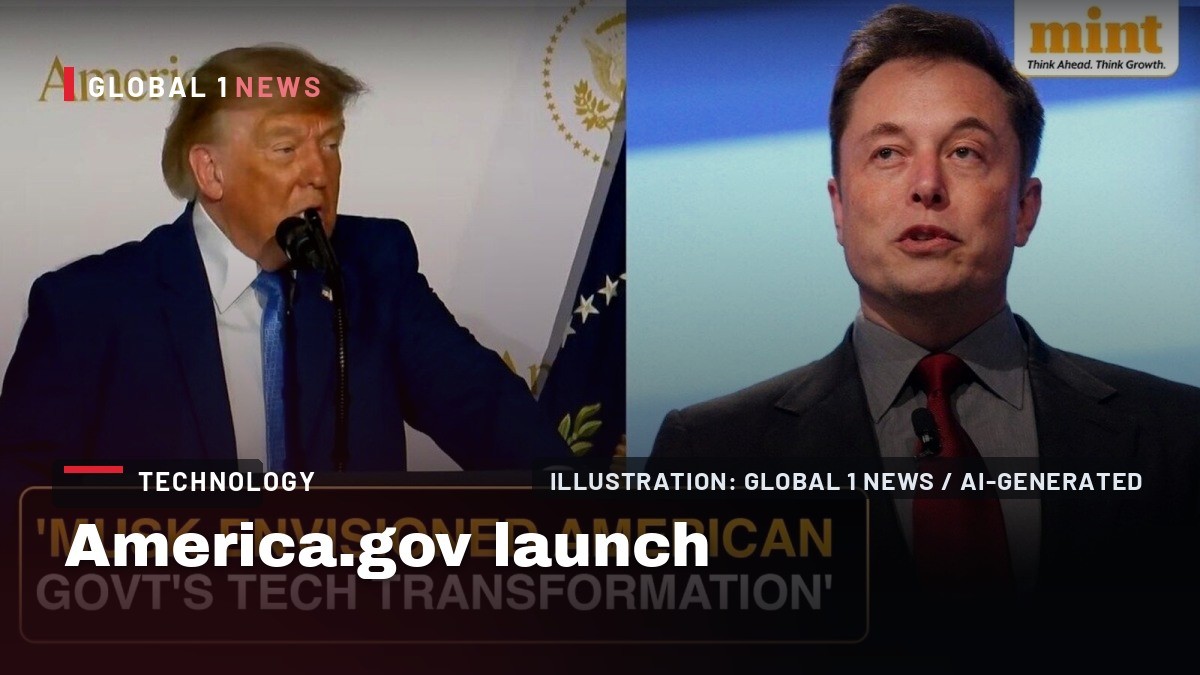
America.gov, the newly launched AI‑driven portal of the United States, marks a significant shift in how federal information and services are delivered to citizens. Unveiled by President Donald Trump on 29 September 2026, the platform promises a single, conversational interface that pulls answers directly from official government websites, eliminating the need to navigate a maze of agency portals. While the initiative is still in its first phase, its design and policy implications echo ongoing debates in India about digital public services, data privacy, and the role of artificial intelligence in governance.
From fragmented sites to a unified AI front‑end
The United States has long struggled with a fragmented digital landscape, where each federal agency maintains its own website. America.gov seeks to replace that model with a conversational search engine that interprets natural‑language queries and returns answers sourced from official government pages. The platform also supplies direct links to the original documents, ensuring transparency. This mirrors India’s own challenges with disparate portals for schemes such as PM‑Kisan, DigiLocker, and the National Digital Health Mission, where users often face cumbersome navigation.
By centralising access, the US administration hopes to make interactions “simpler, faster and more accessible”. For Indian policymakers, the American experiment offers a case study in consolidating services without sacrificing the autonomy of individual ministries—a balance that the Government of India continues to negotiate as it expands its own digital ecosystem.
Multilingual and multimodal interaction
America.gov supports English, Spanish and French, allowing users to ask questions in any of these languages and receive responses in the same tongue. Voice input is also enabled via a microphone icon, reflecting a broader trend toward multimodal interfaces. In India, where linguistic diversity is far greater, the American model underscores the importance of multilingual support in any AI‑driven public service. While the US platform currently limits itself to three languages, the Indian context would demand inclusion of dozens of regional languages to achieve true accessibility.
The emphasis on language parity also raises questions about the quality of translation and the preservation of nuance in policy communication—issues that Indian ministries must address as they integrate AI chatbots into services like the Common Service Centres and the Unified Payments Interface.
Privacy safeguards and data minimisation
According to the launch details, America.gov does not require users to create accounts, and conversations are not stored beyond the active session. The chat disappears when the user leaves the site, though some answers may be cached for up to two hours. The platform claims it does not retain search histories, IP addresses, or employ invasive analytics. For location‑based queries, it uses only an approximate area rather than precise GPS data.
These privacy measures are noteworthy for Indian regulators, especially in light of the Personal Data Protection Bill and the ongoing discourse on data localisation. The American approach of limiting data retention and avoiding user profiling could inform Indian guidelines for AI‑enabled public portals, ensuring that convenience does not come at the expense of citizen privacy.
Operational architecture under the GSA
The United States General Services Administration (GSA) operates America.gov, positioning the platform within the broader federal technology stack. By sourcing answers from official agency sites, the system avoids reliance on third‑party content, thereby maintaining a chain of trust. This operational model, where a central technology agency provides the interface while content remains with individual departments, could be instructive for India’s Ministry of Electronics and Information Technology, which oversees the Digital India programme.
Adopting a similar architecture would allow Indian ministries to retain control over their data and policy documents, while a centralised AI front‑end could aggregate and present that information cohesively. The GSA’s role also highlights the importance of a dedicated agency to manage the technical standards, security protocols, and continuous improvement of such a national AI service.
Roadmap to transactional capabilities
America.gov’s first phase focuses on information retrieval, but a second phase slated for 2027 aims to enable full transactional services. Planned features include uploading resumes for federal job matching, completing forms and applications, and tracking the status of submissions—all within the same conversational flow. This evolution from static answers to end‑to‑end service delivery reflects a broader ambition to make AI the primary gateway for citizen‑government interaction.
India’s own digital transformation roadmap, which envisions integrated service delivery through platforms like the Unified Citizen Services portal, can draw lessons from this staged rollout. By first establishing a reliable information layer before layering transactional capabilities, the US approach mitigates risk and builds user trust—a strategy that could be replicated in Indian pilot projects before nationwide scaling.
Policy origins and strategic intent
The America.gov initiative traces its roots to an executive order signed on 21 August 2025, which launched the “America by Design” programme and created a National Design Studio to collaborate with the GSA. President Trump framed the platform as part of a broader effort to create a unified interface between Americans and the federal government, signalling a strategic commitment to AI as a public service tool.
In India, similar executive directives have been issued to promote AI adoption in health, agriculture, and education. The American experience underscores the need for a clear policy mandate, dedicated design studios, and inter‑agency coordination to translate AI ambitions into functional public platforms. It also illustrates how political leadership can accelerate digital innovation, a factor that Indian policymakers must balance with inclusive stakeholder engagement.
Implications for Indian digital governance
While America.gov is a US‑specific solution, its underlying principles resonate with India’s digital agenda. The drive toward a single conversational interface, multilingual support, privacy‑by‑design, and phased expansion mirrors the challenges faced by Indian ministries seeking to modernise service delivery. By observing the US rollout—its technical choices, privacy safeguards, and governance structure—Indian officials can refine their own AI strategies, ensuring that future platforms like a potential “Bharat.gov.ai” are both user‑friendly and compliant with domestic data norms.
Ultimately, the success of America.gov will be measured by citizen adoption, the accuracy of its answers, and the seamlessness of its eventual transactional capabilities. For India, the experiment offers a valuable benchmark: an opportunity to harness AI for public good while safeguarding the democratic values and linguistic diversity that define the nation.
This article was produced with AI-assisted research and editorial support. Reporting is based on the source material cited below. Sources: Livemint; livemint.com; Global1.News (30 September 2026).
By Dr. Raj Patel, Staff Writer
What's Your Reaction?
 Like
0
Like
0
 Dislike
0
Dislike
0
 Love
0
Love
0
 Funny
0
Funny
0
 Wow
0
Wow
0
 Sad
0
Sad
0
 Angry
0
Angry
0

India/South Asia Correspondent at Global1.News. Analytical voice with a background in science and health journalism. Based in New Delhi, covering Indian politics, education, healthcare, technology, and policy. Breaks down complex data into clear, actionable reporting.















Comments (0)