
F1 in Azerbaijan: That was almost a close-run thing
Formula 1’s weekend in Baku was a vivid snapshot of the sport’s current state—high‑tech drama set against a dusty, wall‑lined street circuit, a schedule shift to dodge a national holiday, and a blend of raw driver talent and mechanical fragility that kept fans on the edge of their seats.
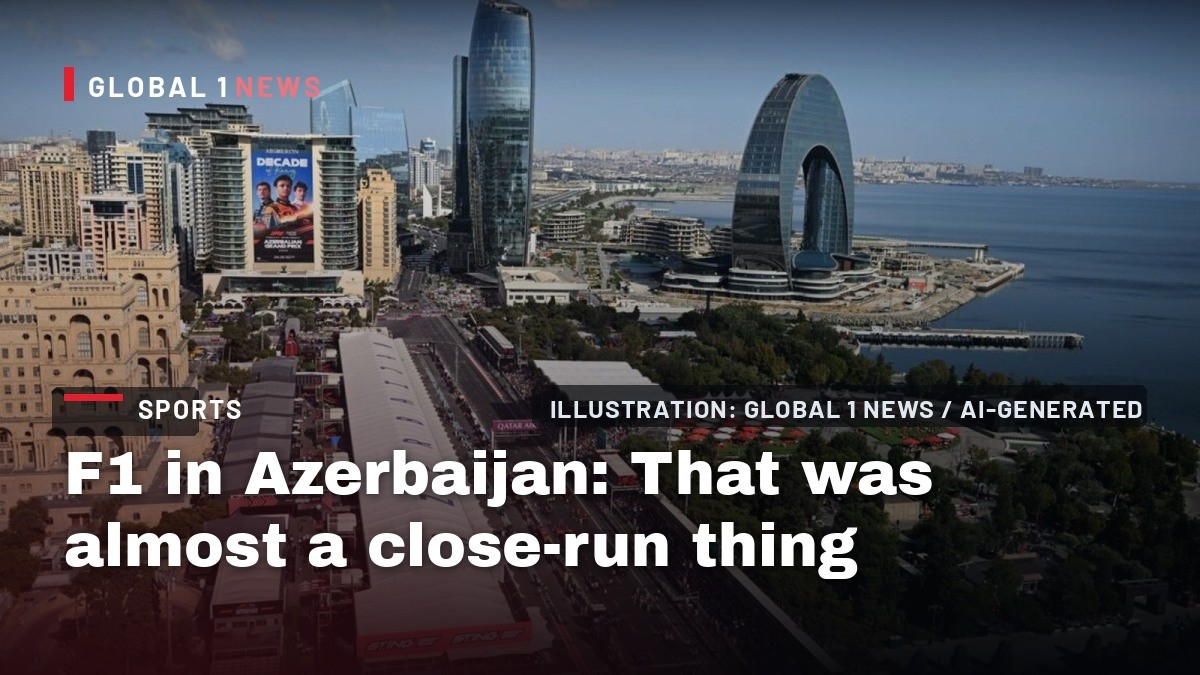
Formula 1’s weekend in Baku was a vivid snapshot of the sport’s current state—high‑tech drama set against a dusty, wall‑lined street circuit, a schedule shift to dodge a national holiday, and a blend of raw driver talent and mechanical fragility that kept fans on the edge of their seats. As the Liberty Group’s recent acquisition of the sport looms, the race in Azerbaijan highlighted both the promise and the pitfalls of a Formula 1 that is trying to balance spectacle, technology, and the ever‑present specter of controversy.
Street‑Circuit Brutality: Baku’s Unforgiving Layout
The Baku City Circuit is a study in contrasts. Its narrow, concrete‑lined streets snake through a medieval fortress gate before opening onto a 1.4‑mile (2.2 km) flat‑out sprint to the finish line, with the Caspian Sea’s gusts whipping up just a block away. That mix of historic architecture and modern hospitality complexes creates a visual feast, but it also means drivers have virtually no margin for error. The proximity of the walls forces precision at the very high speeds the cars reach, turning any mis‑judgment into a wall‑hugging nightmare.
Last year’s qualifying session underscored that danger. Six red‑flag incidents punctuated the session as drivers repeatedly clipped the unforgiving barriers. This year, the drama was more subdued—until it hit championship leader Kimi Antonelli. The 20‑year‑old mis‑read his front‑grip levels into turn 1, clipped the wall with his left front tire, and was forced to abandon the rest of qualifying. Although his earlier lap was fast enough to advance, the damage relegated him to a 16th‑place grid start, a stark reminder that Baku rewards precision and punishes even the slightest slip.
Antonelli’s Rollercoaster: From Penalties to Podium Threats
Antonelli’s weekend in Baku must be read against the backdrop of his recent exploits. A few weeks earlier at Monza, a power‑unit change penalty dropped him to 19th on the grid, yet he surged through the field to snatch a win from teammate George Russell. That victory was aided by two standing‑start incidents—including a massive crash by Charles Leclerc on lap 2—that opened gaps for rapid overtakes. The Baku race, however, offered no such windfalls. Starting from 16th, Antonelli faced a daunting climb up the order, a task made even tougher by the circuit’s limited overtaking zones.
When the race concluded, Antonelli finished just behind Leclerc in fifth, describing his performance as “the work of a grandmother.” The self‑critique reflected both frustration at his limited recovery and the broader reality that, despite his raw speed, the young driver still wrestles with consistency on circuits where a single error can erase a whole lap’s worth of effort.
Russell’s Dominance and the Near‑Miss Finish
George Russell, the seasoned hand behind the team’s best‑performing car, delivered a masterclass in Baku. He topped Friday’s qualifying by nearly a second over Leclerc, a margin that underscored the superiority of his machinery and his own pace. Starting from pole, Russell led from the green flag to the checkered flag, a performance reminiscent of his early‑season form that had many touting him as a title favorite.
Yet the victory was not a walk in the park. In the closing laps, a turbocharger failure threatened to hand the win to Red Bull’s Max Verstappen. Verstappen closed to within two‑tenths of a second, forcing Russell to nurse his car to the finish line. The narrow margin highlighted how even a dominant performance can hinge on the reliability of a single component—a recurring theme as the sport’s hybrid power units become ever more complex.
Red Bull’s Resilience: Verstappen, Hadjar, and the Engine Race
Red Bull’s V6 turbo‑hybrid remains the most powerful engine on the grid, and in Baku that power translated into a relentless chase. Verstappen, fresh off a win at Monza, pushed hard in the final stages, narrowing the gap to a hair’s breadth. His teammate Isack Hadjar, returning after a hand injury, qualified ahead of the four‑time world champion and finished third, a testament to the team’s depth.
The engine narrative extends beyond raw horsepower. The 2026 hybrid units can only sustain full electric boost for roughly 11–12 seconds before the battery depletes, after which the car reverts to pure V6 output until the next recharge window. This limitation was evident on Baku’s long straight, where straight‑line speeds were noticeably lower than the previous year—a direct result of the battery’s brief high‑power window and the strategic management of energy recovery.
Ferrari’s Faltering Momentum and Internal Turmoil
Ferrari entered Baku with high expectations, yet the race exposed cracks in both performance and stability. Charles Leclerc, often dubbed a Baku specialist for his qualifying speed, could only manage fourth place, while Lewis Hamilton, in the other Ferrari, slipped to sixth. The team’s recent engine upgrade, introduced at Monza, failed to deliver the hoped‑for boost, leaving the Scuderia’s title aspirations in tatters.
Beyond the on‑track struggles, Ferrari is wrestling with internal discord. Under team principal Fred Vasseur, dissent has grown, with factions lobbying for his replacement by former Red Bull boss Christian Horner. The call for change echoes the “court intrigue” that has long haunted Ferrari, recalling the turbulent eras of the Todt, Brawn, and Schumacher years. As the season progresses, the pressure on Vasseur will intensify, especially if the team cannot translate its historic pedigree into podium finishes.
McLaren’s Gear‑Ratio Gamble and Missed Opportunities
McLaren’s weekend was a cautionary tale about the new 2026 regulations that lock teams into a fixed set of eight gear ratios (plus a final drive) for the entire season, permitting only a single change. The team’s decision to run shorter gearing—beneficial for acceleration out of slow corners—proved a liability on Baku’s long straight, relegating the McLaren to the second‑slowest car in a straight line.
Oscar Piastri, who started third, briefly challenged Leclerc for second place before a safety‑car restart on lap 35 saw Verstappen overtake him. A subsequent lock‑up in turn 1, induced by pressure from Hadjar, forced Piastri onto the escape road and dropped him out of the points, finishing 14th. Lando Norris fared worse; after qualifying behind Piastri, he fell from fifth to ninth before a collision with Franco Colapinto’s Alpine—who lost control at the safety‑car restart—ended his race. Norris’s post‑race apology for calling for a race ban on Colapinto highlighted the heightened emotions that Baku’s tight walls can provoke.
The Bigger Picture: Technology, Transparency, and the Future of F1
The Baku Grand Prix underscored several macro trends shaping Formula 1’s evolution. First, the hybrid power‑unit’s limited electric boost window forces teams to balance outright speed with energy‑management strategy, a factor that will increasingly dictate race outcomes as battery technology matures. Second, the lack of on‑screen telemetry for battery state‑of‑charge or speed—despite previous promises from Stefano Domenicali that fans care about overtaking, not raw data—raises questions about transparency and fan engagement in an era where data drives narrative.
Finally, the race illustrated how regulatory changes—such as the fixed gear‑ratio rule—can have outsized effects on competitiveness, especially on circuits with extreme straight‑line demands. As Liberty’s ownership of the sport settles, the balance between technical innovation, cost control, and spectacle will be tested. Baku’s blend of historic streets, modern hospitality, and high‑stakes drama offers a microcosm of that tension, reminding us that while the sport’s engines roar louder than ever, the human element—driver skill, team strategy, and even political intrigue—remains the heart of the spectacle.
This article was produced with AI-assisted research and editorial support. Reporting is based on the source material cited below. Sources: Ars Technica; arstechnica.com; Global1.News (29 September 2026).
By Jessica Ali, Staff Writer
What's Your Reaction?
 Like
0
Like
0
 Dislike
0
Dislike
0
 Love
0
Love
0
 Funny
0
Funny
0
 Wow
0
Wow
0
 Sad
0
Sad
0
 Angry
0
Angry
0

Editor-in-Chief at Global1.News. Atlanta-based journalist who cuts through the BS and tells it like it is. Lead anchor, host, and the voice you hear when the spin stops and the truth starts.











Comments (0)