
Government warns Chao Phraya communities as dam releases rise
As the monsoon clouds linger over central Thailand, the Royal Irrigation Department has raised the water release from the Chao Phraya Dam to 2,500 cubic metres per second, effective from noon on 30 September.
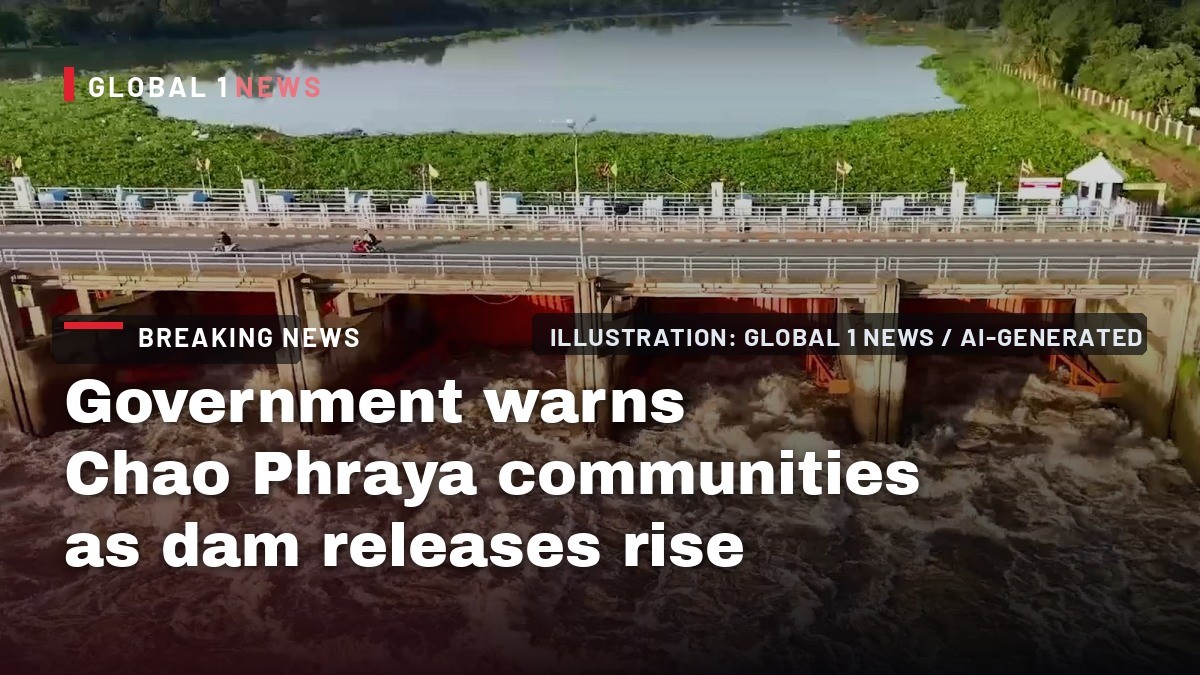
As the monsoon clouds linger over central Thailand, the Royal Irrigation Department has raised the water release from the Chao Phraya Dam to 2,500 cubic metres per second, effective from noon on 30 September. This adjustment is a clear signal that river levels will climb in the days ahead, prompting the government to ask residents of low‑lying riverside communities to ready themselves for the rising waters. While the flood barriers that protect many towns remain intact, the gentle flow of the river can quickly become a powerful force, especially for those living just beyond the safety of the dikes.
Why the dam release has increased
The decision to boost the discharge follows a surge in upstream flow that is expected to reach between 3,600 and 3,700 cubic metres per second in the coming days. At the C.2 monitoring station in Nakhon Sawan, officials forecast a peak of about 3,000 cubic metres per second on 2 October. These figures reflect the natural rhythm of the monsoon season, when rain‑filled tributaries swell the main river.
In addition to the main channel, the department estimates that tributaries will add another 700 to 750 cubic metres per second to the Chao Phraya, while roughly 550 to 580 cubic metres per second will be diverted into irrigation systems on both banks. This balance of water management aims to sustain rice paddies and other crops while keeping the river within manageable limits for communities downstream.
Areas under close watch
The government has highlighted several provinces where low‑lying districts sit outside the protective flood barriers. In Ayutthaya, the districts of Sena, Phak Hai, Bang Ban, Phra Nakhon Si Ayutthaya, Bang Pa‑in and Bang Sai are on the watch list. Ang Thong’s Wiset Chai Chan, Pa Mok, Mueang Ang Thong and Chaiyo districts, as well as Sing Buri’s In Buri, Phrom Buri and Mueang Sing Buri, are similarly flagged. In Chai Nat, officials are monitoring the Sapphaya district.
These areas lie along the main Chao Phraya channel and its tributary, the Noi River. The Royal Irrigation Department stresses that communities inside the established flood barriers are not expected to be directly affected by the increased release. However, the river’s natural meander can bring water into fields and villages that sit just beyond the dikes, especially after sustained high flow.
What residents are being asked to do
Deputy spokesperson Phatdarasmi Thongsaluaykorn has urged people in vulnerable zones to take practical steps before the water rises. Households are advised to move electrical appliances, important documents and other valuables to higher ground, reducing the risk of damage from water intrusion. Livestock, vehicles and farming equipment should also be relocated to safer spots, ensuring that livelihoods are not abruptly disrupted.
Beyond physical relocation, officials recommend that families prepare essential supplies—such as food, clean water and first‑aid kits—and keep emergency contact information readily available. Staying tuned to official updates on water levels and evacuation warnings will help communities respond swiftly if conditions change.
Broader regional preparedness
The recent alert follows an earlier warning that was sent to authorities across 11 provinces in the Chao Phraya basin, including Uthai Thani, Suphan Buri, Lop Buri, Pathum Thani, Nonthaburi, Samut Prakan and Bangkok. By extending the advisory network, the government aims to create a coordinated response that can be activated quickly if the river threatens to overtop its banks.
This layered approach reflects Thailand’s long‑standing tradition of community resilience, rooted in Buddhist teachings of mindfulness and preparedness. Villages along the river have historically built their lives around the water’s rhythm, learning to read the signs of rising tides and to act with calm deliberation.
Impact on agriculture and daily life
The diversion of roughly half a thousand cubic metres per second into irrigation channels underscores the importance of water for Thailand’s rice paddies. Farmers in the monitored districts rely on a steady flow to flood their fields, a practice that sustains the country’s staple crop. Yet the same water that nurtures the rice can also threaten homes and roads when it spills beyond the intended channels.
Balancing these needs is a delicate task for the Royal Irrigation Department. By adjusting dam releases in response to upstream conditions, the agency seeks to keep enough water in the system for agriculture while preventing excessive flooding. The current release level of 2,500 cubic metres per second represents a middle ground, aiming to protect both crops and communities.
Historical context and cultural significance
The Chao Phraya River has long been the lifeblood of central Thailand, shaping the development of ancient Ayutthaya and the modern capital, Bangkok. Its waters have been celebrated in Thai literature and song, and Buddhist monks often meditate by its banks, reflecting on the impermanence of all things—including the river’s flow.
In recent decades, climate variability has added new challenges to this age‑old relationship. Seasonal rains can arrive earlier or later, and extreme weather events can push river levels beyond historical norms. The government’s proactive communication, therefore, is not just a technical measure but also a cultural one, echoing the Buddhist principle of right effort—acting wisely before a crisis fully unfolds.
Looking ahead
The Royal Irrigation Department will continue to monitor rainfall, upstream water volumes and river levels, ready to adjust its water‑management plan if conditions evolve. As the forecast suggests a peak flow around 3,000 cubic metres per second at the C.2 station on 2 October, communities along the Chao Phraya and Noi rivers are encouraged to stay vigilant.
In the spirit of communal care that characterises Thai society, neighbours are urged to check on one another, especially the elderly and those with limited mobility. By combining practical preparedness with the cultural values of compassion and mindfulness, the region can navigate the seasonal rise of the river while safeguarding homes, fields and the cherished way of life that has flourished along its banks for centuries.
This article was produced with AI-assisted research and editorial support. Reporting is based on the source material cited below. Sources: Khaosod English; khaosodenglish.com; Global1.News (30 September 2026).
By Ann Srisawat, Staff Writer
What's Your Reaction?
 Like
0
Like
0
 Dislike
0
Dislike
0
 Love
0
Love
0
 Funny
0
Funny
0
 Wow
0
Wow
0
 Sad
0
Sad
0
 Angry
0
Angry
0

Southeast Asia Correspondent at Global1.News. Based in Bangkok, covering Thai and Southeast Asian politics, economy, technology, and culture. Deep regional perspective on one of the world's most dynamic regions.














Comments (0)