
Russia Tells NATO It Will Use Nuclear Weapons to Defend Kaliningrad
Russia has sent NATO an informal non-paper warning it would use its entire arsenal, including nuclear weapons, to defend Kaliningrad if the alliance tried to isolate the exclave. NATO confirmed the exchange and condemned Moscow's irresponsible nuclear rhetoric.
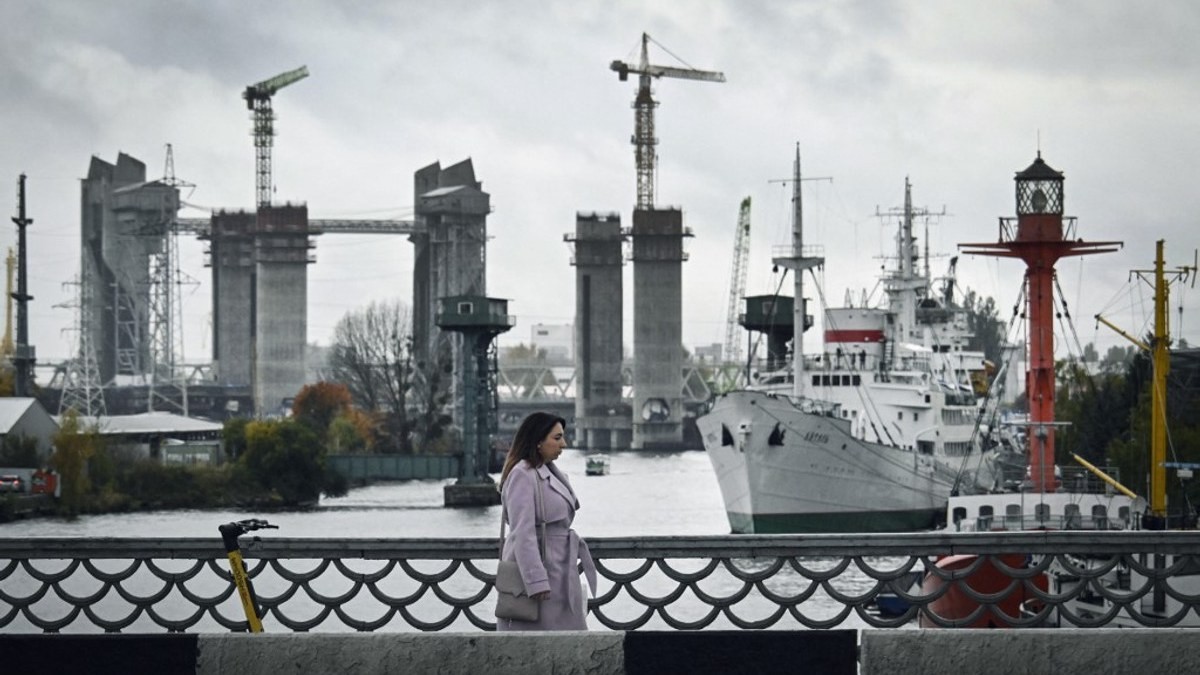
Russia has sent NATO an informal diplomatic document warning it would be ready to use nuclear weapons if the alliance attempted to isolate Kaliningrad, the Russian exclave on the Baltic Sea. NATO has confirmed the exchange and condemned what its spokesperson called "irresponsible nuclear rhetoric." The non-paper, seen by Reuters, was delivered to NATO's International Secretariat and to Belgium's Foreign Ministry.
Russia Tells NATO It Will Use Nuclear Weapons to Defend Kaliningrad
Brussels, Belgium — The document accuses the alliance of a "dangerous and reckless course" carrying "high risks of the outbreak of a direct armed conflict," and states that Russia "will be ready to use the entire arsenal of forces and capabilities at its disposal, including nuclear weapons, in order to defend its territory should NATO countries undertake any attempt aimed at isolating the Kaliningrad Region from the rest of the country." NATO did not disclose the contents of the Russian document, but a military source confirmed to Rapporteur that it concerned Kaliningrad.
A Non-Paper, and Why the Word Matters
A non-paper is diplomatic jargon for an informal document — a text that carries a message without the legal weight or formal standing of a note, demarche or treaty instrument. Because it is informal, it does not commit Moscow to a published position in the way a formal diplomatic note would, yet it was written specifically to be read in Brussels. NATO spokesperson Allison Hart confirmed the exchange without releasing the text. The Russian side did not specify which actions had prompted the warning.
What Moscow Actually Wrote
Beyond the central passage, the non-paper said the risk included the possibility "of Russian strikes against decision-making centres in the alliance's member states right from the outset of the conflict." A Russian embassy statement said: "We emphasised that Russia possesses the necessary means to repel potential aggression and stands ready to deploy its entire available arsenal of weapons if NATO countries try to isolate the Kaliningrad Region from the rest of our country." The embassy urged NATO members to refrain from "further escalatory rhetoric and actions in order to prevent a large-scale confrontation." The statements said Russia had no intention of attacking NATO countries but warned that any aggression against Kaliningrad would be met with the strongest possible response.

Brussels Answers in Four Sentences
NATO spokesperson Allison Hart said: "I can confirm that Russia sent a non-paper to NATO and that we have sent a response, noting that NATO is a defensive Alliance and none of our activities or exercises pose a risk to any part of Russia." Hart said: "We strongly denounce the threat of force, including any irresponsible nuclear rhetoric. We call on Russia to end its unprovoked war in Ukraine." She added: "Russia's use of hybrid tactics is a sign of desperation. But we will not be dissuaded from our support to Ukraine." And: "We have what it takes to defend every inch of allied territory and remain strong, ready, and able to counter any threat." A NATO diplomat said: "I would say that the Russian letter is only another Russian attempt to intimidate Europeans, and that the response by NATO is firm and responsible. (It) reaffirms that we will not be dissuaded from supporting Ukraine." A senior European defence official called it "(the) first time since (the) Cold War that Russia is threatening us like this. So this is serious."
Why Kaliningrad Is the Pressure Point
Kaliningrad is a Russian exclave on the Baltic Sea, wedged between Lithuania and Poland, both EU and NATO members. It sits roughly 360 kilometres (224 miles) from the Russian mainland, with no land connection to the rest of Russia, linked to it only by sea. Once the German city of Königsberg, capital of East Prussia, it was taken by the Soviet Union at the end of World War II, its German population expelled, and renamed in 1946. It is Russia's only ice-free port on the Baltic and hosts the headquarters of the Russian Baltic Fleet. Russia has deployed Iskander tactical missiles there, with a range of about 500 kilometres (310 miles), according to the US Naval Institute. NATO has long been concerned that Russia could station non-strategic nuclear weapons in the exclave.
The Suwalki Gap
The Suwałki Gap is a stretch of the Polish-Lithuanian border roughly 65 kilometres (40 miles) long that separates Kaliningrad from Belarus, one of Russia's closest allies. Should a direct conflict emerge, Russian forces pushing from Belarus and Kaliningrad could try to seize the corridor and cut the Baltic states off from allied reinforcements. The International Crisis Group warns Russia's Baltic Fleet, missiles, air defences and ground forces in Kaliningrad could also be used to deny NATO access to the Baltic Sea and disrupt air operations. In June 2022, Lithuania halted the rail transit of steel and other EU-sanctioned goods to the exclave, a move Moscow branded a "blockade." The standoff eased the following month when the European Commission ruled sanctioned goods, except weapons, could continue to cross Lithuania by rail.
Three Embassies in Three Days
On Monday 28 September, the Russian Embassy in Belgium said it had sent the warning and accused the alliance and its members of pursuing an "aggressive policy." On Tuesday 29 September, NATO replied with Hart's written statement. The same day, the Russian Embassy in Ireland said "There is information that NATO is preparing an air and sea blockade of Kaliningrad and the Kaliningrad region," and said Russia "will be ready to use its entire arsenal, including nuclear weapons" if NATO tries to isolate the region, adding that the risk of armed confrontation is high, "with the likelihood that Russia will use preemptive strikes against decision-making centers in the Alliance countries at an early stage of the conflict." Also on Tuesday, the Russian Embassy in London said any British or NATO military action against Kaliningrad will be met with "all available means, including nuclear weapons." On Wednesday 30 September, Yulia Zhdanova, head of the Russian delegation to the Vienna talks on military security and arms control, said Russia had recorded "an unprecedented increase in the alliance's military activity near our borders," with specific "scenarios of military and political isolation" being modelled for Kaliningrad, quoted by RIA Novosti. She said that in case of attempts to "break off" the region, Moscow will take the necessary measures to protect its territory.
What Prompted It
It was unclear what specifically prompted Russia's statement, though widely reported NATO air exercises held in Poland and the Baltic states near Kaliningrad in mid-August may have played a role, according to The Japan Times. The Russian embassy in Ireland cited the joint military exercises of Lithuania, Poland and France "Gallant Boar-2026," which it said were specifically directed against Kaliningrad. The exercise was conducted 16-26 June in the area of the Suwałki Corridor, with over 1,800 military personnel and more than 200 armoured vehicles. The embassy also cited Operation Baltic Sentry: frigates, aircraft and naval drones testing the mechanism for blocking Baltic shipping. It said Polish Foreign Minister Radosław Sikorski had explicitly called for increasing pressure near the region's borders. Russia's updated nuclear doctrine of 2024 lists an attempt to cut off part of the country's territory and block transport communications among "critical military dangers" for which nuclear weapons are provided.
The Baltic Has Already Been Breached
European officials and intelligence services have been warning of an intensifying hybrid campaign directed from Moscow, acts including sabotage and arson, which they increasingly think could result in civilian casualties. Russia denies this. On 15 September, Italian fighter jets shot down a drone in Lithuanian airspace — the first time a drone had been shot down in Lithuania's airspace. It fell near Pratkūnai village, about 100 kilometres west of Vilnius, near the Kaunas reservoir, and most likely entered from Belarus, Lithuania's National Crisis Management Centre said. It remained in Lithuanian airspace about 30 minutes and flew along the outskirts of populated areas before being intercepted. Two senior Lithuanian officials said the device was likely carrying explosives. President Gitanas Nausėda said the drone was a Russian Gerbera headed for Ukraine. The same day, Poland said it had launched "aviation operations" in its own airspace because Russian jet-powered drones were "conducting strikes on Ukrainian territory"; it described them as "preventive" and said they concluded without any violation of Polish airspace.

The Same Week in Ukraine
Four people were killed in Russian drone and missile attacks on Kyiv on 30 September, according to RTE. Russia has intensified daytime strikes on Kyiv using jet-powered drones that Ukrainian forces are struggling to intercept. Ukraine's air force said Russia fired ballistic missiles and dozens of jet-powered drones at Kyiv on Tuesday. The new jet-powered drones fly too fast and too high for Ukrainian ground-based air defences to shoot down. Russia struck two datacentres in Kyiv overnight, a military-linked cargo vessel in the Black Sea, and another vessel with military cargo in the Ukrainian port of Odesa, the Russian defence ministry said. Kyiv's Taras Shevchenko National University said it would "switch to a remote format of work" until at least 16 October "due to the deteriorating security situation in Kyiv." Its main campus is close to the National Academy of Sciences, which was hit by a drone strike on Monday, killing one person. Russian glide bombs struck a school in the northern city of Sumy on Tuesday, killing two people and injuring six, the regional governor Oleh Hryhorov said. Three children were among the injured. He said teachers and school officials had managed to evacuate 100 people.
What Happens Next
NATO Secretary-General Mark Rutte told journalists in Brussels on 29 September that Russia is continuing "its reckless campaign of hostile actions directed against NATO." Rutte said: "It is trying to weaken our resolve and halt our support for Ukraine. But it will not succeed." Kremlin spokesman Dmitry Peskov said on 13 September that Russia was taking the necessary measures to ensure the security of the Kaliningrad Region. Russia denies stepping up a hybrid war on the continent and rejects statements by Western politicians that it is gearing up for a possible military attack on a NATO country. Deputy chairman of the Russian Security Council Dmitry Medvedev claimed on 11 September that Lithuania would "disappear from the map of the world" if it lifts its longstanding nuclear weapons ban. President Vladimir Putin has dismissed European warnings as deliberate escalation and "provocation." Foreign Minister Sergey Lavrov, at his final press conference at the 81st UN General Assembly in New York, said European calls to prepare for a possible war with Russia could become a "self-fulfilling prophecy." President Volodymyr Zelensky has warned that Russia could directly attack another European country.
By Jessica Ali, Staff Writer
This article was produced with AI-assisted research and editorial support. Sources: Reuters, RTE, The Japan Times, The Guardian, Kyiv Post, Rapporteur, TASS, Izvestia, AFP and NATO statements.
What's Your Reaction?
 Like
0
Like
0
 Dislike
0
Dislike
0
 Love
0
Love
0
 Funny
0
Funny
0
 Wow
0
Wow
0
 Sad
0
Sad
0
 Angry
0
Angry
0

Editor-in-Chief at Global1.News. Atlanta-based journalist who cuts through the BS and tells it like it is. Lead anchor, host, and the voice you hear when the spin stops and the truth starts.












Comments (0)