
Washington Labels Brazil's Top Drug Gangs as Terrorist Organizations — Lula Fires Back
Washington Labels Brazil's Top Drug Gangs as Terrorist Organizations — Lula Fires Back Brazil's two most powerful criminal syndicates — the Primeiro Comando da Capital (PCC) and Comando Vermelho (CV) — have been officially designated as Foreign Terrorist Organizations by the United States government, and President Luiz Inácio Lula da Silva is not taking it quietly. The decision
Washington Labels Brazil's Top Drug Gangs as Terrorist Organizations — Lula Fires Back
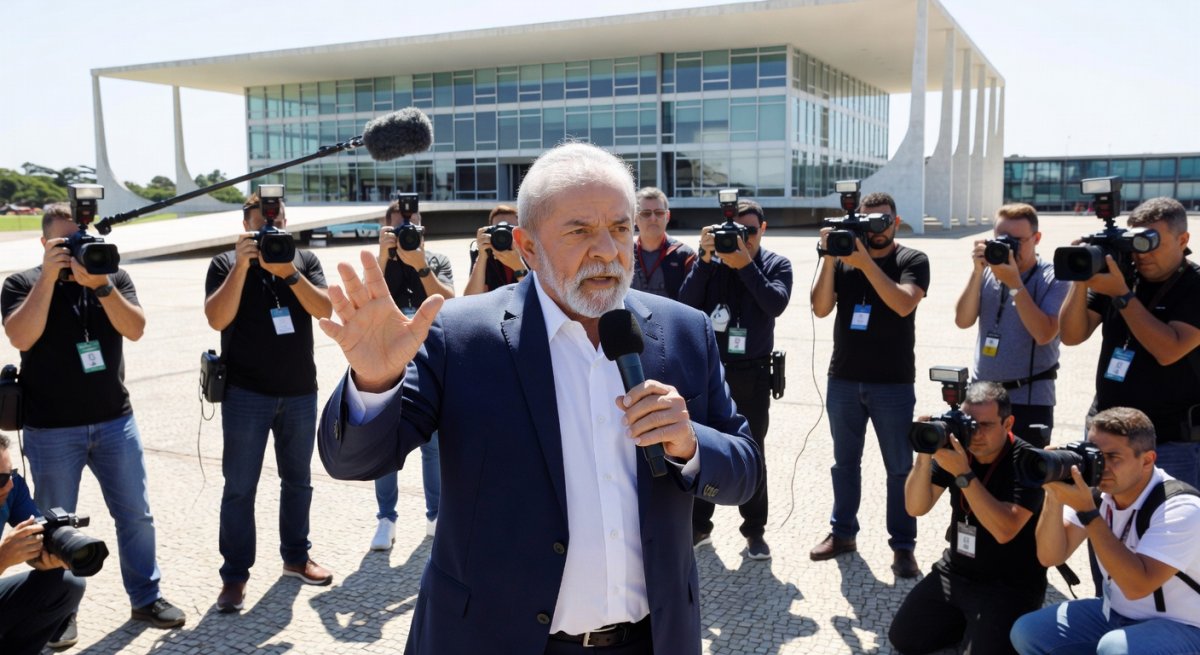
Brazil's two most powerful criminal syndicates — the Primeiro Comando da Capital (PCC) and Comando Vermelho (CV) — have been officially designated as Foreign Terrorist Organizations by the United States government, and President Luiz Inácio Lula da Silva is not taking it quietly. The decision, confirmed by the U.S. State Department earlier this week, marks an unprecedented escalation in how Washington treats organized crime in Latin America. And it's sparked a diplomatic firestorm that's dominating headlines across Brazil today. ### What the U.S. Designation Actually Means Let's be clear about what just happened. The U.S. State Department added the PCC — which originated in São Paulo's prison system and now operates across South America, trafficking cocaine to Europe and Asia — and the Rio-based Comando Vermelho to the official Foreign Terrorist Organizations list. This isn't symbolic. It unlocks a suite of powerful legal tools: asset freezes, travel bans, criminal penalties for anyone providing material support to these groups, and expanded U.S. law enforcement jurisdiction. American banks and companies can now face prosecution for any financial dealings tied to these organizations. According to PBS News, the move followed months of lobbying by allies of former President Jair Bolsonaro, who have pushed Washington to take a harder line on Brazilian organized crime. The New York Times reported that the Bolsonaro family — particularly Congressman Eduardo Bolsonaro — was instrumental in building the case to the Trump administration. ### Lula's Explosive Response President Lula did not hold back. In a press conference in Brasília yesterday, he accused Washington of treating Brazil like what he called a "tinpot country" — a dismissive term for a small, insignificant nation. "The United States does not have the right to unilaterally label organizations inside Brazil without consulting the Brazilian government," Lula said, according to Reuters and Al Jazeera. "We will not accept being treated as a colony. If the U.S. wants to cooperate on security, we welcome it. But this was done behind our backs." The response reflects deep frustration within the Lula administration. While the Brazilian government has long acknowledged the threat posed by the PCC and Comando Vermelho — which together control the majority of Brazil's cocaine trade and have expanded into illegal mining, land grabbing, and extortion — officials argue that the U.S. designation was a unilateral move that bypassed diplomatic channels. Lula's characterization of the decision as "arbitrary measures" was echoed by Foreign Minister Mauro Vieira, who summoned the U.S. ambassador for an explanation. ### The Role of the Bolsonaro Connection This is where it gets political — and it's impossible to separate from Brazil's domestic dynamics. Eduardo Bolsonaro, the son of the former president, has spent months in Washington meeting with conservative think tanks and Trump administration officials. Multiple reports, including from The American Conservative, confirm that the Bolsonaro family lobbied heavily for this designation. The timing is pointed: Lula and Bolsonaro are likely to face off again in this year's presidential election. By securing a U.S. terror designation against Brazil's most notorious gangs, Bolsonaro's camp can claim they're tougher on crime than the current administration — a powerful message in a country where public security is consistently the top voter concern. Lula's government, meanwhile, argues that the designation is an act of political interference designed to weaken his administration ahead of the election. ### What This Means for Brazilians On the ground, the immediate impact is limited. Brazilian police and military forces — not U.S. agencies — are the ones fighting the PCC and Comando Vermelho in the favelas of Rio, the prison complexes of São Paulo, and the Amazon borderlands where the gangs control drug routes. But the long-term effects are significant. Brazilian banks and companies that do business with U.S. financial systems now face compliance risks if they're found to have any connection to designated gang members. That could chill investment and complicate anti-money laundering efforts. There's also the question of sovereignty. Brazil has its own anti-terrorism laws, and the Lula administration has argued that applying the U.S. terror label to domestic criminal groups sets a dangerous precedent. Could Washington designate other Latin American gangs — like Mexico's cartels or Colombia's Clan del Golfo — the same way? For Lula, the answer is clear: this is a slippery slope. ### The Bigger Picture: U.S. Policy in Latin America This move fits a broader pattern. The Trump administration has increasingly used terrorism designations against organized crime groups across the Western Hemisphere. Mexico's cartels were the first major target. Now Brazil's gangs are next. Critics argue that labeling criminal organizations as terrorist groups conflates two different threats. The PCC and Comando Vermelho are motivated by profit, not ideology. They're not ISIS or Al-Qaeda. But the U.S. legal framework for counterterrorism — with its enhanced surveillance powers, asset seizure capabilities, and international cooperation mandates — makes it a tempting tool for going after transnational crime. Human rights groups have also raised concerns. The designation could be used to justify tougher policing tactics that disproportionately affect poor and predominantly Black communities in Brazil's urban peripheries, where these gangs operate. What's clear is that this story isn't going away. The Lula administration is weighing diplomatic responses, the Bolsonaro camp is celebrating a political win, and the PCC and Comando Vermelho — well, they're still running their operations. The question now is whether this designation actually makes Brazilians safer, or whether it's just another chapter in the endless U.S.-Latin America sovereignty debate. *— Elena Vasquez, Global 1 News*This article was produced with AI-assisted research and editorial support. Reporting is based on sources cited in the article.
What's Your Reaction?
 Like
0
Like
0
 Dislike
0
Dislike
0
 Love
0
Love
0
 Funny
0
Funny
0
 Wow
0
Wow
0
 Sad
0
Sad
0
 Angry
0
Angry
0

Elena Vasquez
Latin America Correspondent at Global1.News. Based in Mexico City, covering politics, economics, energy, and culture across the region. Brings an on-the-ground perspective to stories spanning from the Rio Grande to Patagonia.










Comments (0)