
Review: The Evil Lawyer – Nottapon Boonprakob's Thai Legal Drama
The Director Behind The Evil Lawyer The Evil Lawyer, released on 11 June, marks director Nottapon Boonprakob's turn toward Thailand's legal world after his screenwriting on SuckSeed and May Who?, co-directing and writing on One for the Road, and directing the Netflix series Mad Unicorn. Nottapon Boonprakob brings the same careful eye for character that defined those earlier wor
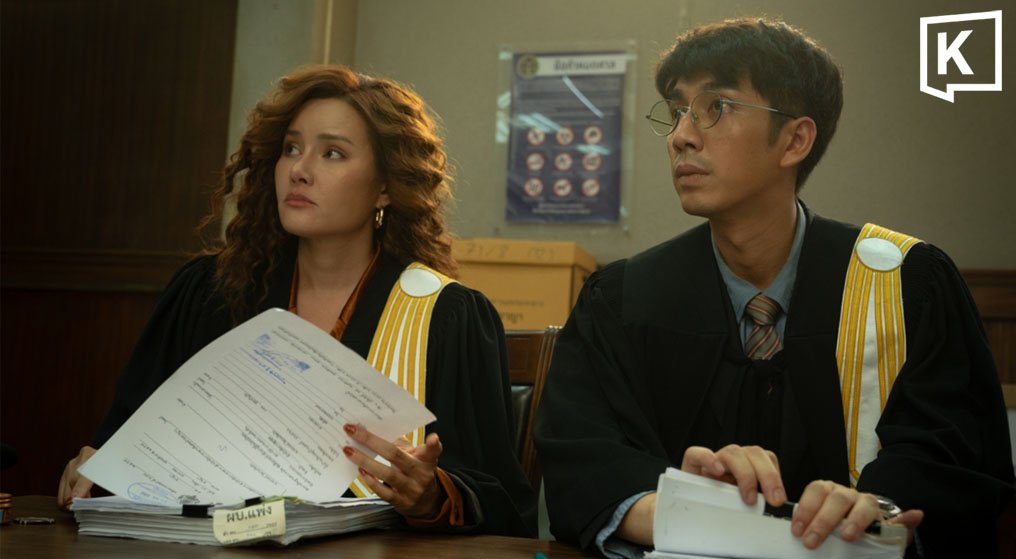
The Director Behind The Evil Lawyer
The Evil Lawyer, released on 11 June, marks director Nottapon Boonprakob's turn toward Thailand's legal world after his screenwriting on SuckSeed and May Who?, co-directing and writing on One for the Road, and directing the Netflix series Mad Unicorn.
Nottapon Boonprakob brings the same careful eye for character that defined those earlier works to this story of Mek, an idealistic young lawyer suddenly accused of murdering the son of a police officer.
Viewers familiar with Nottapon Boonprakob's previous projects will recognise how he lets moral tension build through everyday decisions rather than dramatic speeches.
Teamwork Between Mek and Jittri
To clear his name, Mek must team up with Jittri, a notoriously cunning attorney known for exploiting loopholes in the law, forcing both characters to navigate a justice system where answers are rarely black and white.
This partnership lets the series show how Thai lawyers often balance strict procedure with the practical need to protect clients inside an imperfect system.
The dynamic between the two men reflects real conversations many Thai families have about whether the law serves everyone equally.
Grey Areas of Thailand's Justice System
What stands out most is the series' willingness to explore the grey areas of Thailand's justice system through the eyes of legal professionals, raising uncomfortable questions about morality, power, and justice.
By focusing on how power influences outcomes, the drama connects directly to ongoing public discussions about fairness in Thai courts.
These questions feel especially relevant because many viewers have followed high-profile cases where influence appeared to shape results.
Authentic Courtroom Detail
Another standout aspect is the attention to detail in depicting courtroom proceedings and cross-examinations, achieved through extensive research that results in scenes feeling remarkably authentic.
The series reminds viewers that courtrooms are not bright, orderly spaces but are filled with tension, pressure, and fierce competition.
This grounded approach helps Thai audiences recognise the real pressure lawyers face when every word can shift a case's direction.
Performances and Casting Choices
Lead actors deliver compelling performances while supporting actors and minor characters add realism, with many resembling people one might encounter in Thailand's legal profession.
The casting choices go beyond conventional standards of attractiveness, allowing characters to feel like actual professionals rather than idealised figures.
The character Seya presents a migrant worker in a way that feels natural and believable, reflecting the quiet presence of migrant communities in Thai legal matters.
Visual Style and Real-Life Echoes
Visually, the series employs muted colours and subdued lighting, creating an atmosphere of discomfort and moral ambiguity that matches the stories it tells.
One of the most striking achievements is its incorporation of cases reminiscent of real life incidents that have shaken Thai society, including the mysterious death of a young woman on a boat surrounded by influential figures recalling the Tangmo Nida case, abandoned infant remains in hospitals, and devastating industrial fires.
These references invite viewers to consider how media and memory shape public understanding of justice.
Episode Five and Ying Rhatha Phongam's Approach
The series is emotionally unsettling rather than entertaining in the conventional sense, with pacing that moves too quickly at times and an ending that leaves several questions unresolved.
Episode five, featuring the cross examination of a doctor accused of sexually assaulting a patient, stands among the most distressing scenes.
Actress Ying Rhatha Phongam portrays Jittri and contributed to the design of this sequence by avoiding rehearsals with the actress playing the victim beforehand, resulting in a painfully raw and realistic scene.
Satire of Sensationalist News and Public Trust
The series questions the failures of Thailand's justice system by satirising sensationalist news talk shows that invite the public to judge social issues.
Many people no longer place enough trust in formal legal mechanisms and instead seek justice through public opinion, a shift the drama examines without easy answers.
A lawyer's duty is to fight for the best interests of their client, not to determine who deserves representation, a point the series returns to when characters face moral pressure.
Space for Female Lawyers
Another major strength is the space the series gives to female lawyers, showing that while women make up a significant part of the legal profession in reality, patriarchal attitudes often cause them to be overlooked.
This series demonstrates that certain issues become even more powerful when told through women's perspectives, particularly when Jittri navigates both professional and societal expectations.
By centering these voices, The Evil Lawyer quietly challenges viewers to notice who is usually heard in Thai courtrooms and who is not.
By Ann Srisawat, Staff WriterThis article was produced with AI-assisted research and editorial support. Reporting is based on sources cited in the article.
What's Your Reaction?
 Like
0
Like
0
 Dislike
0
Dislike
0
 Love
0
Love
0
 Funny
0
Funny
0
 Wow
0
Wow
0
 Sad
0
Sad
0
 Angry
0
Angry
0

Southeast Asia Correspondent at Global1.News. Based in Bangkok, covering Thai and Southeast Asian politics, economy, technology, and culture. Deep regional perspective on one of the world's most dynamic regions.















Comments (0)