
The Capture That Shattered Lives in Sinjar
The Capture That Shattered Lives in Sinjar Shireen was studying for a high school examination at her home in the northern Iraqi town of Sinjar on 3 August 2014 when Islamic State militants broke into the house and seized her from her family. At nineteen years old she was transported to the north-western city of Tal Afar and sold as a sex slave to an Islamic State fighter. Three
The Capture That Shattered Lives in Sinjar
Shireen was studying for a high school examination at her home in the northern Iraqi town of Sinjar on 3 August 2014 when Islamic State militants broke into the house and seized her from her family. At nineteen years old she was transported to the north-western city of Tal Afar and sold as a sex slave to an Islamic State fighter. Three months later she was sold again, this time to Abu Omar in Mosul, where she became his third wife alongside two Iraqi women who lived in a separate house.
Abu Omar told Shireen he loved her, yet subjected her to repeated rape. She later told interviewers that such words held no meaning when paired with violence that destroyed her life. The other wives beat her during their occasional meetings. For more than two years she remained confined to the Mosul residence, cooking, washing dishes and cleaning under the watch of two guards stationed at the entrance. She was forbidden even to step into the garden for fresh air.
Abu Omar later brought two additional Yazidi girls into the household. One was six years old and forced to clean; the other was ten. Shireen tried to stop the abuse directed at the younger girls, but her pleas were ignored. Iraqi forces liberated her during the 2016 campaign to retake Mosul. Upon release she learned that her uncle and several friends had been killed, while her father and one sister remained missing since the 2014 abductions.
The Yazidi Community Under Genocidal Assault
Yazidis believe in Yasdan, a god who emanates seven angels, with Melek Tawwus, the Peacock Angel, revered above all others. Islamic State fighters told Shireen that Melek Tawwus was the devil and forced her to convert to Islam. This religious targeting formed part of a broader campaign that the United Nations has described as an ongoing genocide against the minority. In 2014 the group seized almost a third of Iraq, killing or kidnapping at least 12,000 Yazidis.
Survivors recount systematic isolation, sexual violence and threats against relatives. Many were told their beliefs justified enslavement and that escape attempts would bring death. Shireen’s account of two years of confinement and forced domestic labour reflects patterns reported by thousands of women. The destruction of homes and the creation of mass graves left communities without immediate means of mourning or recovery.
Four years after the initial assaults, Sinjar remained largely in ruins. Economic and social structures had not recovered, leaving displaced families reliant on camps such as Khanke near Duhok. Shireen now lives alone in a tent there and has declined to return to Sinjar, where most of her surviving relatives have sought asylum abroad. These conditions continue to shape daily life for those who escaped captivity.
Dr Nagham Nawzat: From Mosul Medical College to Survivor Care
Born in Mosul in 1976 to a Yazidi family, Nagham Nawzat pursued medicine with an early focus on women’s health. She graduated from Mosul Medical College with a gynaecology degree in 2002. Her goal was to understand women’s health issues more deeply, teach patients about preventive care and provide direct support during vulnerable periods. By 2014 Islamic State forces had overrun large portions of northern Iraq, including Sinjar.
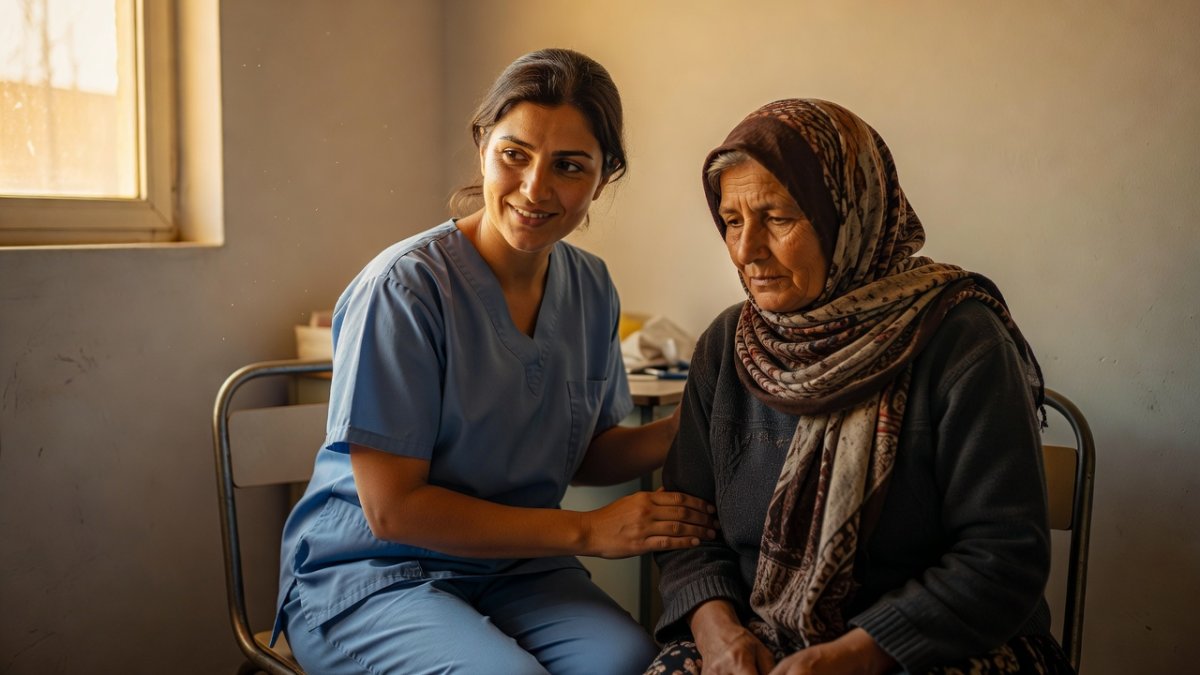
Nawzat responded by dedicating her skills to survivors arriving in the Kurdistan region. She joined the Duhok Survivors Centre in 2015, where her dual role as gynaecologist and counsellor proved essential. At forty-two she balances clinical duties with volunteer commitments. Her approach begins with a thorough physical check-up followed by attentive listening sessions that allow survivors to recount experiences without pressure.
In March 2016 Nawzat received the International Women of Courage Award from then United States Secretary of State John Kerry. The recognition highlighted her psychological support for traumatised Yazidi survivors and her efforts against gender-based violence. She has stated that she wanted to better understand issues related to women’s health and provide support for them, a commitment that guided her work after the 2014 attacks.
A Lifeline at the Duhok Survivors Centre
The Duhok Survivors Centre, funded by the United Nations Population Fund, is the only facility in Iraq that specialises in gender-based violence. Nawzat volunteers there to provide healthcare and psychological support for women who survived Islamic State captivity. Hussein al-Qaidi, director of the Kidnapped Affairs department at the Kurdistan Regional Government in Duhok, reported that 2,023 Yazidi women had been liberated from Islamic State areas by July 2018. Nawzat has assisted an estimated 1,200 of these women.
Her method combines physical assessment with extended conversations. She offers reassurance and frames survivors’ endurance as strength, positioning herself as a trusted confidante. In cases involving acute depression, post-traumatic stress disorder or suicide risk, she refers patients to the psychiatric department at Duhok’s Azadi hospital. Trust forms the foundation of these interactions, allowing women to share deepest fears once consistent support is established.
Nawzat remains available for follow-up meetings whenever survivors request additional psychological assistance. Her presence has enabled many women to begin processing events that previously left them unable to sleep or function in daily life. Shireen credited Nawzat with helping her after captivity, noting that without the doctor’s intervention she would not be alive today.
Reclaiming Dignity After Enslavement
In 2014 Khurto Hajji Ismail, known as Baba Sheikh and the supreme leader of the Yazidis, publicly declared that women who had been enslaved by Islamic State remained welcome within the community. This statement eased the process of reintegration for many survivors and supported the daily work of counsellors such as Nawzat. Shireen described how Nawzat sat with her after release and told her she was brave, a message that countered the shame imposed during enslavement.
Survivors often arrive with severe depression and persistent nightmares. Nawzat listens attentively and offers positive reinforcement like a big sister the survivors can confide in. She creates relationships based on mutual trust so patients reveal their deepest emotions and fears with ease. This sustained engagement distinguishes her contribution from short-term relief efforts.
Shireen now lives alone in a tent at the Khanke camp and rejects the idea of returning to Sinjar. Most of her family members managed to obtain asylum in Germany. Nawzat has stated that she dedicates her life to the Yazidis and intends to continue offering medical and emotional care. Her consistent presence provides continuity for women who require repeated support over months or years.
International Recognition and the Road Ahead
Nawzat’s receipt of the International Women of Courage Award in March 2016 drew attention to the scale of support needed by Yazidi survivors. At that time she had already begun volunteering at the Duhok Survivors Centre, where she combined gynaecological care with psychological listening. The award recognised both her clinical work and her efforts to combat gender-based violence within a community facing systematic targeting.
Her approach relies on building trust through repeated, attentive sessions rather than one-time interventions. Patients gradually share traumatic memories once they sense consistent support. Nawzat remains willing to meet survivors again whenever they request further assistance. This model has allowed many women to regain a sense of possibility after years of captivity and loss.
Although Iraqi forces declared final victory over Islamic State in December 2017, Nawzat continues her work without interruption. She has said she will remain available for the women who need her. Her long-term commitment illustrates how targeted medical and psychological services can address both immediate health needs and longer-term recovery within communities that have endured systematic violence.
The Ongoing Crisis of Missing Yazidis
Although Iraqi forces declared victory over Islamic State in December 2017, approximately 1,500 Yazidi women remain in captivity across Iraq, Syria and Turkey according to al-Qaidi. Some continue to be released through ransom payments years after the initial abductions. Four years after the fall of Sinjar, survivors still emerge from areas once controlled by the group.
Nawzat faces personal risks because of her engagement with Yazidi survivors. She receives frequent death threats from Islamic State sympathisers through telephone calls and social media platforms. These threats have not deterred her from maintaining regular contact with patients or from conducting examinations at the centre.
Sinjar itself remains largely in ruins. Destroyed homes and mass graves serve as constant reminders of the violence. Shireen described the horror of knowing the skeletons of her uncle and friends lie under the ground. The economic and social fabric of the region has yet to recover, leaving many displaced families dependent on camps such as Khanke for shelter and basic services.
What Survivors Need From the International Community
Survivors such as Shireen require sustained access to both medical examinations and psychological support over extended periods. Nawzat’s model at the Duhok Survivors Centre demonstrates that combining physical check-ups with attentive listening sessions helps women begin processing trauma. Continued funding for facilities like the one supported by the United Nations Population Fund remains essential for maintaining these services.
Community statements, such as the 2014 declaration by Baba Sheikh welcoming returning women, have eased reintegration. International recognition, including the award presented by John Kerry, has highlighted the need for specialised care. Survivors also need safe living conditions beyond temporary camps and pathways for family reunification where possible.
Nawzat has stated that she dedicates her life to the Yazidis and will continue her mission to help heal their wounds. Her work shows that consistent, trust-based support can counter the isolation and violence imposed during captivity. Long-term commitment from governments and organisations is required to address both the immediate health needs and the broader recovery of affected communities.
By Fatima Al-Rashid, Staff WriterThis article was produced with AI-assisted research and editorial support. Reporting is based on sources cited in the article.
What's Your Reaction?
 Like
0
Like
0
 Dislike
0
Dislike
0
 Love
0
Love
0
 Funny
0
Funny
0
 Wow
0
Wow
0
 Sad
0
Sad
0
 Angry
0
Angry
0
Gulf/MENA Correspondent at Global1.News. Based in Doha, covering Gulf politics, energy markets, diplomacy, and development across the Middle East and North Africa. Tracks the economic transformation of the Gulf states.










Comments (0)