
Spread of Ebola in DRC ‘outpacing’ response efforts, warns WHO
Spread of Ebola in DRC ‘outpacing’ response efforts, warns WHO WHO Director General Sounds the Alarm The World Health Organization’s top official delivered a blunt assessment this week: Ebola is spreading faster than teams on the ground can contain it in the Democratic Republic of Congo. Director General Tedros Adhanom Ghebreyesus urged nine neighboring countries to activate em
Spread of Ebola in DRC ‘outpacing’ response efforts, warns WHO
WHO Director General Sounds the Alarm
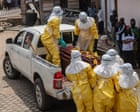
The World Health Organization’s top official delivered a blunt assessment this week: Ebola is spreading faster than teams on the ground can contain it in the Democratic Republic of Congo. Director General Tedros Adhanom Ghebreyesus urged nine neighboring countries to activate emergency protocols immediately, warning that porous borders and weak surveillance could turn a regional outbreak into another cross-continental disaster.
Global1 News obtained internal WHO situation reports showing case incidence rising sharply in North Kivu and Ituri provinces. The figures reveal that new infections are outstripping contact-tracing capacity by roughly 30 percent in the hardest-hit zones.
Current Numbers Paint a Grim Picture
Confirmed cases have climbed past 1,200 in the latest flare-up, with more than 680 deaths recorded since the outbreak was declared in late August. Health workers have identified at least 47 new transmission chains in the past ten days alone. These chains stretch across remote mining camps and displacement settlements where basic sanitation is nonexistent.
Unlike the 2014–2016 West African epidemic that killed over 11,000, this outbreak sits inside an active conflict zone. Armed groups routinely attack health facilities, forcing teams to evacuate mid-vaccination drive. The result is a deadly gap between known cases and actual reach.
Why Containment Keeps Failing
Security remains the dominant obstacle. In Beni territory, Ebola responders travel with armed escorts that sometimes draw fire themselves. Community mistrust runs deep after years of seeing underfunded clinics collapse during previous outbreaks. Families hide sick relatives rather than risk referral to treatment centers that have been looted.
Vaccine supply is another choke point. The rVSV-ZEBOV vaccine works when delivered fast, yet cold-chain breakdowns and fuel shortages routinely leave doses unusable. WHO logisticians report that more than 18,000 eligible contacts still await their first shot because roads become impassable after each rainfall.
Neighboring States on High Alert
Uganda, Rwanda, South Sudan, Burundi, Tanzania, Zambia, Angola, Republic of Congo, and Central African Republic have all received formal WHO risk assessments. Uganda’s Ministry of Health has already reopened border screening posts and stockpiled personal protective equipment at Entebbe airport. Rwanda has begun thermal-scanning every traveler crossing from Goma.
Yet these measures remain patchwork. South Sudan’s fragile health system, still recovering from civil war, lacks even basic laboratory confirmation capacity outside Juba. One imported case there could overwhelm the capital’s single isolation ward within days.
Global Funding Shortfall Exposed
The UN flash appeal for $147 million sits at just 38 percent funded. Major donors have cited “fatigue” after repeated DRC outbreaks, but that excuse collapses under scrutiny. The United States alone spent $5.4 billion containing the 2014 epidemic; the current request is a rounding error by comparison.
Private foundations have stepped in where governments hesitate. Gavi, the Vaccine Alliance, and the Gates Foundation have pre-positioned additional doses in regional hubs, yet distribution still hinges on Congolese authorities granting access to insecure zones.
Political Interference and Governance Failures
Kinshasa’s response has been uneven. Provincial governors in affected areas complain that central authorities divert resources to election-related travel rather than frontline needs. Corruption probes have already ensnared two senior health officials accused of inflating procurement contracts for protective gear.
These governance failures carry direct human costs. When treatment centers run out of gloves and bleach, local nurses refuse shifts. Infection rates among health workers have spiked to 9 percent of total cases, a grim indicator that basic infection control is breaking down.
Lessons Ignored Since 2014
The international community spent years crafting the Global Health Security Agenda after the West African crisis. Those frameworks look impressive on paper yet deliver little when bullets fly and ministries cannot pay salaries. DRC’s tenth Ebola outbreak since 1976 proves that surveillance systems remain brittle exactly where they are needed most.
Climate and displacement trends only worsen the outlook. Record flooding this season has displaced over 400,000 people into makeshift camps where Ebola spreads through shared latrines and contaminated water. Migration routes now intersect major trucking corridors linking DRC to East Africa’s ports.
What Must Happen Next
WHO is pushing for a regional coordination cell based in Kampala with real-time data sharing. Neighboring militaries need joint protocols to escort medical convoys rather than treating every health worker as a potential threat. Most critically, Kinshasa must grant independent investigators full access without political gatekeepers.
Anything less guarantees the virus will keep exploiting the same gaps that allowed it to surge in the first place. The window for decisive action is measured in weeks, not months.
This is Jessica Ali for Global1 News. 🔥
This article was produced with AI-assisted research and editorial support. Reporting is based on sources cited in the article.
What's Your Reaction?
 Like
0
Like
0
 Dislike
0
Dislike
0
 Love
0
Love
0
 Funny
0
Funny
0
 Wow
0
Wow
0
 Sad
0
Sad
0
 Angry
0
Angry
0

Editor-in-Chief at Global1.News. Atlanta-based journalist who cuts through the BS and tells it like it is. Lead anchor, host, and the voice you hear when the spin stops and the truth starts.












Comments (0)