
SpaceX Files for Record $75 Billion IPO as Japanese Space Stocks Rally
Japanese investors watched closely as SpaceX filed its S-1 registration with the U.S. Securities and Exchange Commission, setting the stage for what could become the largest initial public offering in history. The June 5 report by NHK WORLD-JAPAN highlighted immediate ripples across Tokyo's Growth Market, where shares of Astroscale Holdings, Synspective, and ispace climbed shar
Japanese investors watched closely as SpaceX filed its S-1 registration with the U.S. Securities and Exchange Commission, setting the stage for what could become the largest initial public offering in history. The June 5 report by NHK WORLD-JAPAN highlighted immediate ripples across Tokyo's Growth Market, where shares of Astroscale Holdings, Synspective, and ispace climbed sharply on the announcement. With Japan's space budget expanding and Starlink already operating in the country since 2022, the listing carries direct implications for regional supply chains and defense priorities.
SpaceX Files for Record $75 Billion IPO as Japanese Space Stocks Rally
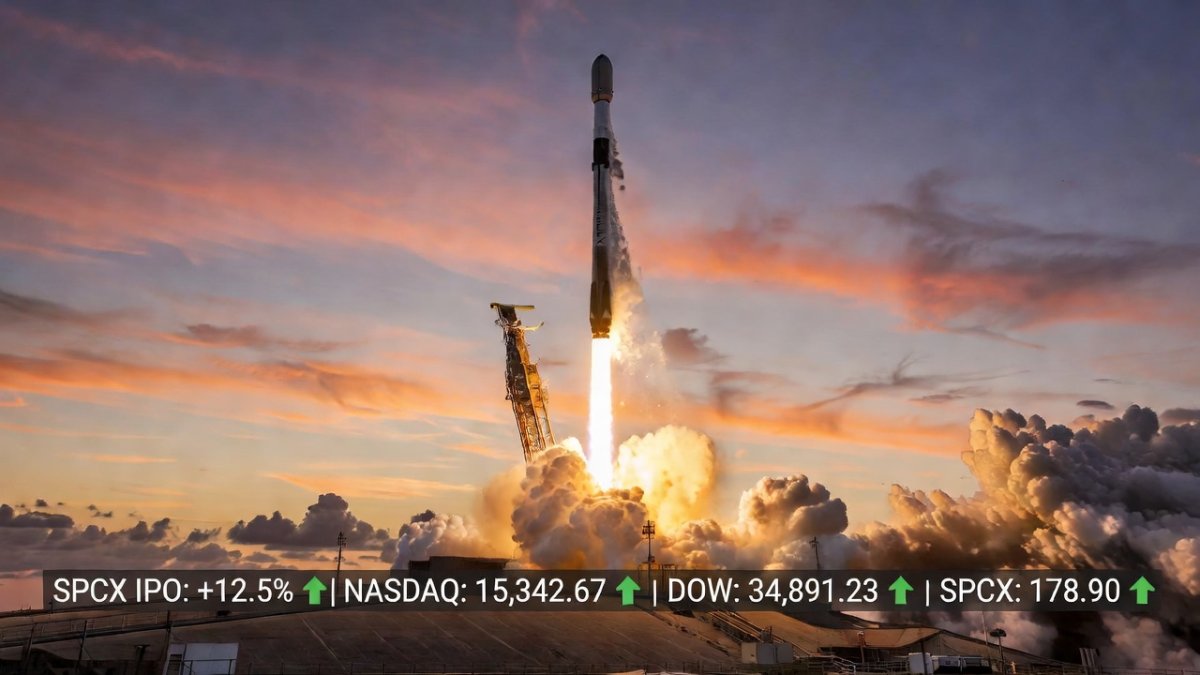
Tokyo, Japan – June 6, 2026 — SpaceX submitted its S-1 filing to the SEC and targets a June 12, 2026 listing on Nasdaq under the ticker SPCX. The offering comprises 555.6 million Class A shares priced at $135 each, with the goal of raising approximately $75 billion. This figure would surpass Saudi Aramco's 2019 record of $29.4 billion by a wide margin and value the company at roughly $1.77 trillion, placing it among the world's seven largest firms by market capitalization.
Elon Musk's approximately 42 percent equity stake will be paired with an 82.4 percent voting interest through a dual-class share structure. Twenty-three banks, including JPMorgan, Goldman Sachs, and Morgan Stanley, are managing the transaction. JPMorgan CEO Jamie Dimon is scheduled to host portions of the investor roadshow at the bank's headquarters alongside SpaceX President Gwynne Shotwell.
Analyst Perspectives on Valuation and Control
Market analyst Fabien Yip of IG Group noted the unusual decision to set pricing before the roadshow began. He stated that the move reflects Musk's firm grip on deal terms and confidence that demand will materialize. Emeritus professor Jay R. Ritter of the University of Florida contrasted SpaceX's profile with earlier high-valuation listings, pointing out that the company's trailing revenue remains below $20 billion and that it continues to post losses.
Wedbush Securities analyst Dan Ives emphasized Musk's broader strategy of consolidating AI capabilities. He observed that the acquisition of xAI positions SpaceX to integrate orbital infrastructure with terrestrial AI operations, potentially creating tighter links with Tesla over time. These comments underscore the tension between demonstrated financial performance and expectations of future growth that investors must weigh.
SpaceX Business Structure and Financial Performance
SpaceX has reorganized into three primary units: rocket launches, the Starlink satellite broadband division, and an AI segment that now includes the acquired xAI business. Starlink is reported to be profitable, helping offset overall company losses. In 2025 the firm recorded an $18.7 billion revenue base with a net loss of $4.9 billion; the first quarter of 2026 showed a further $4.3 billion loss.
Revenue grew 33 percent year-over-year, supported by expanding launch contracts and Starlink subscriptions. Plans call for orbital compute datacenters to become operational by 2028, extending the AI unit's reach beyond ground-based facilities. The separation into distinct business lines is intended to provide clearer visibility for investors evaluating each segment's contribution.
Japan's Space Sector Response
Shares of Japanese space companies rose immediately after the NHK report. Astroscale Holdings advanced 20 percent, Synspective gained 19 percent, ispace climbed 12 percent, and Axelspace Holdings rose 11 percent on the Tokyo Stock Exchange Growth Market. These moves reflect renewed attention to debris-removal, radar-imaging, and lunar-landing technologies that could benefit from a more liquid SpaceX equity market.
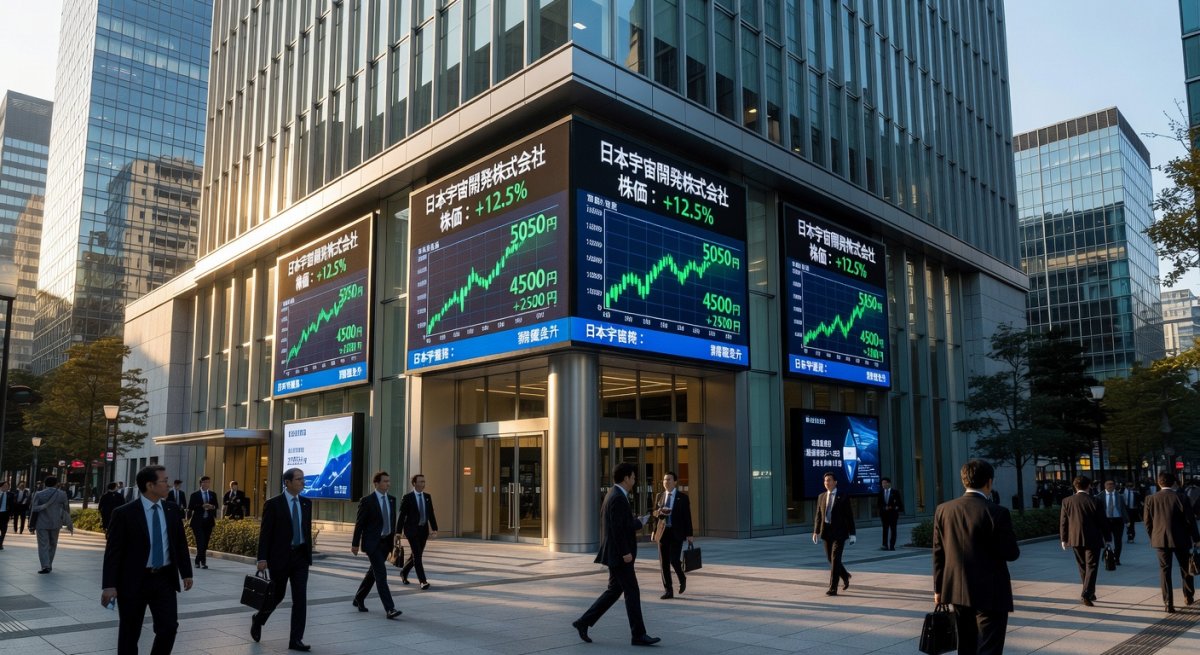
Japan's ¥1 trillion space strategy fund, administered through JAXA, continues to support domestic startups. Major institutions such as Mizuho Securities are preparing a retail tranche that will allow Japanese individual investors to participate. Space-themed ETFs recorded $1.3 billion in net inflows over the past month, with holdings that include Mitsubishi Heavy Industries and Mitsubishi Electric.
Implications for Asia Pacific
Prime Minister Takichi's administration has designated space as the "fifth battlefield" within a five-year defense budget framework totaling ¥43 trillion. Enhanced access to capital through SpaceX's listing could accelerate technology partnerships involving Japanese firms in satellite manufacturing and ground-segment services. Starlink's existing market access since 2022 provides an established channel for data services that regional defense and commercial users may expand.
Broader Asia-Pacific economies are monitoring how the IPO affects supply-chain financing and export-control considerations. Countries with growing space programs may seek similar dual-class structures or strategic investments to retain control while tapping global markets. The transaction therefore serves as a reference point for regulatory discussions across the region.
What to Watch For
Investors will monitor subscription levels during the remaining roadshow days and any adjustments to the final share allocation. Regulatory feedback from the SEC on the dual-class voting provisions could influence the June 12 listing timeline. In Japan, attention will focus on whether the retail tranche opens on schedule and how JAXA-funded startups adjust their own fundraising plans in light of the new valuation benchmark.
Further milestones include the first public earnings release after listing and progress updates on the planned orbital compute datacenters. Any announcements regarding additional Japanese bank involvement or technology licensing agreements would also shape regional market sentiment. Market participants are advised to track filings for precise timing rather than assuming immediate operational changes.
The SpaceX IPO marks a pivotal moment for both the global space industry and Japan's emerging ecosystem of satellite and debris-removal companies. With concrete filings now public and trading slated for mid-June, stakeholders across Asia Pacific have a defined window to assess participation and strategic alignment. Continued reporting from NHK WORLD-JAPAN and other outlets will provide updates as the offering progresses.
By Kenji Tanaka, Staff Writer
This article was produced with AI-assisted research and editorial support. Reporting is based on sources cited in the article.
What's Your Reaction?
 Like
0
Like
0
 Dislike
0
Dislike
0
 Love
0
Love
0
 Funny
0
Funny
0
 Wow
0
Wow
0
 Sad
0
Sad
0
 Angry
0
Angry
0

Japan Correspondent at Global1.News. Tokyo-based voice covering Japanese politics, technology, economy, and culture. Tracks the intersection of tradition and innovation in one of the world's most dynamic societies.













Comments (0)