
Smart Light Company Govee Apologizes After 'White Supremacy' Books Appear in Marketing Image
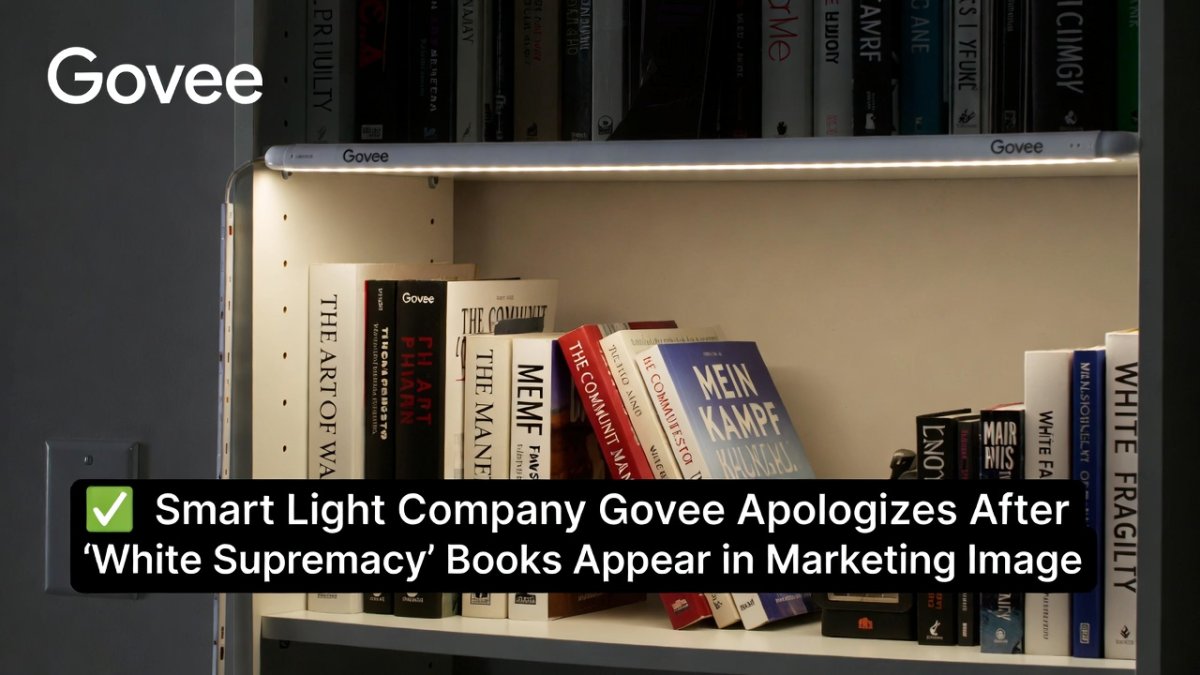
Smart Light Company Govee Apologizes After 'White Supremacy' Books Appear in Marketing Image
Smart lighting manufacturer Govee is issuing apologies after a marketing image on its US website featured books with the words "white supremacy" clearly visible on their spines — positioned on a shelf above a child's bed in a bedroom lighting advertisement. The image, which was meant to showcase Govee's smart LED lighting products, instead sparked immediate outrage and raised serious questions about the company's content review processes.
The books were part of a stock photograph that Govee licensed and used without apparently reviewing the content of the books visible in the frame. The result was an advertisement that juxtaposed cozy bedroom lighting with a phrase that carries enormous political and cultural weight.

How It Happened
The Verge was first to report the story after a reader contacted the publication. The image was displayed on Govee's US website in the bedroom lighting section, showing a child's bed with stuffed animals on a shelf above. Among the toys, the books with "white supremacy" on their spines were unmistakably visible.
Govee removed the image after being contacted by The Verge, but initially did not respond to questions about how the image came to be used. The company later issued a statement apologizing and explaining that the image was an "unfortunate error" that occurred because the imagery was sourced from a third-party stock photo provider without adequate review.
"We sincerely apologize for this oversight," Govee said in a statement. "The image was licensed from a stock photography service and was used without proper vetting of its contents. We have removed the image and are reviewing our content approval processes to ensure this does not happen again."

The Bigger Problem: Stock Photo Risks
Govee's situation is a cautionary tale for any company that uses stock photography in marketing materials. Stock image libraries contain millions of photographs, many of which include books, signs, newspapers, and other objects with readable text. Unless every detail is carefully reviewed, there is always a risk that something inappropriate slips through.
This is not the first time a company has been embarrassed by a poorly vetted stock image. In 2017, a stock photo of a family watching television was found to have a racist slur visible on a magazine in the background. In 2020, a government agency used a stock photo that included a protest sign with an obscene message. The pattern is consistent: stock images are convenient, but they are not safe without careful review.
The Aftermath
Govee's response — a prompt apology and a commitment to review processes — is the right approach, but the damage to the brand's reputation is real. In an era where every marketing image is scrutinized on social media, the margin for error is vanishingly small. The internet does not forgive quickly.
For consumers, the incident raises questions about whether Govee has adequate quality control processes. If a company cannot catch "white supremacy" in a marketing image, what else might they miss? It is a fair question, and Govee will need to demonstrate that it has learned from the mistake.
Key Takeaways
- Govee used a stock photo containing books with "white supremacy" on their spines in a bedroom lighting advertisement.
- The company apologized, removed the image, and promised to review content approval processes.
- The incident highlights the risks of using stock photography without thorough content review.
- Social media reaction was swift and unforgiving, as is typical for brand controversies.
- Govee will need to demonstrate improved quality control to rebuild consumer trust.
Conclusion
Govee's mistake is a textbook example of why every element of marketing imagery matters. A stock photo that seemed harmless at first glance contained a detail that, once noticed, completely overwhelmed the intended message. The company's response was appropriate, but the lesson is clear: in the age of social media, every pixel of your marketing is subject to scrutiny. Review everything. Assume nothing.
This is Jessica Ali for Global1 News, reporting from Atlanta. 🇺🇸🔥
Stock Photography: A Hidden Danger
The stock photography industry is enormous — companies like Getty Images, Shutterstock, and Adobe Stock offer millions of images for marketing use. The images are generally curated, but the sheer volume means that problematic content inevitably slips through. Books, magazines, and signs in the background of photographs are particularly risky because they often contain text that the photographer may not have noticed or considered significant. Govee's experience is a reminder that stock images are not pre-vetted for marketing safety — the burden falls on the licensee.
Brand Safety in the AI Era
As AI-generated imagery becomes more common, the challenge of ensuring brand safety in marketing content will only grow. AI image generators can produce photorealistic content that includes text, but the text may be garbled, nonsensical, or worse. Companies that use AI-generated images will need even more rigorous review processes than those that use traditional stock photography, because AI systems can introduce unexpected elements that human reviewers might miss.
The Speed of Social Media Judgment
One of the striking aspects of the Govee incident is how fast it spread. A reader noticed the image, contacted The Verge, and within hours the story was being covered nationally. Social media amplified the outrage, and Govee's brand took a hit — however unfair or disproportionate the response may seem. In the age of social media, companies have no grace period for mistakes. Every marketing image is subject to immediate global scrutiny, and the consequences of errors are instantaneous.
The Lesson for Every Marketer
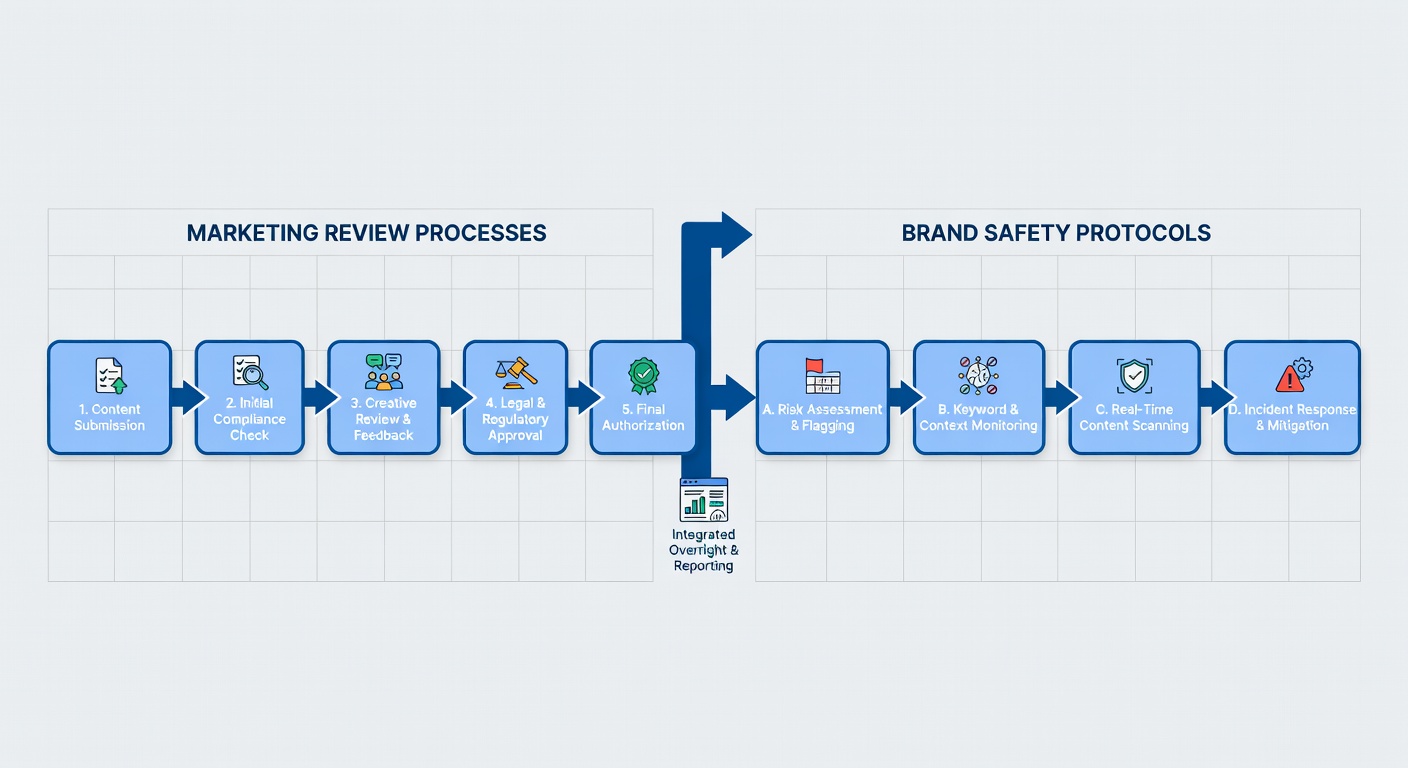
The Govee incident is a cautionary tale that every marketing team should study. It demonstrates that in the age of social media, there is no such thing as a small mistake. A detail that would have gone unnoticed in a print catalog a generation ago can now become a national news story within hours. The lesson is not that companies should avoid stock photography — it is that every image must be reviewed with the assumption that someone will zoom in on every detail. Marketing teams need processes, not just trust, and the Govee story shows what happens when those processes fail.
The Cost of Corner-Cutting in Content Review
Govee's mistake reveals a deeper issue in how many companies approach marketing content: the assumption that stock photography is safe by default. Stock image libraries are not vetted for marketing appropriateness — they are vetted for technical quality and basic legality. The content of books, signs, clothing, and other details within images is rarely reviewed by the stock photo provider. That responsibility falls entirely on the company using the image. Govee's failure to catch the 'white supremacy' books before publishing the image suggests either that no content review took place, or that the review process was superficial. In a well-functioning content approval workflow, every element of a marketing image would be scrutinized before publication. The fact that this slipped through indicates a gap in Govee's processes that needs to be addressed. The financial cost of this mistake is difficult to quantify but will likely be significant. Beyond the immediate reputational damage, Govee may face lost sales, increased scrutiny from retail partners, and the cost of reworking its content approval processes. For a company competing in the crowded smart home market, a brand crisis of this nature is a distraction that no marketing team needs.
Govee's apology is sincere, but the damage is done. The company will spend months rebuilding trust that was lost in an instant because someone failed to look closely at a stock photo. The lesson for every business is clear: in the age of social media, every pixel of your marketing matters. Review everything. Take nothing for granted. And never assume that a stock image is safe to use without scrutiny. Govee learned this lesson the hard way. Other companies would be wise to learn it from Govee's mistake.
The Govee incident is a textbook case of brand risk in the digital age. A single image, inadequately reviewed, caused a wave of negative attention that no marketing campaign could offset. The company's response — prompt apology, investigation, process review — was appropriate. But the lesson for every business is that brand safety requires vigilance at every level. In an era where every detail is scrutinized, there is no substitute for thoroughness.
The Govee controversy will fade from the headlines, but the lesson it taught should not. Every company that uses marketing imagery — which is to say, every company — should take this as a warning. Review your processes. Train your teams. And never assume that a stock image is safe. Govee learned this lesson the hard way so that others might learn it more easily.
This article was produced with AI-assisted research and editorial support. Reporting is based on sources cited in the article.
What's Your Reaction?
 Like
0
Like
0
 Dislike
0
Dislike
0
 Love
0
Love
0
 Funny
0
Funny
0
 Wow
0
Wow
0
 Sad
0
Sad
0
 Angry
0
Angry
0

Editor-in-Chief at Global1.News. Atlanta-based journalist who cuts through the BS and tells it like it is. Lead anchor, host, and the voice you hear when the spin stops and the truth starts.














Comments (0)