
Rio de Janeiro Helicopter Collision: 6 Dead After Mid-Air Crash
Lead/Hook The skies over Rio turned deadly on a clear Sunday morning that should have been nothing but postcard perfect. Two helicopters slammed into each other above the western zone neighborhood of Recreio dos Bandeirantes, sending wreckage and bodies straight into a BYD car dealership below. Six people gone in seconds. No survivors. This was not some distant tragedy you scro
Lead/Hook
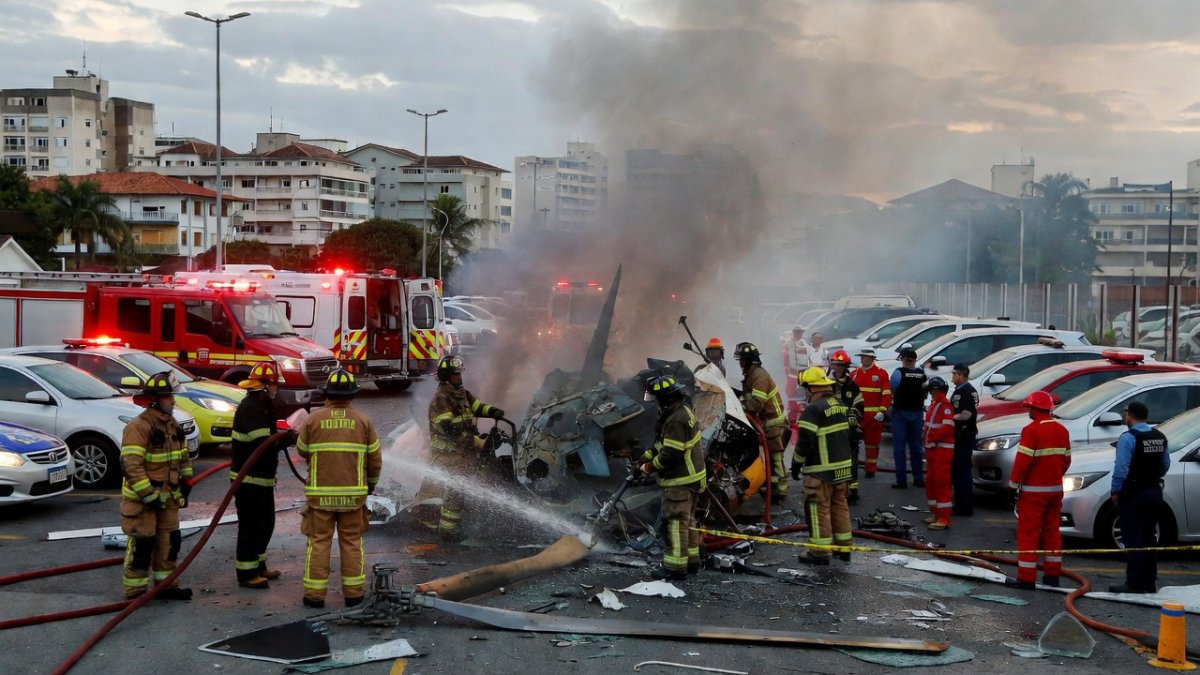
The skies over Rio turned deadly on a clear Sunday morning that should have been nothing but postcard perfect. Two helicopters slammed into each other above the western zone neighborhood of Recreio dos Bandeirantes, sending wreckage and bodies straight into a BYD car dealership below. Six people gone in seconds. No survivors. This was not some distant tragedy you scroll past. This was raw, loud, and unforgiving, and it demands we look straight at it without flinching.
June 14, 2026 started like any other tourist draw in Brazil's most famous city. Clear skies, warm air, the usual hum of helicopters ferrying the famous and the curious over beaches and favelas. Then the collision ripped that calm apart. One aircraft dropped like a stone into the dealership lot. The other followed in pieces. Emergency crews from the Rio Military Fire Department raced in, but the outcome was already sealed. Six lives erased before the morning coffee cooled.
I am telling you this straight because sugarcoating helps nobody. Foreign nationals died here, including an American singer whose music reached millions and an Argentine YouTuber with over five million subscribers. Their stories ended in twisted metal on Brazilian soil. The world watched Rio for Carnival and soccer. Now it watches for answers about why two helicopters could not share the same airspace without catastrophe.
This collision is not an isolated headline. It is a flashing warning light on how we move people through crowded skies above dense cities. Rio draws the bold and the bright. When those lights go out mid-flight, the loss ripples far beyond one dealership lot. We owe the dead more than silence or vague statements. We owe them the full, unvarnished truth about what went wrong and why it must never happen again.
The Collision
Two helicopters met in mid-air over Recreio dos Bandeirantes under bright morning sun. Witnesses on the ground heard the sudden roar of engines fighting for space, then the sickening crunch of rotors and fuselages locking together. One aircraft spiraled down and slammed into the BYD dealership. The second broke apart on impact. Debris scattered across the lot and nearby streets. The Rio Military Fire Department arrived within minutes, but flames and twisted wreckage told the story before any official word.
Clear weather ruled out the usual excuses. No storm, no fog, no obvious mechanical failure reported in the first hours. The neighborhood sits in Rio's western zone, a busy corridor for tourist flights and private charters. Helicopters often buzz low over the area to give passengers views of the coastline. That routine traffic turned lethal when paths crossed without enough separation. Six people boarded those aircraft expecting a scenic ride. None walked away.
Emergency responders worked through the morning pulling bodies from the wreckage. Lt. Colonel Fabio Contreiras later confirmed the grim count to CNN Brasil. No survivors meant the focus shifted immediately to recovery and investigation. The dealership itself became a crime scene, cars crushed under burning debris. Locals stood in shock, phones recording the smoke that rose above the neighborhood like a dark flag.
This was not a gentle descent or a survivable crash. The force of the mid-air strike left nothing to chance. Pilots Alexandre Souza and Charles Marsillac had no time to radio distress before the impact. The remaining four passengers never stood a chance. Rio has seen its share of aerial incidents, yet this one carried the weight of international names and young talent cut short. The clear morning sky offered no cover for whatever split-second error or system failure allowed two aircraft to occupy the same deadly point in space.
The Victims
Oliver Tree, 32, the American singer behind hits like Life Goes On and Alien Boy, boarded one of the helicopters that morning. His music mixed humor, vulnerability, and sharp beats that connected with fans worldwide. Tree had built a career on refusing to fit neat boxes. His presence on that flight turned a local aviation story into global news. Thirty-two years ended in seconds above a Rio dealership, leaving behind unfinished tracks and a fanbase that now grieves without closure.
Gaspar Prim, known to millions as Gaspi, was only 23. The Argentine YouTuber had grown his channel past five million subscribers with raw energy and unfiltered takes. Prim represented a generation that built fame from screens rather than stages. His death alongside Tree and the others shows how the same skies that promise adventure can swallow the young and driven without warning. Five million voices now mourn a creator who never got to post his next video.
Lucas Frota and Lucas Vignale rounded out the passenger list. Vignale, an Argentine director and screenwriter, carried stories yet to be told on film. Frota's role in the group remains tied to the same doomed flight. Both men traveled with dreams and deadlines that vanished in the collision. Their families now face the brutal arithmetic of lives measured in potential rather than completed work.
The two pilots, Alexandre Souza and Charles Marsillac, carried the responsibility of keeping everyone aloft. Their experience ended in the same wreckage. These six names represent different worlds colliding in one aircraft cabin. American music, Argentine digital fame, creative vision, and professional aviation skill all erased together. Rio will remember the smoke. The rest of us must remember the people who never made it home.
Official Response
Mayor Eduardo Cavaliere confirmed early that foreign nationals were among the dead. His statement cut through the initial confusion but left the hard questions untouched. Lt. Colonel Fabio Contreiras of the Rio Military Fire Department spoke directly to CNN Brasil about the recovery effort. The official line stayed measured: investigation ongoing, cause unclear. That measured tone does little to calm families waiting for real answers across borders.
Brazilian aviation authorities moved quickly to secure the site and begin the painstaking work of piecing together flight data. Black boxes, if recovered intact, will tell the mechanical story. Human factors, air traffic control logs, and maintenance records will fill the rest. Yet the public deserves more than the standard promise of a thorough probe. Six deaths, including high-profile names, demand transparency that goes beyond press conferences.
International cooperation will be essential. American and Argentine officials have every right to monitor the process. Tourism boards in Rio will want swift conclusions to protect the city's image. None of that pressure should slow the actual investigation. The truth about why two helicopters shared fatal airspace matters more than any headline cycle or economic worry.
Clear morning conditions remove weather as a convenient scapegoat. That leaves pilot decisions, traffic control, or mechanical issues as the remaining possibilities. Until the final report lands, speculation fills the gap. Officials must resist the urge to close the book early. Six families deserve every detail, not a sanitized summary designed to move the news cycle forward.
Broader Implications
Rio sells itself on dramatic views from above. Helicopter tours have become a staple for visitors who want the postcard shot without the hike. That business model now carries fresh risk after this collision. Tourism officials will scramble to reassure travelers that the skies remain safe. The real work lies in proving that claim with tighter rules, not marketing slogans.
Aviation safety in dense urban corridors requires constant vigilance. Two aircraft meeting mid-air over a populated neighborhood exposes gaps in separation standards or real-time tracking. Brazil is not alone in facing these pressures. Cities worldwide that rely on helicopter traffic for tourism and business must examine their own procedures before another clear morning turns deadly.
The loss of international visitors also carries diplomatic weight. American and Argentine citizens died on Brazilian soil. That fact alone forces conversations about cross-border accountability. Insurance claims, repatriation of remains, and future travel advisories will follow. Rio cannot afford to treat this as a local story when the victims came from far beyond its borders.
Every city that hosts aerial tourism faces the same math. One failure can erase years of safety records. The question is whether regulators will tighten standards before the next collision or wait for another body count. Rio's western zone just became the latest example that clear skies offer no guarantee when procedures fail.
Tributes and Impact
Melanie Martinez, Diplo, Kid Cudi, Bebe Rexha, and T-Pain all posted public grief for Oliver Tree. Their words carried the weight of colleagues who understood the grind of making music that connects. Tree's death hit the industry at a moment when live performances and creative risks already felt fragile. The tributes revealed how one voice can thread through multiple careers and still leave an irreplaceable hole.
Gaspar Prim's YouTube community reacted with raw disbelief. Five million subscribers lost the creator who spoke directly to them without filters. Digital fame moves fast, yet the mourning showed that online connections can run as deep as any family tie. Prim's absence will echo in comment sections and reaction videos for years.
Lucas Vignale's film work now sits unfinished. Directors and writers who knew him will carry the memory of scripts that will never reach screens. The cultural loss compounds when young talent disappears before the peak. Rio's collision did not just take six lives. It removed future contributions that audiences worldwide will never experience.
These tributes are not empty gestures. They mark the moment when private grief becomes public record. The music, videos, and stories these six people created will outlast the wreckage. Their impact forces the rest of us to confront how quickly promise can vanish above a city that still markets itself as paradise.
Analysis
Let me be direct. This collision exposes the casual risk we accept when fame and tourism mix with thin margins for error. Oliver Tree and Gaspi Prim did not die because they chose danger. They died because two helicopters occupied the same airspace at the wrong second. Clear weather makes the failure more glaring, not less. Rio cannot wave this away as bad luck.
The victims represent a new class of traveler. Digital creators and independent artists move through the world chasing content and connection. They board helicopters for the view and the post. When systems meant to protect them fail, the loss hits harder because their audiences feel it in real time. This is not abstract aviation safety. This is the cost of treating aerial tours like routine Uber rides.
Officials will talk about ongoing investigations. I am telling you the pattern is already clear. Cities that sell spectacle from the sky must invest in the boring work of separation protocols and redundant tracking. Anything less is negligence dressed up as progress. Six deaths are the price of that shortcut.
Rio will recover its image. The question is whether it will earn that recovery through real change or through the usual cycle of statements and silence. The dead do not care about tourism numbers. They care that the living fix what killed them. Anything short of that is an insult to every name on that flight manifest.
Action Steps
Start by demanding the full investigation report when it drops. Contact Brazilian aviation authorities and your own elected officials to insist on public release of findings. Vague assurances are not enough. Six families deserve the complete record, not a summary designed to protect reputations.
Support the families through verified channels. Donations and messages matter, but pressure on regulators matters more. Use your platform, however small, to keep this story alive until concrete safety changes appear. Silence lets the next clear morning repeat the same mistake.
Reconsider how you consume aerial tourism. Ask operators about their separation standards and tracking systems before booking. Demand transparency instead of scenic photos. The market responds when customers refuse to accept thin safety margins as normal.
Finally, remember the names. Oliver Tree, Gaspar Prim, Lucas Frota, Lucas Vignale, Alexandre Souza, and Charles Marsillac. Say them out loud when officials try to move on. Their deaths are not content. They are a line in the sand. Cross it only when the skies above Rio and every other city become measurably safer for the next passenger who boards a helicopter on a clear morning.
By Jessica Ali, Staff Writer
This article was produced with AI-assisted research and editorial support. Reporting is based on sources cited in the article.
What's Your Reaction?
 Like
0
Like
0
 Dislike
0
Dislike
0
 Love
0
Love
0
 Funny
0
Funny
0
 Wow
0
Wow
0
 Sad
0
Sad
0
 Angry
0
Angry
0

Editor-in-Chief at Global1.News. Atlanta-based journalist who cuts through the BS and tells it like it is. Lead anchor, host, and the voice you hear when the spin stops and the truth starts.











Comments (0)