
Netanyahu Declares IDF Full Freedom of Action in South Lebanon as US-Iran Burgenstock Talks Yield Major Progress
The escalating confrontation in southern Lebanon unfolds against the backdrop of intensifying Sunni-Shia competition and great power maneuvering, where Iranian influence through Hezbollah collides with Israeli security imperatives and American diplomatic engineering involving Gulf states and Pakistan. This dynamic risks broader regional destabilization as energy routes and nucl
The escalating confrontation in southern Lebanon unfolds against the backdrop of intensifying Sunni-Shia competition and great power maneuvering, where Iranian influence through Hezbollah collides with Israeli security imperatives and American diplomatic engineering involving Gulf states and Pakistan. This dynamic risks broader regional destabilization as energy routes and nuclear thresholds intersect with proxy calculations.
Netanyahu Declares IDF 'Full Freedom of Action' in South Lebanon as US-Iran Burgenstock Talks Yield 'Major Progress'
Beirut, Lebanon – June 22, 2026 — Israeli Prime Minister Benjamin Netanyahu's declaration granting the Israel Defense Forces unrestricted operational latitude in southern Lebanon marks a decisive escalation, even as the first round of US-Iran negotiations concluded in Switzerland with claims of substantive advancement on nuclear and economic fronts.
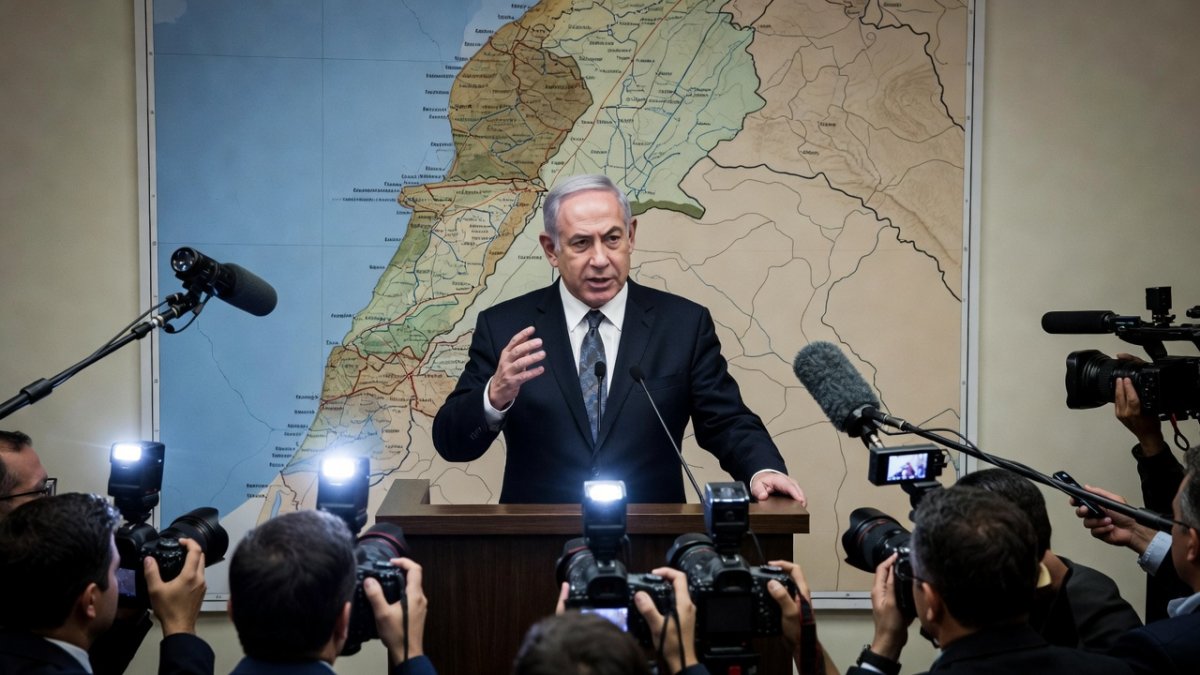
Netanyahu's Freedom of Action Doctrine
Prime Minister Benjamin Netanyahu explicitly authorized the IDF to exercise full freedom of action against any perceived threat emanating from southern Lebanon, stating that Israeli forces would remain deployed "as long as necessary" without external constraints. This doctrine directly responds to Hezbollah's continued presence and rocket capabilities north of the Litani River, where over 3,500 fatalities have been recorded since March 2026 amid sustained exchanges. Netanyahu's position rejects any linkage between the Burgenstock process and Israeli operational decisions, emphasizing that security imperatives along the border supersede diplomatic timelines.
Israeli strategy under this framework prioritizes preemptive and responsive strikes targeting Hezbollah infrastructure while maintaining a buffer zone that extends several kilometers into Lebanese territory. Defense Minister Israel Katz has coordinated with Northern Command to ensure rapid response protocols remain unhindered, even as Washington prepares for separate Israel-Lebanon discussions scheduled for June 23-25. The approach reflects Netanyahu's calculation that Iranian-backed forces will exploit any perceived restraint, particularly following the brief closure of the Strait of Hormuz on June 21.
Regional analysts note that this freedom-of-action policy effectively sidelines the new trilateral guarantee mechanism involving Iran, Qatar, and Pakistan, which deliberately excludes Israel. Netanyahu's insistence on autonomy underscores longstanding Israeli skepticism toward multilateral arrangements that dilute deterrence. Military sources indicate that operations will continue targeting command nodes and supply lines irrespective of the sanctions suspension on Iranian oil announced until August 21, 2026.
Burgenstock Breakthrough: Inspections, Assets, and Oil
The first round of US-Iran talks at Burgenstock, Switzerland, concluded on June 22 with Iranian Foreign Minister Abbas Araghchi citing "major progress" after intensive overnight sessions. Vice President JD Vance confirmed that Tehran agreed to readmit International Atomic Energy Agency inspectors, reversing prior restrictions on monitoring activities at key nuclear sites. This concession forms the centerpiece of the emerging framework, aimed at restoring transparency following years of limited access.
Parallel agreements address the unfreezing of Iranian assets, which will now be jointly administered by the United States and Qatar under a structured disbursement mechanism described by Vance as "a classic Trump deal." The arrangement seeks to channel funds toward verified civilian purposes while preventing diversion to proxy networks. Simultaneously, Washington suspended sanctions on Iranian oil exports until August 21, 2026, providing Tehran with immediate revenue relief estimated in the billions of dollars.
These economic and nuclear provisions emerged only after Iran's brief closure of the Strait of Hormuz on June 21, which served as leverage during the negotiations. The sequencing illustrates how energy coercion accelerated diplomatic movement, though the sustainability of the inspection regime remains contingent on continued compliance monitoring by IAEA teams. Araghchi's public statements emphasized that progress hinged on addressing Israeli actions in Lebanon, revealing the interconnected nature of the nuclear and regional files.
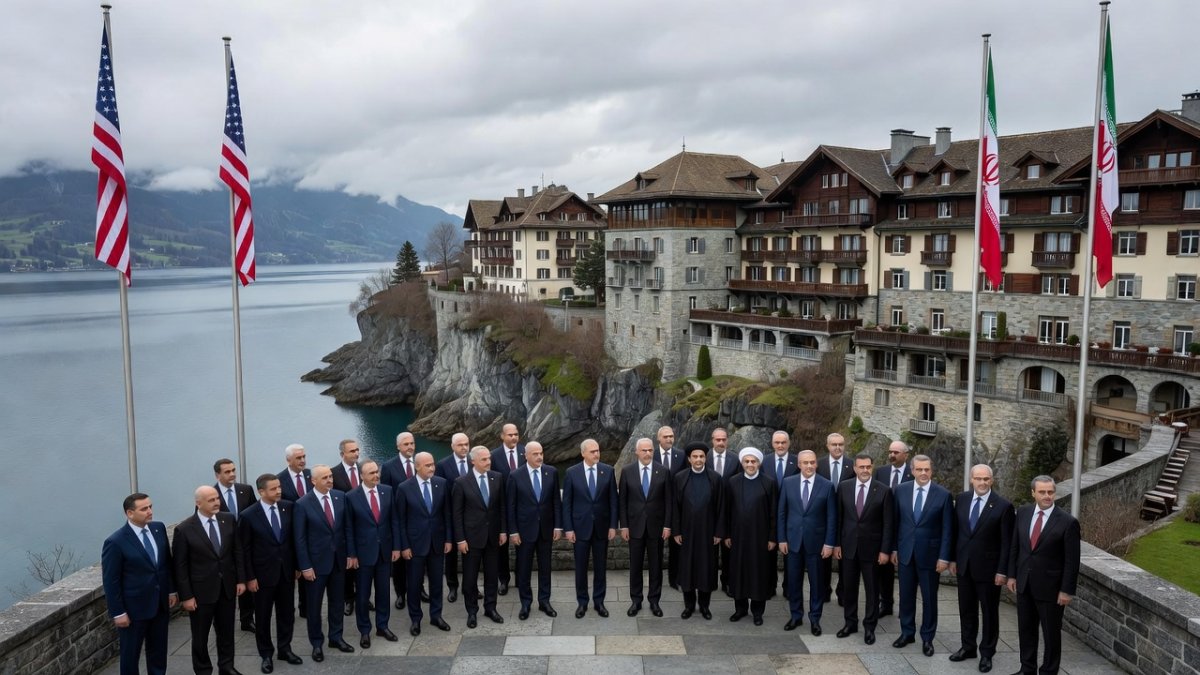
The New Lebanon Mechanism: Iran, Qatar, Pakistan Without Israel
A novel US-Iran Lebanon mechanism designates Iran, Qatar, and Pakistan as formal guarantors for de-escalation arrangements, pointedly excluding Israel from the oversight structure. This trilateral format emerged from the Burgenstock discussions and aims to manage cross-border incidents through third-party verification rather than direct Israeli-Lebanese coordination. Pakistani Foreign Minister Ishaq Dar has been tasked with facilitating communication channels alongside Qatari diplomats.
The mechanism's design limits Israeli response options by routing complaints and verification through the guarantor states, creating procedural delays that could constrain rapid IDF action. Netanyahu's subsequent freedom-of-action declaration directly challenges this architecture, signaling that Israel will not accept external vetoes on operations deemed necessary for border security. Hezbollah has already signaled alignment with the Iranian position within this framework, rejecting any Lebanese government engagement that bypasses its own veto authority.
Critics within Lebanon argue that the exclusion of Israel undermines the mechanism's credibility, as the primary kinetic actor on the ground remains outside the guarantee structure. The arrangement reflects Washington's attempt to balance Iranian sensitivities with Gulf state mediation, yet it risks entrenching Hezbollah's influence by formalizing Tehran's role in Lebanese security affairs. Concrete implementation details, including patrol zones and incident reporting timelines, are expected to be clarified during the Washington talks later this week.
Pakistan's Mediation and the Strait of Hormuz
Pakistan's Foreign Minister Ishaq Dar played a pivotal role in bridging US-Iran positions, telling Al Arabiya that sanctions relief was mutually agreed upon by Washington, Islamabad, and Tehran. Dar emphasized that no tolls or fees would be imposed on Strait of Hormuz transit, addressing concerns that Iran's June 21 closure might evolve into a permanent revenue extraction scheme. His involvement underscores Islamabad's growing diplomatic footprint in Gulf security matters.
The Pakistani mediation helped secure the sanctions suspension on Iranian oil, providing Tehran with fiscal breathing room while committing to IAEA readmission. Dar noted that Israeli operations in Lebanon had "derailed everything" prior to the Burgenstock round, highlighting how kinetic developments directly influenced the pace of nuclear and economic talks. This framing positions Pakistan as an honest broker capable of managing Shia-Sunni tensions within the broader negotiation architecture.
Energy market participants welcomed the clarification on Hormuz access, which stabilized futures pricing after the brief closure. However, the arrangement leaves open questions about enforcement mechanisms should Iran again restrict passage. Dar's statements suggest that Pakistan will continue to facilitate quarterly review meetings among the guarantor states, ensuring that the Lebanon mechanism remains tethered to verifiable compliance on both nuclear and maritime issues.
Hezbollah's Rejection and Washington Talks
Hezbollah swiftly rejected the Lebanese government's proposed direct talks with the United States, insisting that any engagement must occur through established resistance channels rather than official Beirut representation. The group's stance aligns with Iranian preferences and underscores its determination to retain veto power over Lebanese foreign policy decisions. This position complicates the upcoming Israel-Lebanon discussions scheduled in Washington for June 23-25.
Israeli officials have indicated they will attend the Washington meetings primarily to coordinate with American counterparts rather than negotiate directly with Lebanese representatives under Hezbollah influence. Prime Minister Netanyahu reiterated that Israeli operations would proceed independently, citing the need to neutralize threats irrespective of diplomatic calendars. The disconnect between Hezbollah's rejectionism and the trilateral guarantee mechanism reveals deep structural obstacles to durable ceasefires.
Lebanese political factions outside Hezbollah's orbit have expressed frustration that the group's intransigence prolongs the conflict, which has already claimed more than 3,500 lives since March. The Washington talks are therefore expected to focus on technical deconfliction measures rather than comprehensive political settlements, with the US seeking to prevent further spillover into Syria and Iraq while managing Iranian expectations.
Regional Implications: Energy Markets and Alliance Shifts
The suspension of sanctions on Iranian oil until August 21, 2026, combined with the unfreezing of assets under US-Qatari oversight, is projected to add significant barrels to global supply, potentially easing price pressures in European and Asian markets. Yet the exclusion of Israel from the Lebanon guarantee mechanism introduces uncertainty that could trigger renewed volatility should cross-border incidents escalate. Sunni Gulf states, particularly the Kingdom of Saudi Arabia and the United Arab Emirates, are monitoring Pakistan's expanded mediation role with caution, wary of any arrangement that elevates Iranian influence in the Levant.
Alliance realignments are already visible as Qatar and Pakistan consolidate their positions as indispensable intermediaries, while traditional US-Israel coordination faces new procedural hurdles. President Donald Trump's assertion that he can influence IDF actions because "Israelis respect him" suggests continued American attempts to manage Israeli restraint, though Netanyahu's doctrine indicates limited room for external direction. The interplay between nuclear inspections, energy flows, and Lebanese security guarantees will shape the next phase of regional competition.
Looking ahead, the durability of the Burgenstock framework depends on whether the IAEA can maintain credible access to Iranian nuclear sites and whether the trilateral guarantors can prevent Hezbollah from exploiting the mechanism's procedural constraints. For Lebanon, the coming weeks will test whether external diplomatic engineering can contain a conflict that has already exacted a devastating human toll.
By Malik Hassan, Staff Writer
This article was produced with AI-assisted research and editorial support. Reporting is based on sources cited in the article.
What's Your Reaction?
 Like
0
Like
0
 Dislike
0
Dislike
0
 Love
0
Love
0
 Funny
0
Funny
0
 Wow
0
Wow
0
 Sad
0
Sad
0
 Angry
0
Angry
0
Middle East Correspondent at Global1.News. Based in Beirut, covering politics, conflict, energy, and society across the Middle East. Brings context and depth to a region often reduced to headlines.









Comments (0)