
NEET-UG 2026 Re-Exam: Record Security After Paper Leak
The NEET-UG 2026 re-examination on June 21 drew 22 lakh candidates across 5,440 centres in 551 Indian cities and 14 international locations, following the CBI-confirmed paper leak that forced cancellation of the original May 3 test. With 1.1 lakh MBBS seats at stake, the National Testing Agency deployed 1.38 lakh AI-powered CCTV cameras and 51,311 signal jammers in the most ext
The NEET-UG 2026 re-examination on June 21 drew 22 lakh candidates across 5,440 centres in 551 Indian cities and 14 international locations, following the CBI-confirmed paper leak that forced cancellation of the original May 3 test. With 1.1 lakh MBBS seats at stake, the National Testing Agency deployed 1.38 lakh AI-powered CCTV cameras and 51,311 signal jammers in the most extensive security operation in Indian examination history. This massive exercise directly affects the pipeline of doctors entering India's strained public health system under the Union Ministry of Health and Family Welfare.
NEET-UG 2026 Re-Exam: Record Security Deployment Exposes Deep Structural Flaws in Medical Entrance Testing
New Delhi, India – June 22, 2026 — The re-examination conducted by the National Testing Agency under Union Education Minister Dharmendra Pradhan restored a measure of credibility to the process after the Central Bureau of Investigation verified the paper leak. Over 22 lakh aspirants sat for the test that determines entry into more than 1.1 lakh MBBS seats nationwide, with the Ministry of Education coordinating unprecedented logistical support including Indian Air Force airlifts of question papers to 18 remote locations.
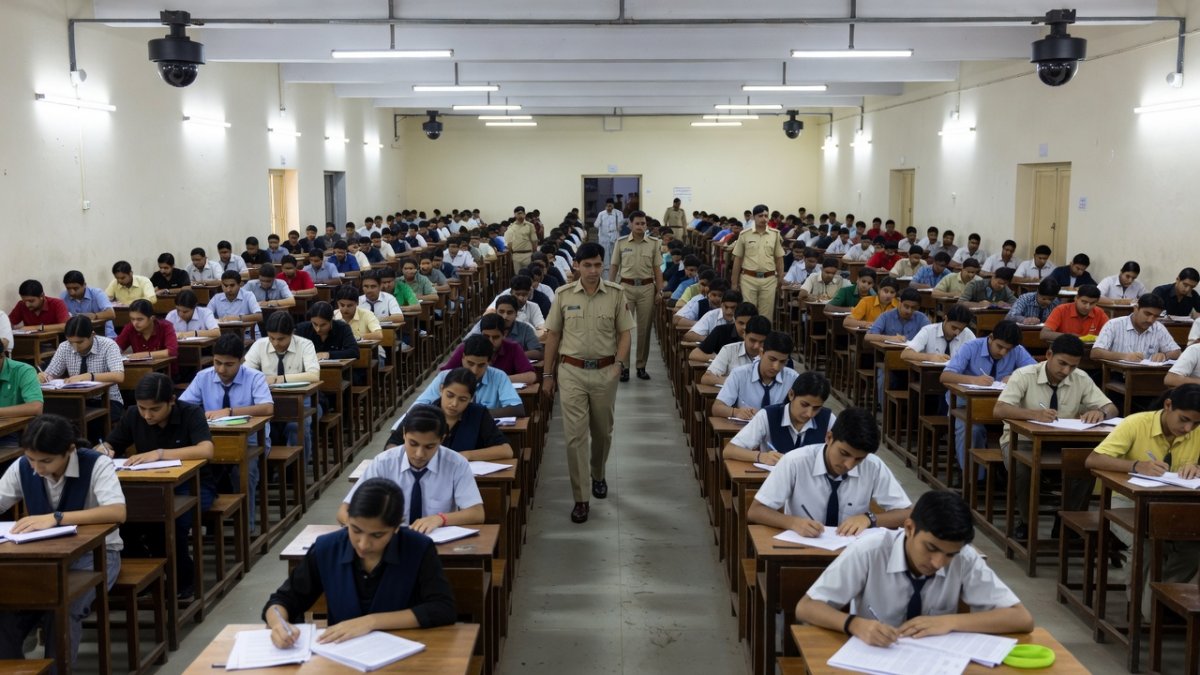
Unprecedented Security Architecture and Its Implementation
The deployment of 1.38 lakh CCTV cameras with real-time AI monitoring and 51,311 signal jammers across every centre represented a quantum leap in examination integrity measures. Biometric verification was mandated for all 22 lakh candidates, while dual invigilators and over 6,000 flying squad observers operated under strict protocols developed after consultations with the Ministry of Home Affairs. Paper setters remained isolated in secure facilities for several days prior, and a nationwide mock drill validated the entire chain of custody.
These measures carry direct fiscal implications for Indian taxpayers. The additional expenditure on technology and personnel will ultimately be borne by the education budget, raising questions about long-term sustainability of such intensive oversight for a single entrance examination. For families of aspirants, the psychological reassurance of enhanced security must be weighed against the precedent of repeated disruptions that have now become annual features of the NEET calendar.
Health policy analysts note that reliable selection of future doctors is critical for India's National Health Policy targets. Any perception of compromised merit in admissions directly affects the quality of physicians entering district hospitals and primary health centres where shortages remain acute.
Student Experiences Amid Logistical and Political Disruptions
Despite the robust security framework, several centres encountered avoidable friction. In Bengaluru, students arriving late due to traffic from a Congress rally faced gate closures, triggering a political blame game between state and opposition parties. Similar incidents in Ajmer involving burqa protocols and in Ahmedabad concerning hijab and sacred thread rules highlighted the absence of uniform standard operating procedures across diverse cultural contexts.
The National Testing Agency added 15 minutes to the examination duration and supplied extra rough sheets, measures welcomed by candidates but insufficient to offset the cumulative stress of a rescheduled test. Physics emerged as markedly tougher than in previous years, potentially skewing score distributions and affecting rank lists that determine state quota allocations under the Ministry of Health and Family Welfare.
Parents and coaching ecosystems across states such as Rajasthan, Bihar and Uttar Pradesh reported heightened anxiety, with many families having already incurred repeated travel and accommodation costs. The refund window opened for candidates who opted out offers limited relief, yet underscores the financial burden placed on middle-class households aspiring to medical careers.
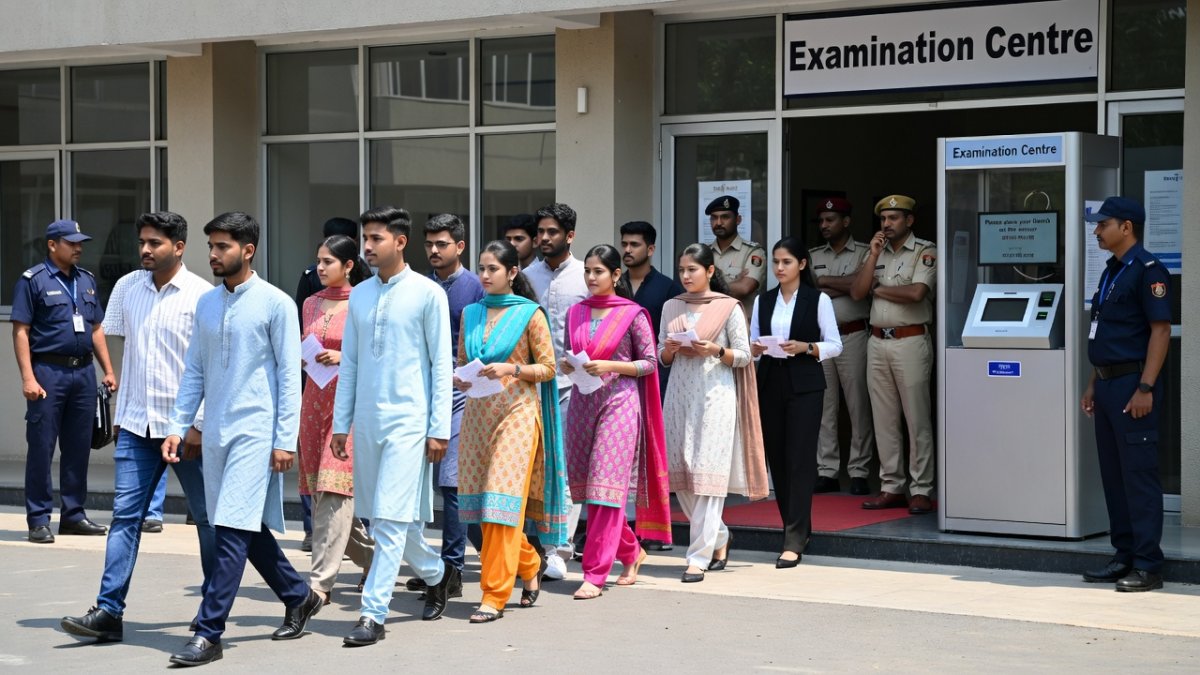
Political Flashpoint and Institutional Accountability
The NEET paper leak has become a sustained political flashpoint, with the opposition demanding a Supreme Court-monitored investigation into systemic NTA failures. Congress leaders have alleged chronic mismanagement, while the NTA has dismissed subsequent leak claims circulating on Telegram as fraudulent and warned of legal action. These exchanges risk eroding public trust in an examination that serves as the sole gateway to medical education for the vast majority of Indian students.
Education policy experts argue that repeated controversies point to the need for structural reforms beyond ad-hoc security enhancements. The Ministry of Education must consider whether the current NTA model, designed for scale, adequately incorporates feedback loops from state education boards and medical councils. Without such reforms, the credibility of results expected within three to four weeks will remain contested.
Taxpayers ultimately fund both the examination machinery and the medical education subsidies that follow successful candidates. Persistent doubts about fairness therefore translate into broader questions about efficient allocation of public resources in the health and education sectors.
Long-Term Implications for India's Healthcare Workforce
With 1.1 lakh MBBS seats on the line, the integrity of NEET-UG directly shapes the future composition of India's doctor population. Delays and repeated examinations disproportionately affect candidates from rural and economically weaker sections who lack the resources to sustain prolonged preparation cycles. This dynamic risks widening existing disparities in healthcare access across states.
The provisional answer key scheduled for release within 7-10 days will be scrutinised intensely by coaching institutes and student bodies. Any significant deviation in difficulty levels, particularly in Physics, could prompt fresh litigation that further postpones counselling and admission processes managed jointly by the Medical Counselling Committee and state authorities.
Doctors already in the system have voiced concern that repeated controversies damage the profession's image. A transparent and stable admission mechanism is essential if India is to meet its target of increasing the doctor-population ratio in underserved regions under Ayushman Bharat initiatives.
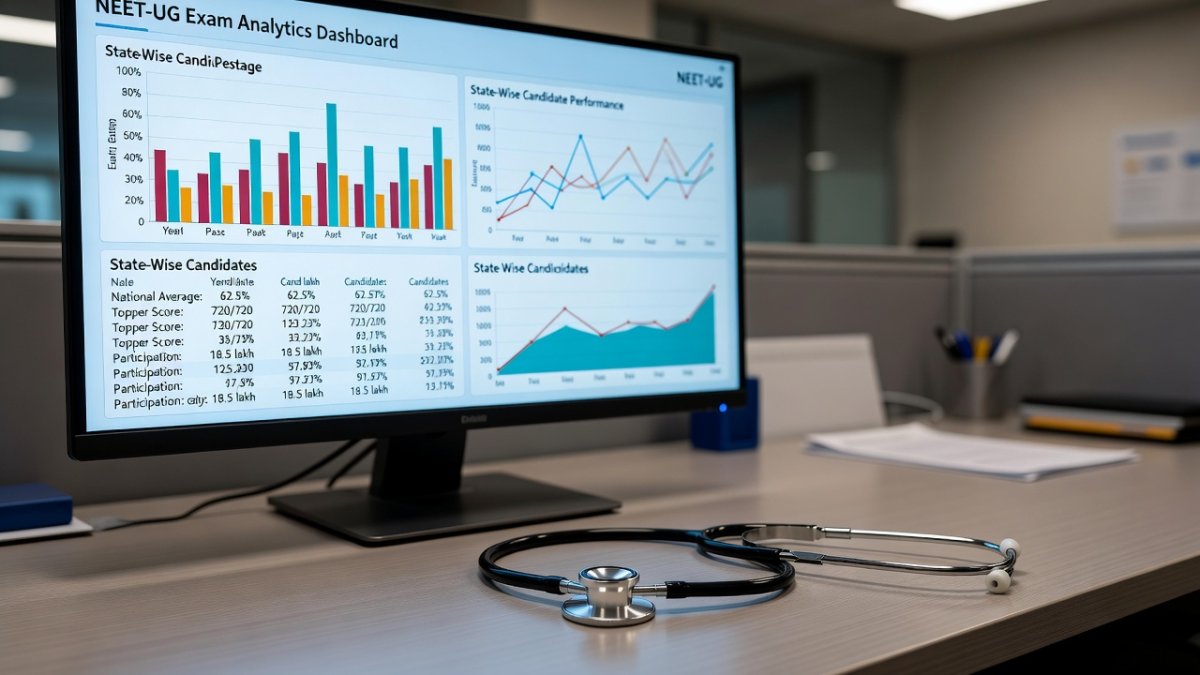
The Bottom Line
The 22 lakh candidates who appeared under 1.38 lakh CCTV cameras and 51,311 jammers represent not merely an examination statistic but the next generation of physicians tasked with strengthening India's healthcare infrastructure. While the immediate security operation succeeded in preventing further leaks, the episode underscores the urgent requirement for permanent institutional safeguards, transparent grievance redressal, and policy coherence between the Ministry of Education and the Ministry of Health and Family Welfare. Without these reforms, Indian families and taxpayers will continue to shoulder the recurring costs of systemic instability in medical admissions.
— By Dr. Raj Patel, Staff Writer
This article was produced with AI-assisted research and editorial support. Reporting is based on sources cited in the article.
What's Your Reaction?
 Like
0
Like
0
 Dislike
0
Dislike
0
 Love
0
Love
0
 Funny
0
Funny
0
 Wow
0
Wow
0
 Sad
0
Sad
0
 Angry
0
Angry
0

India/South Asia Correspondent at Global1.News. Analytical voice with a background in science and health journalism. Based in New Delhi, covering Indian politics, education, healthcare, technology, and policy. Breaks down complex data into clear, actionable reporting.













Comments (0)