
Mexico Murder Rate Hits Decade Low During 2026 World Cup
**Keywords:** Mexico murder rate, 2026 World Cup, CJNG truce, Sinaloa Cartel, Claudia Sheinbaum, El Mencho, Jalisco violence, disappearances Mexico, National Guard, World Cup security, US border mission, criminal governance, Mexican families, mañanera Mexico Murder Rate Hits Decade Low During 2026 World Cup Across Mexico, families are breathing easier as the 2026 FIFA World Cup
Mexico Murder Rate Hits Decade Low During 2026 World Cup
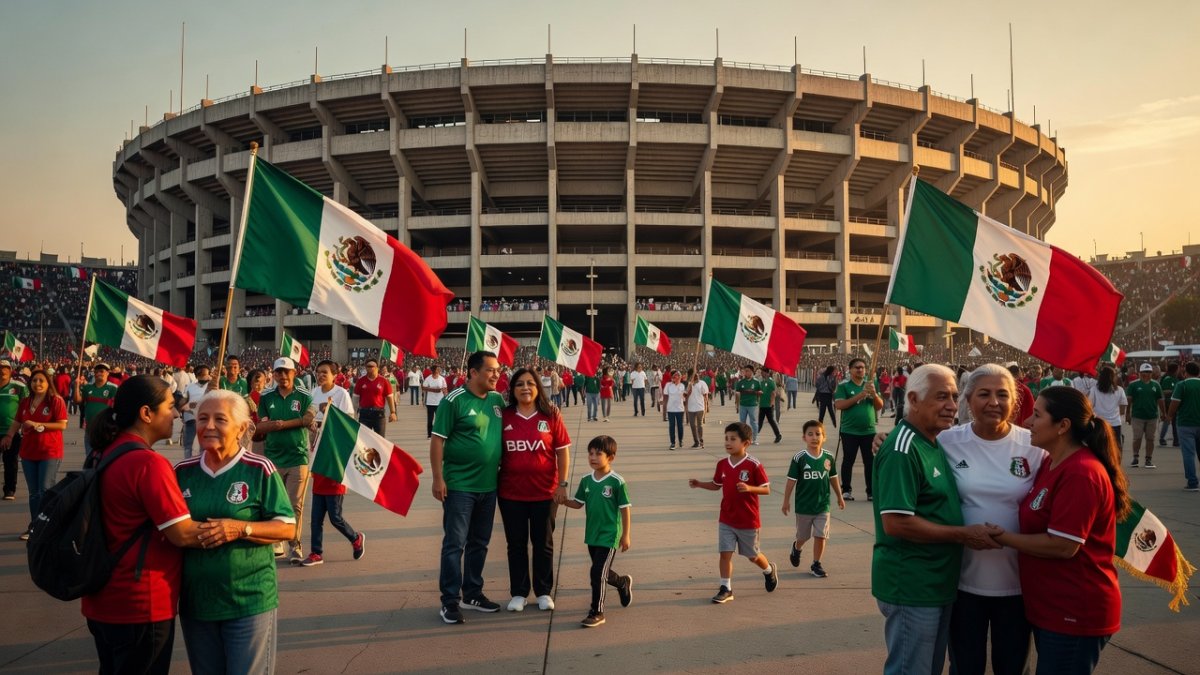
Across Mexico, families are breathing easier as the 2026 FIFA World Cup unfolds from June 11 to July 19. Since the tournament kicked off with 13 matches across Mexico City's Estadio Azteca, Monterrey, and Guadalajara, the country's murder rate has reached its lowest point in a decade, according to reports from the New York Post on June 20 and El Pais on June 18. In neighborhoods from the capital's colonias to the northern border towns, parents let children play outside a little longer, and street vendors along tianguis markets stay open past dusk with fewer worries.
This decline builds on a broader trend of falling homicidal violence that El Pais described on June 18 as "reinforced by World Cup celebrations." For ordinary Mexican families, these statistics translate into real moments of connection — grandparents sharing stories with grandchildren about past tournaments, neighbors gathering at taquerías to watch games, and small business owners seeing their streets filled with visitors rather than fear. The warmth of this moment reminds us how deeply our communities value peace, even when it arrives alongside an international spotlight that demands our best face.
Tags: Mexico murder rate, World Cup 2026, cartel truce, Sheinbaum, disappearances Mexico, Jalisco security, border mission
Mexican families gather near Estadio Azteca during the 2026 World Cup. (Global 1 News)
Cartels' Unofficial Truce: Profits Over Bloodshed
Behind the encouraging numbers lies an unofficial truce among major cartels, including the CJNG and Sinaloa Cartel, as they shift focus toward illegal profits during the World Cup. Security analysts explain that these groups have stepped back from open conflicts to avoid disrupting the flow of visitors and the economic opportunities the tournament presents. In states where these organizations maintain strongholds — CJNG in Jalisco, Michoacán, Guanajuato, Colima, Tamaulipas, Zacatecas, and Aguascalientes; Sinaloa Cartel in Sinaloa, Baja California, Sonora, and Durango — the reduction in clashes has contributed directly to safer streets and public spaces.
This pause feels particularly meaningful in tight-knit communities that have endured years of tension. Families in towns near match venues report fewer disruptions to daily routines. Small businesses selling World Cup merchandise, from jerseys to sombreros painted in team colors, see modest gains without the shadow of extortion that often accompanies cartel presence. The truce aligns with a practical calculus: tourist dollars and international attention make restraint more profitable than territorial warfare, at least for now.
Yet as El Pais noted, the homicide decline masks deeper issues of "criminal governance" — the quiet, everyday control that cartels exert over everything from local markets to municipal politics in regions where the state's presence is weak. The truce is strategic, not permanent, and families in affected zonas know better than to mistake a pause for peace.
Jalisco: From El Mencho's Death to Measurable Improvement
February 2026 brought a seismic moment in Mexico's security landscape when Mexican Armed Forces, supported by US intelligence, killed CJNG leader Nemesio Oseguera Cervantes, known as "El Mencho," in Tapalpa, Jalisco. The operation triggered a violent backlash: at least 25 National Guard members died in Jalisco state alone, and cartel gunmen launched attacks across cities including Guadalajara, Zapopan, and Puerto Vallarta. Businesses shuttered, schools closed, and families in the Guadalajara metropolitan area lived through some of the darkest weeks in recent memory.
Yet in the months since, violent crime numbers have dropped significantly in Jalisco, according to Mexico News Daily reports. The state, which hosts World Cup matches in Guadalajara's Estadio Akron, has seen a gradual return to normalcy. Markets that once emptied by midday now stay open through evening hours. Community events and local festivals resume without the heavy presence of security forces that followed the February clashes.
For residents of colonias on Guadalajara's outskirts, the improvement is tangible but fragile. "We know they are still there," one tortillería owner told a local reporter. "They have just lowered their heads for the cameras. We are not fooled, but we are grateful for the quiet." This is the uneasy peace that many Mexican families have learned to live with — accepting the gift of calm while knowing its givers do not act out of goodwill.
President Sheinbaum's Assurance and the Politics of Security
During a mañanera press conference, President Claudia Sheinbaum told the nation that there is "no risk" to World Cup visitors, emphasizing the federal government's commitment to a secure tournament experience. Her words carry particular weight in host cities where excitement builds daily for matches that will draw hundreds of thousands of international visitors. Sheinbaum herself did not attend the June 11 opening ceremony, telling reporters through The Guardian on June 12 that tickets were simply too expensive — a remark that resonated with ordinary Mexican families who also found themselves priced out of the stands.
Local leaders across the three host cities echo the message of safety, highlighting how the drop in homicides supports a welcoming atmosphere. In Mexico City's Cuauhtémoc borough, community groups organized neighborhood welcome initiatives. In Monterrey's San Pedro Garza García, private security firms partnered with municipal police to patrol areas near the Estadio BBVA. In Guadalajara's Zapopan district, families prepared traditional foods like birria and tortas ahogadas to share with visitors, turning the World Cup into a celebration of Mexican hospitality.
Yet the political dimension is unavoidable. Sheinbaum's administration, as successor to the AMLO legacy, has staked considerable credibility on security improvements. The decade-low murder rate offers a powerful talking point, but critics note that the decline coincides more with cartel business strategy than federal policy — and could reverse as soon as the tournament ends on July 19.
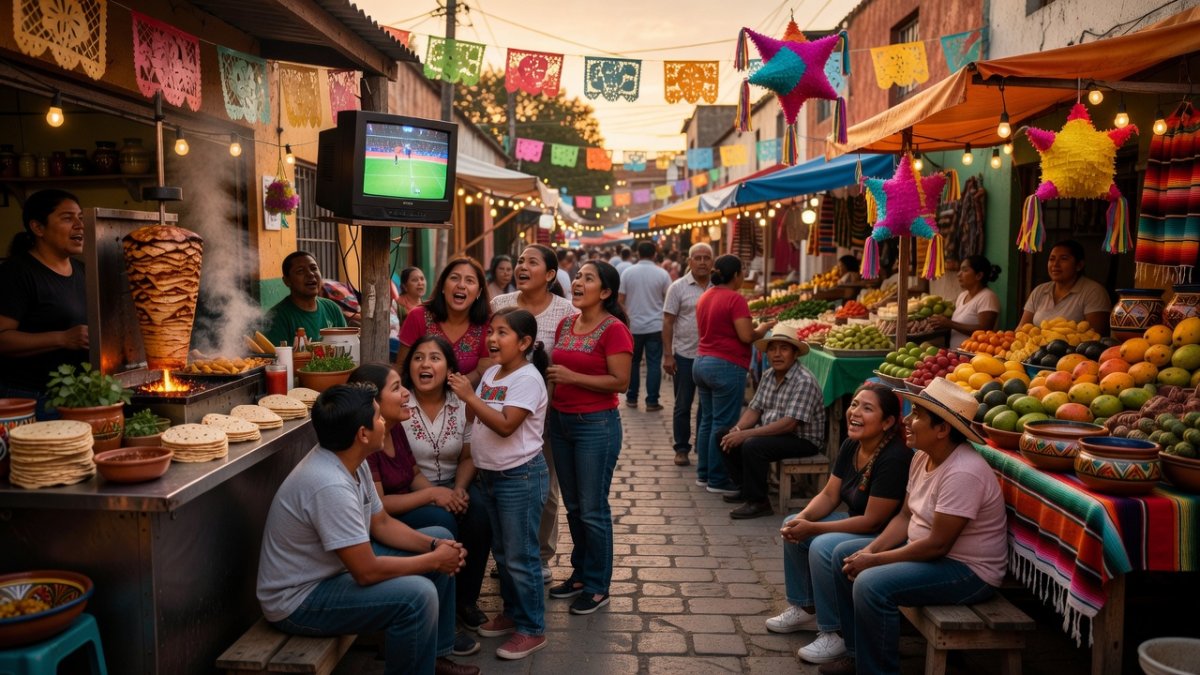
Communities across Mexico gather to watch World Cup matches in local taquerías and markets. (Global 1 News)
Thousands Protest Outside Opening Ceremony: The Disappeared Are Not Forgotten
Even as murder rates fall, thousands of Mexicans gathered outside the June 11 World Cup opening ceremony in Mexico City to demand justice for the disappeared, as reported by the New York Times. The demonstration turned the glitzy international event into a stark reminder of the country's unresolved wounds. Over 1,000 bone fragments discovered at a site in the capital have fueled demands for faster, more transparent investigations into Mexico's crisis of forced disappearances — a crisis that predates the current administration and spans both the AMLO and Sheinbaum presidencies.
These protesters represent families whose loved ones have vanished into the void of impunity that characterizes much of Mexico's criminal justice system. Mothers carry photos of sons and daughters who disappeared years ago. Activists from indigenous communities in Guerrero and Oaxaca stand alongside urban organizers from Mexico City's colectivos de búsqueda. Their message is clear: a decade-low murder rate does not mean justice has been served.
The contrast between tournament joy and these demands shows the complexity of Mexico's national moment. In colonias near the protest site, conversations continue about how to balance celebration with accountability. As one protester told reporters, "The world is watching our fútbol. Let them also watch our pain." The bone fragments and the empty chairs at millions of dinner tables remain a challenge that no truce can resolve.
Along the Northern Border: A Military Mission With No End Date
An ongoing US military mission along the approximately 2,000-mile border continues with no end in sight, according to a June 20 New York Times report. US military patrols work alongside Customs and Border Protection and Mexican military forces — elements of SEDENA and the Guardia Nacional — gradually pushing cartel operations into more remote mountainous zones. The cooperation has supported the broader reduction in urban violence that benefits World Cup host cities, but it has also raised sovereignty questions in Mexican political circles.
Border communities from Tijuana to Matamoros feel the effects through steadier daily life, with fewer firefights interrupting cross-border family connections and commercial trade. The operations complement Mexico's internal security architecture, creating conditions where the unofficial cartel truce can hold through the tournament period. Yet residents on both sides of the line note that the military presence, while stabilizing, is not a solution to the deeper drivers of cartel power: corruption, poverty, and the insatiable US demand for illegal drugs.
Families in border colonias express cautious gratitude for the stability. "We can visit our relatives in El Paso more freely now," one Juárez resident shared. "But we know this is temporary. The cartels are just waiting." The US State Department's standard travel advisory for Mexico, issued May 29, remains in effect, reminding visitors that the security picture varies dramatically by region — a warning that rings true for families living far from the World Cup's well-lit stadiums.
What This Means for Mexican Communities Beyond July 19
The central question on every Mexican family's mind is simple: what happens when the World Cup ends? The decade-low murder rate, the unofficial cartel truce, and the surge in international attention have created a unique window of calm. But the underlying architecture of criminal governance — the extortion rings, the disappearances, the corruption that reaches into municipal palaces and state governments — has not been dismantled. It has merely paused for the cameras.
For communities in Jalisco, Guanajuato, Zacatecas, and the other states where cartels hold sway, the post-World Cup period will test whether the current decline is a genuine inflection point or just a temporary lull. El Pais's June 18 analysis warned that "criminal governance remains the source of the country's major unresolved problem" — a problem that requires not just military operations or cartel math, but institutional reform, community investment, and a reckoning with impunity that no tournament schedule can accommodate.
Mexican families know this reality intimately. In the taquerías of Guadalajara, the mercados of Mexico City, and the colonias of Monterrey, the conversation is the same: enjoy the celebration, but do not mistake it for transformation. The murder rate has fallen. The disappeared have not returned. The truce holds — for now. And as the final whistle sounds on July 19, Mexico will return to the work of building a peace that lasts beyond the tournament's glow.
By Rosa Martinez, Staff Writer
This article was produced with AI-assisted research and editorial support. Reporting is based on sources cited in the article.
What's Your Reaction?
 Like
0
Like
0
 Dislike
0
Dislike
0
 Love
0
Love
0
 Funny
0
Funny
0
 Wow
0
Wow
0
 Sad
0
Sad
0
 Angry
0
Angry
0
Latin America/Andes Correspondent at Global1.News. Based in Bogota, covering politics, environment, energy, and social movements across the Andean region. Passionate about environmental journalism and communities protecting their land.













Comments (0)