
Oh Se-hoon's Fifth Term as Seoul Mayor: Continuity and Conservative Realignment
Oh Se-hoon's Fifth Term as Seoul Mayor: Continuity and Conservative Realignment The Unexpected Electoral Outcome The June 3 mayoral contest in Seoul produced a narrow victory for incumbent Oh Se-hoon, who secured re-election by roughly 60,000 votes, or one percentage point. All available polling and exit surveys had indicated a lead for his Democratic Party rival until the fina
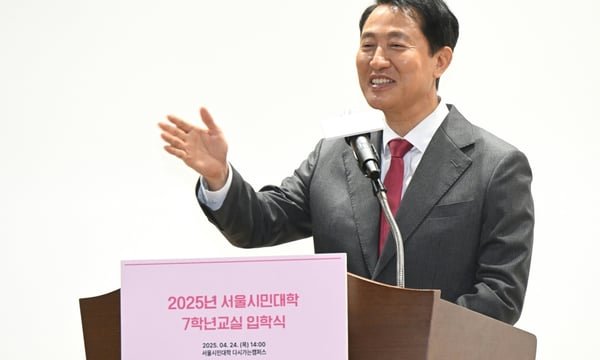
The Unexpected Electoral Outcome
The June 3 mayoral contest in Seoul produced a narrow victory for incumbent Oh Se-hoon, who secured re-election by roughly 60,000 votes, or one percentage point. All available polling and exit surveys had indicated a lead for his Democratic Party rival until the final tally was released around 9 a.m. on June 4. This result extended Oh's record to five nonconsecutive terms as head of South Korea's capital city.
The margin underscores the volatility that continues to characterize local contests when national party brands dominate voter attention. Seoul's electorate, historically sensitive to both administrative competence and partisan signaling, responded to Oh's framing of the contest as a defensive stand rather than an endorsement of personal record alone.
From Environmental Lawyer to Municipal Executive
Oh entered elective politics in 2000 after a career as an environmental attorney. He won a legislative seat under the banner of what is now the People Power Party and quickly positioned himself as an advocate for domestic political reform. In 2006, at age 45, he became the youngest mayor in Seoul's modern history. His early agenda emphasized aesthetic and infrastructural renewal, including efforts that contributed to UNESCO's 2010 designation of Seoul as a Creative City of Design.
These initiatives reflected a technocratic approach to urban governance that sought to align the capital's physical environment with global standards of livability and cultural branding. The policy choices of that period remain visible in Seoul's design districts and public-space projects, illustrating how municipal leadership can embed long-term identity markers even when subsequent administrations pursue different priorities.
The 2010-2011 Referendum and Its Enduring Image
Oh's second term encountered direct confrontation with the Seoul Council over an ordinance providing free school lunches to all elementary students. He characterized the measure as an example of unsustainable universal welfare and called a referendum, pledging to resign if the vote went against his position. The referendum failed to meet the required turnout threshold, yet Oh honored his commitment and stepped down in 2011.
The episode produced one of the most widely circulated images in recent Korean local politics: Oh's televised press conference in which he became visibly emotional and performed a formal bow. For many residents, that moment crystallized tensions between fiscal conservatism and expanding social entitlements at the municipal level. The episode also demonstrated how symbolic gestures can shape public memory of a political figure long after specific policy disputes fade.
Hiatus, Setbacks, and the 2021 Return
Between 2012 and 2016, Oh withdrew from partisan competition. He lectured on public policy and served as an adviser on urban administration and environmental issues in Peru and Rwanda. Attempts to regain a parliamentary seat in 2016 and 2020 proved unsuccessful, as did his 2019 bid for the People Power Party leadership.
The 2021 by-election, triggered by the suicide of predecessor Park Won-soon amid harassment allegations, occurred against a backdrop of multiple Democratic Party scandals and pandemic-related restrictions. Oh's victory restored him to office and was followed by a full-term win in 2022. These successive returns illustrate the resilience of established local figures when national ruling-party difficulties create openings at the municipal level.
Campaign Rhetoric and Intra-Party Distancing
Oh's most recent campaign centered on two rhetorical strands. The first framed Seoul as the "last bastion" of conservative governance amid a Democratic administration under Lee Jae-myung and a large Democratic majority in the National Assembly. The second involved explicit criticism of People Power Party leadership. Oh initially signaled he might run as an independent, describing himself as a rational conservative and calling for the party to sever remaining ties with former President Yoon Suk-yeol after Yoon's failed self-coup.
By positioning Seoul as a distinct conservative laboratory, Oh sought to insulate his municipal record from national party turbulence. This strategy reflects a recurring pattern in Korean politics whereby successful local executives attempt to build autonomous bases that can later project influence onto national conservative renewal efforts.
Implications for Korean Conservatism and Local-National Relations
Oh's continued tenure highlights the structural advantages that accrue to mayors of the capital when they cultivate an image of administrative independence. Seoul's budget, regulatory reach, and symbolic weight give its mayor leverage that governors of other regions rarely match. In an era when the National Assembly remains firmly under Democratic control, the capital's executive office functions as one of the few institutional footholds available to the opposition.
The episode also reveals ongoing fragmentation within conservative ranks. Oh's willingness to criticize his own party leadership while seeking re-election on that party's ballot suggests that personal brand and local performance continue to outweigh strict party discipline in large urban constituencies. Such dynamics may shape candidate selection and coalition-building ahead of future national contests.
Urban Policy Continuity and Regional Context
Throughout his terms, Oh has maintained emphasis on design-oriented infrastructure and environmental administration, themes first articulated in the mid-2000s. These priorities intersect with broader Korean concerns about livability in a high-density capital that also serves as the primary interface with global capital and culture. The city's ability to project stability and modernity carries implications for inter-Korean economic signaling and for attracting foreign investment that might otherwise favor other Asian hubs.
Oh's record therefore offers a case study in how municipal executives navigate the tension between national partisan polarization and the pragmatic demands of running a metropolis of nearly ten million residents. His fifth term will test whether the "last bastion" framing can translate into durable policy outcomes or whether it remains primarily an electoral device.
By Prof. David Park, Staff WriterThis article was produced with AI-assisted research and editorial support. Reporting is based on sources cited in the article.
What's Your Reaction?
 Like
0
Like
0
 Dislike
0
Dislike
0
 Love
0
Love
0
 Funny
0
Funny
0
 Wow
0
Wow
0
 Sad
0
Sad
0
 Angry
0
Angry
0

East Asia/Technology Correspondent at Global1.News. Seoul-based voice covering Korean politics, technology, business, and culture. Analyzes how technology and geopolitics intersect across East Asia.














Comments (0)