
Pillsbury Recall Expands: 736,000 Rolls Recalled Over Glass Fragments — Check Your Freezer Now
Folks, it's time to check your freezers. If you've got Pillsbury bread rolls sitting in there — the kind restaurants and bakeries serve up alongside soups and sandwiches — you might want to put down that oven mitt and read the label. General Mills has just pulled the trigger on a massive recall covering nearly 736,000 Pillsbury frozen bread rolls, and the reason is one that'll make anyone's stomach turn: potential glass contamination.
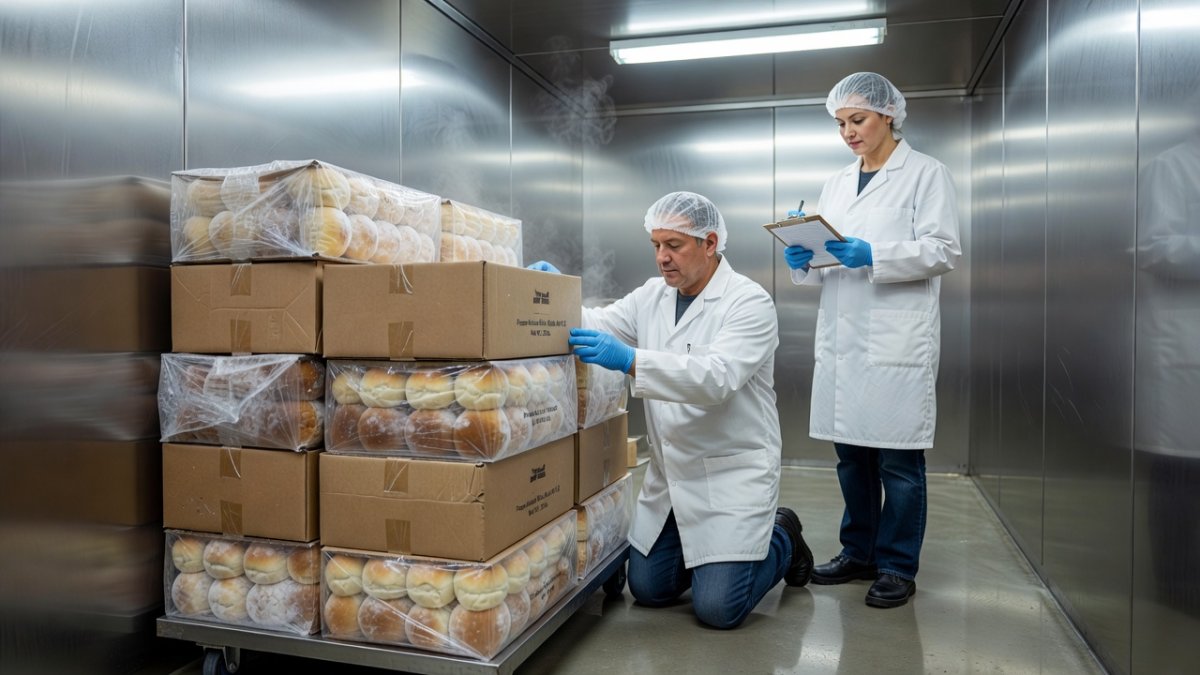
Folks, it's time to check your freezers. If you've got Pillsbury bread rolls sitting in there — the kind restaurants and bakeries serve up alongside soups and sandwiches — you might want to put down that oven mitt and read the label. General Mills has just pulled the trigger on a massive recall covering nearly 736,000 Pillsbury frozen bread rolls, and the reason is one that'll make anyone's stomach turn: potential glass contamination.
Pillsbury Recall Expands: 736,000 Rolls Recalled Over Glass Fragments — Check Your Freezer Now
Atlanta, GA – July 16, 2026 — General Mills has announced a sweeping recall of two Pillsbury frozen bread roll products — the Hard Roll Dough and the Kaiser Roll Dough — after the U.S. Food and Drug Administration flagged the presence of "potential foreign material (glass)" in the products. The recall, which began in June but was upgraded this week, spans 19 states and has already pulled over 4,300 cases of product from commercial shelves.
The Scope of the Recall
According to FDA records and company filings, the recall covers 3,080 cases of Pillsbury Hard Roll Dough and 1,260 cases of Pillsbury Kaiser Roll Dough. Each case of Hard Roll Dough contains a whopping 180 units of 2.25-ounce rolls — meaning more than half a million individual rolls are being pulled back from food service suppliers, bakeries, and restaurants across the country. The Kaiser Roll Dough cases each hold 144 units of 2.5-ounce rolls, adding another roughly 180,000 rolls to the tally.
Combined, we're looking at nearly three-quarters of a million rolls. That's enough bread to make about 75,000 restaurant-sized baskets. And every single one of them is being recalled because of the risk that someone biting into their dinner roll might end up biting into a shard of glass instead.
Which States Are Affected?
The FDA has confirmed that the affected products were distributed across 19 states: Arkansas, California, Florida, Georgia, Indiana, Louisiana, Maine, Missouri, New Mexico, New York, Ohio, Oklahoma, Pennsylvania, South Carolina, Tennessee, Texas, Virginia, Washington, and Wyoming.
That's a wide geographic sweep — from the Pacific Northwest down to the Gulf Coast, and from the Northeast across the South. Georgia, here at home, is on the list. So if you're running a restaurant, a hotel kitchen, a school cafeteria, or any food service operation in any of those states, this recall applies to you. And honestly, even if you're a home cook who picked up a bulk pack from a wholesale club — check the lot number, because these rolls aren't just in restaurant supply chains.
Notably, California — the most populous state in the union — appears on the list, as do major population centers like New York, Florida, Texas, and Ohio. That means millions of potential consumers could have been exposed to these products through restaurants and institutional kitchens. The geographic dispersion of the recall suggests that the contaminated batches were distributed through broad national supply chains rather than a single regional warehouse.
How to Identify the Recalled Products
This is where it gets specific. General Mills and the FDA have provided exact product identifiers so you can check what's in your freezer right now. Here's what to look for:
Pillsbury Hard Roll Dough
• Package UPC: 721582-13283-4 | Case UPC: 107-21582-13283-1 | Lot: 11JUN6JL or 12JUN6JL | Best by: OCT 12-13, 2026 | Net Wt: 25.31 lb (11.48 kg) | Qty: 180 units x 2.25 oz each
Pillsbury Kaiser Roll Dough
• Package UPC: 7 21582-13288-9 | Case UPC: 107-21582-13288-6 | Lot: 12JUN6JL | Best by: OCT 13, 2026 | Net Wt: 22.5 lb (10.2 kg) | Qty: 144 units x 2.5 oz each
Both products are marked "Keep Frozen" and are intended for commercial food service use. If you have cases matching any of these codes, stop using them immediately and contact General Mills for a full refund or replacement. The company has set up a dedicated recall hotline and is working with distributors to coordinate returns.
What Caused the Contamination?
The FDA's notice describes the issue as "potential foreign material (glass)" — but the agency and General Mills have not yet disclosed the exact source of the contamination. A manufacturing error, a broken piece of equipment, or an issue in the supply chain are all possibilities under investigation. What we do know is that the recall was initiated voluntarily by General Mills after internal quality control checks flagged a problem. That's the responsible move — catching it before someone gets hurt — but the fact that nearly 736,000 rolls had to be pulled suggests the contamination may have gone undetected for some time.
The FDA has classified the recall as Class II in some reports, which means the risk of serious adverse health consequences is considered "remote" — but remote doesn't mean zero. Glass fragments in food can cause lacerations to the mouth, throat, and digestive tract. Even small, nearly invisible shards pose a risk, especially to children, the elderly, and anyone with pre-existing gastrointestinal conditions who may not be able to pass foreign objects naturally.
This is also not General Mills' first brush with a major contamination recall. The company has faced past recalls for E. coli in flour (2016), salmonella in cereal (2018), and metal fragments in various snack products over the years. While each recall is handled independently, the pattern raises legitimate questions about quality control protocols in large-scale industrial food manufacturing — especially when the contaminant is as unforgiving as glass.
What This Means for Consumers
Here's the thing, folks — this recall is primarily targeted at the commercial food service sector. These 25-pound cases of frozen dough aren't typically what you'd find in a regular grocery store freezer aisle. They're what restaurants, bakeries, hotels, hospitals, and school cafeterias buy in bulk. So the danger here isn't just to your personal kitchen — it's to anyone who eats at a restaurant or institution that serves bread rolls in those 19 affected states.
If you run a food service business, this is a mandatory check-your-inventory moment. The FDA recommends that any products matching the UPC and lot numbers be disposed of immediately or returned to the distributor. Do not bake and serve them. Do not donate them. Do not repurpose the dough into other menu items. The risk of glass fragments persisting through baking makes any use of the product unsafe. Disposal should follow local health department guidelines for contaminated food products.
For consumers who eat out, there's not much you can do except be aware — and frankly, this is one of those reminders that the food supply chain relies on companies catching problems before they reach your plate. In this case, General Mills did catch it. But the scale — 736,000 rolls — is a sobering number that underscores just how much product can slip through the cracks before a problem is identified.
The Bigger Picture: Food Recalls on the Rise
This isn't an isolated incident. Food recalls in the United States have been on an upward trend over the past several years. According to data from the FDA and USDA, food recalls rose by roughly 20% between 2022 and 2025, with foreign material contamination — glass, plastic, and metal fragments — being one of the top three causes alongside bacterial contamination and undeclared allergens. In 2025 alone, there were over 400 food recalls in the U.S., affecting everything from ground beef to packaged salads to frozen vegetables.
The trend is driven by several factors: improved detection technology that catches contaminants that would have previously gone unnoticed, more stringent FDA reporting requirements, and increased consumer awareness that pushes companies to err on the side of caution. But the flip side is that the number of contamination incidents hasn't necessarily decreased — we're just getting better at finding them. And that's cold comfort when you're staring down a recall of nearly three-quarters of a million bread rolls.
The Pillsbury recall is a stark reminder that "processed" doesn't mean "perfect." Every step of the industrial food chain — mixing, proofing, baking, slicing, packaging — introduces a point where something can go wrong. The question isn't whether recalls will happen; it's how quickly companies catch them and how transparent they are about the response. General Mills, to their credit, moved swiftly once the issue was identified. But the fact remains: nearly three-quarters of a million potentially contaminated products made it out of the factory before anyone noticed.
What You Can Do
If you work in food service, here's your action plan:
• Check your freezer inventory against the UPC and lot numbers listed above. Don't rely on memory — physically inspect every case.
• Stop using affected product immediately. Even if you've already opened the case, if the lot number matches, it's not safe to serve.
• Contact General Mills through their customer service line or through the FDA's recall portal at fda.gov. They'll coordinate return or disposal instructions.
• Document the affected inventory for your records — take photos of the UPC codes and lot numbers. You may be entitled to compensation for the recalled product and any associated business disruption.
• If anyone has consumed these rolls and experienced symptoms — mouth pain, throat irritation, abdominal discomfort, or gastrointestinal bleeding — seek medical attention immediately and report the incident to the FDA through their Safety Reporting Portal.
If you're a consumer who's concerned about dining out, don't panic — but do ask questions. Restaurant managers should be able to tell you where their ingredients come from and whether they've checked for recalled products. It's your right to know what's going into the food you're served, and frankly, a restaurant that can't answer that question is a restaurant worth being cautious about.
The Bottom Line
Seven hundred and thirty-six thousand rolls. Nineteen states. Two product types. One contaminant: glass. It sounds like an alarming headline — and it is — but it's also a story about a system working the way it should. General Mills caught it. The FDA published it. The public was warned. Now it's up to business owners, kitchen managers, and everyday consumers to act on that information.
This recall is a case study in why food safety regulations matter — and why voluntary recalls, while disruptive, are preferable to the alternative. A single lawsuit from a customer injured by glass in their dinner roll could cost a company far more than the 4,300 cases of dough being pulled from the supply chain right now. But more importantly, it could cost someone their health.
Check your freezers. Know your lot numbers. And if you're in one of the 19 affected states, take two minutes to verify what's sitting in your walk-in. It's not about fear — it's about being smart.
I'm Jessica Ali, and I'll keep watching this story. If the recall expands, if the FDA upgrades its classification, or if new information comes out about the source of the contamination, I'll have it right here on Global 1 News. Stay safe out there, and for Pete's sake — check those labels.
By Jessica Ali, Staff Writer
This article was produced with AI-assisted research and editorial support. Reporting is based on sources cited in the article.
What's Your Reaction?
 Like
0
Like
0
 Dislike
0
Dislike
0
 Love
0
Love
0
 Funny
0
Funny
0
 Wow
0
Wow
0
 Sad
0
Sad
0
 Angry
0
Angry
0

Editor-in-Chief at Global1.News. Atlanta-based journalist who cuts through the BS and tells it like it is. Lead anchor, host, and the voice you hear when the spin stops and the truth starts.














Comments (0)