
Japan's 2026 Strategy Positions FDI to Drive Export Growth
The 2026 Policy Announcement and Its Core Objective The Japanese government announced on June 4, 2026, that it will treat foreign direct investment as a primary instrument for increasing exports. The measure forms part of a broader growth strategy aimed at linking inward capital flows with the overseas activities of Japanese firms. Officials described the shift as a deliberate
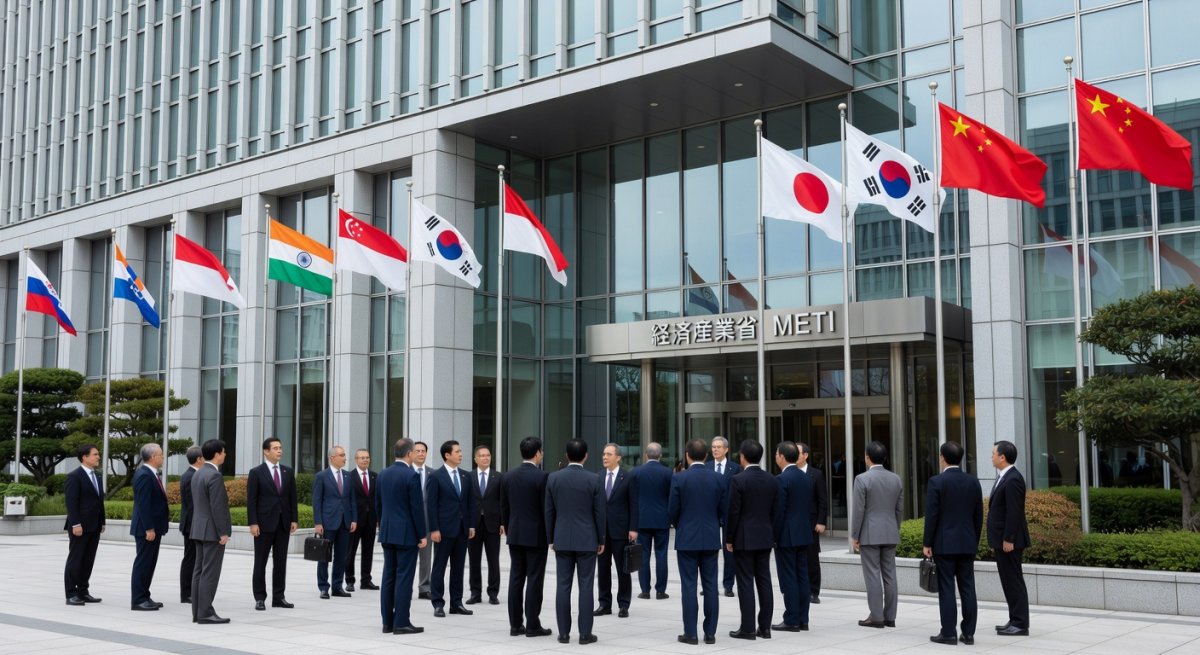
The 2026 Policy Announcement and Its Core Objective
The Japanese government announced on June 4, 2026, that it will treat foreign direct investment as a primary instrument for increasing exports. The measure forms part of a broader growth strategy aimed at linking inward capital flows with the overseas activities of Japanese firms.
Officials described the shift as a deliberate move to use incoming investment to modernize production networks that then support higher export volumes. No immediate enforcement date was attached to the announcement.
Placement Within Japan’s Longer-Term Economic Framework
This initiative continues the line of growth policies pursued since the early 2010s. Abenomics emphasized monetary easing, fiscal stimulus, and structural reform. The Kishida administration later stressed “new capitalism” with greater attention to wage growth and supply-chain resilience.
The June 2026 statement adds an explicit export channel through FDI. It does not replace earlier pillars but seeks to integrate them with trade performance metrics. The Bank of Japan’s ongoing low-interest-rate environment is expected to remain supportive of cross-border financing, though no new monetary measures were announced alongside the strategy.
Role of METI and Coordination With Other Ministries
The Ministry of Economy, Trade and Industry (METI) is designated as the lead agency. METI will oversee investment screening procedures and match foreign investors with Japanese exporters in priority sectors such as semiconductors, green energy, and advanced materials.
The Ministry of Foreign Affairs (MOFA) will handle related diplomatic frameworks, particularly bilateral investment treaties in Southeast Asia. The Ministry of Finance will manage tax incentives, while the Bank of Japan continues to monitor capital flows. No new inter-ministerial body was created in the initial announcement.
Implications for Japanese Companies Expanding Overseas
Japanese firms are expected to gain from improved access to foreign technology and capital that can be deployed in regional production hubs. Companies in the automotive and electronics sectors may accelerate joint ventures in ASEAN countries where local content rules favor partnerships backed by inward FDI.
Smaller suppliers that previously focused on domestic markets may now be encouraged to form consortia with foreign investors to meet export certification standards. METI guidance documents scheduled for release later in 2026 are intended to clarify eligibility criteria.
Comparison With Earlier Growth Strategies
Previous packages under Abenomics set numerical targets for inward FDI stock but treated exports and investment as largely separate tracks. The Kishida-era documents stressed domestic wage increases and regional revitalization without directly tying FDI inflows to export performance.
The 2026 approach introduces measurable export additionality as a condition for certain investment approvals. This represents a tighter linkage than earlier frameworks, although the precise indicators remain under development.
Effects on Japan–Asia Economic Relations
The strategy aligns with existing efforts to deepen economic ties across Asia. METI has long maintained dialogues with counterparts in Vietnam, Thailand, and Indonesia on supply-chain diversification. The new emphasis on FDI-supported exports is likely to reinforce these channels, particularly for components used in final assembly within the region.
Japanese trading houses and manufacturers already active in Asia stand to benefit from streamlined approval processes when they bring foreign partners into projects. No changes to existing rules governing sensitive technologies were indicated in the June announcement.
Practical Steps for Japanese Investors and Businesses
Companies planning overseas projects are advised to review METI’s forthcoming investment-matching platform. Early engagement with METI regional bureaus can help identify foreign investors whose technology complements export-oriented production lines.
Firms should also track updates from the Japan External Trade Organization (JETRO), which will likely expand its advisory services on FDI-linked export financing. Tax and regulatory filings will continue under existing schedules until further guidance appears.
Businesses are encouraged to maintain records demonstrating how proposed investments contribute to export growth, as this linkage may influence future incentive eligibility.
Tags: Japan FDI strategy, METI policy, export growth, Abenomics, Kishida economy, Asia investment, Japanese companies overseas, BOJ financing
By Kenji Tanaka, Staff Writer
This article was produced with AI-assisted research and editorial support. Reporting is based on sources cited in the article.
What's Your Reaction?
 Like
0
Like
0
 Dislike
0
Dislike
0
 Love
0
Love
0
 Funny
0
Funny
0
 Wow
0
Wow
0
 Sad
0
Sad
0
 Angry
0
Angry
0

Japan Correspondent at Global1.News. Tokyo-based voice covering Japanese politics, technology, economy, and culture. Tracks the intersection of tradition and innovation in one of the world's most dynamic societies.















Comments (0)