
'Hormuz Will Open To All': Trump Says Iran "Negotiating On Fumes"
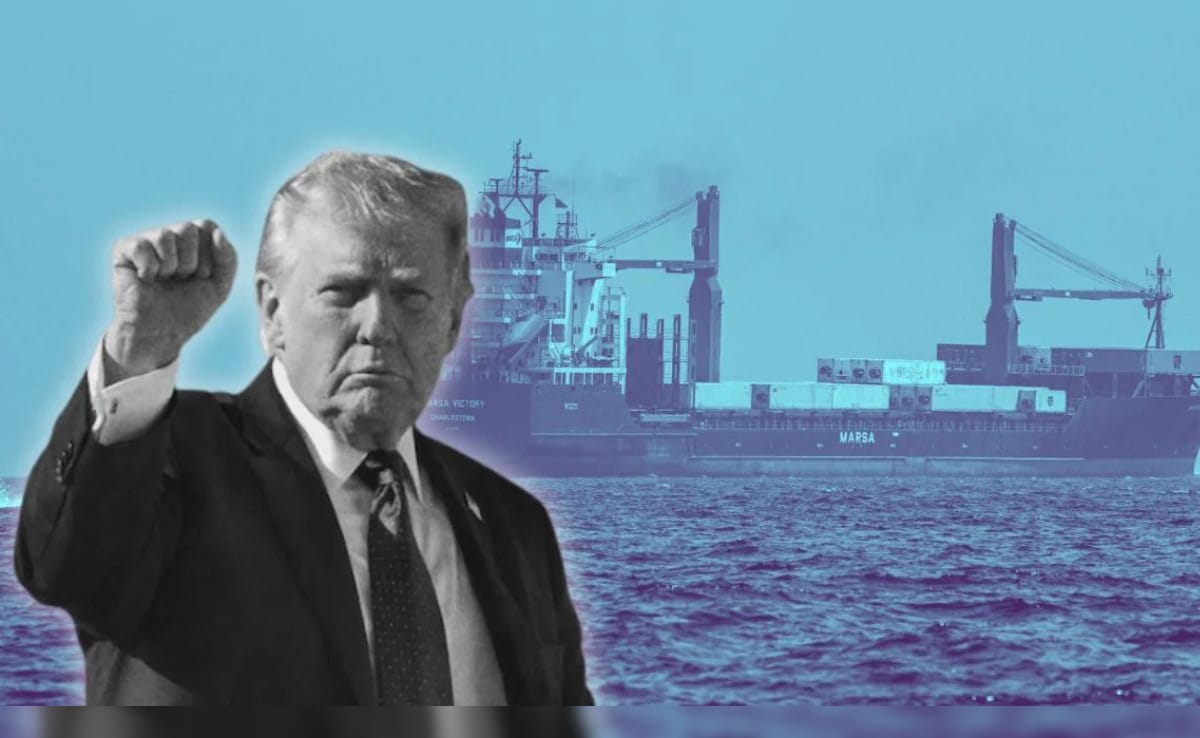
'Hormuz Will Open To All': Trump Says Iran "Negotiating On Fumes"
Deadlocked Talks Prompt Sharp Rebuke from Washington
US President Donald Trump declared on Tuesday that the Strait of Hormuz “will open to all” after multiple rounds of indirect negotiations with Iran collapsed without agreement. Speaking from the White House briefing room, Trump accused Tehran of “negotiating on fumes,” a phrase he repeated to underscore what he described as Iran’s depleted leverage following tightened sanctions and internal economic strain. The statement marks the sharpest public escalation in months of back-channel diplomacy aimed at de-escalating tensions over Iran’s nuclear program and regional shipping routes.
Round After Round: Anatomy of a Stalemate
Diplomats from both sides have met five times since March, first in Muscat and later in Geneva under Omani and Swiss facilitation. Each session ended without a joint statement. US officials entered the latest round seeking verifiable limits on uranium enrichment below 5 percent and monitored access to Fordow and Natanz facilities. Iranian negotiators countered with demands for immediate sanctions relief totaling $120 billion in frozen assets and a phased rollback of ballistic-missile restrictions. After 72 hours of talks last week, the Iranian delegation walked out citing “unrealistic preconditions.” Trump’s subsequent remark referenced intelligence assessments showing Iran’s daily oil exports hovering near 400,000 barrels—down from 2.5 million in 2018—leaving negotiators with limited economic cards to play.
The Strait of Hormuz: Quantifiable Global Chokepoint
The 21-mile-wide waterway remains the world’s most critical energy artery. Data from the US Energy Information Administration indicate that 20.3 million barrels of crude and condensate transited the strait daily in 2023, representing 21 percent of global petroleum liquids consumption. Roughly 80 percent of those volumes head to Asian markets, including 2.1 million barrels destined for Indian refiners. Any sustained closure would add an estimated $40–$60 per barrel to Brent crude within weeks, according to modeling by the International Energy Agency. Satellite tracking by MarineTraffic shows Iranian Revolutionary Guard speedboats conducted 47 close approaches to commercial vessels between January and May this year, underscoring persistent harassment risks even without formal closure.
India’s Exposure: Import Data and Strategic Hedging
India imported 4.8 million barrels per day of crude in fiscal 2024, with 58 percent sourced from the Persian Gulf. Reliance on Hormuz transit exposes Mumbai’s refining corridor and northern petrochemical clusters to immediate price shocks. Petroleum Minister Hardeep Singh Puri confirmed last month that strategic petroleum reserves stand at 9.5 million tonnes—enough for 12 days of consumption—while state-owned explorers accelerate bidding on Russian and US shale cargoes. Health-sector analysts note secondary effects: a sustained $30 spike in crude would raise fertilizer and transport costs, pushing up retail medicine prices by 4–7 percent according to National Health Authority projections. These downstream pressures explain New Delhi’s quiet diplomatic push for any Hormuz guarantee to include explicit freedom-of-navigation clauses.
Expert Perspectives on Leverage and Limits
Energy economist Dr. Rania Al-Mubarak of the Oxford Institute for Energy Studies described Iran’s position as “structurally constrained.” She pointed to China’s discounted purchases of Iranian crude at $8–$12 below benchmark, which have kept Tehran’s revenues above collapse levels but far below pre-sanction peaks. Former Indian ambassador to Iran, Shivshankar Menon, told Global1 News that Trump’s rhetoric reflects calculation rather than bluster: “Washington calculates that Tehran’s internal inflation above 40 percent and rial volatility limit its ability to sustain prolonged brinkmanship.” Conversely, Tehran University political scientist Dr. Leila Karimi warned that domestic hardliners may view continued deadlock as preferable to concessions that could invite further protests over living costs.
Market and Supply-Chain Repercussions
Brent crude futures rose 3.8 percent within two hours of Trump’s statement, settling at $87.40. Indian refiners reported spot premiums on Middle East sour grades widening by $1.25 per barrel. Shipping analysts at Clarksons Research estimate that rerouting tankers around the Cape of Good Hope would add 12–15 days and roughly $1.8 million in fuel and insurance costs per very-large crude carrier. Pharmaceutical supply chains, already stressed by active-ingredient shortages, face secondary risk if diesel prices climb and delay overland distribution from Kandla and Mumbai ports. These interconnected effects illustrate why energy security now sits at the intersection of trade policy and public-health planning in import-dependent economies.
Possible Pathways and Monitoring Indicators
Three scenarios dominate internal US and Indian assessments. A limited confidence-building accord could see Iran cap enrichment at 3.67 percent in exchange for $20 billion in phased asset releases, monitored by the IAEA. A second path involves continued sanctions pressure until Iranian oil exports drop below 300,000 barrels daily. The third, least probable but highest-impact route would involve formal Iranian parliamentary authorization to mine the strait approaches—an action that would trigger immediate naval responses from the US Fifth Fleet and allied partners. Key indicators to watch include weekly IAEA inspection reports, Iranian rial exchange rates published by the Central Bank of Iran, and AIS data showing tanker speeds through the strait’s traffic-separation scheme.
Trump’s assertion that the strait “will open to all” therefore functions less as new policy than as a public marker of Washington’s red line. For Indian planners balancing energy affordability against strategic autonomy, the coming weeks will test whether sustained pressure produces verifiable Iranian concessions or simply prolongs market volatility with measurable knock-on effects for households and hospitals alike.
This is Dr. Raj Patel for Global1 News, reporting from Mumbai. 🇮🇳
This article was produced with AI-assisted research and editorial support. Reporting is based on sources cited in the article.
What's Your Reaction?
 Like
0
Like
0
 Dislike
0
Dislike
0
 Love
0
Love
0
 Funny
0
Funny
0
 Wow
0
Wow
0
 Sad
0
Sad
0
 Angry
0
Angry
0

India/South Asia Correspondent at Global1.News. Analytical voice with a background in science and health journalism. Based in New Delhi, covering Indian politics, education, healthcare, technology, and policy. Breaks down complex data into clear, actionable reporting.













Comments (0)