
Earthquake of Magnitude 5 Hits Himachal Pradesh
A magnitude 5.0 earthquake struck Himachal Pradesh at 7:50 AM IST on June 6, 2026, sending residents of Dharamsala and nearby areas rushing outdoors in panic. The event occurred along the tectonically active Himalayan belt where the Indian plate continues its northward collision with the Eurasian plate at 4-5 cm per year. This latest tremor underscores persistent seismic hazard
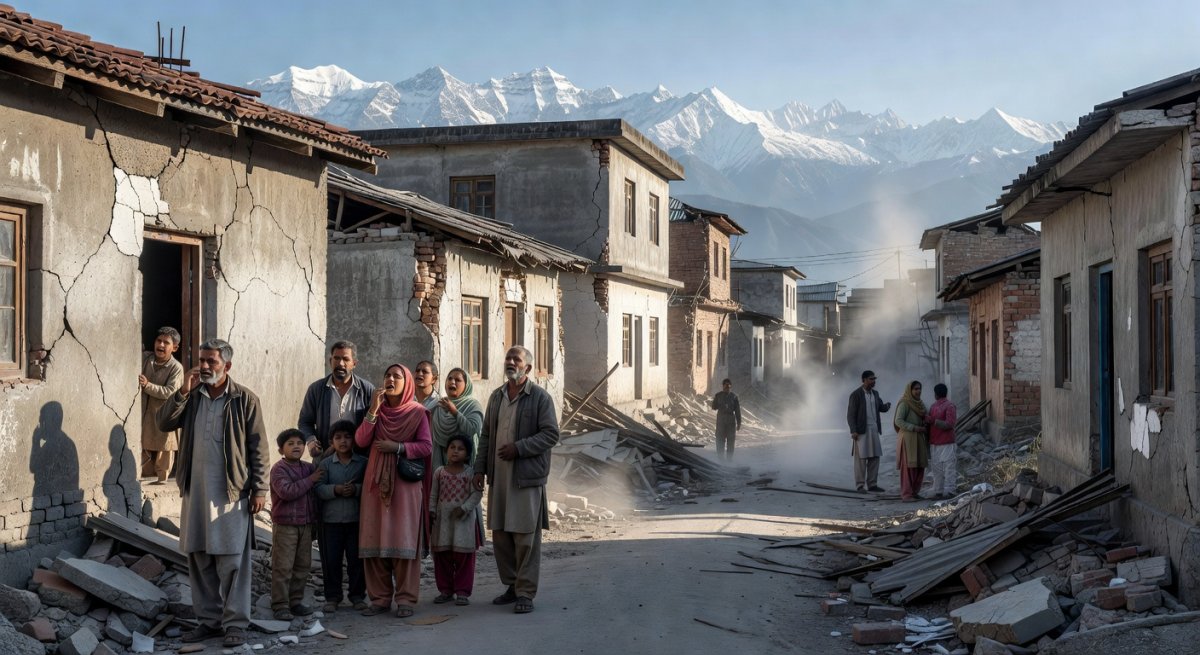
A magnitude 5.0 earthquake struck Himachal Pradesh at 7:50 AM IST on June 6, 2026, sending residents of Dharamsala and nearby areas rushing outdoors in panic. The event occurred along the tectonically active Himalayan belt where the Indian plate continues its northward collision with the Eurasian plate at 4-5 cm per year. This latest tremor underscores persistent seismic hazards in a region already classified under high-risk zones by the Bureau of Indian Standards.
June 2026 Dharamsala Tremor Exposes Persistent Gaps in Himalayan Earthquake Preparedness
New Delhi, India – June 6, 2026 — The National Center for Seismology recorded the magnitude 5.0 event with its epicenter near Dharamsala, prompting immediate evacuations from homes and offices across Kangra and Mandi districts. No casualties have been reported, yet the incident has renewed scrutiny of India's seismic monitoring infrastructure and building compliance in Zone IV and V areas.
Event Details and Immediate Impact
The earthquake registered 5.0 on the Richter scale at 7:50 AM IST, with shaking felt strongly in Dharamsala, Palampur, and parts of Shimla district. The National Center for Seismology confirmed the timing and magnitude through its network of 115 observatories, noting that aftershocks remained below 3.0 in the following hours. Local administration in Kangra district activated emergency protocols, though no major structural damage was recorded in the initial assessment by the Himachal Pradesh State Disaster Management Authority.
Himalayan Tectonics and Regional Seismicity
The Indian plate's ongoing collision with the Eurasian plate generates continuous stress accumulation along the Main Himalayan Thrust, making the entire arc from Jammu and Kashmir to Arunachal Pradesh seismically active. Himachal Pradesh lies directly within this collision zone, where historical strain release has produced events exceeding magnitude 7. The June 6 tremor aligns with the pattern of moderate earthquakes that frequently occur between major ruptures in the Kangra and Mandi sectors.

Seismic Zoning, Historical Precedents, and Building Codes
The Bureau of Indian Standards classifies most of Himachal Pradesh under Seismic Zone IV, with pockets of Zone V near the border with Jammu and Kashmir. The 1905 Kangra earthquake of magnitude 7.8 killed approximately 20,000 people and remains the benchmark event for the region. Current construction must comply with IS 1893 standards for earthquake-resistant design, yet the National Disaster Management Authority reports that only 35 percent of new buildings in Himachal Pradesh fully adhere to these codes as of 2025 audits.
Monitoring Agencies and Preparedness Shortfalls
The National Disaster Management Authority and National Center for Seismology jointly operate real-time monitoring, issuing alerts within two minutes of detection. Despite these systems, studies by IIT Roorkee indicate significant gaps in community-level preparedness, with only 22 percent of households in Dharamsala possessing earthquake evacuation plans. The Ministry of Home Affairs continues to fund retrofitting programs, but implementation in rural Mandi and Kullu districts lags behind urban Shimla.
What This Means for India
Recurring moderate earthquakes in Himachal Pradesh highlight the urgent need to accelerate enforcement of IS 1893 across all Himalayan states. Residents face elevated risk until municipal bodies integrate NDMA guidelines into local building permissions and school curricula. Policy focus must shift from post-event response toward mandatory seismic audits and public awareness campaigns if future events are to cause minimal disruption.
The Bottom Line
The 5.0 Dharamsala earthquake on June 6, 2026, serves as a reminder that 58 percent of India's land area remains vulnerable to seismic activity, with Zone IV and V districts requiring sustained investment in resilient infrastructure. Strengthened compliance with national codes and expanded NDMA training programs offer the clearest path to reducing casualties in the next major Himalayan event.
— By Dr. Raj Patel, Staff Writer
This article was produced with AI-assisted research and editorial support. Reporting is based on sources cited in the article.
What's Your Reaction?
 Like
0
Like
0
 Dislike
0
Dislike
0
 Love
0
Love
0
 Funny
0
Funny
0
 Wow
0
Wow
0
 Sad
0
Sad
0
 Angry
0
Angry
0

India/South Asia Correspondent at Global1.News. Analytical voice with a background in science and health journalism. Based in New Delhi, covering Indian politics, education, healthcare, technology, and policy. Breaks down complex data into clear, actionable reporting.














Comments (0)