
Chile's Tear Gas Crisis: How Austerity and Police Tactics Created a Public Health Emergency
In the crowded plazas of Santiago, where mothers clutch their children amid clouds of stinging gas, the human toll of Chile's unfolding crisis hits hardest—families gasping for breath while hospitals slash supplies under brutal austerity. This is not just protest; it's a public health emergency unfolding in real time. Chile's Tear Gas Crisis Exposes Deadly Austerity Under Kast
In the crowded plazas of Santiago, where mothers clutch their children amid clouds of stinging gas, the human toll of Chile's unfolding crisis hits hardest—families gasping for breath while hospitals slash supplies under brutal austerity. This is not just protest; it's a public health emergency unfolding in real time.
Chile's Tear Gas Crisis Exposes Deadly Austerity Under Kast
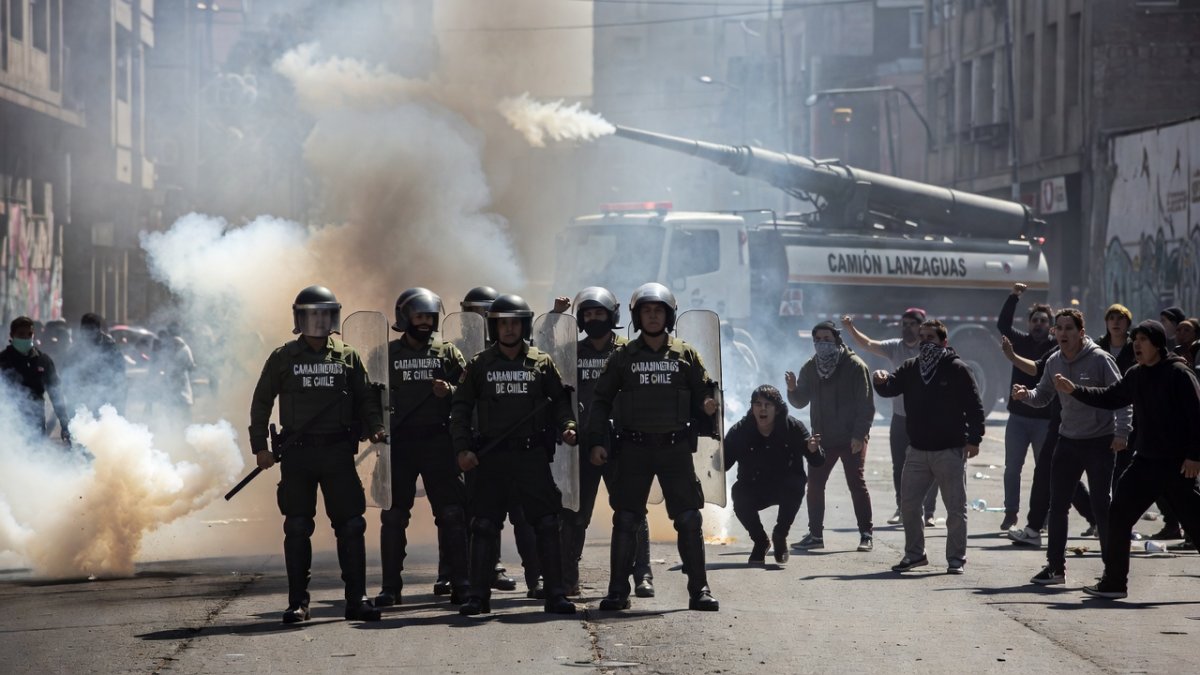
Santiago, Chile — As far-right President José Antonio Kast took office in March 2026, his $6 billion austerity plan triggered massive healthcare cuts that left public hospitals reeling. Police forces, known as Carabineros, responded to student protests in June 2026 with CS tear gas and water cannons, injuring over 25 people and leading to numerous arrests. The $413 billion peso reduction in public healthcare funding has compounded the dangers, turning routine demonstrations into medical nightmares for Chile's most vulnerable populations.
Chile's Public Health System Under Siege
Chile once stood as a Latin American public health success story, with robust systems that delivered care to millions through the public FONASA network relied upon by 80 percent of citizens. Yet President José Antonio Kast's far-right administration, upon taking office in March 2026, unleashed a $6 billion austerity plan that carved deep into healthcare budgets. This included a staggering $413 billion peso cut to public services, prioritizing fiscal restraint over human welfare in a nation already strained by inequality.
The consequences cascade daily. Hospitals face chronic underfunding that threatens everything from basic supplies to emergency response capabilities. Vulnerable groups—children, the elderly, and those with preexisting conditions—bear the brunt as resources dwindle. Kast's first State address notably omitted any mention of these health cuts, signaling a deliberate downplaying of the crisis to the public. Protesters, many from low-income backgrounds dependent on FONASA, now encounter not only economic hardship but also direct physical assaults via police tactics that exacerbate respiratory vulnerabilities.
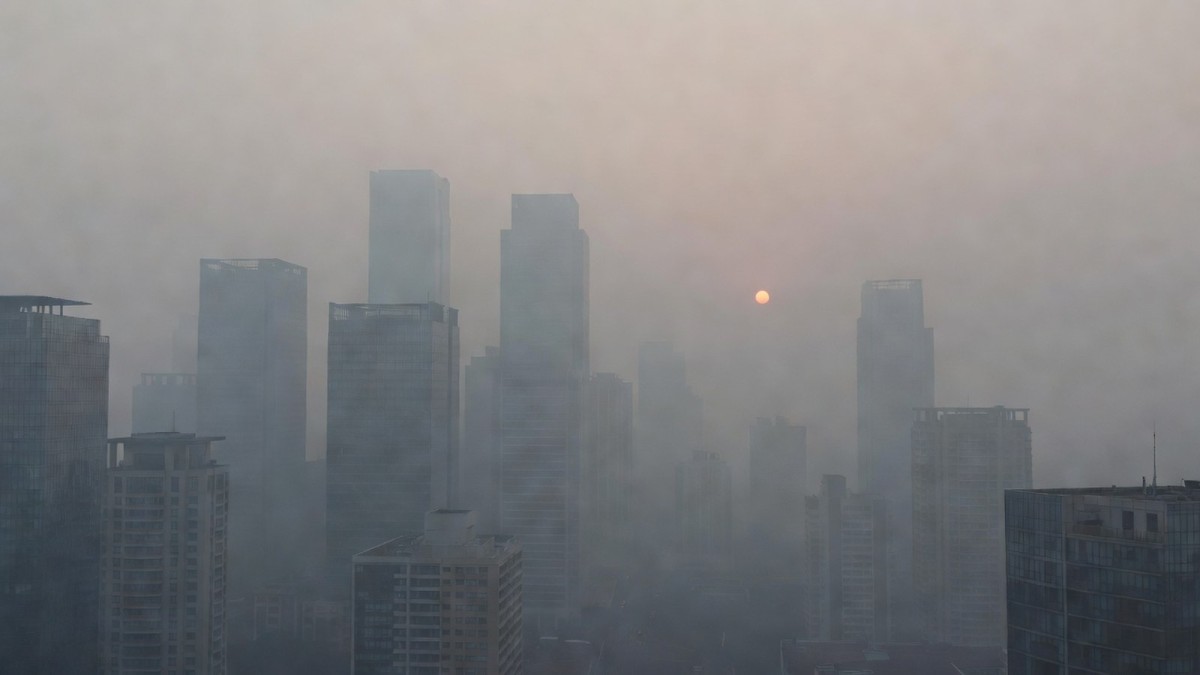
Climate and health intersections amplify the damage, as polluted urban environments in Santiago worsen outcomes for those exposed during crackdowns. The policy shift marks a stark departure from prior progressive gains, leaving communities exposed to both economic and environmental stressors. Without swift reversal, Chile risks losing its regional leadership in accessible care, turning a once-celebrated model into a cautionary tale of ideological overreach.
The Science of Tear Gas: What CS Agents Do to the Human Body
CS tear gas, deployed aggressively by Carabineros during June 2026 student protests, inflicts immediate and severe physiological harm. Exposure triggers intense eye burning, temporary blindness, respiratory distress, bronchospasm, nausea, and skin burns that can persist for hours or days. These effects intensify dramatically in confined spaces like metros or plazas, where concentrations build rapidly and escape becomes difficult.
High-risk populations face disproportionate threats. Individuals with asthma or COPD experience life-threatening exacerbations, while children, the elderly, and pregnant women suffer amplified complications including developmental risks and acute distress. Historical precedent from the 2019 Chile protests shows thousands of tear gas-related emergency room visits, underscoring the agent's capacity to overwhelm medical systems already stretched thin.
Experts, including those featured in AJE video reports by Lucia Newman, emphasize that repeated or high-dose exposure carries long-term pulmonary consequences. Water cannons compound injuries through hypothermia and blunt trauma. In Chile's current context of austerity-driven hospital shortages, these chemical assaults transform protests into mass casualty events. The science reveals CS gas as far from benign crowd control—it functions as a chemical irritant with documented public health fallout that demands accountability from authorities.
Hospital Sótero del Río on the Brink
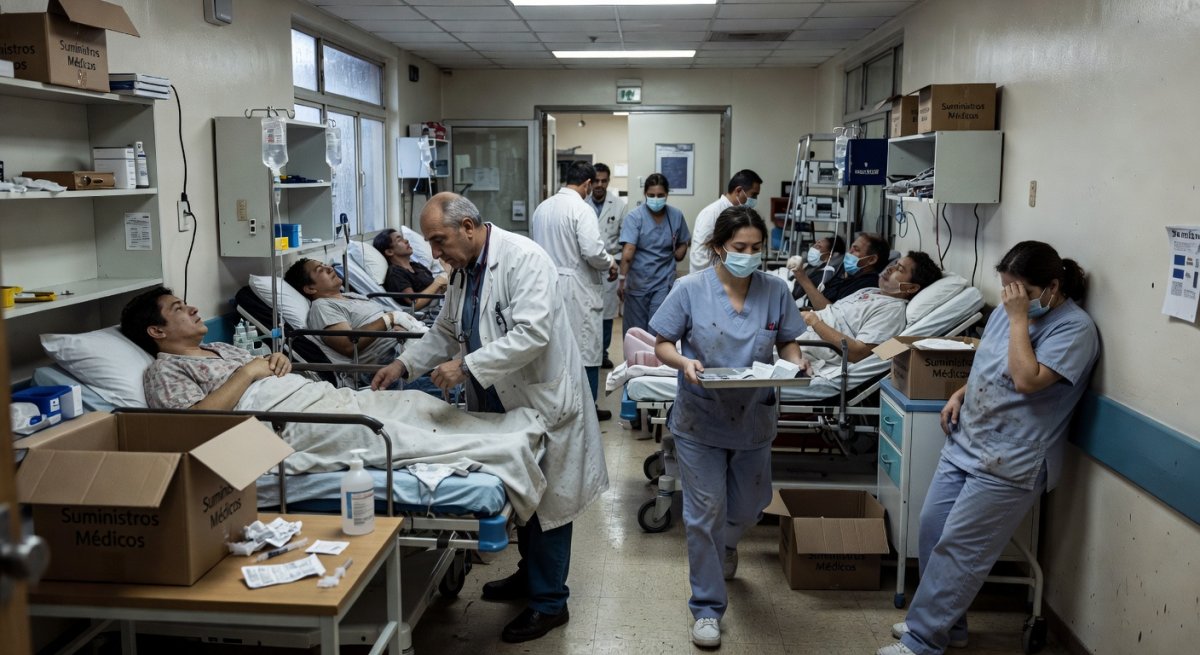
Hospital Sótero del Río, serving over one million patients annually, now teeters on collapse following a $3.182 billion peso budget slash under Kast's austerity measures. Supply shortages plague wards, forcing staff to ration essentials while looming layoffs threaten operational capacity. Projections indicate the facility may only sustain basic functions until August without emergency intervention.
This flagship public hospital exemplifies broader systemic erosion. Once a cornerstone of Chile's celebrated healthcare network, it now grapples with delayed treatments and compromised infection control amid ongoing protests. Patients arriving with tear gas injuries encounter depleted stocks of oxygen, bronchodilators, and protective equipment, turning routine care into triage scenarios.
The human stories multiply: families wait hours for respiratory support while administrators scramble to retain personnel. Austerity's logic prioritizes ledgers over lives, ignoring how such cuts fuel cycles of illness and unrest. Regional comparisons highlight Chile's rapid decline from success story to cautionary case. Without restored funding, Sótero del Río's fate foreshadows nationwide breakdowns that will claim preventable lives in the months ahead.
Colegio Médico Fights Back
Dra. Anamaría Arriagada, president of Colegio Médico de Chile, delivered powerful congressional testimony exposing how the $413 billion peso healthcare cuts endanger patient care and clinical confidentiality. Colmed leaders argue these reductions violate core medical ethics by forcing physicians into impossible choices between fiscal compliance and lifesaving duties.
The organization has mobilized nationwide, documenting shortages and advocating for restored budgets. Arriagada highlighted risks to vulnerable protesters exposed to CS gas, noting that confidentiality breaches could deter injured citizens from seeking treatment. Colmed's resistance underscores professional solidarity against policies that weaponize economics against public welfare.
Physicians report moral injury as they witness preventable suffering from both austerity and police tactics. Their campaign ties health advocacy to broader democratic defense, warning that silenced medical voices enable further repression. In a nation where 80 percent depend on FONASA, Colmed's fight represents frontline resistance to an agenda that threatens Chile's social fabric. Sustained pressure may yet force policy reversals before hospitals reach breaking points.
Austerity's Latin American Contagion
Kast's $6 billion austerity blueprint echoes across Latin America, where similar far-right experiments have eroded public health infrastructure in neighboring countries. Chile's $413 billion peso healthcare reduction mirrors patterns seen elsewhere, where budget slashes coincide with intensified policing of dissent. The result is a regional contagion of weakened systems unable to handle protest-related injuries or chronic disease burdens.
Environmental health linkages grow clearer amid climate pressures. Urban pollution in Santiago, worsened by water cannon deployments, compounds tear gas effects on respiratory patients. Historical data from 2019 protests reveals how such tactics overwhelm facilities, a lesson ignored under current leadership. High-risk groups—asthma sufferers, pregnant women, the elderly—pay the heaviest price as services contract.
Regional health advocates draw parallels to past crises, urging solidarity against austerity's spread. Chile's former status as a public health model crumbles, replaced by images of gas-filled streets and shuttered clinics. The contagion threatens to reverse decades of progress unless progressive coalitions mobilize. Economic ideology must yield to evidence-based policies that prioritize collective well-being over ideological purity.
The Bottom Line — Chile's Health at a Crossroads
Chile stands at a pivotal juncture where President Kast's March 2026 policies have fused economic austerity with chemical repression, creating a health crisis that endangers millions. The $6 billion plan and targeted cuts like the $3.182 billion peso reduction at Hospital Sótero del Río reveal a government willing to sacrifice care for fiscal dogma. Tear gas injuries from June 2026 protests compound these wounds, overwhelming a system serving 80 percent of citizens through FONASA.
Colmed's resistance, led by Dra. Anamaría Arriagada, offers hope through advocacy and testimony. Yet without reversal, confined-space exposures and supply shortages will claim more lives. The AJE video by Lucia Newman captures expert warnings that demand attention. Chile's trajectory from regional success to crisis zone serves as urgent warning.
Passionate defense of health rights remains essential. Citizens, physicians, and international observers must pressure for accountability before August deadlines force irreversible closures. The crossroads offers a choice: restore humane policies or watch preventable suffering escalate across Latin America.
By Elena Vasquez, Staff Writer
Chile Tear Gas Health Crisis Under Kast Austerity 2026 Explore Chile's public health emergency as President Kast's austerity cuts and police tear gas spark injuries, hospital shortages, and Colmed resistance in 2026.This article was produced with AI-assisted research and editorial support. Reporting is based on sources cited in the article.
What's Your Reaction?
 Like
0
Like
0
 Dislike
0
Dislike
0
 Love
0
Love
0
 Funny
0
Funny
0
 Wow
0
Wow
0
 Sad
0
Sad
0
 Angry
0
Angry
0

Latin America Correspondent at Global1.News. Based in Mexico City, covering politics, economics, energy, and culture across the region. Brings an on-the-ground perspective to stories spanning from the Rio Grande to Patagonia.














Comments (0)