
Casino Giant Caesars To Be Bought By Trump Ally And Houston Rockets Owner For $17.6 Billion
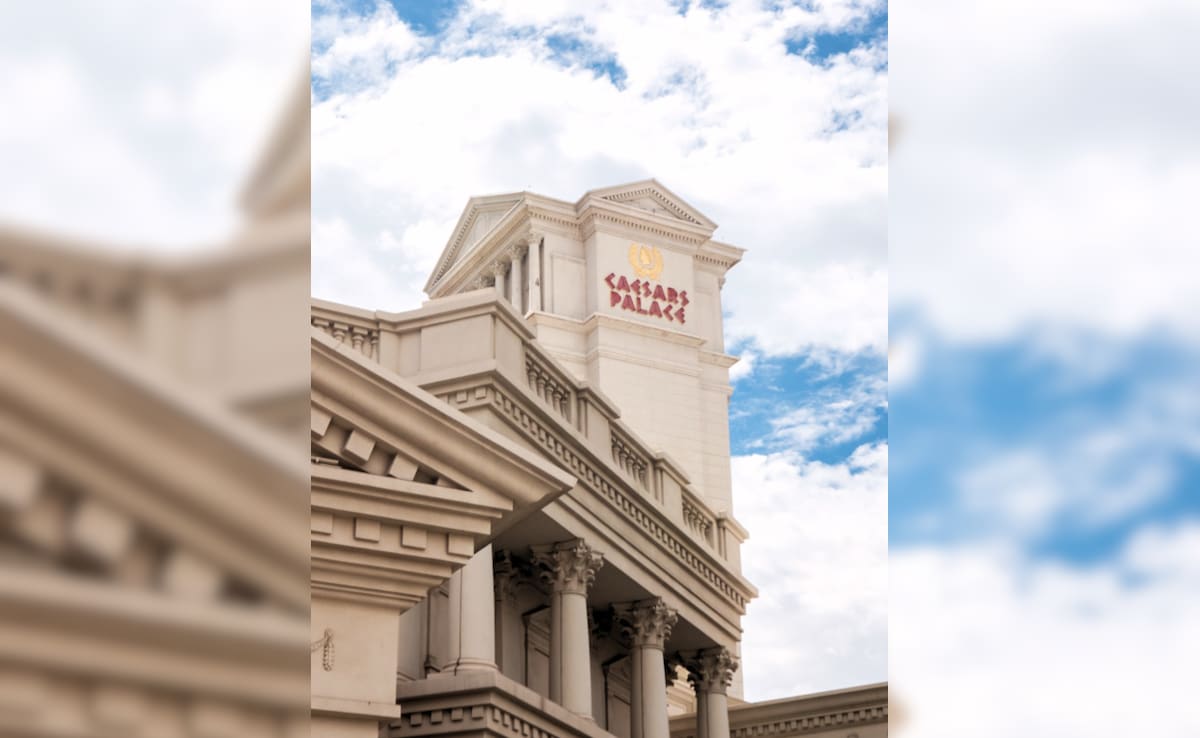
Caesars Entertainment Faces $17.6 Billion Takeover by Tilman Fertitta as Trump Ally Secures Casino Giant in All-Cash Deal
Global markets reacted swiftly today as Caesars Entertainment confirmed receipt of a $17.6 billion all-cash acquisition offer from Tilman Fertitta, the Houston Rockets owner and longtime Trump supporter. The proposed transaction values Caesars at approximately $42 per share, representing a 28 percent premium to the company's closing price on the last trading day before the announcement. This development arrives amid a consolidating U.S. gaming sector where operators seek scale to offset rising operational costs and regulatory pressures.
Deal Structure and Go-Shop Provisions
The agreement includes a standard “go-shop” window extending through July 11, during which Caesars’ board may solicit superior proposals from other suitors. Under the terms, Fertitta’s investment vehicle would acquire 100 percent of outstanding shares without financing contingencies, a structure that reduces execution risk compared with leveraged buyouts common in prior gaming deals. Caesars reported trailing twelve-month revenue of $11.2 billion, with EBITDA margins expanding to 24.8 percent in the most recent quarter after cost rationalization across its 51 properties.
Analysts note the cash certainty differentiates this bid from earlier expressions of interest that relied on debt financing amid elevated interest rates. The transaction remains subject to shareholder approval and clearance from gaming regulators in Nevada, New Jersey, and six additional states where Caesars holds licenses.
Background on Caesars and Industry Metrics
Caesars emerged from its 2020 merger with Eldorado Resorts carrying $14.7 billion in net debt, a figure since reduced to $9.8 billion through asset sales and free-cash-flow generation. The company operates iconic Las Vegas Strip resorts including Caesars Palace and Harrah’s, alongside regional properties that generate 62 percent of total revenue. Post-pandemic visitation data from the Nevada Gaming Control Board shows Strip gaming revenue reached $8.9 billion in 2023, a 4.2 percent increase year-over-year, yet below inflation-adjusted peaks recorded in 2019.
Public-health researchers have tracked concurrent rises in problem-gambling prevalence. A 2023 National Council on Problem Gambling survey estimated 2.8 million U.S. adults meet criteria for gambling disorder, with online sports-betting expansion correlating to a 19 percent increase in helpline calls since 2021. These figures underscore the dual economic and societal stakes embedded in large-scale ownership changes.
Fertitta’s Profile and Strategic Rationale
Tilman Fertitta, who built Landry’s Inc. into a hospitality conglomerate before acquiring the Rockets in 2017, brings operational expertise in integrated resort management. His political alignment with former President Trump has surfaced in Federal Election Commission filings showing $3.4 million in contributions during the 2024 cycle. Fertitta’s prior gaming exposure remains limited to non-casino hospitality, prompting questions about integration synergies with Caesars’ loyalty program, which counts 65 million active members.
Financial models circulated by investment banks project that combining Fertitta’s regional dining and entertainment assets with Caesars’ database could lift ancillary revenue per visitor by 7–9 percent within 24 months, assuming cross-promotional execution. Such projections hinge on maintaining current hold percentages averaging 7.4 percent on slot machines, a metric sensitive to both consumer spending patterns and state tax regimes.
Regulatory, Political, and Global Context
Gaming control boards in key jurisdictions require “suitability” findings that examine character, financial wherewithal, and source of funds. Fertitta’s existing sports-franchise ownership has already undergone NBA and state-level scrutiny, potentially shortening the review timeline to nine months rather than the typical 12–18 months. Nevertheless, Democratic attorneys general in states such as New Jersey have signaled heightened attention to political contributions tied to license holders.
From an Indian capital-markets perspective, the deal illustrates global investor appetite for U.S. experiential assets even as domestic real-estate and hospitality sectors face headwinds. Foreign institutional holdings in Caesars stood at 14 percent prior to the announcement, with Singapore’s GIC and several Mumbai-based family offices among notable holders. Currency hedging data from the Reserve Bank of India shows a 12 percent uptick in U.S. gaming-sector exposure among Indian investors over the past fiscal year.
Economic Multipliers and Public-Health Analysis
Regional input-output tables published by the Bureau of Economic Analysis attribute a 1.8 multiplier effect to casino employment in host counties, meaning each direct job supports 0.8 additional positions in lodging, food service, and transportation. The proposed ownership shift could influence capital expenditure plans; Caesars guided $650 million in maintenance and growth capex for 2024, funds that might accelerate under private ownership less constrained by quarterly earnings optics.
Health economists caution that expanded gaming footprints correlate with measurable increases in bankruptcy filings and mental-health service utilization. A longitudinal study from the University of Nevada, Las Vegas tracked a 3.1 percent rise in county-level suicide rates in markets gaining new casino licenses between 2015 and 2022. These externalities rarely appear on corporate balance sheets yet factor into long-term regulatory risk assessments.
Market Reaction and Alternative Scenarios
Caesars shares rose 19 percent in pre-market trading following the announcement, while peer operators Wynn Resorts and MGM Resorts gained 2–3 percent on speculation of renewed consolidation interest. Options-market implied volatility for Caesars jumped to 48 percent, reflecting uncertainty over competing bids during the go-shop period. Should a higher offer materialize, termination fees of $450 million would apply, a sum representing 2.6 percent of transaction value and within norms for large-cap strategic deals.
Scenario analysis prepared by credit-rating agencies suggests that if the transaction closes at the stated price, Fertitta’s leverage would reach 5.2 times EBITDA—below the 6.5 times threshold that triggered distress during the 2008 financial crisis for prior casino owners.
The coming weeks will test whether Caesars attracts rival suitors or proceeds toward regulatory milestones. Data from the past decade of gaming M&A indicates that 37 percent of announced deals receiving go-shop periods ultimately attracted superior bids, underscoring the non-binding nature of today’s headline figure.
This is Dr. Raj Patel for Global1 News, reporting from Mumbai. 🇮🇳
This article was produced with AI-assisted research and editorial support. Reporting is based on sources cited in the article.
What's Your Reaction?
 Like
0
Like
0
 Dislike
0
Dislike
0
 Love
0
Love
0
 Funny
0
Funny
0
 Wow
0
Wow
0
 Sad
0
Sad
0
 Angry
0
Angry
0

India/South Asia Correspondent at Global1.News. Analytical voice with a background in science and health journalism. Based in New Delhi, covering Indian politics, education, healthcare, technology, and policy. Breaks down complex data into clear, actionable reporting.














Comments (0)