
Sawmill Closures 'Gut-Wrenching' Amid Lumber Industry Headwinds: Canfor CEO
Canfor Corp. is permanently closing its Fox Creek sawmill in northwestern Alberta, a move the company's chief executive described as "gut-wrenching" but necessary as the forestry sector faces punishing U.S. tariffs, weak markets, and a shrinking timber supply in the region. The Vancouver-based company announced the closure this week, citing insufficient fibre availability in the region to sustain the mill's operations over the long term.
Sawmill Closures 'Gut-Wrenching' Amid Lumber Industry Headwinds: Canfor CEO
Canfor Corp. is permanently closing its Fox Creek sawmill in northwestern Alberta, a move the company's chief executive described as "gut-wrenching" but necessary as the forestry sector faces punishing U.S. tariffs, weak markets, and a shrinking timber supply in the region.
The Vancouver-based company announced the closure this week, citing insufficient fibre availability in the region to sustain the mill's operations over the long term. The mill, located in the town of approximately 2,400 people, is expected to wind down operations and close by late summer, reducing Canfor's annual capacity by 120 million board feet.
Fox Creek residents and provincial officials reacted with alarm to the news, which marks the latest blow to Alberta's forestry sector as global trade pressures continue to mount against Canadian industry.
Tags: Canfor, Fox Creek, sawmill closure, Alberta forestry, softwood lumber, US tariffs, Susan Yurkovich, lumber industry, Alberta economy, Prince George pulp mill, West Fraser, pine beetle, trade war, Canadian manufacturing, rural communities
A Second Shutdown in Two Weeks
Fox Creek, Alberta – July 30, 2026 — The Fox Creek closure comes just two weeks after Canfor announced it would shutter its pulp mill in Prince George, British Columbia, citing a market oversupply that has depressed prices across the sector. In May, the company also announced the permanent closure of two sawmills in southern Sweden, pointing to an imbalance between fibre availability and production capacity there as well.
"These are incredibly difficult decisions that impact our employees, their families, and our local communities," Canfor president and chief executive Susan Yurkovich told analysts during a conference call Thursday. "We've made changes across our platform that are gut-wrenching, but we are putting our business on a more sustainable footing."
The rapid succession of closures has raised questions about the long-term viability of Canada's forestry sector in a trade environment increasingly hostile to Canadian exports. Canfor has operated in Alberta for more than 70 years and remains focused on strengthening its remaining operations, including its Grande Prairie and Whitecourt sawmills, its Spruceland manufacturing facilities, and its newly acquired PinkWood building materials supplier in Calgary.
From Beetle Strategy to Timber Shortage
The Fox Creek sawmill has a history shaped by both environmental policy and natural disaster. Destroyed by a fire in 2008, the mill was rebuilt in 2011 as a single-shift operation designed to process the increased availability of timber stemming from the Alberta government's mountain pine beetle management strategy, launched in 2007.
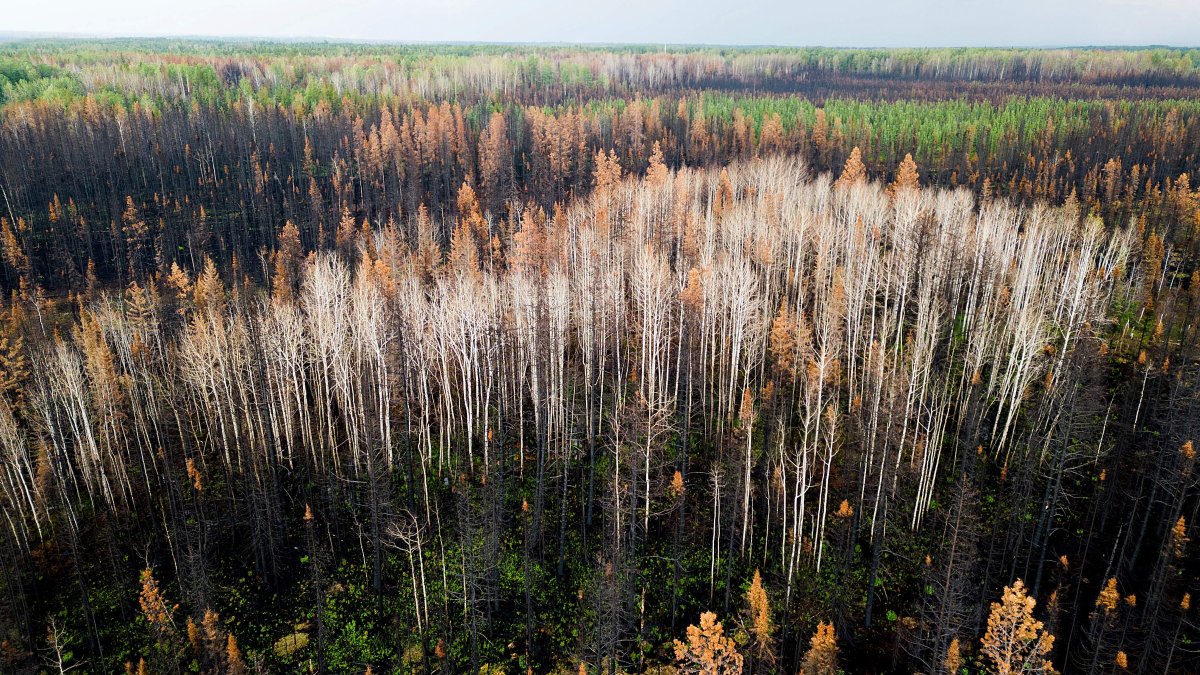
That strategy, coupled with consecutive deep freezes, led to a drastic decline in the destructive insect population. The mountain pine beetle was decimated in Jasper National Park by 2022 and reduced by 98 per cent province-wide. The province then ended its pine beetle management strategy, and with the wildfire-damaged timber that had sustained the mill now largely exhausted, Canfor said there is simply not enough fibre in the Fox Creek region to keep the operation running.
"This decision reflects the challenges facing our operation and does not diminish the dedication and contribution of our Fox Creek team," Yurkovich said in a statement. The company said it is committed to supporting affected employees through the transition.
Tariffs Pile Pressure on Canadian Producers
The Fox Creek closure comes against a backdrop of escalating trade friction between Canada and the United States that is reshaping the forestry landscape. The Canadian softwood lumber industry had already been coping with long-standing duties exceeding 35 per cent when, last year, an additional 10 per cent tariff was imposed on certain softwood lumber products under U.S. national security provisions.
Now, the Trump administration has announced a plan to impose a 50 per cent tariff on hundreds of categories of Canadian goods, including several varieties of plywood, paper, and other wood-derived products. The tariffs are slated to take effect on Aug. 19 and are being imposed using an obscure legal tool dating back to the Great Depression — a move that trade experts say signals an unprecedented escalation in the ongoing bilateral trade dispute.
Yurkovich described the combination of "punishing duties and tariffs" as the final blow to the Fox Creek mill's viability, alongside the structural decline in regional fibre supply. The tariffs are expected to add further pressure to an industry already operating on thin margins.
Financial Picture: Losses Narrow but Pressure Mounts
Canfor reported its second-quarter financial results on Thursday, showing a narrowed loss of $18.5 million compared to a loss of $202.8 million in the same quarter a year earlier. The loss amounted to 16 cents per diluted share for the quarter ended June 30, versus a loss of $1.71 per diluted share in the second quarter of 2025.
Sales for the quarter totalled $1.53 billion, up from $1.38 billion in the same period last year — a sign that while market conditions remain challenging, the company's revenue base is holding up. The financial impacts of the mill closures are expected to appear in Canfor's third-quarter results. The company anticipates approximately $30 million in restructuring costs in its pulp segment related to the Prince George mill, along with an asset writedown and impairment charge of about $35 million linked to the Fox Creek closure.
Despite the grim news, Canfor shares were trading up approximately three per cent on Thursday, suggesting that investors may view the restructuring as a necessary step toward long-term sustainability.
West Fraser Feels the Tariff Impact
Canfor is not alone in navigating the turbulent trade environment. West Fraser Timber Co. Ltd., another major Canadian lumber producer, is continuing to assess the impact of the Trump administration's latest tariff measures. The company said its medium-density fibreboard is not directly subject to the new tariffs, and the indirect effects are "not fully determinable at this time."
However, West Fraser noted that, year-to-date, three per cent of its plywood and 20 per cent of its laminated veneer lumber would have been affected by the new tariffs had they been in place during that period. The company's shares were trading down more than six per cent on Thursday, a day after it reported a wider second-quarter loss.
West Fraser booked a loss of US$61 million, or 78 cents per share, compared to a loss of US$24 million, or 38 cents per share, during the same period a year earlier. Sales dropped to US$1.43 billion during the quarter from US$1.53 billion in the same quarter of 2025.
Impact on Rural Alberta and Western Canada
The Fox Creek closure represents more than a corporate restructuring — it is a significant economic blow to a small community in northwestern Alberta that depends heavily on the forestry sector for employment and local economic activity. The town of approximately 2,400 residents has seen its economic fortunes tied to the resource sector for decades, and the loss of the sawmill will ripple through local businesses, service providers, and municipal finances.
The closure is also emblematic of broader structural challenges facing rural and resource-dependent communities across Western Canada. The combination of depleted timber supplies, punishing U.S. tariffs, weak global markets for lumber, and the transition away from beetle-kill harvesting has left many communities in a precarious position.
Alberta's government has not yet announced specific support measures for Fox Creek workers or the community, though provincial officials have indicated they are monitoring the situation. The federal government, meanwhile, has been engaged in ongoing trade negotiations with the United States, though no breakthrough on softwood lumber has been achieved.
What Happens Next
With the Fox Creek mill expected to close by late summer and the Prince George pulp mill facing its own shutdown, Canfor is focused on consolidating its remaining operations in Alberta and British Columbia. The company has expressed confidence in the long-term viability of its Grande Prairie and Whitecourt sawmills, as well as its new Calgary-based building materials supplier.
However, much depends on the trajectory of U.S.-Canada trade relations. The August 19 tariff deadline looms large, and the Canadian forestry sector is watching closely for any signs of movement in bilateral negotiations. Industry analysts say that without meaningful tariff relief or new market diversification, further consolidation in the sector is likely.
For the workers and families of Fox Creek, the immediate future is uncertain. The loss of a major employer in a small town is the kind of economic shock that takes years to recover from — if recovery comes at all. The closure serves as a stark reminder that Canada's resource industries, long the backbone of rural communities, are increasingly vulnerable to forces far beyond local control.
By Alex Thompson, Staff Writer
This article was produced with AI-assisted research and editorial support. Reporting is based on sources cited in the article.
What's Your Reaction?
 Like
0
Like
0
 Dislike
0
Dislike
0
 Love
0
Love
0
 Funny
0
Funny
0
 Wow
0
Wow
0
 Sad
0
Sad
0
 Angry
0
Angry
0

Canada Correspondent at Global1.News. Based in Toronto, covering Canadian politics, energy, trade, and US-Canada relations. Provides the Canadian perspective on North American and global affairs.















Comments (0)