
8.3 mn refugees at risk due to 'severe' funding cuts: UN
UNHCR’s latest budget warning underscores a looming humanitarian crisis that could reshape the displacement landscape across the Middle East and beyond.
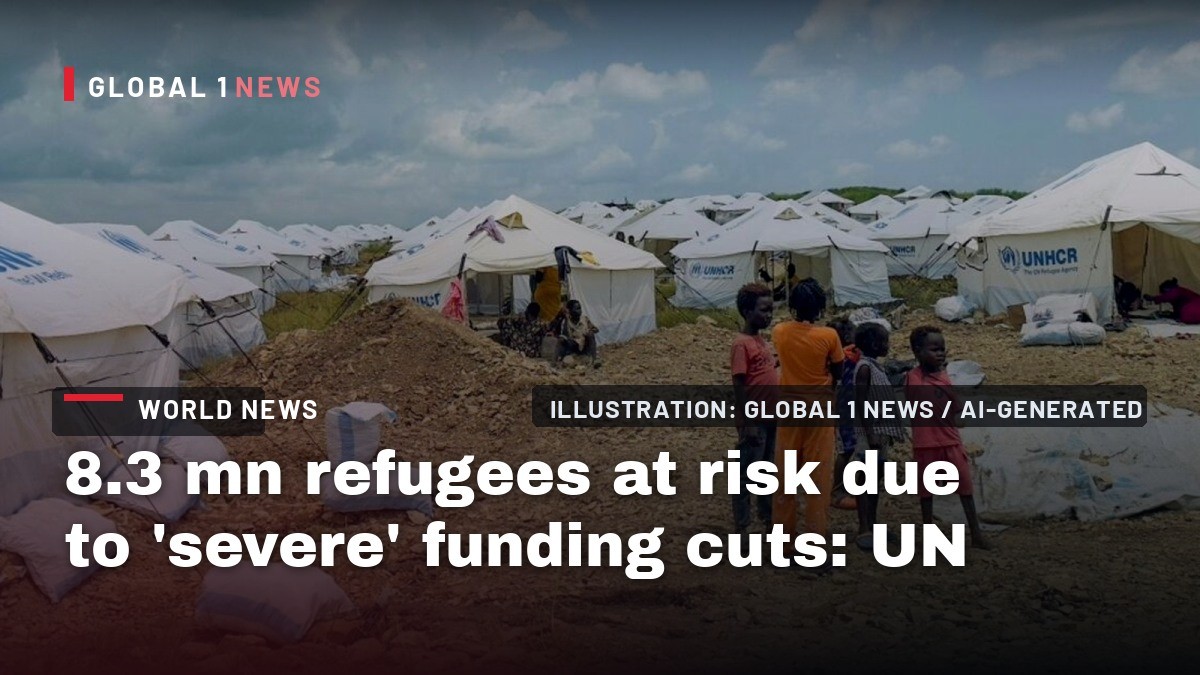
UNHCR’s latest budget warning underscores a looming humanitarian crisis that could reshape the displacement landscape across the Middle East and beyond. The agency’s report, released on 29 September 2026, warns that nearly 8.3 million refugees, internally displaced persons (IDPs) and stateless individuals are now “at risk of losing access to UNHCR assistance” as funding shortfalls erode core protection services. For Israel, a country that both hosts a sizable asylum-seeker population and coordinates closely with the United Nations on regional humanitarian operations, the funding crunch raises urgent questions about how regional displacement dynamics will evolve and what role Israeli agencies may need to play.
Funding Gap and Its Immediate Impact
The UN refugee agency disclosed that its available funding fell from $5.2 billion in 2024 to $3.9 billion in 2025. By the end of July 2026, UNHCR had secured only 32 percent of its $8.5 billion target for the year, leaving a substantial shortfall that threatens to cripple its ability to deliver essential services. Dominique Hyde, UNHCR’s external relations chief, warned that “protection cannot be reduced indefinitely without systems collapsing,” emphasizing that the cuts are pushing “refugee support and protection structures towards breaking point.”
These financial constraints have already translated into tangible service gaps. In Chad, registration delays affect 319,000 refugees, denying them the documentation needed to access aid. Around 233,000 children in the same country risk losing child‑protection services. Ethiopia reports an alarming decline in child‑protection coverage of up to 85 percent in certain areas, while Sudan’s tens of thousands of sexual‑violence survivors and at‑risk children face the prospect of losing critical protection mechanisms.
Scale of Displacement and Regional Concentrations
UNHCR’s data show that 117.8 million people were forcibly displaced worldwide at the end of 2025, a modest decline from the 2024 record of 123.2 million. Of those, 35.6 million are refugees under UNHCR’s mandate, with two‑thirds originating from Venezuela, Ukraine, Syria, Afghanistan and Sudan. The concentration of displacement in the Middle East remains stark, especially as Syrian and Sudanese crises continue to generate large refugee flows that intersect with Israel’s own security and humanitarian considerations.
In Iraq, up to 350,000 refugees and asylum seekers could lose access to economic inclusion programmes, a loss that threatens to reverse gains made in livelihoods and self‑reliance. Similarly, in Syria, 162,500 vulnerable IDPs and returned refugees may miss out on initial financial assistance, hampering their ability to rebuild homes and livelihoods. These figures illustrate how funding cuts reverberate across the region, potentially increasing pressure on neighboring states, including Israel, to absorb secondary effects such as increased border crossings or informal labor market influxes.
UNHCR’s Workforce Reductions and Operational Strain
Compounding the financial squeeze, UNHCR shed nearly 5,000 jobs in 2025—more than a quarter of its workforce. The agency attributes much of the staff reduction to the United States’ “heavily slashed” foreign‑aid contributions, alongside tightening budgets from other major donors. The loss of personnel inevitably hampers field operations, from registration drives to protection monitoring, and raises concerns about the agency’s capacity to maintain a presence in volatile settings.
For Israel’s Ministry of Economy and the Israel Innovation Authority, the contraction of UNHCR’s operational footprint could open both challenges and opportunities. Israeli NGOs and tech firms that have partnered with UNHCR on data‑management, biometric registration and remote‑learning platforms may find their contracts at risk, while also facing heightened demand for alternative solutions to fill the service gaps left by the agency’s downsizing.
Implications for Israeli Humanitarian Coordination
Israel has long coordinated with UNHCR and other UN bodies on refugee and IDP assistance, particularly in the context of Syrian and Palestinian displacement. The current funding crisis forces Israeli officials to reassess the sustainability of joint programmes, especially those that rely on UNHCR’s logistical and funding backbone. The Ministry of Economy’s recent initiatives to bolster “innovation for humanitarian impact” could become more critical as UNHCR’s capacity wanes.
Moreover, the risk of protection services collapsing in neighboring countries may generate secondary security concerns for Israel. If child‑protection and gender‑based‑violence services deteriorate in Sudan or Ethiopia, displaced families may seek safer routes that traverse Israeli‑controlled territories, potentially increasing the number of asylum seekers arriving at Israel’s borders. This scenario would test Israel’s asylum policies and its ability to balance security imperatives with humanitarian obligations.
Potential Shifts in Regional Aid Dynamics
The funding shortfall highlights a broader trend of donor fatigue, especially among traditional contributors like the United States. As UNHCR’s budget contracts, other regional actors—such as the European Union, Gulf states and emerging donors—may be called upon to fill the gap. Israel’s diplomatic outreach to Gulf partners, already deepening through the Abraham Accords framework, could include discussions on shared humanitarian financing, particularly for programmes that address cross‑border displacement impacts.
In addition, Israel’s own development‑aid apparatus, coordinated through the Ministry of Foreign Affairs, may need to allocate additional resources to support UNHCR‑linked projects or to launch independent assistance streams. Such moves would align with Israel’s broader strategy of leveraging its tech sector to enhance regional stability, positioning Israeli solutions as cost‑effective alternatives to traditional aid delivery mechanisms.
Economic Inclusion and Livelihood Programs at Risk
UNHCR’s warning that up to 350,000 refugees in Iraq could lose access to economic inclusion opportunities underscores the fragile link between humanitarian assistance and long‑term self‑reliance. In Israel, similar programmes—often funded through joint UN‑Israeli initiatives—focus on vocational training, micro‑finance and digital‑skill development for displaced populations. Funding cuts threaten to curtail these programmes, potentially increasing reliance on direct cash assistance and prolonging dependency cycles.
The loss of economic inclusion support also carries macro‑economic implications. Reduced labour‑market integration of refugees can depress regional productivity and heighten social tensions. Israeli tech firms that have piloted job‑matching platforms for refugees in Jordan and Lebanon may see reduced demand for their services, prompting a strategic pivot toward domestic markets or alternative humanitarian sectors such as health‑tech and education‑tech.
Looking Ahead: Mitigation Strategies and Policy Recommendations
Given the severity of the funding shortfall, UNHCR emphasizes the need for urgent donor replenishment to avoid a collapse of protection services. For Israeli policymakers, the situation calls for a multi‑pronged response: first, reinforcing bilateral coordination with UNHCR to prioritize the most vulnerable groups—particularly children and survivors of sexual violence—through targeted Israeli‑funded interventions.
Second, scaling up domestic innovation capacity to deliver low‑cost, high‑impact solutions. The Israel Innovation Authority could accelerate grants for startups developing rapid registration tools, remote child‑protection monitoring, and AI‑driven risk‑assessment platforms that can operate with reduced donor funding. Third, expanding diplomatic outreach to secure new financing streams from Gulf partners and the European Union, positioning Israel as a conduit for regional humanitarian stability.
Finally, ensuring that any increase in asylum‑seeker arrivals is managed within a robust legal and security framework, balancing Israel’s humanitarian commitments with its national security imperatives. By aligning domestic innovation, diplomatic outreach and targeted aid, Israel can help mitigate the fallout from UNHCR’s funding crisis while reinforcing its role as a regional leader in tech‑driven humanitarian response.
This article was produced with AI-assisted research and editorial support. Reporting is based on the source material cited below. Sources: Al-Monitor; al-monitor.com; Global1.News (29 September 2026).
By Hannah Berg, Staff Writer
What's Your Reaction?
 Like
0
Like
0
 Dislike
0
Dislike
0
 Love
0
Love
0
 Funny
0
Funny
0
 Wow
0
Wow
0
 Sad
0
Sad
0
 Angry
0
Angry
0

Israel Correspondent at Global1.News. Based in Tel Aviv, covering Israeli politics, security, technology, and society. Provides balanced, deeply-sourced reporting on one of the most closely-watched regions in the world.















Comments (0)