
Chadchart plans ‘guerrilla’ pumping operation to target most-affected communities
Bangkok’s streets are still glistening with the remnants of the heavy rain that fell earlier this month, but Governor Chadchart Sittipunt’s recent briefing at the Flood Prevention System Control Centre gave residents a sense of calm progress.
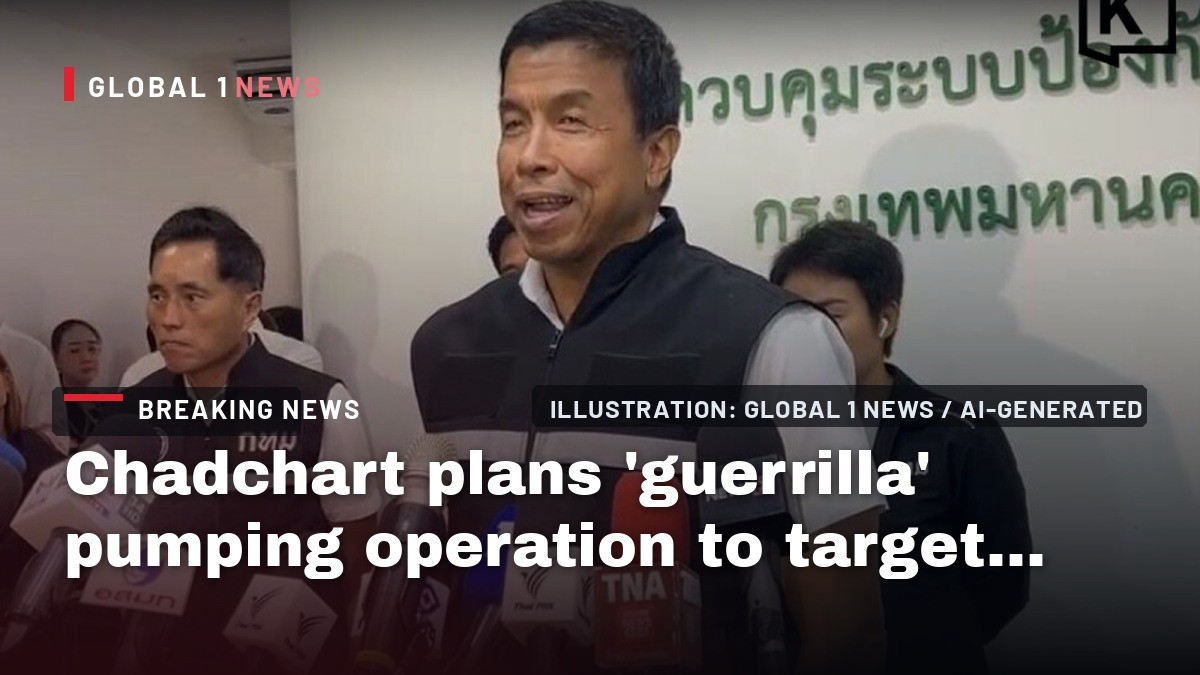
Bangkok’s streets are still glistening with the remnants of the heavy rain that fell earlier this month, but Governor Chadchart Sittipunt’s recent briefing at the Flood Prevention System Control Centre gave residents a sense of calm progress. While the sky has cleared and no new rain has been recorded, the city’s water levels are slowly receding, and officials are now shifting from broad canal‑to‑river pumping to a more precise, community‑focused approach. This change reflects both the scale of the recent flooding and the deep‑rooted Thai principle of caring for the most vulnerable, a value echoed in the Buddhist teaching of compassion for all beings.
Assessing the current situation
Governor Chadchart, accompanied by deputy governors Wisanu Sapsompol and Sanon Wangsrangboon, explained that the main areas still under water are Ramkhamhaeng, Bueng Kum, Seri Thai, Nawamin, Lat Krabang and Luang Phaeng. In each of these districts, water levels are gradually falling, but the pace varies, prompting the administration to tailor its response to local conditions.
He reminded listeners that forecasts can only predict today’s rain, and that the city must look at the “overall picture” rather than short‑term fluctuations. This measured outlook aligns with the Thai practice of “tham bpa‑dta‑na” – a steady, patient assessment before taking action.
From canal pumps to “guerrilla‑style” operations
Historically, Bangkok’s flood management relied on moving water from the city’s network of canals into the Chao Phraya River. That method worked well for localized floods, but the recent deluge covered a much wider area, stretching the capacity of traditional pumps.
To address this, the governor announced a new “guerrilla‑style” pumping plan. Large “Phraya Naga” pumps, named after the mythical river serpent, will be deployed directly into the hardest‑hit villages. Submersible pumps will also be used to target low‑lying streets and condominium estates that have been cut off from the main drainage routes. This targeted approach mirrors the Thai tradition of “phra‑phong” – small, focused actions that together create a larger impact.
Engaging the private sector
Recognising that the scale of the emergency exceeds the resources of any single agency, Governor Chadchart said the Bangkok Metropolitan Administration (BMA) is preparing to seek cooperation from private companies that own large Phraya Naga pumps. By inviting the private sector to lend equipment and expertise, the city hopes to accelerate the removal of water from the most affected neighborhoods.
This collaborative spirit reflects the Thai value of “samphan” – mutual aid and partnership. It also underscores a pragmatic understanding that modern flood management requires a blend of public authority and private capability, especially when swift action can mean the difference between a temporary inconvenience and a prolonged hardship for families.
Ensuring food aid reaches every doorstep
Beyond pumping water, the BMA has been fine‑tuning its food distribution system. At the Khlong Chan flats, officials now have a clear inventory of the 30 flats and surrounding buildings, including the cluster around Lat Phrao 120. By mapping each household’s needs, the administration can allocate boxed meals more evenly.
If district offices cannot meet the demand, the governor said the Education Department of the BMA will step in, preparing supplies that community representatives will collect. Earlier deliveries sometimes missed deeper‑lying condominiums because boats delivered aid to the first communities they encountered. The new system aims to correct that imbalance, ensuring that even residents in high‑rise estates receive timely assistance.
Community resilience and emerging improvements
Signs of recovery are already visible. Residents of Chinnakhet Village, who required food deliveries on 28 September, reported that they can now walk to local markets to purchase supplies. This shift from aid dependence to self‑sufficiency illustrates the resilience of Bangkok’s neighbourhoods, a quality deeply rooted in Thai communal life.
Governor Chadchart noted that as water levels continue to fall, demand for aid will naturally adjust. Remaining resources can then be redirected to areas still struggling, such as the deeper‑lying housing estates that have only recently begun to see water recede. This flexible allocation mirrors the Buddhist principle of “anicca” – the understanding that conditions are impermanent and must be responded to with adaptability.
Coordinated effort across agencies
The flooding’s breadth has required a multi‑agency response, involving boats, vehicles, and now, potentially, private‑sector pumps. The governor highlighted that previous floods were often more localized, allowing a narrower focus. This time, the BMA must coordinate with a broader network of partners to move water quickly and safely.
He expressed confidence that water levels will drop more rapidly over the next two days, thanks to the planned acceleration of pumping operations. By mobilising pumps where canal levels are lower, the city can create a “pressure‑difference” effect, drawing water out of inundated communities faster than the traditional canal‑to‑river flow.
Looking ahead: a model for future floods
The “guerrilla‑style” pumping strategy may become a template for future flood seasons. By combining targeted submersible pumps, large Phraya Naga units, and private‑sector collaboration, Bangkok aims to build a more resilient flood‑management system that can adapt to the increasing intensity of monsoon rains.
In the spirit of Thai foresight, the governor’s plan reflects a willingness to learn from each event, adjust tactics, and involve the community at every step. As the water recedes and markets fill again, the city’s residents can look forward to a season where preparedness and compassion walk hand in hand, guided by the timeless values of Buddhism and the collective strength of Bangkok’s neighbourhoods.
This article was produced with AI-assisted research and editorial support. Reporting is based on the source material cited below. Sources: Khaosod English; khaosodenglish.com; Global1.News (29 September 2026).
By Ann Srisawat, Staff Writer
What's Your Reaction?
 Like
0
Like
0
 Dislike
0
Dislike
0
 Love
0
Love
0
 Funny
0
Funny
0
 Wow
0
Wow
0
 Sad
0
Sad
0
 Angry
0
Angry
0

Southeast Asia Correspondent at Global1.News. Based in Bangkok, covering Thai and Southeast Asian politics, economy, technology, and culture. Deep regional perspective on one of the world's most dynamic regions.














Comments (0)